
Vietnam · Ca Mau
Where to Stay in Cà Mau, Ca Mau
Cà Mau is the southernmost city of mainland Vietnam, capital of Cà Mau province and a Mekong Delta town built around a system of transport canals.
Hotel links are affiliate links: booking through them may earn us a commission, at no extra cost to you. It never affects how places are ranked. How this works


Where to stay in Cà Mau
How the choice of base plays out on the ground.
The canals decide the shape of a stay in Cà Mau more than any street does. Water runs through the built area as a transport system rather than as scenery, and rooms sit near one bank or another, which matters because a boat leaving early is a common reason to be here at all. Beds cluster in the middle.
The city is compact enough that the walk from most of them to a landing takes minutes. Travellers use the city as a base for the far south. Nothing in mainland Vietnam lies beyond it, so a stay is usually built around trips out into the delta by water and back again the same evening, and the choice of room follows the timing of those boats rather than any question of neighbourhood.
Options are modest. This is a provincial capital in southern Vietnam, so the rooms are practical ones meant for people working across Cà Mau province, with little aimed at holidays and less at long stays. If you are coming up out of the channels by barge, take a bed on the water side; if you have arrived overland from Bạc Liêu, anywhere central will serve.
Find hotels in Cà Mau
Direct booking searches for these neighbourhoods.
The canal banks
The strip along the channels that carry the city's barge traffic, close enough to a landing that a dawn departure costs no journey.Find hotels in The canal banksoverland arrivals from Bạc Liêu wanting the provincial capital's own streetsCentral Cà Mau
The compact middle of the southernmost city of mainland Vietnam, within a walk of the canal landings on either side of it.Find hotels in Central Cà MauHotel links are affiliate links: booking through them may earn us a commission, at no extra cost to you. It never affects how places are ranked. How this works
About Cà Mau
Canals do the work of roads.
What is Cà Mau known for?
Cà Mau is characterised by its system of transport canals, and most goods reaching the city arrive by boat or barge rather than on wheels, which is the plainest thing that can be said about how the place functions. It is also the end of the line. No city of mainland Vietnam lies further south, so almost everything about Cà Mau is arrival rather than passage.
What are the main landmarks in Cà Mau?
The record lists no monument here. What Cà Mau has instead are its transport canals and the barges that use them, which give the city a working waterfront rather than a set of sights to be ticked off. That absence is the point.
A place at the southern limit of mainland Vietnam grew as a port for its own stretch of the Mekong Delta rather than as somewhere built to be looked at, and canal traffic is what a visitor actually watches.
What is the history of Cà Mau?
No founding year attaches to Cà Mau in the record, and the city's beginnings are better read from its canals than from any charter. Waterways came before streets. A settlement at the southern limit of the Mekong Delta had little dry ground to build a road along, so the channels became the routes they still are, and the city took its shape from them rather than imposing a shape on the land.
That order has never reversed. Administration arrived after the water. Cà Mau became the capital of Cà Mau province, which turned a canal town into the centre for the whole southern end of the delta and brought it the offices and the market that a provincial seat carries.
The title has since moved. The record describes a former city whose territory is counted with the province it once administered, and Bạc Liêu, in that same province, carries the same word in its own description. Bạc Liêu Province vanished from the map in the same manner.
Goods still move by water. Most of what reaches Cà Mau comes in by boat or barge, and that continuity across every change of administrative name is the more durable fact about the place, more so than any list of the authorities that have governed it. Few towns in southern Vietnam depend on their channels to this degree.
Where is Cà Mau?
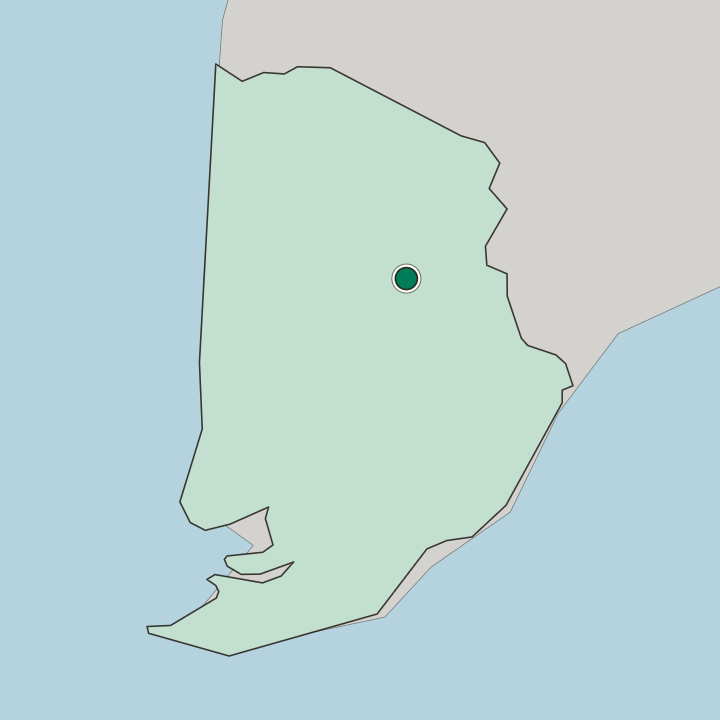
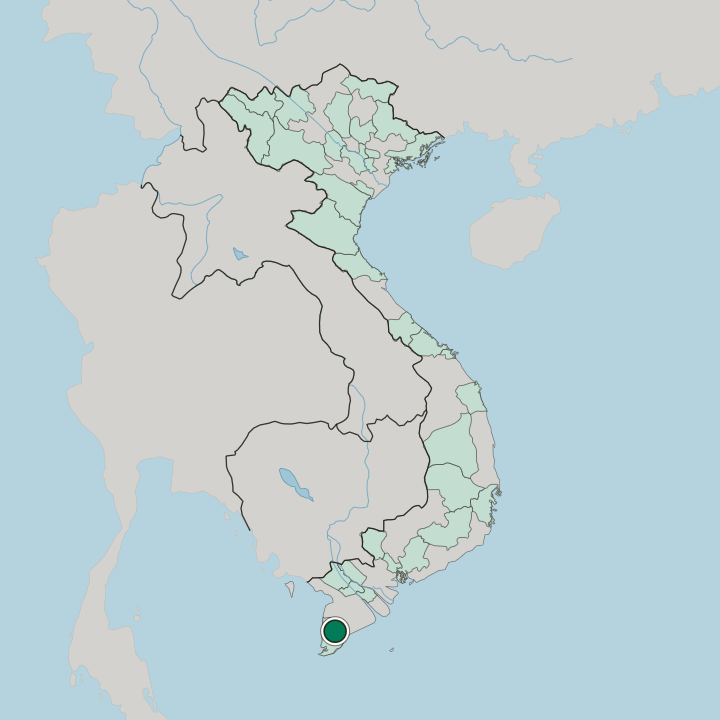
Vietnam's mainland ends below Cà Mau. The city occupies the far southern edge of the Mekong Delta, on ground so low and so cut about by channels that the boundary between land and water is a matter of degree rather than a line anyone could draw. Canals run everywhere.
They carry what roads carry elsewhere, and the flat country of Cà Mau province around them puts up nothing that would interrupt the last of the Mekong's water on its way out.
What is the climate of Cà Mau?
The delta's water rules the calendar. Cà Mau divides its year between a wet stretch and a dry one, and the canals register the difference first, running full when the rains have come and low when they have not. Heat barely moves.
At the southern end of mainland Vietnam the temperature holds much the same range through every month, so the season a visitor actually notices is the one measured in rainfall and in the depth of the channels.
How do you get to Cà Mau?
Boats and barges bring most of the freight. The transport canals connect Cà Mau to the rest of the Mekong Delta, and goods reach the city that way more often than by road, which is unusual enough among provincial capitals to be the first thing worth saying about arriving. Roads come in from the north.
The overland approach runs the length of the delta from Ho Chi Minh City down through Bạc Liêu and the districts of Cà Mau province, and it ends here, because mainland Vietnam has nothing further south to reach.
Common questions
What is the best area to stay in Cà Mau?
The canal banks: early departures by boat into the Cà Mau transport canals. Central Cà Mau: overland arrivals from Bạc Liêu wanting the provincial capital's own streets.
Another city in Ca Mau
Updated September 2026