Kosovo · Gjakova District
Where to Stay in Gjakovë, Gjakova District
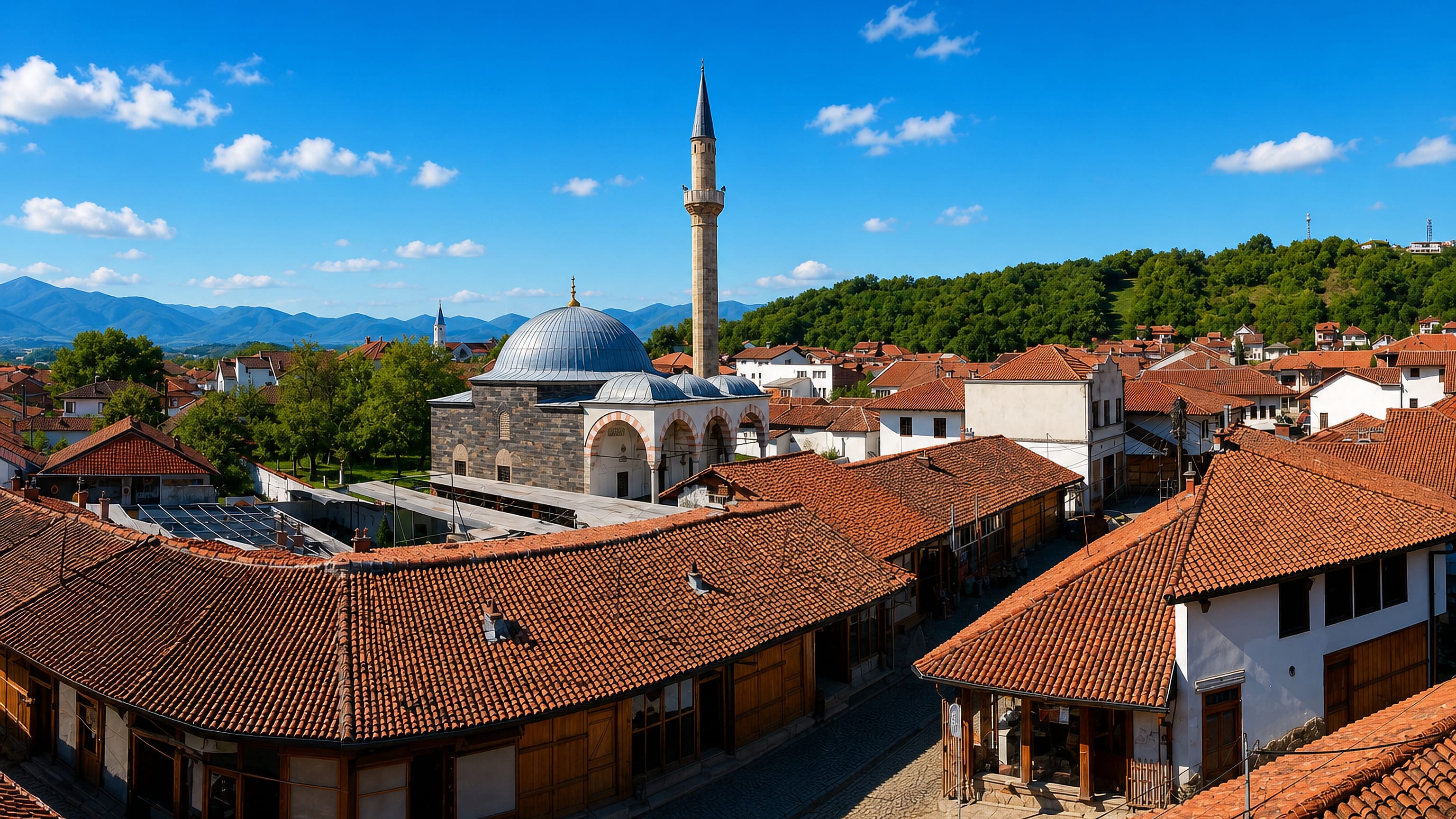
Gjakovë, also called Đakovica, is a Kosovo city whose Çarshija e Madhe bazaar and Hadum Mosque anchor its protected core.
Hotel links are affiliate links: booking through them may earn us a commission, at no extra cost to you. It never affects how places are ranked. How this works


Where to stay in Gjakovë
How the choice of base plays out on the ground.
The Çarshija e Madhe decides most of it. Gjakovë's craft bazaar draws the visitors, and a bed near it puts the day's walking among the Hadum Mosque, the Tabhane and the Ethnographic Museum Gjakova rather than out in the Gjakova Municipality's hill country. Options are few.
Rooms gather in the town itself, since the surrounding 586 square kilometres of the municipality run out into mountain ground where trails matter more than beds. That makes the decision a short one. Three strands of the town read differently.
The bazaar quarter of Çarshija e Madhe is the trading one, the ground named for the Great Madrasa and the Medresa e Vogël is the teaching one, and the kulla streets carry the stone tower houses of Kulla Kryeziu, the Curri Tower House and Kulla e Hysni Koshit. If the handicraft trades are what brought you, stay by the bazaar. The teqe and church buildings, Teqja e Madhe and Saint Anthony's Church and Saint Paul and Saint Peter Church among them, are recorded across the same town alongside the Lapidari i Lidhjes së Prizrenit.
Gjakovë is walkable at that scale. Anyone here for the Kulla e Abdullah Pashë Drenit and the Great Madrasa rather than the stalls will find the quieter half of the record on the same visit.
Find hotels in Gjakovë
Direct booking searches for these neighbourhoods.
Çarshija e Madhe
The Çarshija e Madhe is the protected bazaar quarter Gjakovë is known for, and the Hadum Mosque and Tabhane belong to the same listing.Find hotels in Çarshija e Madheguests drawn to the Great Madrasa and Medresa e VogëlThe madrasa ground
Gjakovë's teaching buildings, the Great Madrasa, the Medresa e Vogël and the Haxhi Ymer Kuttab, are what gave the town its standing as a place of learning.Find hotels in The madrasa groundstays turning on Kulla Kryeziu and the Curri Tower HouseThe kulla streets
Kulla Kryeziu, the Curri Tower House and Kulla e Hysni Koshit are Gjakovë's stone tower dwellings, a different register from the bazaar stalls.Find hotels in The kulla streetsHotel links are affiliate links: booking through them may earn us a commission, at no extra cost to you. It never affects how places are ranked. How this works
About Gjakovë
Handicraft stalls set the tone.
What is Gjakovë known for?
The Çarshija e Madhe, the great bazaar that gives Gjakovë its trading name, deals in the traditional handicrafts that trained generations of masters here, and the Hadum Mosque belongs to the same protected quarter. Alongside them the Great Madrasa and the Medresa e Vogël mark the town out as a centre of learning. The Ethnographic Museum Gjakova keeps the domestic half of that story.
What are the main landmarks in Gjakovë?
The Hadum Mosque is the signature building. Gjakovë's protected list also carries the Great Madrasa, the Medresa e Vogël and the Haxhi Ymer Kuttab, along with Saint Anthony's Church and Saint Paul and Saint Peter Church on the Catholic side. Two old crossings survive as monuments, the Tabački Bridge and the Taliq Bridge.
Tower houses form the other set. Kulla e Abdullah Pashë Drenit, Kulla Kryeziu, Kulla e Hysni Koshit and the Curri Tower House are among the kulla recorded in the town.
What is the history of Gjakovë?
Gjakovë's founding year is nowhere in the record. What the town keeps instead is a dense register of protected buildings, and that inventory of mosques, madrasas and tower houses, together with two stone bridges, stands in for a written founding date. The Çarshija e Madhe runs through most of it.
Its craft workshops gave Gjakovë the trading name the town still carries, and the Hadum Mosque, the Tabhane and the Hani i Haraqisë complex belong to the same part of that record. Two names attach to the place, Gjakovë in Albanian and Đakovica in Serbian, and both belong to a town that serves as seat of the Gjakova Municipality and the Gjakova District. Teaching left its own buildings.
The Great Madrasa and the Medresa e Vogël, together with the Haxhi Ymer Kuttab, mark Gjakovë out as a centre of learning as much as a place of trade. The Lapidari i Lidhjes së Prizrenit commemorates the Lidhja e Prizrenit. Faith took several forms here.
Teqja e Madhe, Teqja e Sheh Danjollit, Teqja e Sheh Eminit and Teqja e Sheh Nakisë appear in the same protected list as the Xhamia e Mahmut Pashes and the Kulla e Sulejman Vokshi.
Where is Gjakovë?
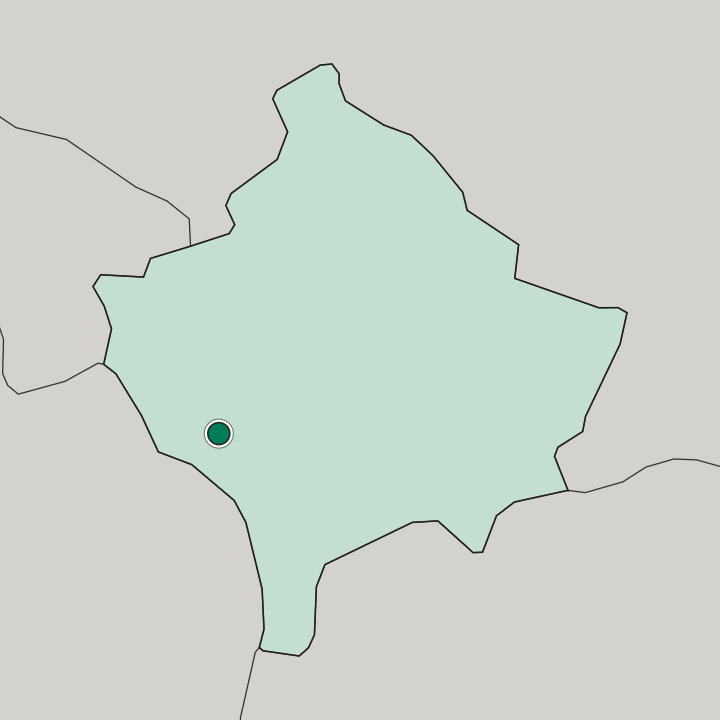
Mountains close in around Gjakovë. Trails run up into them, and the municipality the town administers covers a broad spread of ground rather than a tight urban footprint, roughly 586 square kilometres in all. Two stone crossings, the Tabački Bridge and the Taliq Bridge, mark where the water is passed.
Gjakovë is the seat of the Gjakova District.
What is the climate of Gjakovë?
The mountains around Gjakovë set the terms. Gjakovë lies in the temperate belt of the northern hemisphere, so its year turns through four marked seasons rather than the wet-and-dry split of the tropics. Altitude does the rest.
The hills that carry the town's hiking trails rise well above the built-up ground, which is what separates a walk in those mountains from an afternoon among the stalls of the Çarshija e Madhe.
How do you get to Gjakovë?
No airport or rail terminal is recorded for Gjakovë. The town serves as administrative seat of both the Gjakova Municipality and the Gjakova District, and the buildings a visitor comes for are registered within the town itself rather than scattered across the wider district. One walk covers them all.
The Çarshija e Madhe, the Hadum Mosque and the Ethnographic Museum Gjakova all sit on that protected list.
Common questions
What is the best area to stay in Gjakovë?
Çarshija e Madhe: travellers who want Gjakovë's craft bazaar at the door. The madrasa ground: guests drawn to the Great Madrasa and Medresa e Vogël. The kulla streets: stays turning on Kulla Kryeziu and the Curri Tower House.
Good for
Another city in Gjakova District
Updated September 2026