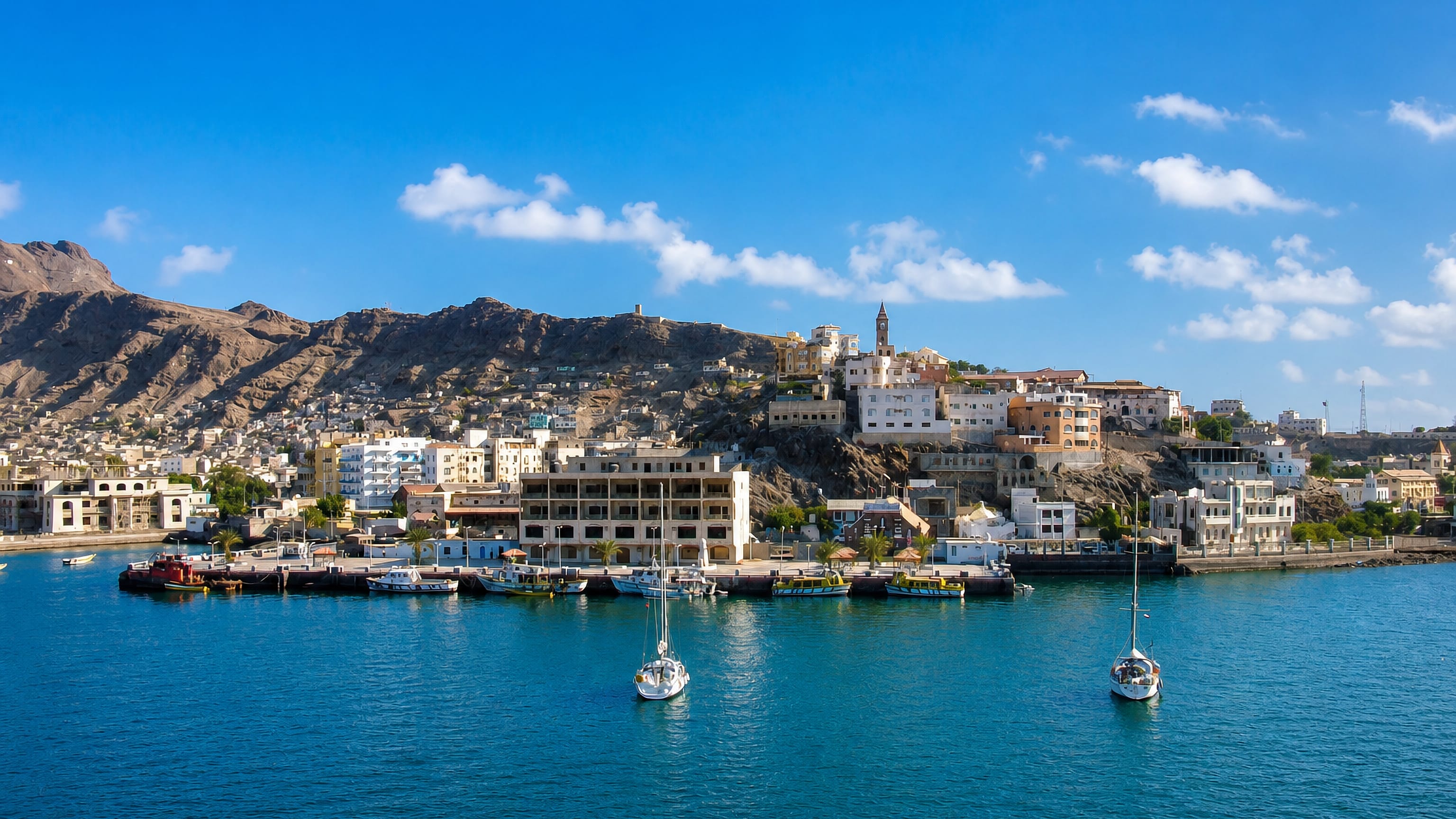
Yemen: Regions, Cities & Travel Guide
The Republic of Yemen occupies the southern Arabian Peninsula, its highland capital Sanaa rising above the Red Sea coast and the Gulf of Aden.
Hotel links are affiliate links: booking through them may earn us a commission, at no extra cost to you. It never affects how places are ranked. How this works


Top destinations in Yemen
Cities to start from, then drill into areas and hotels.
 Yemen
Yemen
Aden
Aden guards a natural harbour on the Gulf of Aden, an ancient port city of southern Yemen, near the Red Sea, with the National Museum of Yemen in Aden.Where to stay →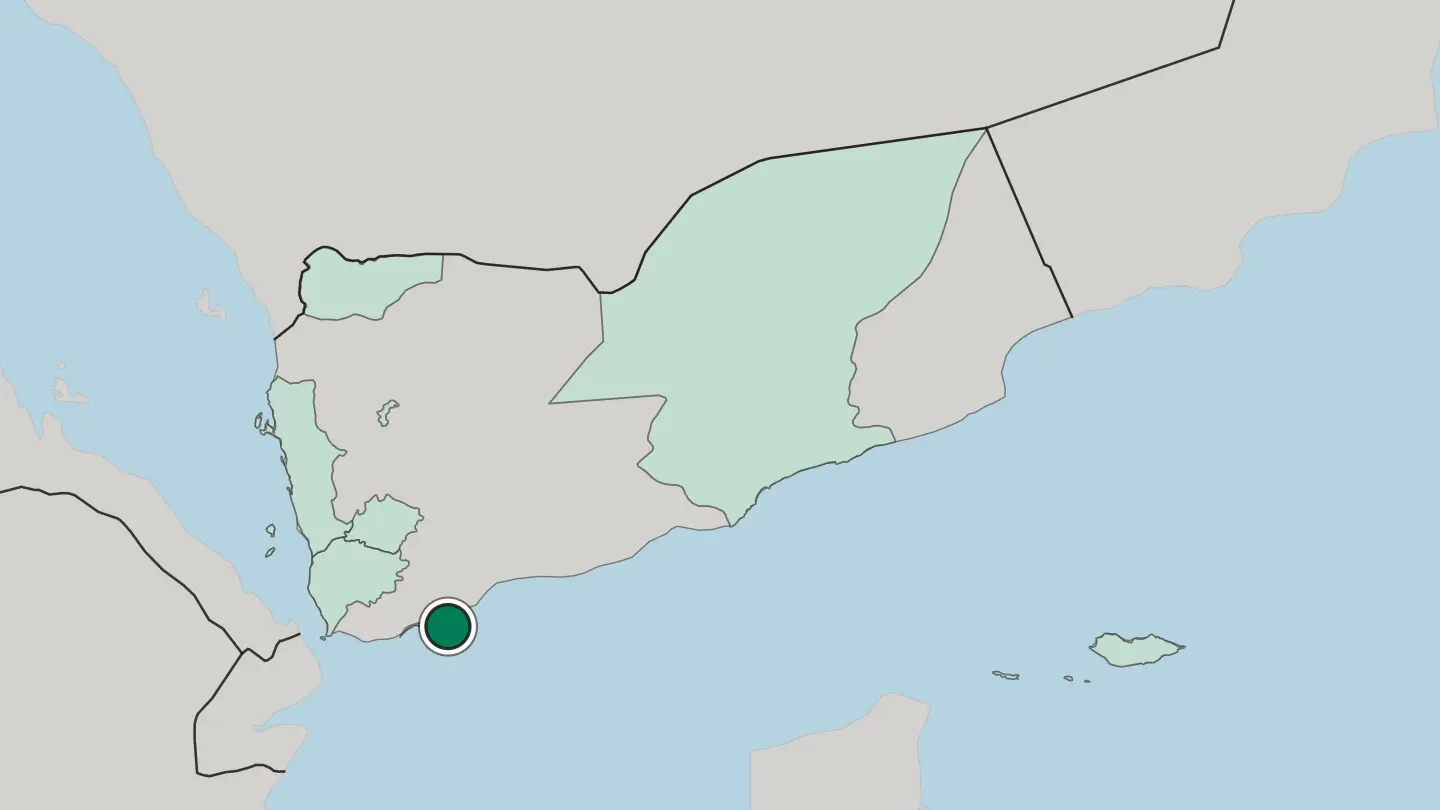
 Yemen
Yemen
Sanaa
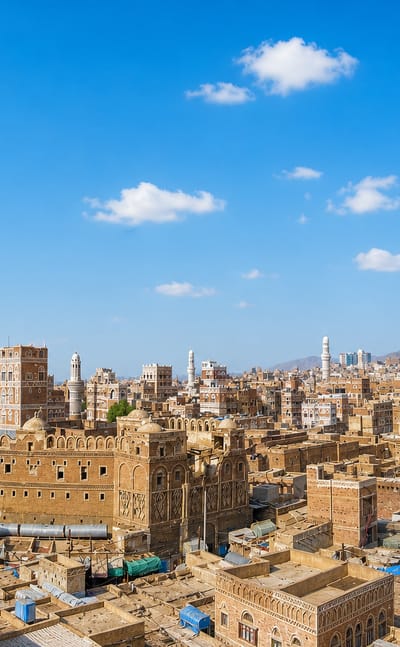
High on its mountain plateau, Sanaa is the capital and largest city of Yemen, an old walled city beneath the Sarawat Mountains.Where to stay →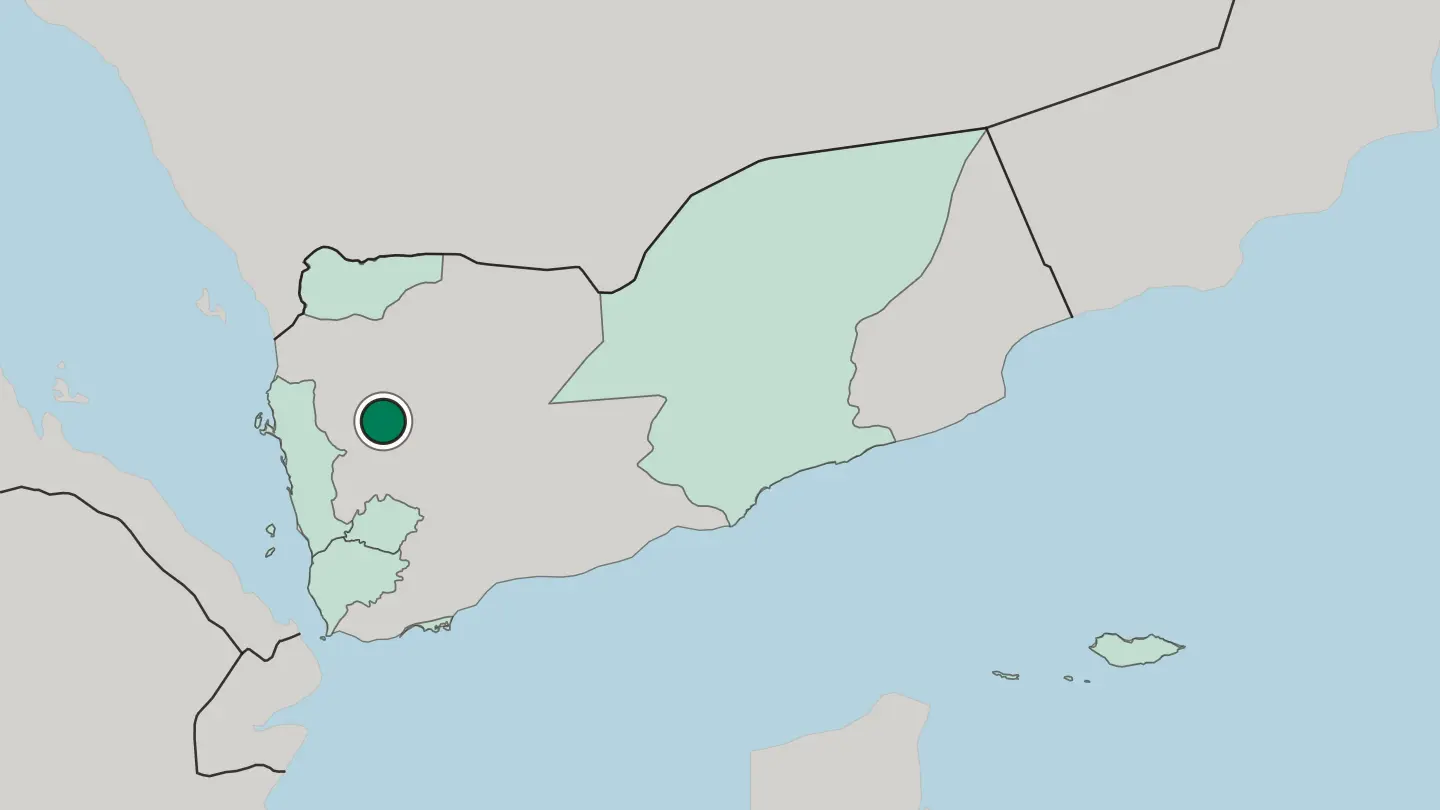
 Yemen
Yemen
Taiz
Taiz stands in the Yemeni highlands near the Red Sea port of Mocha, with the Al-Ashrafiya Madrasa its best-known building.Where to stay →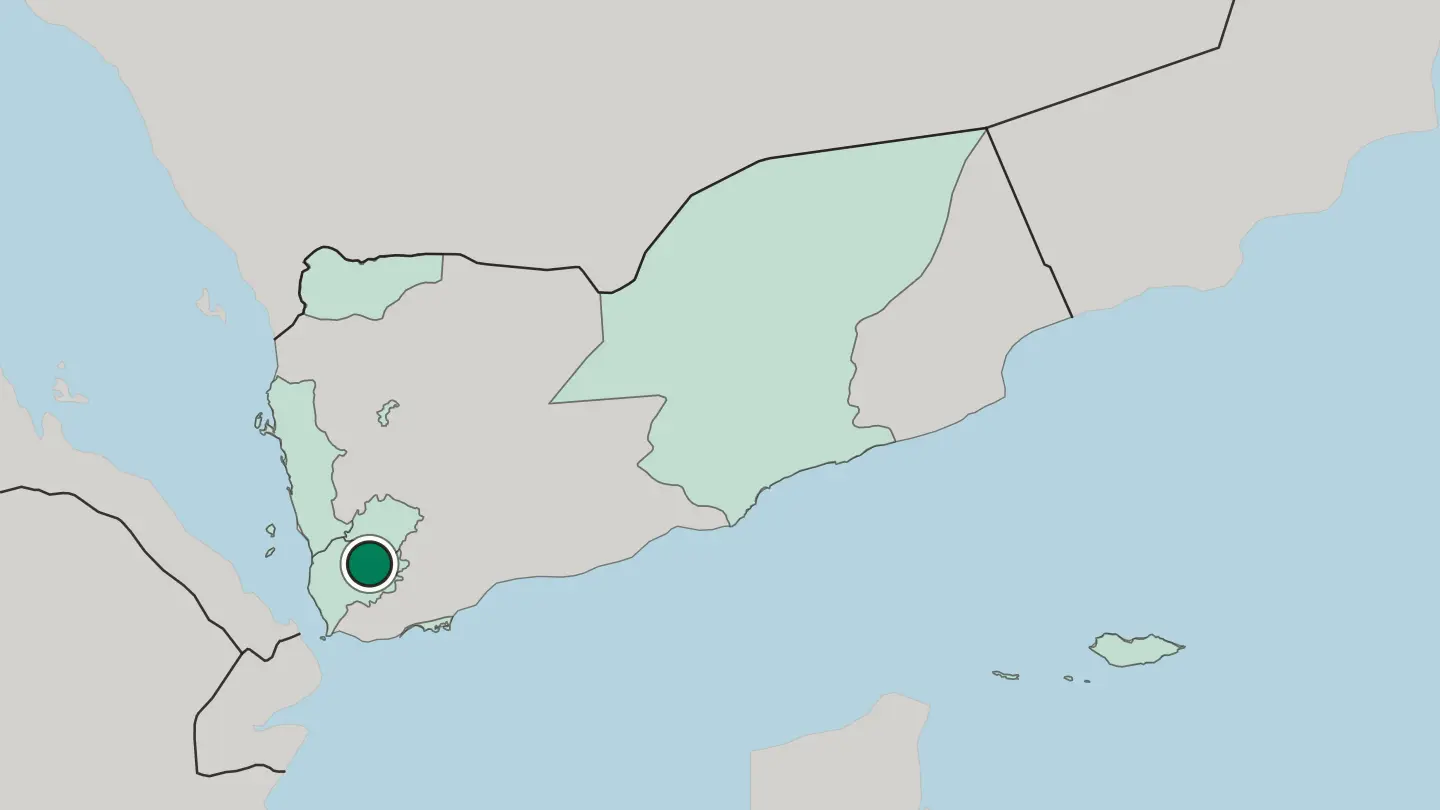 Yemen
Yemen
Al Ḩudaydah
Al Ḩudaydah is Yemen's principal port on the Red Sea, centre of Al Hudaydah Governorate and site of Al Hudayda Castle.Where to stay →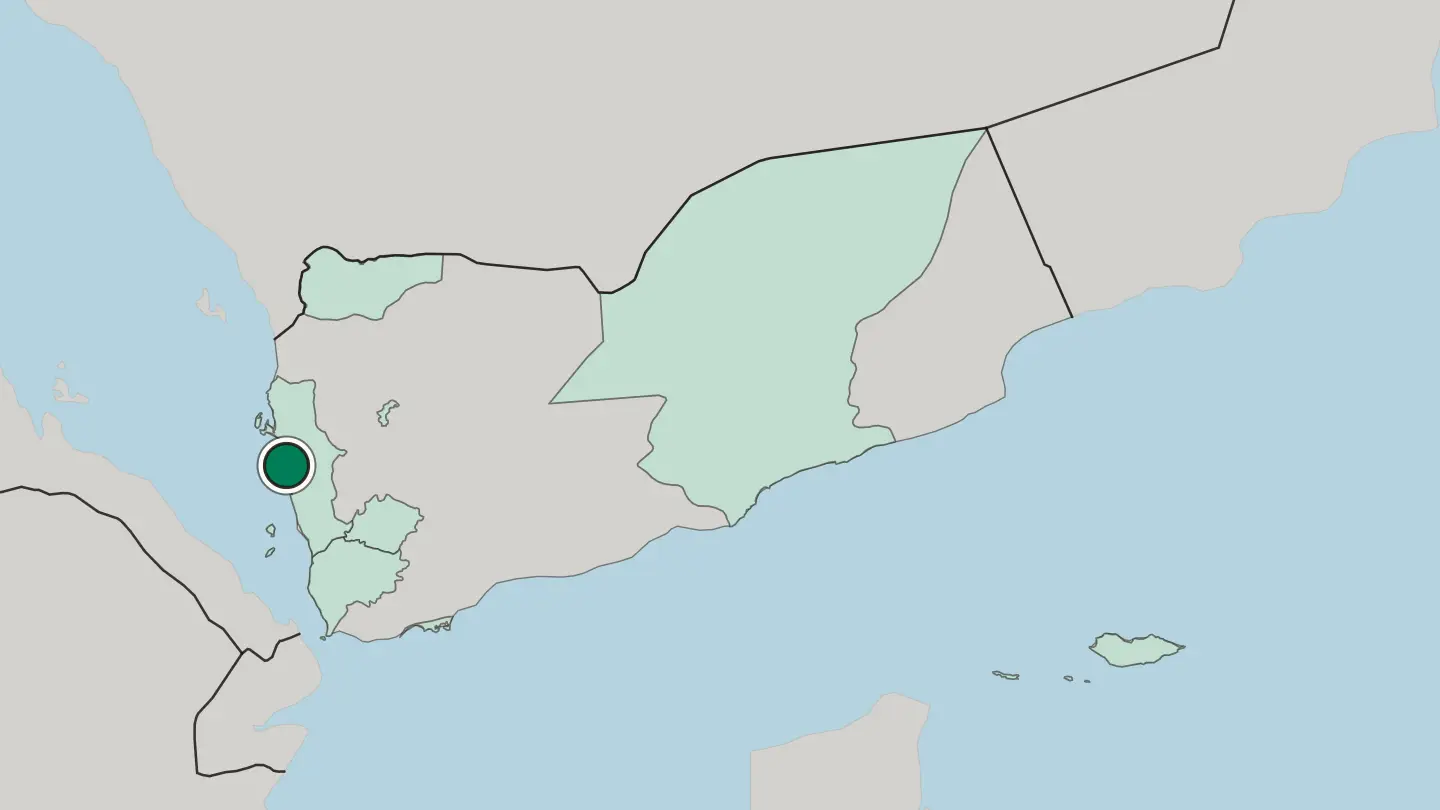
 Yemen
Yemen
Mukalla
Mukalla is the seaport capital of Hadhramaut, on the Gulf of Aden at the edge of the Arabian Sea.Where to stay →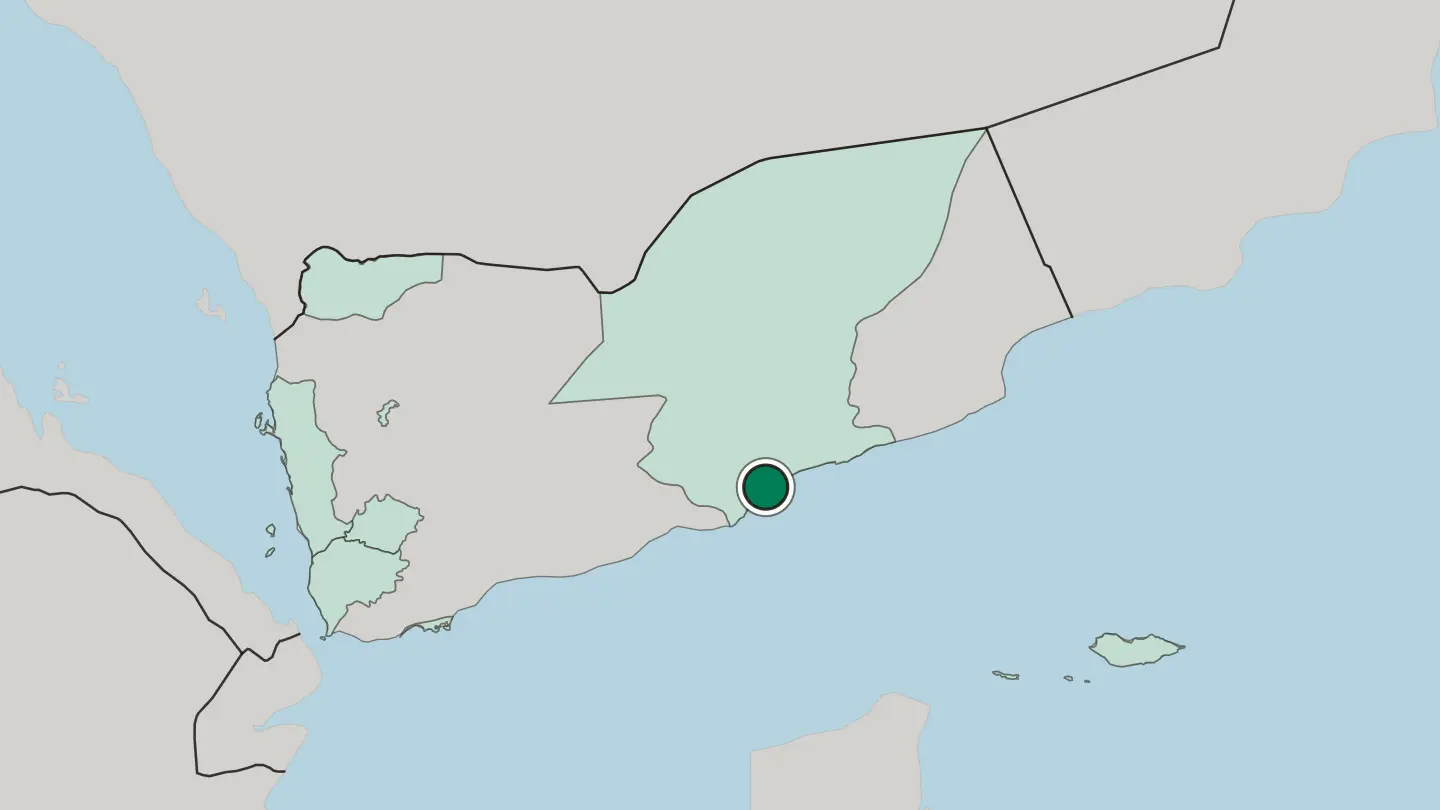
 Yemen
Yemen
Ibb
Ibb, capital of Ibb Governorate, stands on a mountain ridge in Yemen amid the green country that earned it the byname The Land of Green.Where to stay →
 Yemen
Yemen
Sa'dah
Sa'dah, صعدة in Arabic, is the largest city of its governorate, lying high in the Serat mountains of Yemen.Where to stay →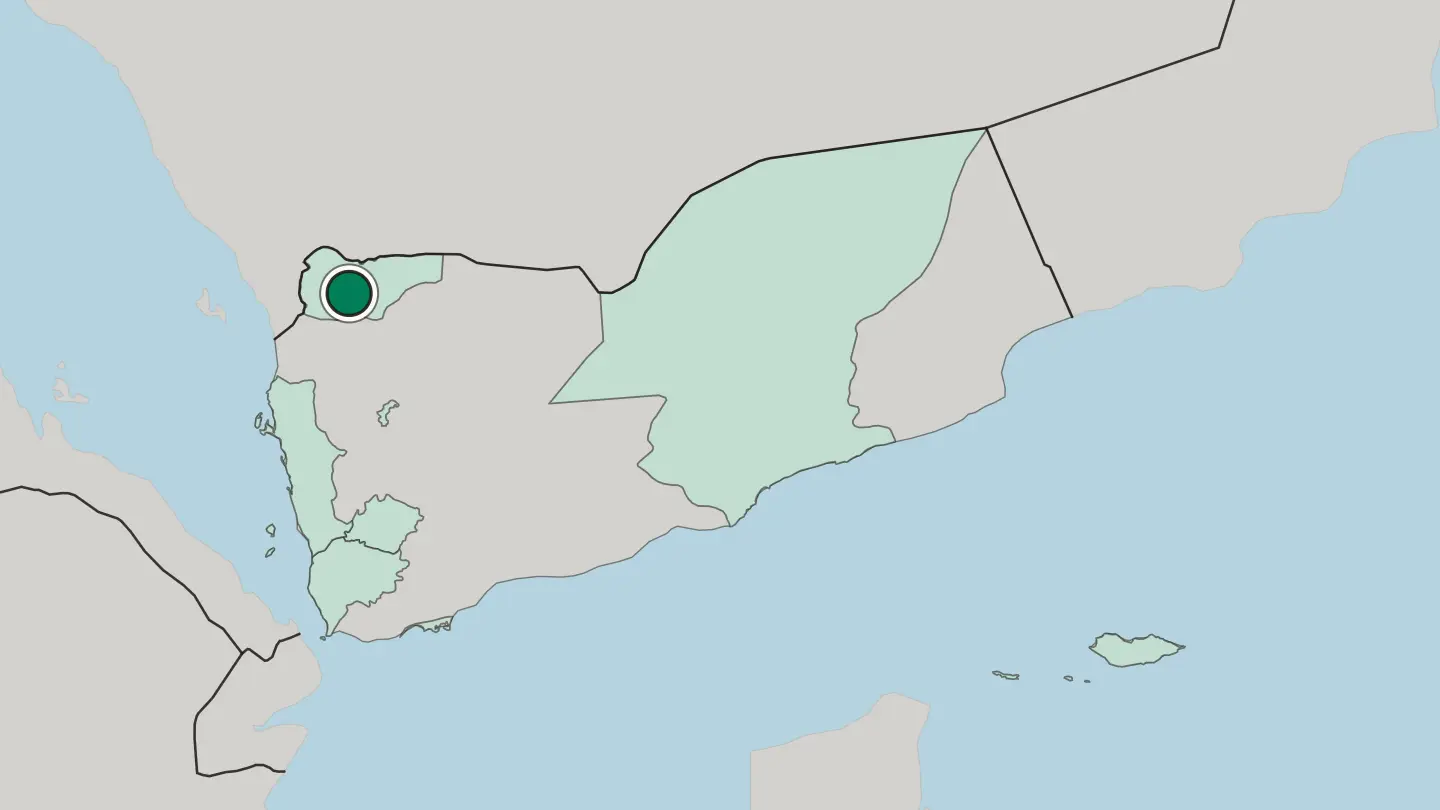
 Yemen
Yemen
Zabīd
Zabīd is one of the oldest towns in Yemen, a World Heritage Site on the western coastal plain near the Red Sea, and once a capital of dynasties.Where to stay →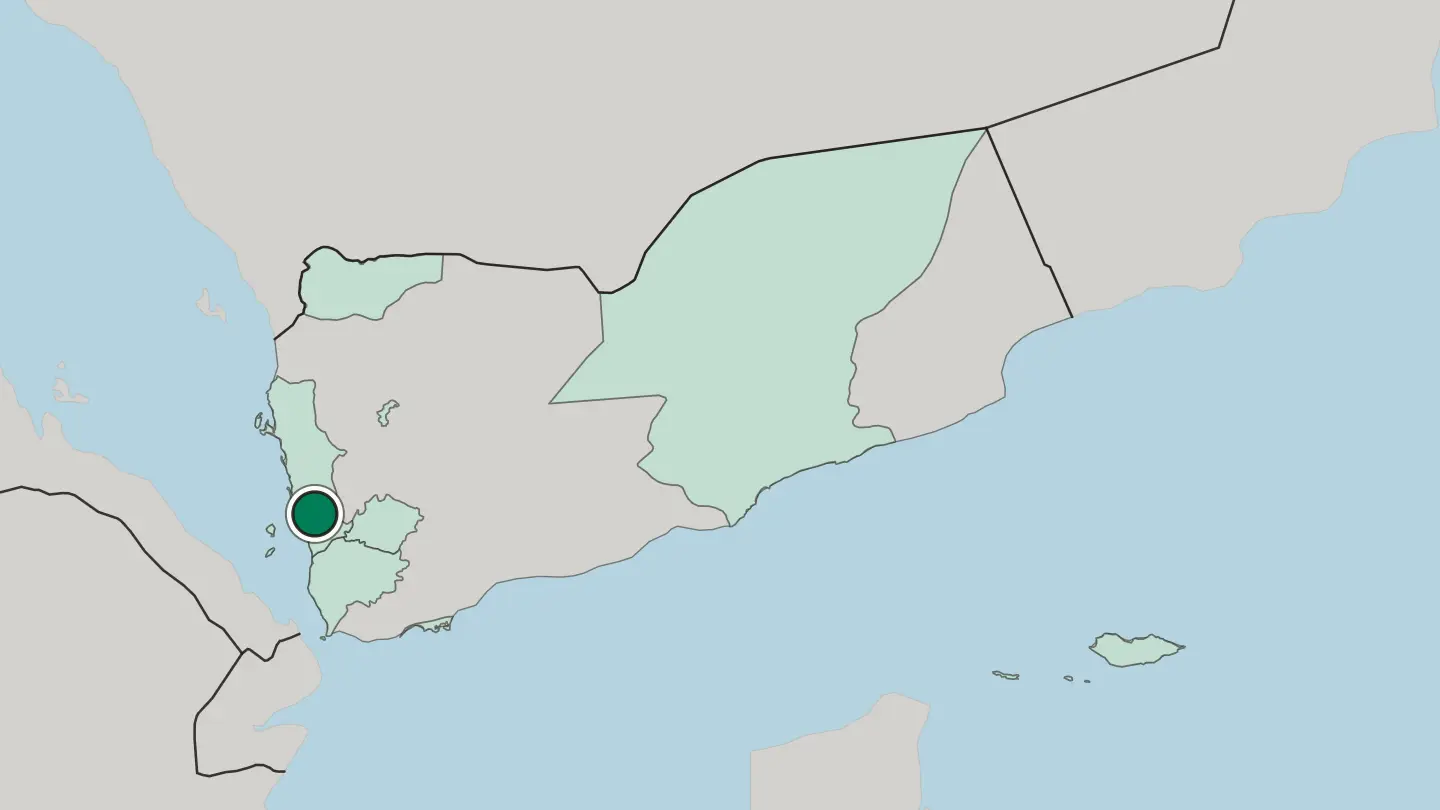
Hotel links are affiliate links: booking through them may earn us a commission, at no extra cost to you. It never affects how places are ranked. How this works
Regions of Yemen
Yemen
Amanat alasimah
High in the Sarawat Mountains, Amanat alasimah is the capital municipality of Yemen, the district around the mountain city of Sanaa.Towns & cities →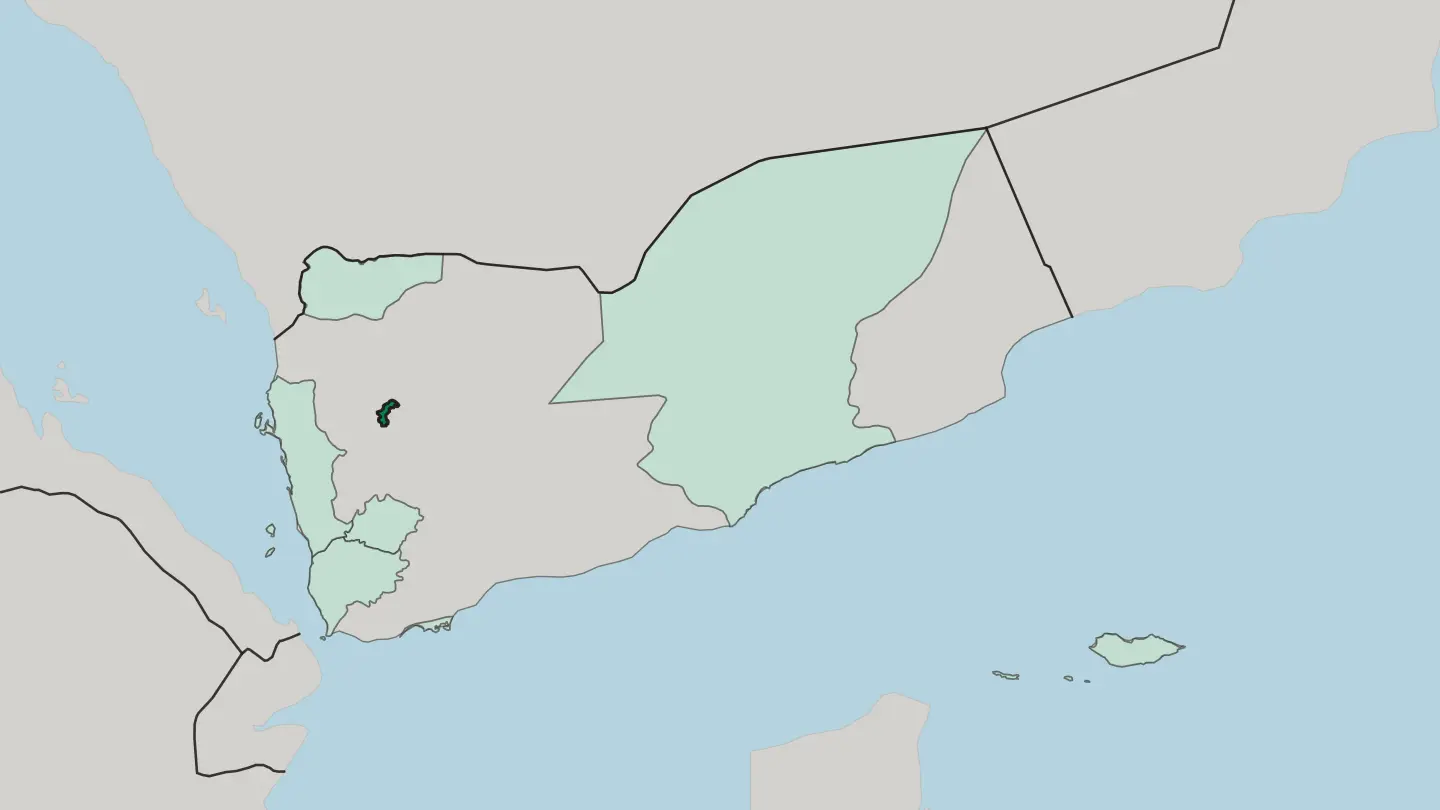 Yemen
Yemen
Governorate Number One
Governorate Number One is a governorate of Yemen built around the port city of Aden, taking in the ancient harbour district of Crater.Towns & cities →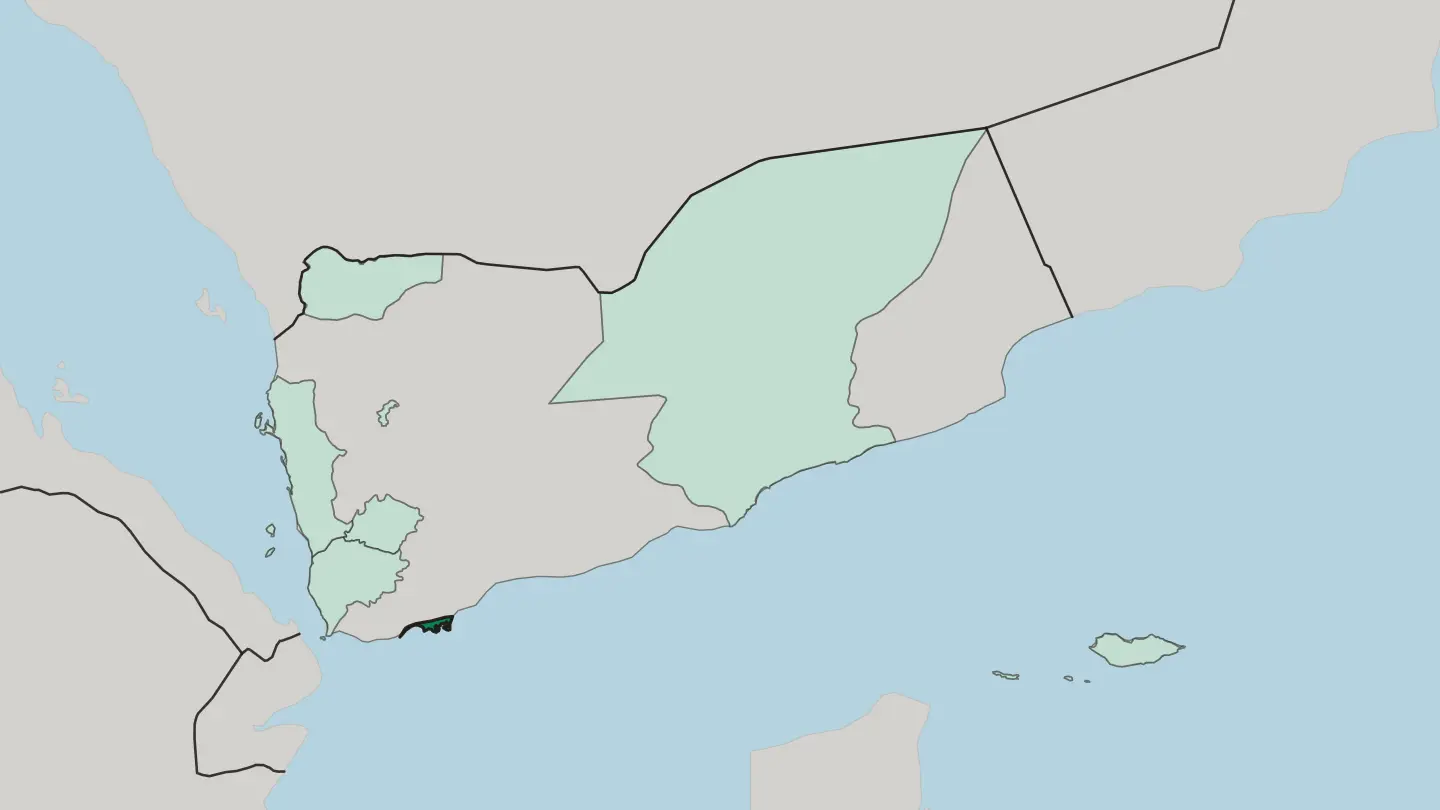 Yemen
Yemen
Hadhramaut Governorate
Hadhramaut Governorate is the largest of Yemen's governorates, capital Mukalla, taking in the historical towns of Shibam, Seiyun and Tarim.Towns & cities →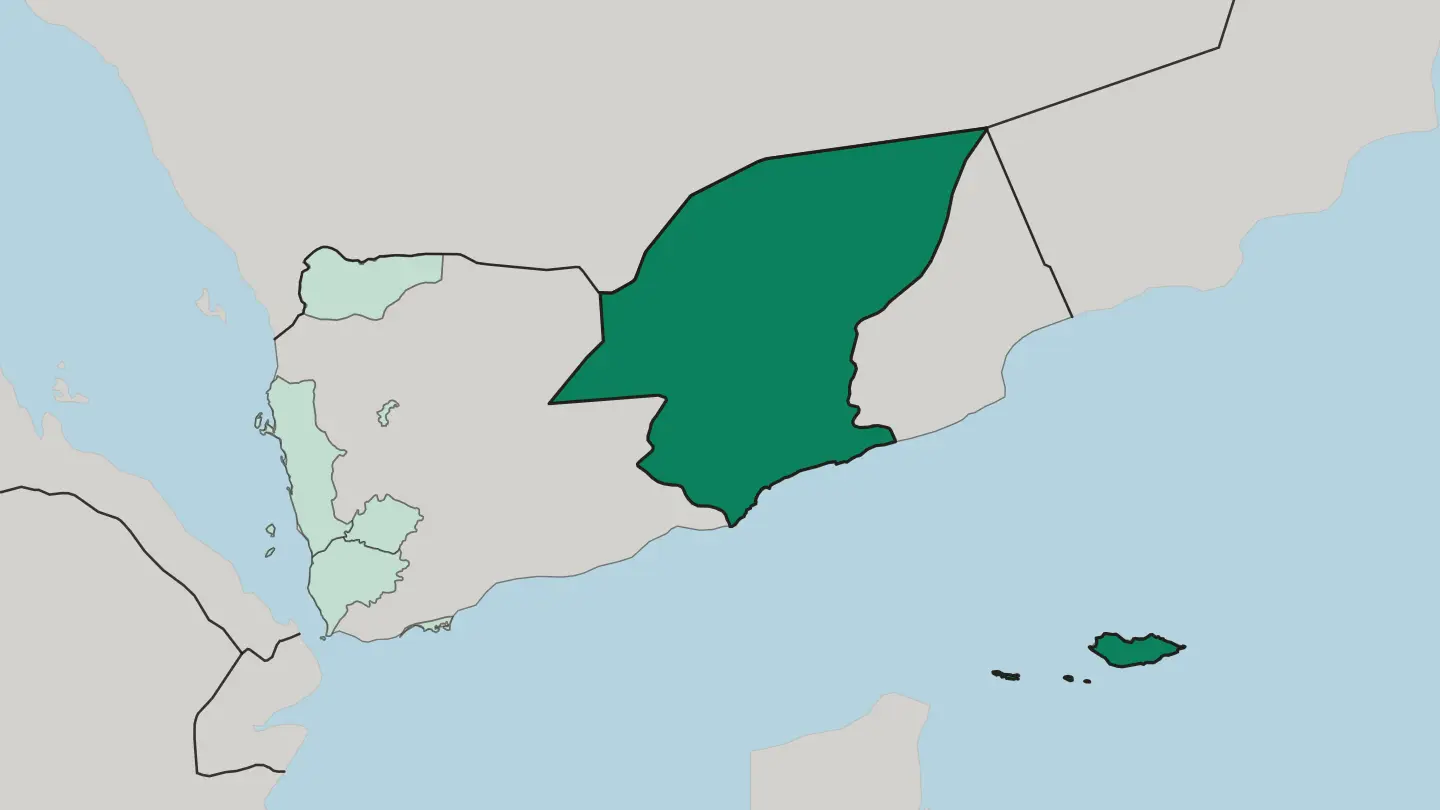 Yemen
Yemen
Ibb
Ibb is an inland governorate of Yemen, held between Ta'izz, Dhamar, Al Hudaydah and Ad Dali', and the densest in the country after San'a.Towns & cities →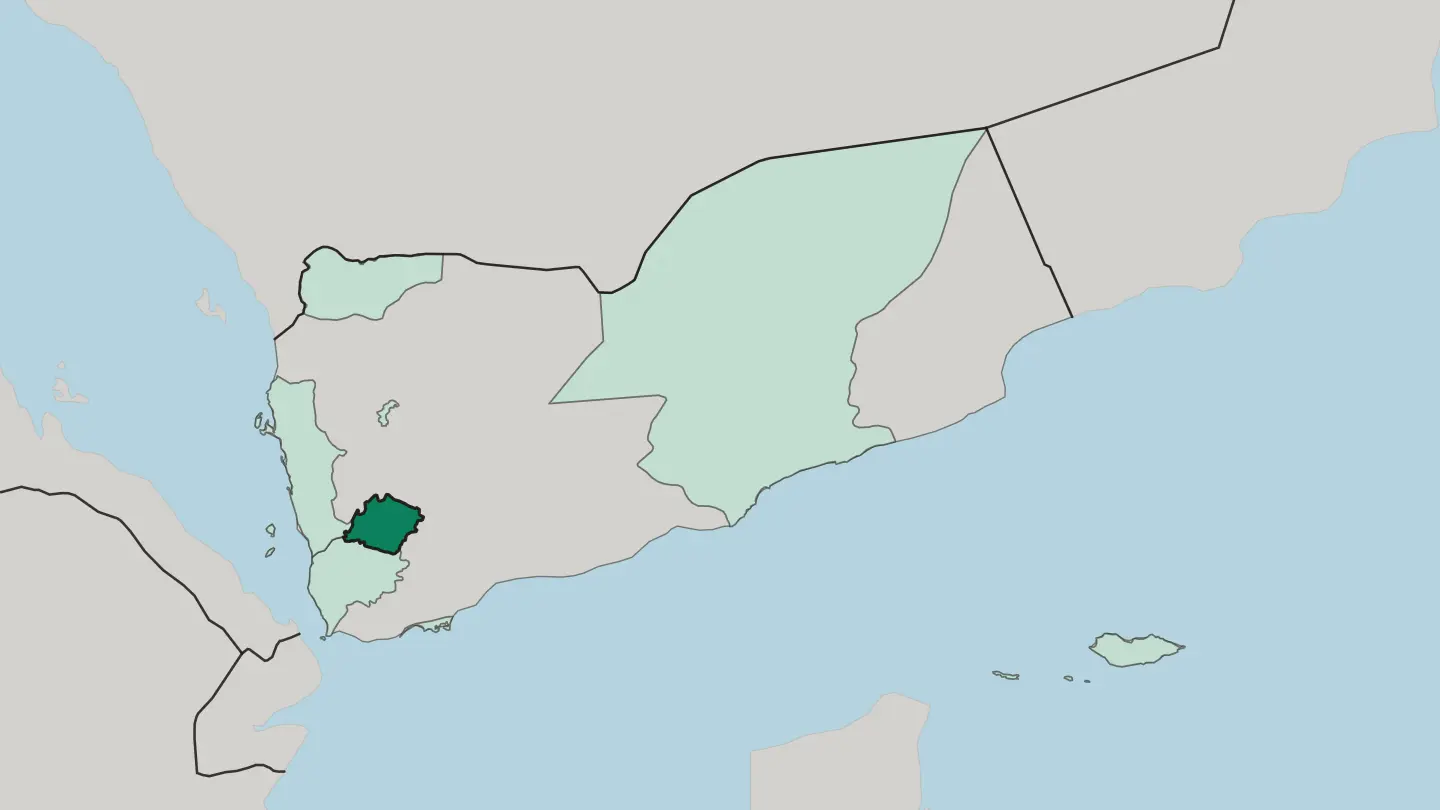 Yemen
Yemen
Muḩāfaz̧at Ta‘izz
Muḩāfaz̧at Ta'izz is the Yemeni governorate around Taiz, a commercial capital set near farmland, the Red Sea port of Mokha and its own airport.Towns & cities →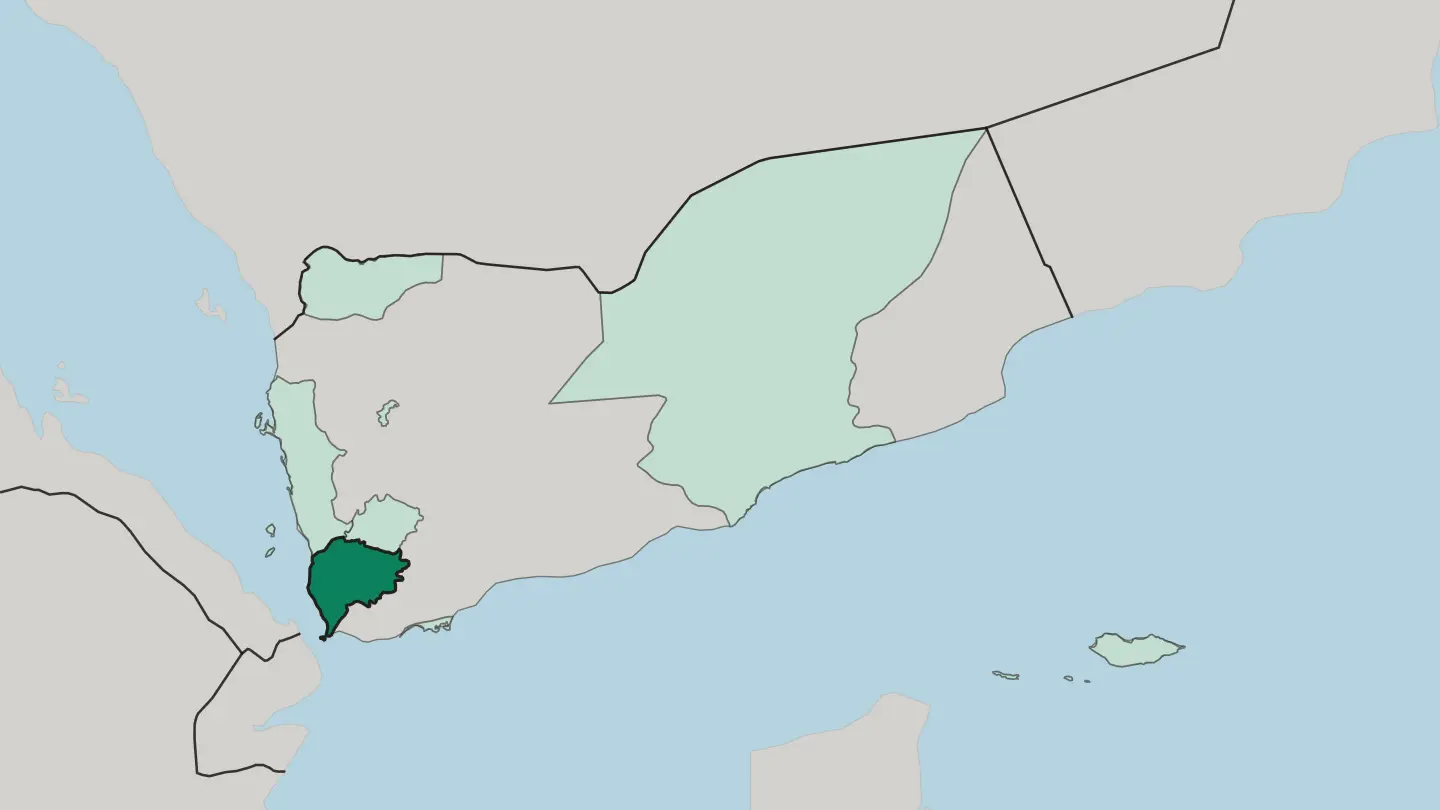 Yemen
Yemen
Muḩāfaz̧at al Ḩudaydah
Muḩāfaz̧at al Ḩudaydah is the Yemeni governorate also called the Western Coast, third-most populous behind Ibb and Taiz, with its capital at Al Hudaydah.Towns & cities →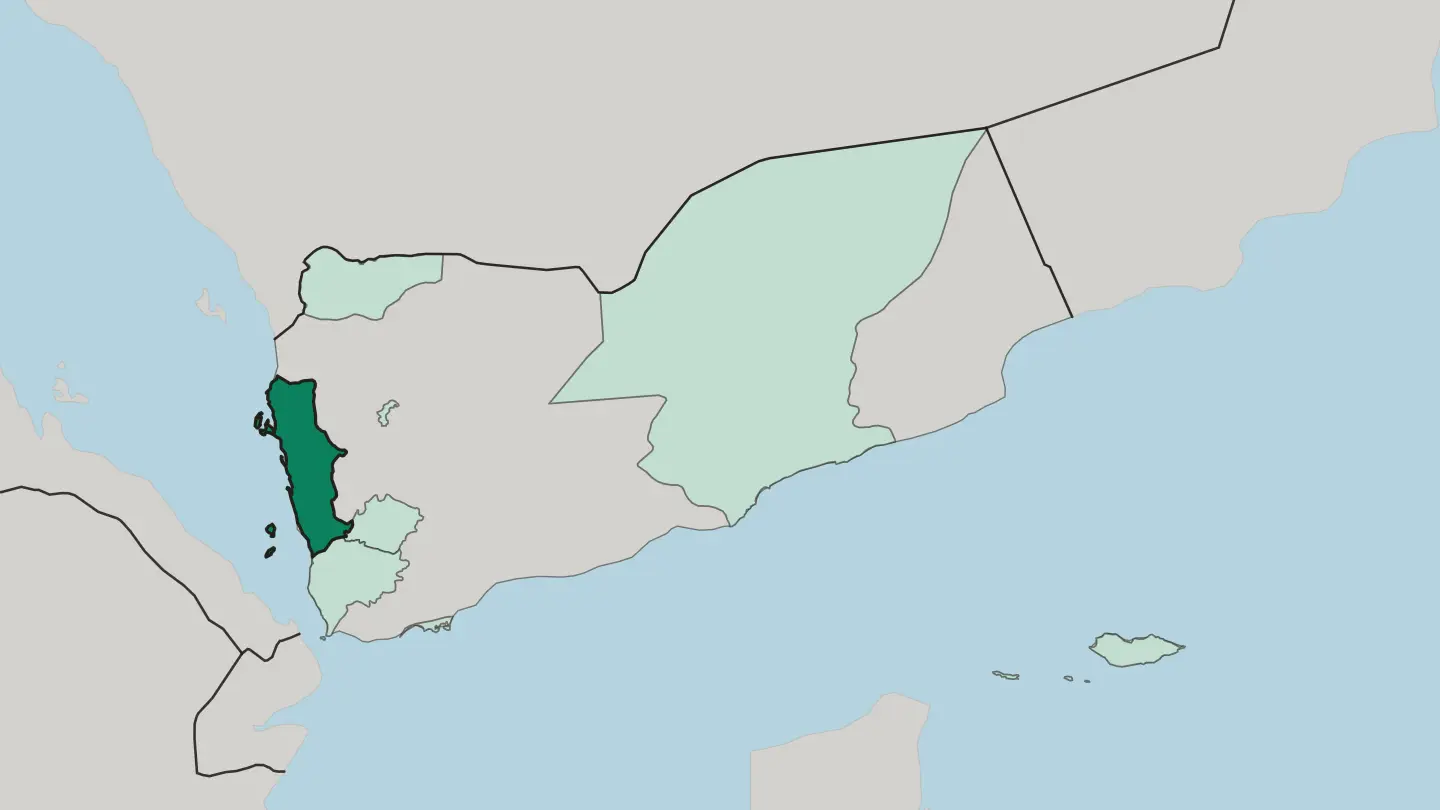 Yemen
Yemen
Muḩāfaz̧at Şa‘dah
Muḩāfaz̧at Şa'dah is a governorate of Yemen centred on Saada, its seat and largest city, and the long-standing centre of Zaydism.Towns & cities →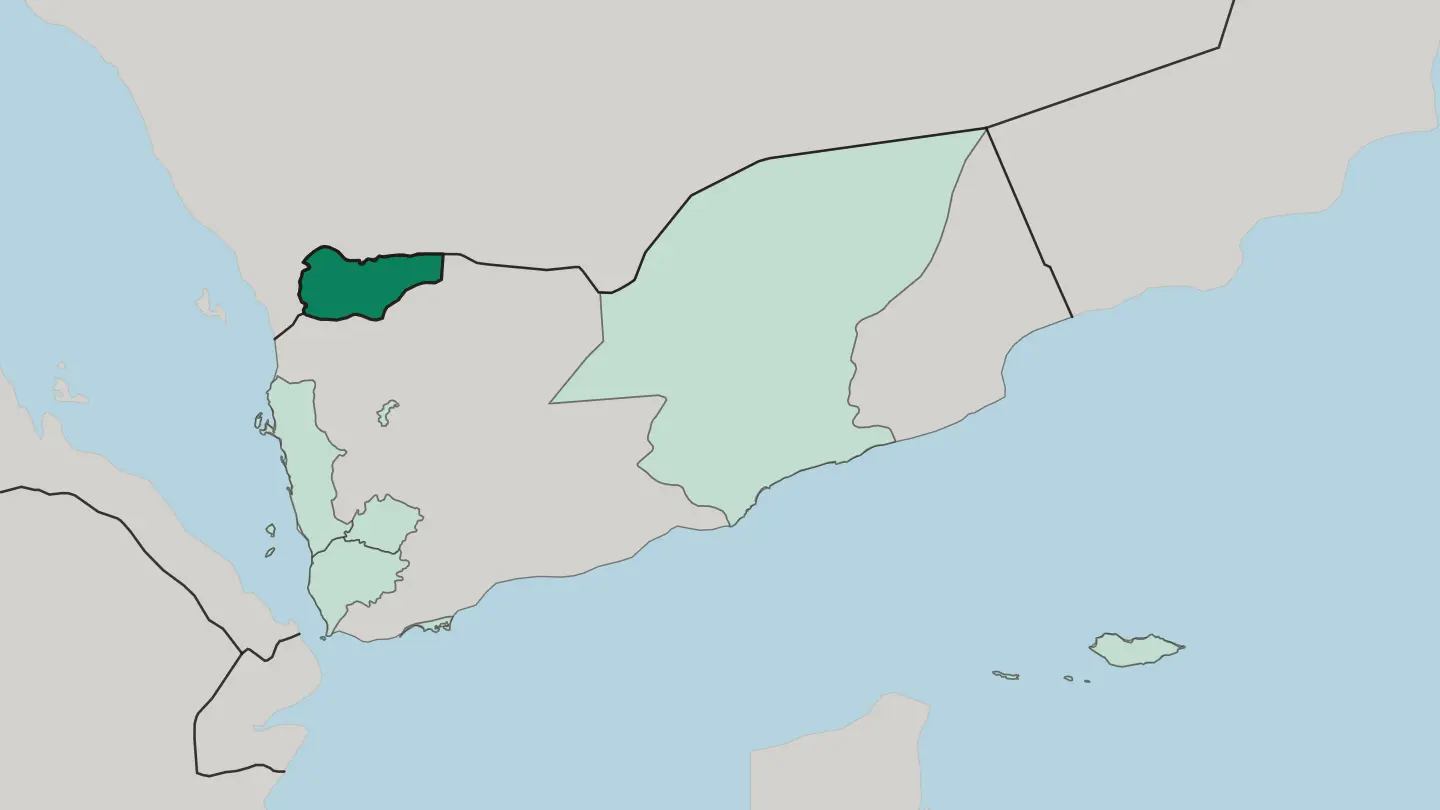
About Yemen
What is Yemen known for?
Yemen carries one of Arabia's oldest urban traditions in its mud-brick and stone tower-houses. Sanaa is the emblem. Its walled Old City stacks decorated storeys behind gypsum-framed windows, while Shibam packs its high mud towers so tightly that travellers call the town the Manhattan of the desert.
Off the mainland lies Socotra. The island grows dragon's blood trees and hundreds of plants found nowhere else on earth.
Where is Yemen?
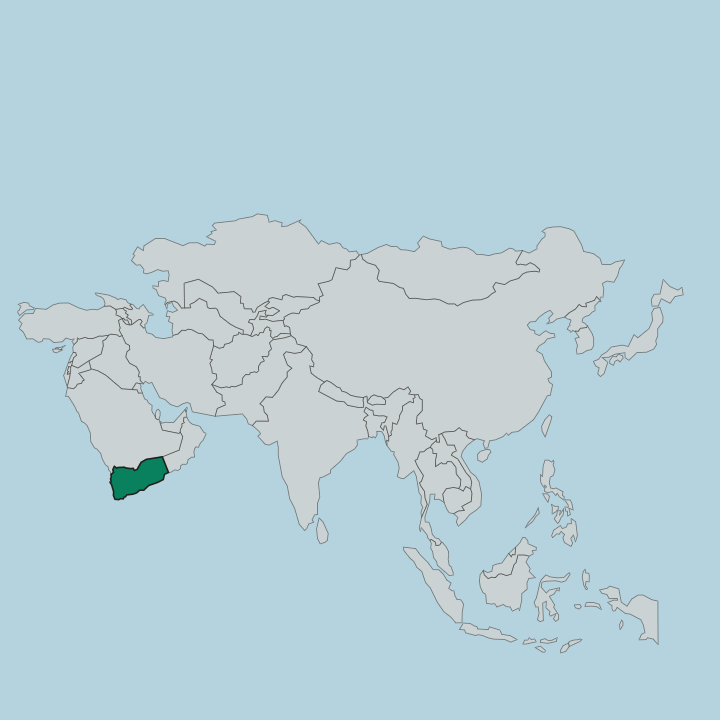
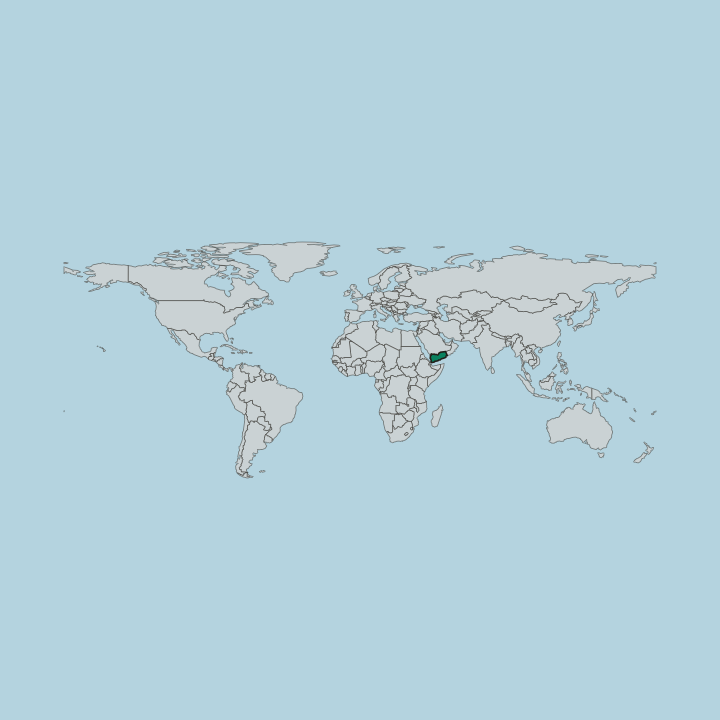
Yemen sits at the south-western corner of the Arabian Peninsula, the second-largest country on it by area. Its land climbs in bands from the sea. Along the Red Sea a flat, hot coastal plain called the Tihamah runs the length of the west, and behind it the ground rises sharply into the western highlands, part of the Sarawat range that carries the Arabian mountains south from the Hejaz.
In those highlands stands Jabal An-Nabi Shu'ayb, the tallest peak on the whole peninsula. The capital, Sanaa, sits high among these mountains. East and north of the highlands the land falls away into desert, edging the great sands of the Rub' al Khali where the population thins to almost nothing.
To the south a second coast faces the Gulf of Aden, backed by the deep, dry valley of Wadi Hadhramaut that cuts inland through the eastern plateau. Farthest out lies Socotra, an island in the Arabian Sea nearer the Horn of Africa than to Yemen itself. Terrain governs everything here.
Where the mountains catch rain, terraced fields and towns cluster; where the desert takes over, the map empties.
What is the history of Yemen?
Yemen's recorded past reaches back nearly three thousand years, to the incense kingdoms of the south Arabian highlands. Chief among them was Saba. From its capital at Marib the Sabaeans grew wealthy on the overland trade in frankincense and myrrh, and around 700 BCE they raised the Great Dam of Marib, an earthwork that watered thousands of acres and turned the desert edge into a garden for more than a millennium.
That dam is the thread of the whole story. Its final collapse, remembered around 570 CE, marks the end of the old order in local memory. Islam arrived early, and the highland towns of Zabid and Taiz became centres of learning under later dynasties.
The port of Aden drew Ottoman and then British attention, and from 1839 the British held it as a coaling station on the route to India. That divide hardened over the next century. The north emerged from Ottoman rule as a kingdom and then a republic, while the British-held south became a separate socialist state after independence.
The two Yemens joined on 22 May 1990 to form a single republic with its capital at Sanaa. Old Marib still stands beside its ruined dam.
What is Yemen like?
Yemeni culture is highland and Arabian to its core, expressed above all in how people build, eat, and gather. Architecture leads. The decorated tower-houses of Sanaa, with their fired-brick patterns and coloured qamariya fanlights, and the packed mud skyscrapers of Shibam show a building tradition that runs unbroken for centuries.
Food follows the same rooted line. Saltah, a bubbling stew crowned with a whipped fenugreek froth, is treated as the national dish, and mandi, meat and rice slow-cooked in a pit, has carried the country's kitchens far across the wider region. Then there is coffee.
The plant was first cultivated commercially in these mountains, and the Red Sea port of Mocha handed its name to the drink the world now takes for granted, though many Yemenis prefer qishr, an infusion brewed from the husks. Afternoons often close around qat. Chewing the mild leaf in company is a social ritual as much as a habit, the hours given over to talk.
Craft, poetry, and the silver-hilted jambiya dagger worn at the waist carry the same deep inheritance. The old ways still order daily life.
What is the climate of Yemen?
Yemen's climate turns almost entirely on elevation. The Tihamah plain along the Red Sea is hot and humid year-round, while the western highlands around Sanaa stay temperate and can drop cold at night thanks to their height. Rain here is not steady.
Summer monsoon storms sweep the mountains and feed the terraced slopes, then leave the eastern deserts and the Rub' al Khali sands bone-dry for most of the year. Socotra keeps its own island rhythm. The seasons read as many at once.
How do you get to Yemen?
Yemen is reached mainly through a handful of coastal and highland gateways. Aden, on the Gulf of Aden, serves the south, while Sanaa's airport sits high in the western mountains and the Red Sea port of Al Hudaydah handles seaborne trade. The distances inland are severe.
Mountain roads and stretches of desert separate the regions, so moving between Sanaa, Aden, and the Hadhramaut valley means long overland hauls rather than quick hops. Socotra is a case apart, tied to the mainland by its own scarce flights.
Good for
Updated September 2026