South Africa · KwaZulu-Natal
Where to Stay in Durban, KwaZulu-Natal
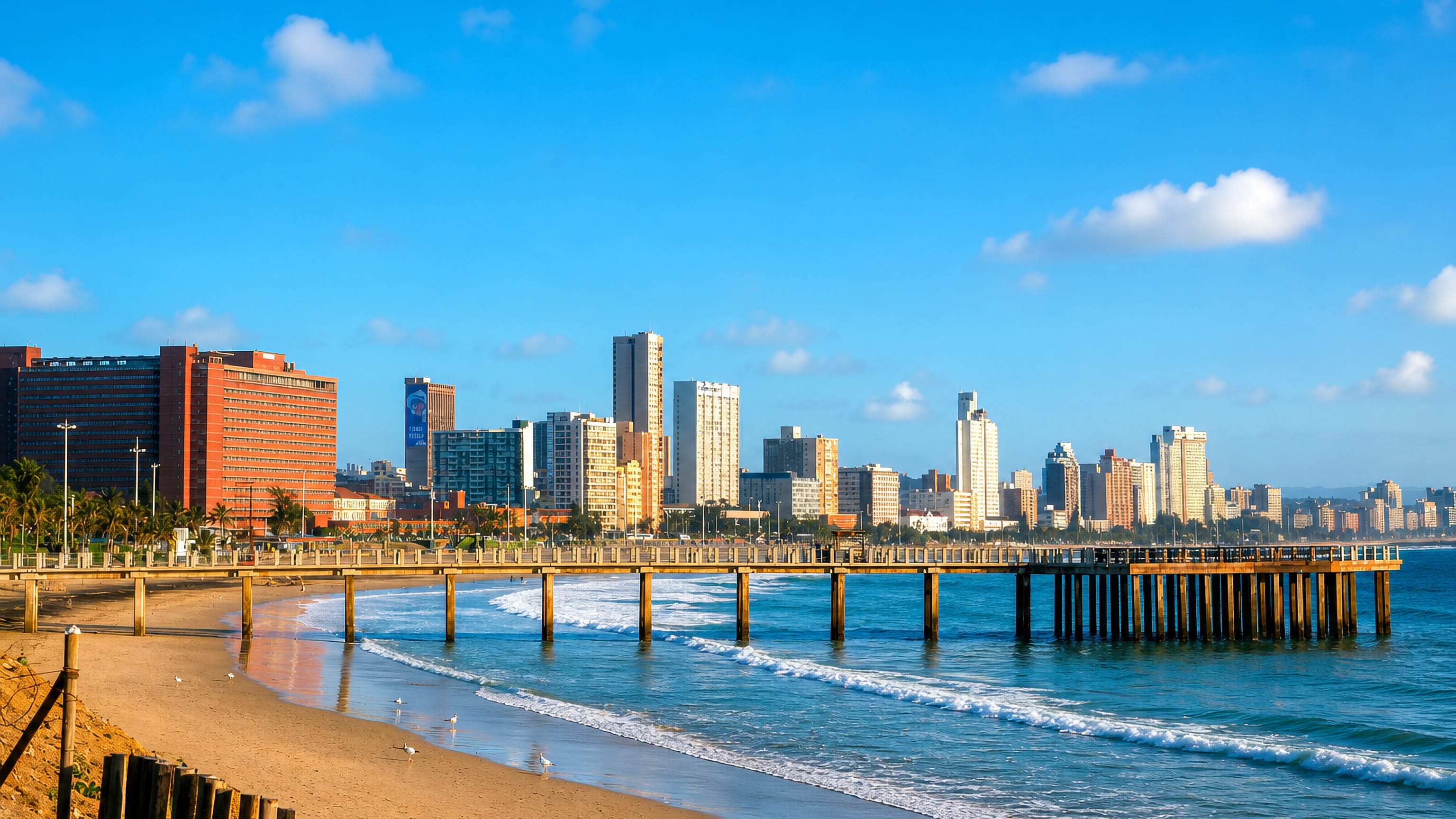
Warm surf breaks along the shore at Durban, a port city on the Natal Bay of the Indian Ocean in KwaZulu-Natal, known for uShaka Marine World and the Berea.
Hotel links are affiliate links: booking through them may earn us a commission, at no extra cost to you. It never affects how places are ranked. How this works


Where to stay in Durban
Not every neighbourhood fits every trip — here's what each one is good for.

 DurbanSouth Africa
Durban Central
Durban Central is the middle district of Durban, in KwaZulu-Natal, with Greyville a few streets north and South Beach on its eastern side.Where to stay → DurbanSouth Africa
South Beach
South Beach is the seafront quarter of Durban that holds uShaka Marine World and the Port Natal Maritime Museum.Where to stay → DurbanSouth Africa
Essenwood
Essenwood is a central suburb of Durban run by the eThekwini Metropolitan Municipality, with Educor among the institutions listed on it.Where to stay →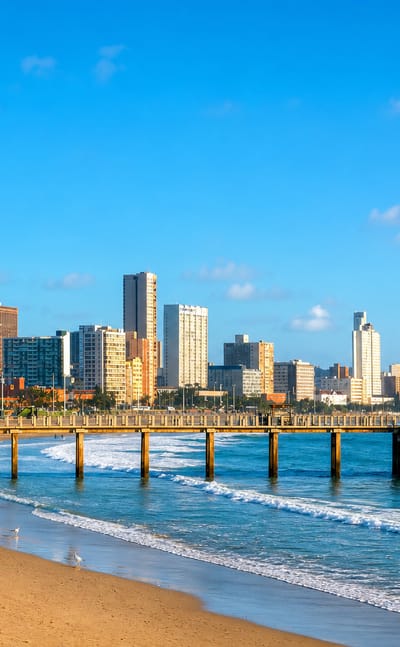 DurbanSouth Africa
Greyville
Greyville is a Durban area on flat ground west of the city centre, at the foot of the Berea, and it takes in the Greyville Racecourse.Where to stay → DurbanSouth Africa
Morningside
Morningside is an affluent Durban suburb where the gardens of Mitchell Park Zoo sit a few streets from the houses.Where to stay →DurbanSouth AfricaGlenwood
Glenwood is a suburb of Durban set about 2 kilometres south-west of the city centre, in the province of KwaZulu-Natal.Where to stay →DurbanSouth AfricaUmbilo
Umbilo is a Durban district sharing its name with the Umbilo River, which rises at Kloof and reaches its mouth in Durban harbour.Where to stay → DurbanSouth Africa
Durban North
Durban North runs between the N2 freeway and the eastern seashore, north of Durban in KwaZulu-Natal, with the Umgeni River along its southern edge.Where to stay →DurbanSouth AfricaCato Manor
Cato Manor is a settlement seven kilometres out from the Durban city centre, in KwaZulu-Natal, South Africa, with a record reaching back to 1865.Where to stay →DurbanSouth AfricaMerebank
Merebank lies at the southern end of Durban's districts, in KwaZulu-Natal, with Lamontville just north-west and Chatsworth further along that line.Where to stay →DurbanSouth AfricaLamontville
Lamontville is a township in eThekwini, the Durban municipality of KwaZulu-Natal, and the home area of Victoria Mxenge and Babes Wodumo.Where to stay →DurbanSouth AfricaChatsworth
Chatsworth is a large township in KwaZulu-Natal, South Africa, laid out in the Southern Durban basin between the Umhlatuzana and Umlaas rivers.Where to stay →Hotel links are affiliate links: booking through them may earn us a commission, at no extra cost to you. It never affects how places are ranked. How this works
Find hotels in Durban
Direct booking searches for these neighbourhoods.
Beachfront and the Point
The Point gathers the surf, the promenade, and uShaka Marine World where the beach meets the mouth of the harbour on the Indian Ocean.Find hotels in Beachfront and the PointLeafy older streets and parks near Mitchell Park Zoo in DurbanThe Berea ridge
The Berea rises above the flat city centre in older tree-lined streets around Mitchell Park Zoo, cooler than the beachfront below.Find hotels in The Berea ridgeQuieter coast south of the harbour along the Durban shoreThe Bluff
South of the harbour, the Bluff runs along the Indian Ocean in a calmer coastal strip away from the beachfront crowds.Find hotels in The BluffHotel links are affiliate links: booking through them may earn us a commission, at no extra cost to you. It never affects how places are ranked. How this works
About Durban
What is Durban known for?
Durban is known above all for its harbour and its warm-water beaches on the east coast of South Africa. The port defines the city. Sheltered by the Natal Bay of the Indian Ocean, Durban grew into the largest city of KwaZulu-Natal, its docks and seafront drawing trade and travellers to a coast that runs from the Umgeni River in the north to the Bluff in the south.
What are the main landmarks in Durban?
Durban holds landmarks that span its seafront, its parks, and its sporting life. uShaka Marine World anchors the Point. Its aquarium and water park draw families to the harbour mouth, while Mitchell Park Zoo keeps a green pocket up on the Berea, the Kings Park Sporting Precinct gathers the stadiums north of the centre, and The Cenotaph stands as the city's war memorial among them.
What is the history of Durban?
Durban began as a harbour settlement on the Natal Bay, founded in 1835 and first known as Port Natal. The bay made the town. Its sheltered water on the east coast of South Africa drew traders to the anchorage, and the port that grew there became the maritime centre of the surrounding province, gathering the trade that moved along the coast of the Indian Ocean.
From that early port, Durban spread inland from the water and up onto the ridge of the Berea. The old name Port Natal gave way to the city that anchors KwaZulu-Natal, its docks handling the goods of a growing region. Through every change the harbour endured.
From a small landing on the Natal Bay, Durban grew into the port that shaped the coast between the Umgeni River and the Bluff.
Where is Durban?
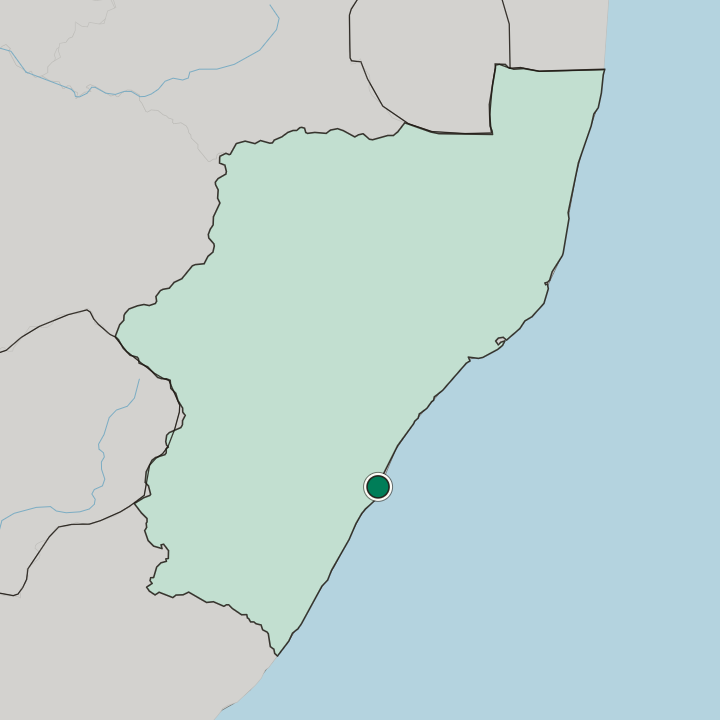
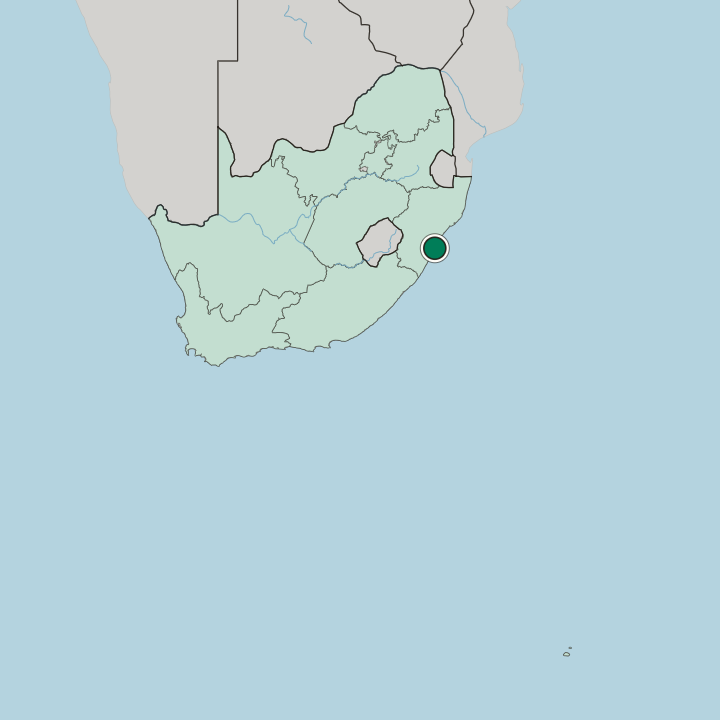
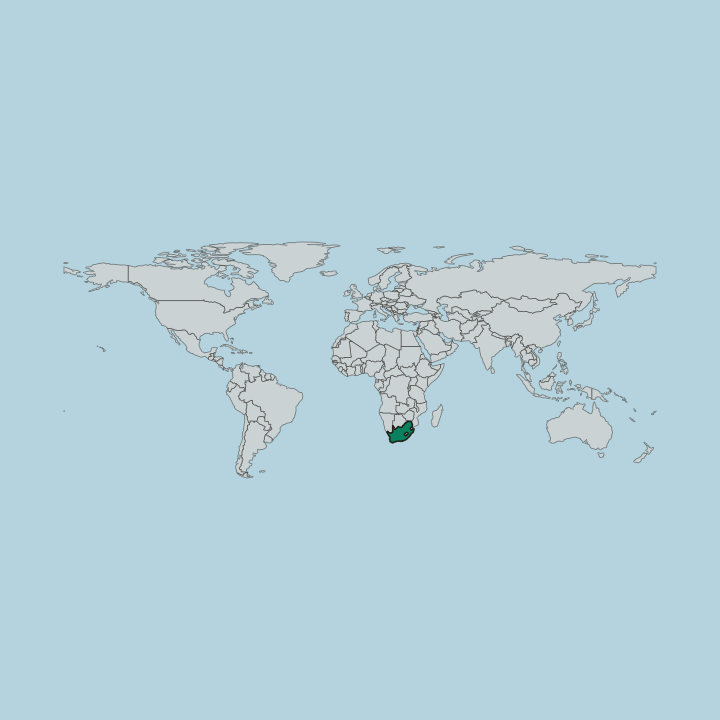
Durban lies on the east coast of South Africa, wrapped around the Natal Bay where it opens to the Indian Ocean. The setting is layered by water and ridge. North of the harbour and the flat city centre lies the mouth of the Umgeni River, the centre rises westward to the hills of the Berea, and south along the coast runs the Bluff, framing the bay that gives KwaZulu-Natal its chief port.
What is the climate of Durban?
Durban has a warm subtropical climate, humid and mild along the Indian Ocean through the year. Winters stay gentle here. Hot, wet summers bring afternoon rains to the Natal Bay and the seafront, warmed by the ocean current that washes the east coast, while the cooler season turns dry and pleasant over the city and the ridge of the Berea.
How do you get to Durban?
Durban is reached by air, sea, and road, the transport hub of coastal KwaZulu-Natal. Most travellers arrive overland or by flight. The harbour on the Natal Bay handles shipping while highways run north and south along the coast, linking Durban across the wider country of South Africa and inland from the Indian Ocean toward the interior.
Common questions
What is the best area to stay in Durban?
Beachfront and the Point: Families near uShaka Marine World on the Durban seafront. The Berea ridge: Leafy older streets and parks near Mitchell Park Zoo in Durban. The Bluff: Quieter coast south of the harbour along the Durban shore.
Good for
More cities in KwaZulu-Natal
Updated October 2026