Belarus · Homyel’ Voblasc’
Where to Stay in Homyel', Homyel’ Voblasc’
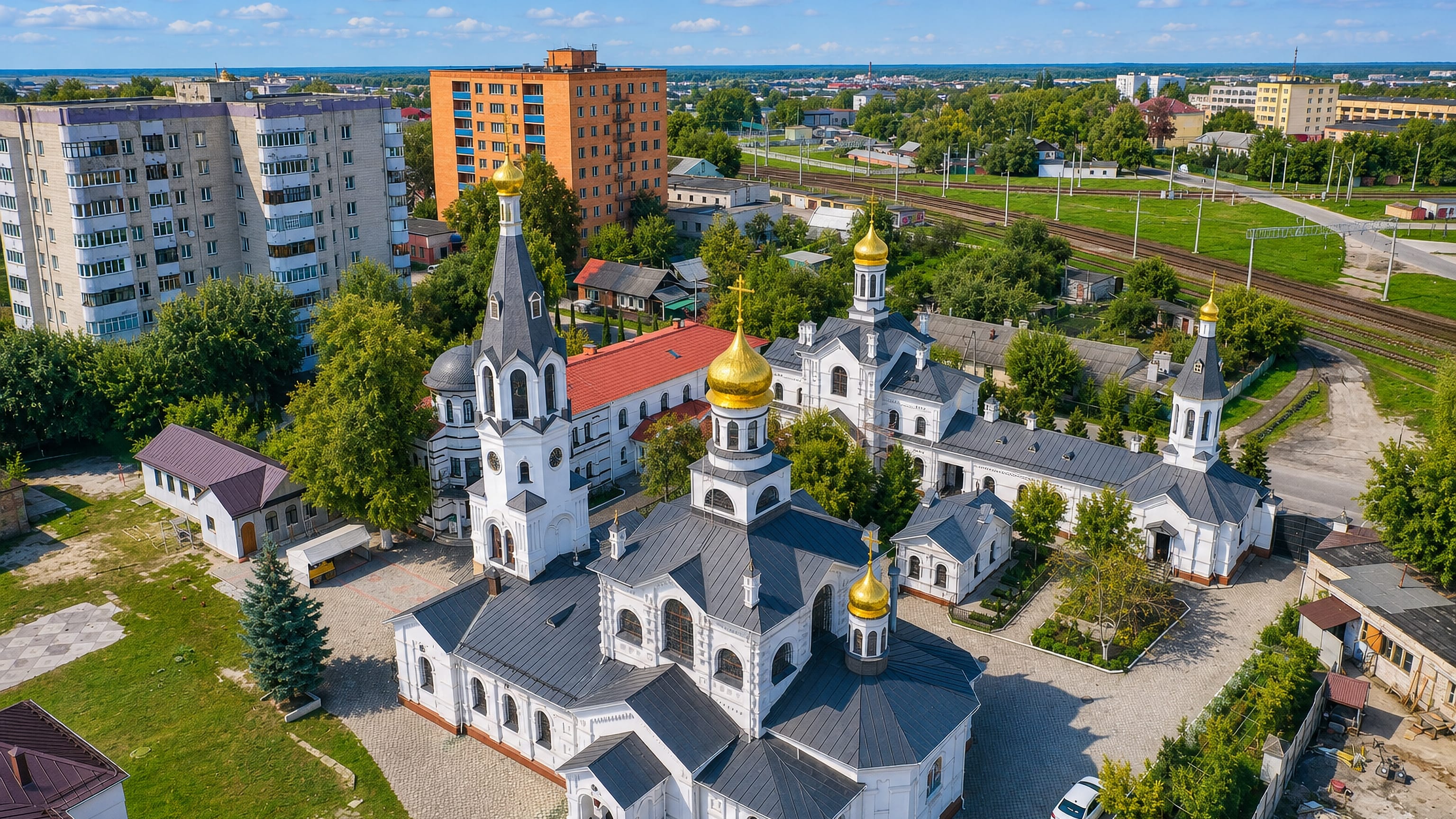
The Sozh runs below Homyel', the second-largest city in Belarus and the seat of Homyel' Voblasc', crowned by the riverside Gomel Palace and Park Ensemble.
Find your area →


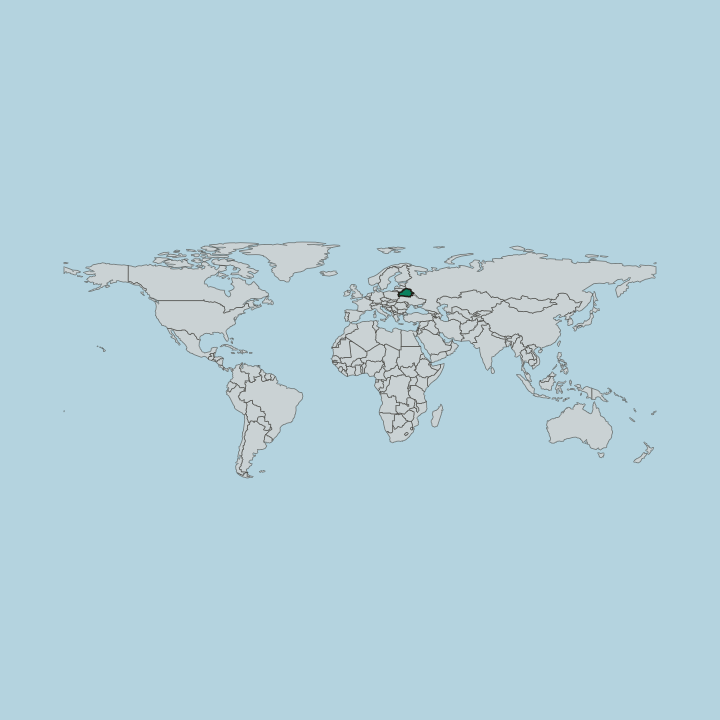
Where to stay in Homyel'
One neighbourhood here has its own guide — here's what it is best for.
 Homyel'Belarus
Zapadnyy
Zapadnyy is a district of Homyel', and the one site logged inside it is the mass graves at Leshchinec cemetery.Where to stay →Things to do in Homyel'
Ranked by global recognition; descriptions from Wikidata (CC0).
Museums & Galleries
3- Museum of Military Glory
- Gauriil Vashchenko Art Gallery
- Gomel Palace and Park Ensemble (museum)
Churches & Religious Sites
3- Saint Nicholas monastery, Gomel Heritage
- Church of Nativity of Virgin Mary
- Tikhvinsky Monastery in Gomel
Castles & Historic Sites
6- Gomel Castle Heritage
- Memorial to fallen Komsomol members in Gomel Heritage
- Monument to Vladimir Lenin in Gomel Heritage
- Memorial to fallen soldiers in Student garden square Heritage
- Memorial to fallen soldiers at Pracy Square Heritage
Show 1 more →
- Mass grave of fallen soldiers and POWs at Traliejbusnaja Street Heritage
Stadiums & Sports
1- Гомельский ледовый дворец спорта
worth knowingacross 4 categories in Homyel'
About Homyel'
What is Homyel' known for?
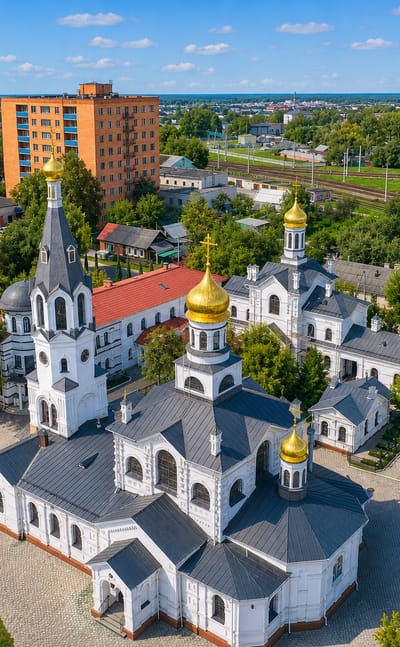
Homyel' is known above all for the Gomel Palace and Park Ensemble, a landscaped estate set high on the bank of the Sozh. It is the second-largest city in Belarus. Within and around the park stand the classical palace, the Church of Nativity of Virgin Mary, and the Saint Nicholas monastery, while the Kirill of Turov monument honours a medieval churchman tied to the region.
The riverside greenery and the palace towers define its face.
What are the main landmarks in Homyel'?
Homyel's landmarks concentrate around the palace park above the Sozh. The Gomel Palace and Park Ensemble anchors the centre, and the Gomel Castle grounds, the Church of Nativity of Virgin Mary, and the Saint Nicholas monastery cluster within a short walk of it. Faith and memory share the city.
The Tikhvinsky Monastery, the Kirill of Turov monument, the Museum of Military Glory, and the Gauriil Vashchenko Art Gallery round out the sights that draw visitors into Homyel'.
What is the history of Homyel'?
Homyel' first appears in the record in 1142, a settlement of the Rus principalities on the bluff above the Sozh. The high bank gave it a natural fort, and the Gomel Castle grounds mark where that early stronghold once controlled the river trade. Over the centuries the town passed through the Grand Duchy of Lithuania, the union with Poland, and then the Russian Empire, which laid out the estate that became the Gomel Palace and Park Ensemble on the site of the old fortifications.
The river carried its fortunes. Homyel's later history is bound up with rail and war. The railway arrived in the imperial era and turned the town into a junction, drawing workshops and workers whose memory survives in the Monument to workers of Homiel railway workshop.
The twentieth century brought devastating fighting, commemorated across the city at the Museum of Military Glory and in the memorials scattered through its squares. Faith persisted alongside industry, from the Church of Nativity of Virgin Mary in the palace park to the Tikhvinsky Monastery on the outskirts. The Sozh still defines the old core.
Where is Homyel'?
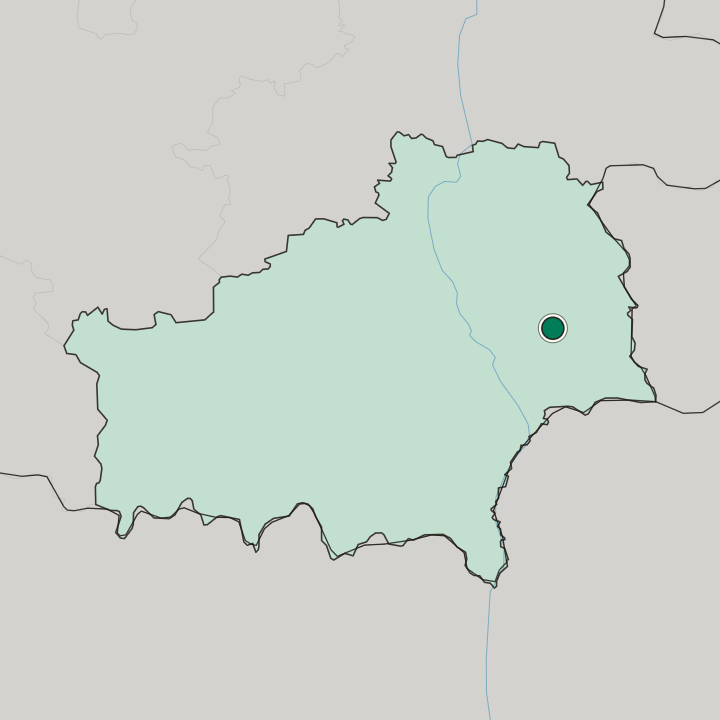
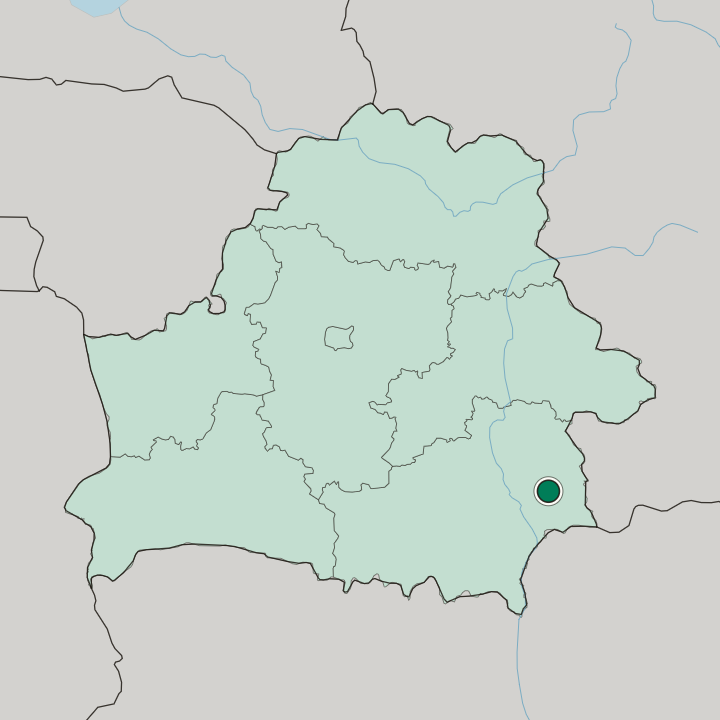
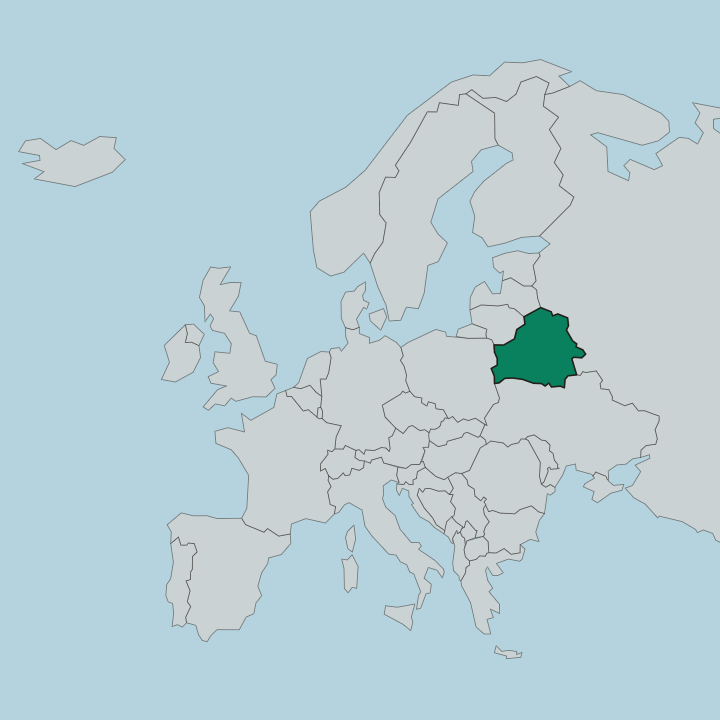
Homyel' lies in south-eastern Belarus on the Sozh, a tributary of the Dnieper that carves the city's eastern edge. The old town and the palace park stand on the high right bank, while flat, wooded floodplain and newer districts stretch away from the water. Around Homyel' the ground lies flat and low along the Sozh.
Close to the Russian and Ukrainian frontiers, Homyel' commands the flat southern reaches of Homyel' Voblasc', where the Sozh winds south toward its meeting with the greater river. It is a low, southern land.
What is the climate of Homyel'?
Homyel' has a continental climate that runs a little warmer than the north of the country. Winters are cold and snowy, freezing the Sozh and its floodplain for much of the season. Summers grow hot and green.
Long, warm days settle over the palace park and the river in the south-eastern reaches of the country, and rain falls across the year, easing the town from a brief bright spring into a gentle, fading autumn before the frost returns.
How do you get to Homyel'?
Homyel' is a major rail and road hub for the south-east of the country. Its station lies on trunk lines that run north to the capital and south toward the Ukrainian border, and the yards recall the railway workshops that built the modern city. An airport serves the region as well.
Long-distance buses reach the frontier crossings and the towns of Homyel' Voblasc', while roads follow the Sozh valley in and out, keeping the second city of Belarus tied to the interior.
Good for
More cities in Homyel’ Voblasc’
Updated September 2026