Belarus · Vitebsk Oblast
Where to Stay in Vitebsk, Vitebsk Oblast
The Western Dvina divides Vitebsk, a city in north-eastern Belarus and the seat of Vitebsk Oblast, known as the birthplace of Marc Chagall.
Find your area →


Where to stay in Vitebsk
Where the beds are, and what that means for the visit.
Vitebsk arranges its lodging around the Western Dvina and the ridge of civic buildings that climbs from it. The riverside core is the first choice. Here the Cathedral of the Merciful Jesus, the Marc Chagall Museum, and the theatres that host the city's summer arts festival sit within an easy walk, and beds cluster along the streets that thread between the water and the central squares.
If you want the concerts and galleries at your door, this is where you stay. Quieter rooms lie a little back from the centre, near the Old Cathedral of St. Barbara and St. Paul and the monastery grounds. These streets trade evening bustle for calm and shorten the walk to Vitebsk's older churches.
Travellers arriving by rail find the station district practical rather than scenic, useful for an early departure and close to the tram lines that cross the Western Dvina. Whichever bank you choose, the river is never far, and the bridges keep both sides of Vitebsk within reach on foot.
Things to do in Vitebsk
Ranked by global recognition; descriptions from Wikidata (CC0).
Museums & Galleries
3- Marc Chagall Museum Heritage
- Viciebsk Regional Museum of the Hero of the Soviet Union M.P. Šmyroŭ Heritage
- Vitebsk Regional Museum of Local History
Churches & Religious Sites
3- Old Cathedral of St. Barbara and St. Paul, Vitebsk Heritage
- Troitsky Markov Monastery Heritage
- Svyato-Dukhov Monastery Heritage
Castles & Historic Sites
3- Monument to heroes of Patriotic War of 1812 in Viciebsk Heritage
- Помнік У. І. Леніну, Віцебск Heritage
- Viciebsk Castle
Landmarks & Notable Places
1- Духаўскі круглік
worth knowingacross 4 categories in Vitebsk
About Vitebsk
What is Vitebsk known for?
Vitebsk is known above all as the hometown of the painter Marc Chagall, whose early life on the Western Dvina shaped a body of work now gathered at the Marc Chagall Museum. The city carries a deep religious skyline too. The Cathedral of the Merciful Jesus rises over the centre, the Old Cathedral of St. Barbara and St. Paul anchors an older quarter, and the Svyato-Dukhov Monastery and Troitsky Markov Monastery hold their ground along the river.
Art and faith define its reputation. So does the wide, hilly setting above the water.
What are the main landmarks in Vitebsk?
Vitebsk's landmarks run from painted modernism to Orthodox stone. The Marc Chagall Museum keeps the artist's legacy in the streets where he grew up, while the Cathedral of the Merciful Jesus and the Old Cathedral of St. Barbara and St. Paul mark the city's church-building centuries. Monasteries hold the edges.
The Troitsky Markov Monastery and the Svyato-Dukhov Monastery stand near the Western Dvina, and the Vitebsk Regional Museum of Local History and the Vitebsk Regional Museum of Art gather the region's collections behind civic facades.
What is the history of Vitebsk?
Vitebsk traces its founding to 974, which makes it one of the oldest towns in Belarus. It grew where the Vitba stream joins the Western Dvina, a crossing that gave the settlement both its name and its early trade. Medieval princes raised a stronghold on the high bank, remembered in the ground where Viciebsk Castle once stood, and the Algirdas Monument recalls the Lithuanian grand duke whose realm later drew the town into its orbit.
Faith and commerce grew side by side for centuries. War has passed through Vitebsk many times. A monument marks the fighting of 1812, when armies crossed the Western Dvina during the campaign that swept toward and back from the east.
The twentieth century left the deepest scars, commemorated by the Three Bayonets memorial that lifts three tall spires over the city. Through all of it the churches were rebuilt and the museums assembled, so that the Vitebsk Regional Museum of Local History now holds the long record of the oblast in one place. The old crossing endures.
Where is Vitebsk?
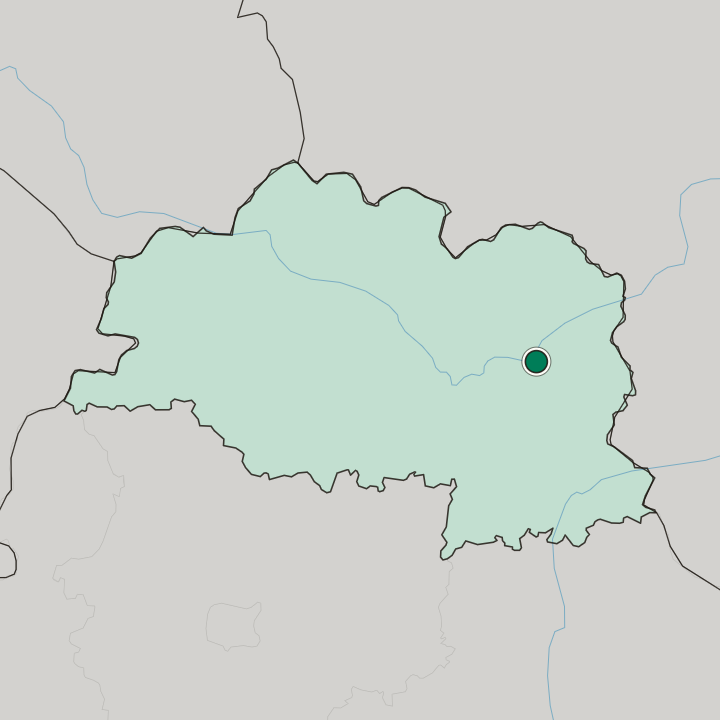
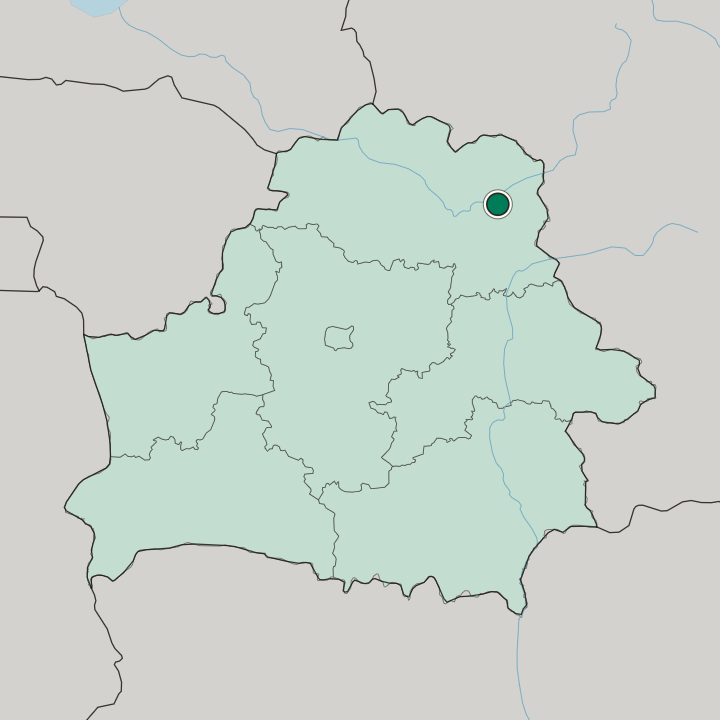
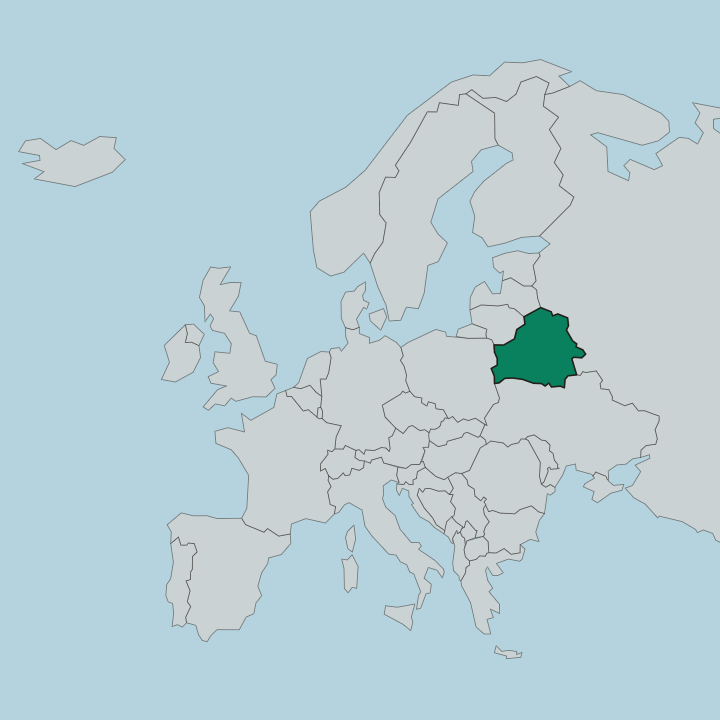
Vitebsk sits in north-eastern Belarus, where the Vitba stream meets the Western Dvina and the surrounding land rises into low, rolling hills that lift the old town above the water. The river splits the city into two banks joined by bridges. Higher ground on either side raises the cathedrals and museums over the current, giving Vitebsk its layered profile of towers and green slopes.
The border with Russia is close. Inland and gently uneven, the terrain drains toward the distant Baltic by way of the Western Dvina as it flows on through Vitebsk Oblast.
What is the climate of Vitebsk?
Vitebsk, in north-eastern Belarus, holds to a continental climate. Cold, snow-covered winters settle over the city for months, freezing the Western Dvina and whitening the hills that rise above it, while summers turn warm and changeable under long northern daylight. Spring is slow to reach Vitebsk.
It thaws the river fast and greens the wooded oblast around the town within a few short weeks. Autumn is brief and grey before the snow returns to north-eastern Belarus.
How do you get to Vitebsk?
Vitebsk is reached by air, rail, and road. Vitebsk Vostochny Airport lies east of the city and handles its scheduled flights. Rail matters most here.
The station sits on lines that run south toward the capital and on toward the Russian border in the north-east, and trams carry arriving passengers across the Western Dvina into the centre. Roads fan out through Vitebsk Oblast, linking the city to the smaller towns of the surrounding region.
Good for
More cities in Vitebsk Oblast
Updated October 2026