
China · Shaanxi
Where to Stay in Xi’an, Shaanxi
Old grey city walls ring Xi'an, the capital of Shaanxi on the Guanzhong plain, an ancient Chinese seat of power known for the Stele Forest.
Hotel links are affiliate links: booking through them may earn us a commission, at no extra cost to you. It never affects how places are ranked. How this works


Where to stay in Xi’an
Where visitors usually base themselves, and why.
Xi'an's lodging gathers inside and around its grey defensive walls. The walled centre holds most visitors, ringed by the old rampart and threaded by the streets that lead to the Stele Forest and the Xi'an Museum. Stay within the walls.
The grid there puts the carved stone galleries, the Tang West Market Museum, and the city's food streets within an easy walk of one another. North of the centre, the district around the Daming Palace spreads across the excavated ground of the old imperial court, a quieter base with more room to breathe. Its parkland traces the footprint of a vanished palace.
Travellers who want the Shaanxi Province Art Museum and the Liquanfang Kiln Site tend to base themselves closer to the museum quarter of Xi'an, where the collections cluster and the walk between them stays short. The two zones sit close enough that moving between them takes little time.
Find hotels in Xi’an
Direct booking searches for these neighbourhoods.
Walled centre
The Stele Forest, the Xi'an Museum, and the Tang West Market Museum sit within an easy walk of one another inside the old grey wall.Find hotels in Walled centreA quieter base on the old imperial palace groundsDaming Palace district
The excavated parkland of the Daming Palace north of the centre gives more room than the packed streets within the Xi'an walls.Find hotels in Daming Palace districtHotel links are affiliate links: booking through them may earn us a commission, at no extra cost to you. It never affects how places are ranked. How this works
Things to do in Xi’an
Ranked by global recognition; descriptions from Wikidata (CC0).
Museums & Galleries
3- Xi'an Museum
- Xi'an Beilin Museum
- Tang West Market Museum
Castles & Historic Sites
2- Daming Palace Heritage
- Liquanfang Kiln Site
worth knowingacross 2 categories in Xi’an
About Xi’an
What is Xi’an known for?
Xi'an is known as one of the oldest capital cities of ancient China. The Guanzhong plain around it carried seat after seat of imperial power, and that long standing as a capital shaped everything the city keeps. Visitors come for the layered heritage: the walled centre of Shaanxi's capital, the carved records of the Stele Forest, and the ruined ground of the Daming Palace.
It anchors the whole province.
What are the main landmarks in Xi’an?
Xi'an's landmarks trace its imperial past. The Stele Forest holds ranks of inscribed stone tablets, and the Xi'an Beilin Museum grew up around that same collection of carved records. To the north lie the excavated grounds of the Daming Palace, once the great court of the Guanzhong plain.
The Tang West Market Museum, the Xi'an Museum, and the Shaanxi Province Art Museum gather the city's antiquities, while the Liquanfang Kiln Site preserves the remains of an old ceramic works. Ancient stone runs through all of it.
What is the history of Xi’an?
Xi'an is the oldest surviving capital of ancient China. The fertile Guanzhong plain drew ruling dynasties to build their seats of power here across one era after another, making the city a centre of government long before most of the surrounding country took shape. Successive courts raised their palaces, temples, and administrative halls on this ground.
The Daming Palace towered among them. That long history as a capital left the city its defining monuments. The Stele Forest gathered inscribed stone tablets set down by scholars and officials over centuries, a written record now held in the Xi'an Beilin Museum.
The Tang West Market Museum preserves the memory of the great trading quarter that once made the city a terminus for merchants reaching Shaanxi from far away. When imperial power finally moved elsewhere, Xi'an kept its walls, its carved stones, and its standing as the historic heart of the Guanzhong plain.
Where is Xi’an?
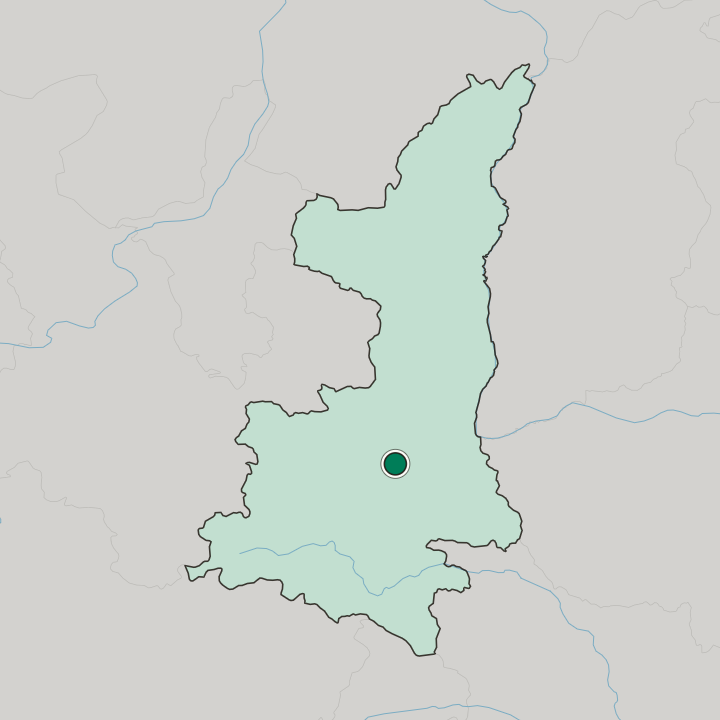
Xi'an lies on the Guanzhong plain. This broad fertile basin gave it flat, well-watered ground and made it the capital of Shaanxi, framed by higher country beyond its edges and long favoured as a place to settle and farm. The old walled core marks the historic centre.
North of it spread the excavated grounds of the Daming Palace. Deep inland, well away from any coast, this river valley plain carried settlement across a very long span of time.
What is the climate of Xi’an?
Xi'an has a marked seasonal climate set by its inland position on the Guanzhong plain. Winters run cold and dry, summers hot, with the sharp swing between them that an interior basin far from the sea tends to bring. Spring and autumn are the gentler seasons.
Because the plain sits well away from any moderating coast, the warm and cold months of Shaanxi's capital pull further apart than a milder maritime setting would allow.
How do you get to Xi’an?
Xi'an sits at a natural crossing of routes on the Guanzhong plain. Roads and rail converge on the capital of Shaanxi from every direction, following the flat basin that has carried travellers across this ground since it served as an imperial seat. Most long-distance visitors arrive by air or by fast train.
From either, the run into the walled centre is short, leaving the Stele Forest and the museum quarter within easy reach of arrival.
Common questions
What is the best area to stay in Xi’an?
Walled centre: First-time visitors staying inside the Xi'an ramparts. Daming Palace district: A quieter base on the old imperial palace grounds.
Good for
More cities in Shaanxi
Updated October 2026