China · Sichuan
Where to Stay in Mianyang, Sichuan
Mianyang is the second largest prefecture-level city of Sichuan, formed in 1985, holding Bao'en Temple and the Beichuan Earthquake Museum.
Hotel links are affiliate links: booking through them may earn us a commission, at no extra cost to you. It never affects how places are ranked. How this works


Where to stay in Mianyang
Where the beds are, and what that means for the visit.
Three districts hold the city. Mianyang's urban districts are where the beds are, and everything beyond them is county ground running out toward Gansu, Guangyuan and the Aba Tibetan and Qiang Autonomous Prefecture. Bao'en Temple anchors the old side.
A room within reach of it also puts Yunyan Temple and the Tongchuan Ancient City Wall in range, which is the compact half of a city that otherwise measures its sights in driving hours. Chengdu changes the calculation. Many visitors arrive from there for a night rather than a week, and for them the urban districts are the only sensible base in the whole prefecture-level city.
Beichuan is a separate journey. The Beichuan Earthquake Museum and the Beichuan Earthquake Historic Site lie out in the counties, and a visit there takes a day of its own rather than an afternoon squeezed between temples. Jiangyou sits apart as well.
That county-level city inside the prefecture has its own centre, and staying there suits anyone whose reason for the trip lies out among the counties rather than in the districts. The Laojunshan Saltpeter Cave Site is further still. Anything reached from Deyang, Suining or Nanchong on the way in argues for one night in the urban districts first, then a move outward once the direction of the trip is settled.
Find hotels in Mianyang
Direct booking searches for these neighbourhoods.
The Bao'en Temple districts
The urban districts of Mianyang, holding the temple, the old wall and Yunyan Temple within one compact areaFind hotels in The Bao'en Temple districtsTrips whose business lies in the counties rather than the cityJiangyou
The county-level city inside the prefecture, with a centre of its own well away from Mianyang's urban districtsFind hotels in JiangyouA full day given to the Beichuan Earthquake Museum and Historic SiteThe Beichuan road
The county side of the prefecture leading to the earthquake memorial sites, too far from the districts for an afternoon. Beds are limited here, so book early.Find hotels in The Beichuan roadHotel links are affiliate links: booking through them may earn us a commission, at no extra cost to you. It never affects how places are ranked. How this works
Things to do in Mianyang
Ranked by global recognition; descriptions from Wikidata (CC0).
Museums & Galleries
1- Beichuan Earthquake Museum
Churches & Religious Sites
4- Qiqushan Temple Heritage
- Yuquan Temple Heritage
- Kaixi Temple Heritage
- Ma'an Temple Heritage
worth knowingacross 2 categories in Mianyang
About Mianyang
Temples and a memorial define it.
What is Mianyang known for?
Bao'en Temple, Qiqushan Temple and Yunyan Temple carry the older religious record of Mianyang, while the Beichuan Earthquake Museum and the Beichuan Earthquake Historic Site hold the most recent one. Chengdu is close. The prefecture-level city dates from 1985 and spreads over more than twenty thousand square kilometres, which puts most of its temples well outside the urban districts.
What are the main landmarks in Mianyang?
Temples outnumber everything else. Bao'en Temple, Qiqushan Temple, Yunyan Temple, Kaixi Temple, Ma'an Temple, Yuquan Temple and Zunsheng Temple are spread across the prefecture, and the Tongchuan Ancient City Wall survives with them. Two que stand apart.
The Que in Pingyang Prefecture and the Li Ye Que are protected monuments of their own class, while the Laojunshan Saltpeter Cave Site records industry rather than worship. Beichuan holds the newest memory. The Beichuan Earthquake Museum and the Beichuan Earthquake Historic Site are kept as a record of the disaster and of what it left standing.
What is the history of Mianyang?
Walls and que came first. The Tongchuan Ancient City Wall and the two que, the Que in Pingyang Prefecture and the Li Ye Que, are the oldest built things the prefecture keeps, and they sit in country the modern city has since grown around. Temples followed.
Bao'en Temple, Qiqushan Temple, Yunyan Temple, Kaixi Temple, Ma'an Temple, Yuquan Temple and Zunsheng Temple make a religious record dense enough to map the settled parts of Mianyang on their own. Saltpetre was worked at Laojunshan. The Laojunshan Saltpeter Cave Site preserves that industry, and it belongs to a different strand of the past from the temples, one about what the ground yielded rather than what was built on it.
The city itself is recent. Mianyang was constituted as a prefecture-level city in 1985, gathering Jiangyou, five counties and three urban districts under one administration reaching from Deyang and Suining to Gansu. Beichuan changed what the place commemorates.
The Beichuan Earthquake Museum and the Beichuan Earthquake Historic Site were made to hold that event, and they now sit alongside the temples as the sites visitors are most likely to have heard of.
Where is Mianyang?
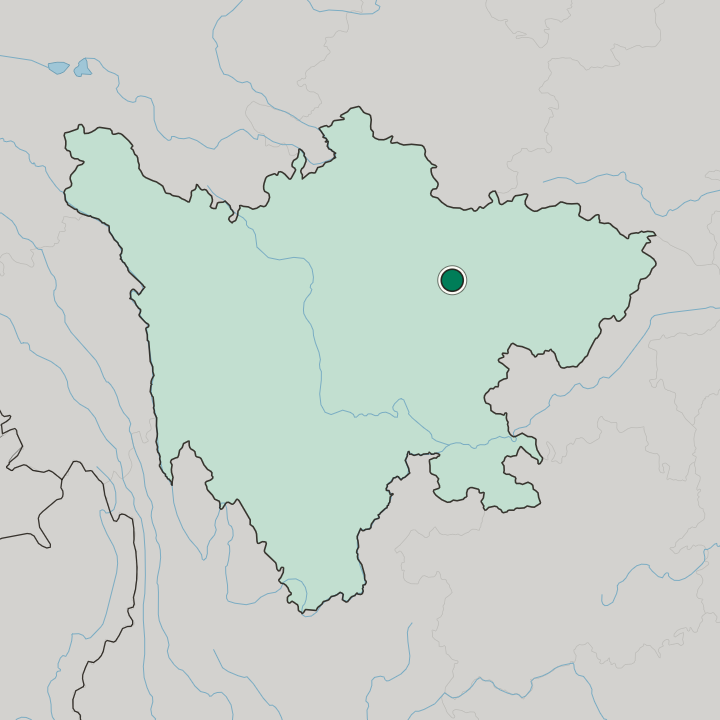
Neighbours ring it on all sides. Mianyang borders Nanchong to the east, Suining to the south, Deyang to the southwest, the Aba Tibetan and Qiang Autonomous Prefecture to the west, Gansu to the north and Guangyuan to the northeast. Chengdu lies near.
The prefecture covers more than twenty thousand square kilometres of Sichuan, which is why Beichuan and Jiangyou sit hours from the urban districts rather than minutes.
What is the climate of Mianyang?
The subtropical band covers Sichuan. Mianyang sits within it north of the equator, so the warm half of the year runs long and wet while the cool half stays comparatively short, the same rhythm that governs Chengdu nearby. The prefecture is wide.
Ground stretching toward Gansu and the Aba Tibetan and Qiang Autonomous Prefecture lies a long way from the urban districts, and a day at Beichuan is planned against that distance.
How do you get to Mianyang?
Chengdu is the usual approach. Mianyang lies near it, and travellers reach the prefecture-level city from there more often than from Nanchong, Suining or Guangyuan, though roads run in from all of them. The districts are the arrival point.
Bao'en Temple and the Tongchuan Ancient City Wall are close to that landing, while Jiangyou, Beichuan and the Laojunshan Saltpeter Cave Site are onward drives across the counties.
Common questions
What is the best area to stay in Mianyang?
The Bao'en Temple districts: Short stays keeping Bao'en Temple and the Tongchuan Ancient City Wall on foot. Jiangyou: Trips whose business lies in the counties rather than the city. The Beichuan road: A full day given to the Beichuan Earthquake Museum and Historic Site.
Good for
More cities in Sichuan
Updated September 2026