Czech Republic · Hlavní město Praha
Where to Stay in Prague, Hlavní město Praha
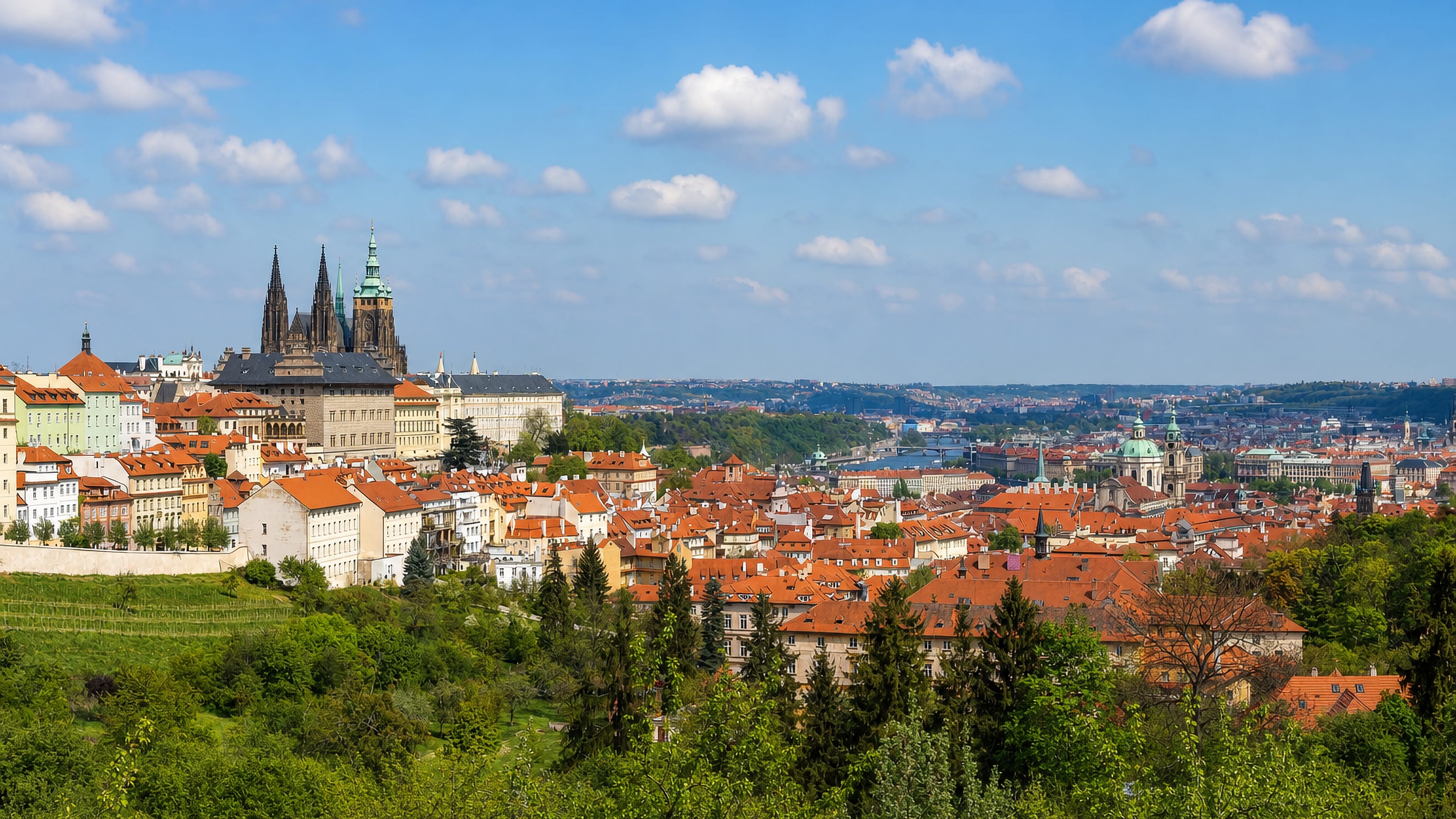
Gold spires rise above the Vltava at Prague, capital of the Czech Republic and historic seat of Bohemia, known for Prague Castle and its Old Town.
Hotel links are affiliate links: booking through them may earn us a commission, at no extra cost to you. It never affects how places are ranked. How this works


Where to stay in Prague
Not every neighbourhood fits every trip — here's what each one is good for.

 PragueCzech Republicspires, squares, and the river bridges within a walk
Old Town
Rooms between the Old Town Hall and the Church of Our Lady before Týn put the medieval squares, the Powder Tower, and the Vltava embankment on the doorstep.Old Town → PragueCzech Republicbaroque palaces below the castle and long roof views
Malá Strana
The western slope beneath Prague Castle climbs past the Strahov Monastery and the Petřín Lookout Tower to quiet courtyards and gardens above the Vltava.Malá Strana → PragueCzech Republic
Josefov
Josefov is the smallest quarter of Prague, in the Old Town, the city's walled Jewish ghetto for centuries. Its synagogues form the Jewish Museum in Prague.Where to stay → PragueCzech Republic
Prague 1
Prague 1 is Prague's central district laid across the Vltava: Old Town, Josefov, Malá Strana, Hradčany. Prague Castle and Old Town Hall rise.Where to stay → PragueCzech Republic
New Town
New Town, Nové Město, is Prague's largest quarter, of 1348, round the Old Town, Wenceslas Square running to the National Museum and Charles Square.Where to stay → PragueCzech Republic
Hradčany
Hradčany is one of the four historic towns of old Prague, on the hill above the Vltava, and grew up around Prague Castle. Bohemian kings ruled the hilltop.Where to stay → PragueCzech Republic
Smíchov
Smíchov is a district on the west bank of the Vltava, in Prague 5, separate until 1922. Petřín hill and the Petřín Lookout Tower rise.Where to stay → PragueCzech Republic
Holešovice
Holešovice sits in north Prague in a meander of the River Vltava, the core of Prague 7. The Trade Fair Palace holds the National Gallery.Where to stay → PragueCzech Republic
Vinohrady
Vinohrady spans Prague 2, Prague 3 and Prague 10, named for vineyards, with Saint Ludmila's Basilica and the Church of the Most Sacred Heart of Our Lord.Where to stay → PragueCzech Republic
Žižkov
Žižkov is a dense district east of Prague, named for Jan Žižka, who won the 1420 battle on Vítkov. The Žižkov Television Tower fixes the skyline.Where to stay → PragueCzech Republic
Libeň
Libeň is a district of northeast Prague on the Vltava, where Reinhard Heydrich was ambushed in 1942. The Anthropoid Operation Memorial marks it.Where to stay → PragueCzech Republic
Letňany
Letňany is a cadastral area on the northern edge of Prague, with Stará Aerovka and the Kbely Aviation Museum. The birth house of Antonín Novotný is here.Where to stay →Hotel links are affiliate links: booking through them may earn us a commission, at no extra cost to you. It never affects how places are ranked. How this works
Things to do in Prague
Ranked by global recognition; descriptions from Wikidata (CC0).
Museums & Galleries
3- Powder Tower Heritage
- Old Town Hall Heritage
- Queen Anne's Summer Palace Heritage
Churches & Religious Sites
8- Church of Our Lady before Týn Heritage
- St. Nicholas Church Heritage
- St. George's Basilica Heritage
- Ss. Cyril and Methodius Cathedral Heritage
- Strahov Monastery Heritage
Show 3 more →
- Church of Saint Nicholas Heritage
- Church of Our Lady of Victories Heritage
- Loreta Heritage
Castles & Historic Sites
3- Prague Castle Heritage
- Statue of St. Wenceslaus Heritage
- Kobylisy Shooting Range Heritage
Landmarks & Notable Places
2- Airport tower in Kbely Heritage
- Panelový dům v Ďáblicích
worth knowingacross 4 categories in Prague
About Prague
What is Prague known for?
Prague is known above all for Prague Castle, the fortified hill above the Vltava that has crowned the city since the ninth century. Its winding lanes and stone bridges carry the memory of Bohemia's old capital. The Old Town Hall keeps its astronomical face over the square, the twin towers of the Church of Our Lady before Týn spike the skyline, and the Strahov Monastery guards its libraries on the western heights.
Writers claim it too. The Franz Kafka Museum keeps the memory of the author who set his fiction in these streets.
What are the main landmarks in Prague?
Prague Castle anchors the landmarks of Prague, its ramparts holding St. George's Basilica above the Vltava. The castle crowns the city. Across the river the Old Town Hall shows its astronomical face to the square, the Church of Our Lady before Týn lifts its dark twin towers behind it, and the Powder Tower marks the gate where the old coronation route began.
On the western heights the Strahov Monastery, the Loreta pilgrimage complex, and the Petřín Lookout Tower stand above the roofs, while the Žižkov Television Tower rises over the eastern quarters.
What is the history of Prague?
Prague grew from a castle founded above the Vltava around the ninth century, the fortified seat from which the dukes and kings of Bohemia ruled. The hill came first. Prague Castle set the pattern for a town that spread down to the river and across it, gathering merchants, churches, and a bridge that tied the two banks into one settlement, and by the medieval centuries it had become the capital of a Bohemian kingdom that reached far beyond its walls.
Stone and faith shaped the growing town. The Old Town Hall rose beside its market square, the Church of Our Lady before Týn lifted its towers over the merchants' houses, and the Strahov Monastery gathered its libraries on the western heights while pilgrims climbed to the Loreta. The city kept its rank through empire and republic alike, the seat of Bohemia becoming the capital of the Czech Republic.
Later memory settled here too. The Memorial to the Victims of Communism records the harder decades of the last century on the slope below Petřín, a marker set among the older stones of Prague.
Where is Prague?
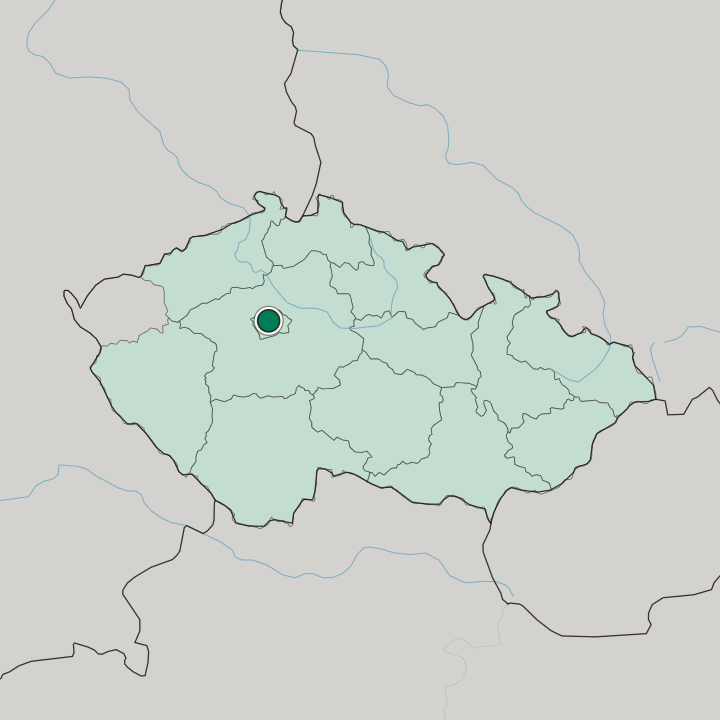
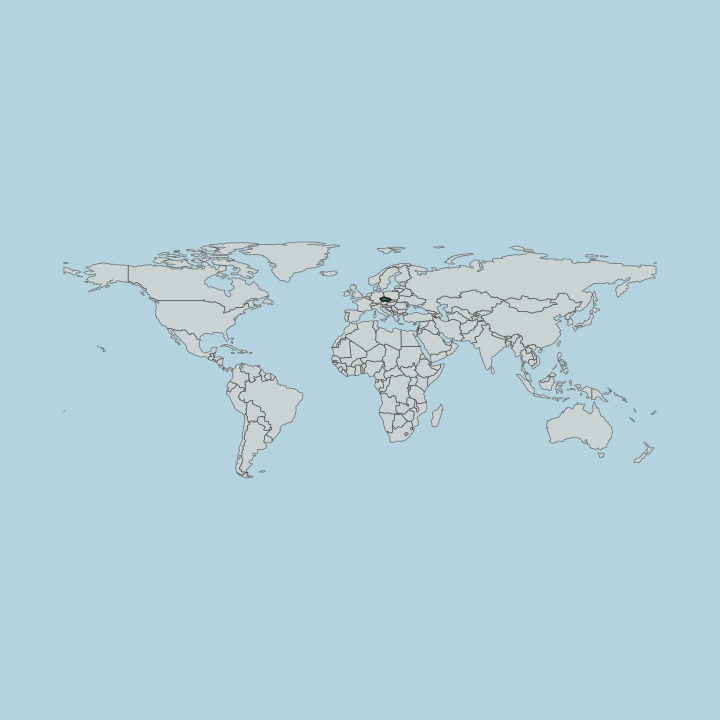
Prague sits on the Vltava, the river winding north through a basin of low hills in the heart of Bohemia. The water divides the city. On the eastern bank the Old Town and its squares spread from the river, while the western slopes carry Prague Castle and the terraced heights of Petřín above the roofs.
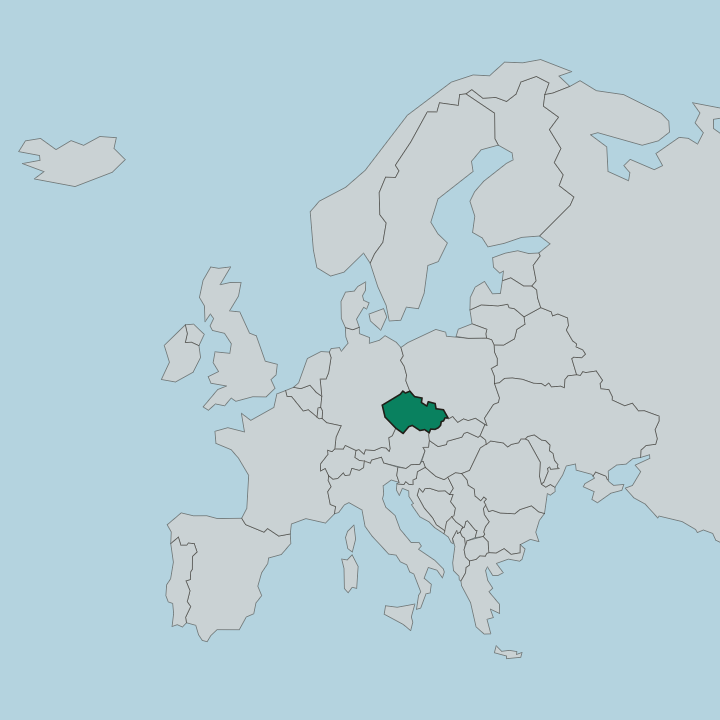
The Vltava's meanders and the ring of wooded hills around them frame a capital set inland at the centre of the Czech Republic, far from any coast.
What is the climate of Prague?
Prague has a temperate inland climate shaped by its position in the Bohemian basin, well away from any moderating sea. The winters run cold in Prague. Snow and frost settle over the Vltava and the castle heights through the darker months, while the summers turn warm and green along the river terraces below Petřín.
Spring and autumn bring the changeable weather of central Bohemia, mild spells broken by grey rain over the spires of Prague.
How do you get to Prague?
Prague is reached by an international airport on its western edge and by the rail lines that converge on the capital from across the Czech Republic. Trains run to the centre. From the main station the tram and metro network threads under and over the Vltava to the Old Town and up toward Prague Castle, and the motorways that ring the city link it onward through Bohemia to the neighbouring countries beyond.
Common questions
What is the best area to stay in Prague?
Old Town: spires, squares, and the river bridges within a walk. Malá Strana: baroque palaces below the castle and long roof views.
Good for
Updated September 2026