Germany · Nordrhein-Westfalen · Eschweiler
Röhe, Eschweiler — Area Guide & Where to Stay
Röhe is a western district of Eschweiler, set on the slope above the Inde valley. St. Antonius marks it.
Hotel links are affiliate links: booking through them may earn us a commission, at no extra cost to you. It never affects how places are ranked. How this works


Where to stay in Röhe
Where visitors usually base themselves, and why.
Eschweiler is the practical base for Röhe. The district lines the B 264, an old Napoleonic road, so the church of St. Antonius and the Helene-Nickel-Stift are a short ride from Eschweiler's centre and easy to fold into a day spent elsewhere in Nordrhein-Westfalen. Stay in town.
Röhe works as an outing along the valley edge rather than as a place to base a trip.
Few places to stay in Röhe — most visitors book in Eschweiler nearby.
About Röhe
What are the main landmarks in Röhe?
Two buildings make up Röhe's list. The church of St. Antonius stands on the B 264 and is the district's recognisable landmark, while the Helene-Nickel-Stift sits on the same record as a second address rather than a set piece. Both belong to the western edge of Eschweiler, so a look at them pairs naturally with the Inde valley below.
Short, and complete.
What is the history of Röhe?
Röhe is counted as probably the oldest clearing settlement around Eschweiler, older than the tenth century. It was first named in a document in 1346, and no later than the sixteenth century it belonged, like Bergrath and Röthgen, to the Amt Eschweiler in the Duchy of Jülich. The present church of St. Antonius dates from 1843.
A Roman estate turned up in 1998.
Where is Röhe?
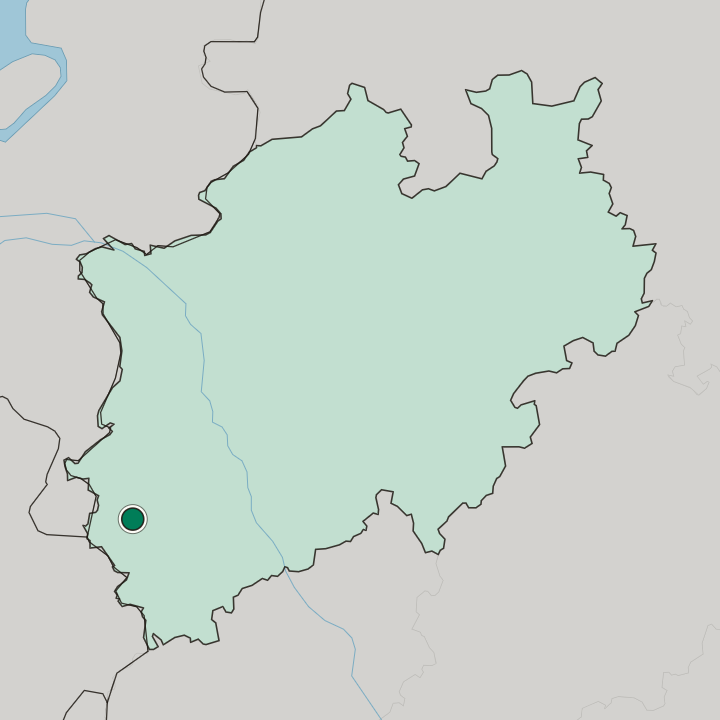
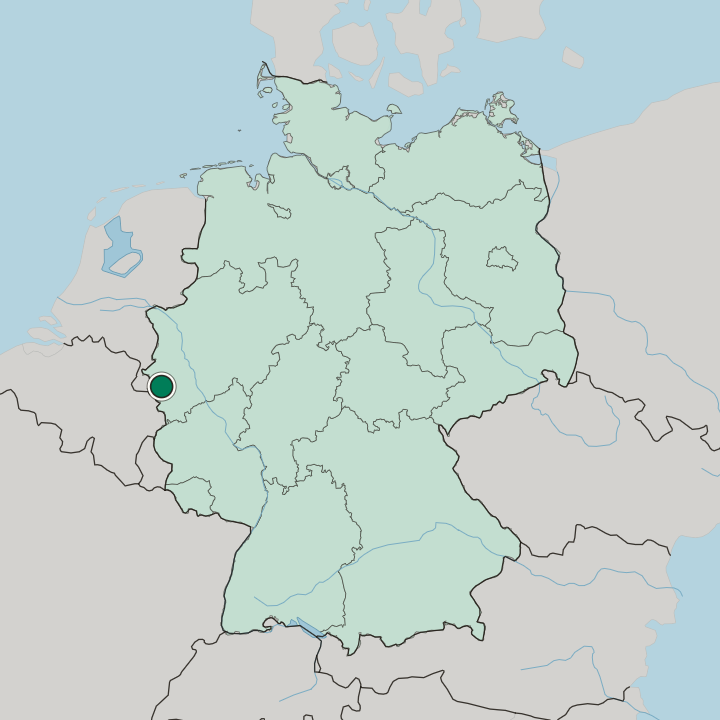
Röhe sits on the western side of Eschweiler, in Nordrhein-Westfalen, Germany, and the A4 motorway splits it into a northern and a southern half. No area figure is recorded.
Common questions
What is the best area to stay in Röhe?
Röhe: An hour at St. Antonius on the way along the B 264.
Good for
More areas in Eschweiler
Updated October 2026