Germany · Saxony-Anhalt · Magdeburg
Werder, Magdeburg — Area Guide & Where to Stay
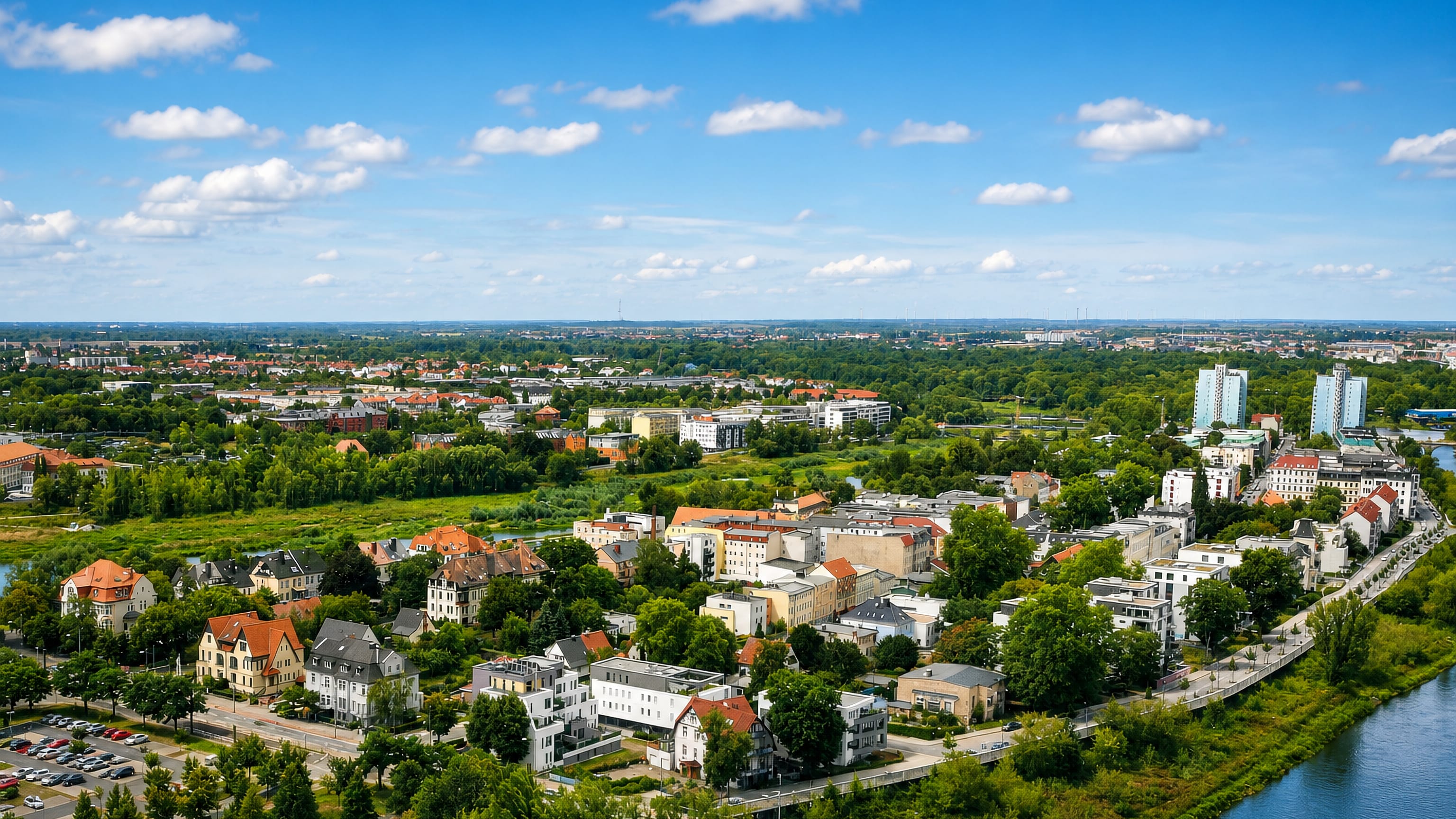
Werder is an island Stadtteil of Magdeburg in the Elbe, some 3.5 square kilometres unbuildable while it lay before the city's fortifications.
Hotel links are affiliate links: booking through them may earn us a commission, at no extra cost to you. It never affects how places are ranked. How this works


Where to stay in Werder
Where the beds are, and what that means for the visit.
Bridges are how you arrive. The Werder is tied to the rest of Magdeburg by the Nordbrückenzug, the Strombrückenzug and the Sternbrücke, with the Hubbrücke and the Brücke am Wasserfall for walkers and cyclists. The island is two things at once.
Housing fills the north of it and the Rotehornpark fills the south, so a stay here means a park on the doorstep and the Altstadt one bridge away. Three tram lines and buses serve it.
Things to do in and around Magdeburg
Ranked by global recognition; descriptions from Wikidata (CC0).
Museums & Galleries
2- Jahrtausendturm
- Art museum Monastery of Our Lady Magdeburg
Churches & Religious Sites
8- Cathedral of Magdeburg Heritage
- Monastery Unser Lieben Frauen Magdeburg Heritage
- St.-Johannis-Kirche Heritage
- St. Petri (Magdeburg) Heritage
- Magdalenenkapelle Heritage
Show 3 more →
- St. Andreas (Magdeburg) Heritage
- Sankt-Gangolfi-Kapelle Heritage
- Wallfahrtskapelle zum Ölberg Heritage
Castles & Historic Sites
3- Lutherdenkmal Magdeburg Heritage
- Elektra Heritage
- Sports Walk of Fame
Nature & Outdoors
1- Elbauenpark
Landmarks & Notable Places
4- Kiek in de Köken Heritage
- Lukasklause Heritage
- Turm hinter der Ausfahrt der Möllenvogtei Heritage
- Tatarenturm Heritage
worth knowingacross 5 categories in and around Magdeburg
About Werder
What are the main landmarks in Werder?
The Stadthalle stands in the Rotehornpark. Beside it rises the Albinmüller-Turm, and the Hyparschale of 1969 is close by, a multi-purpose hall carried on a four-part shell structure. Broadcasting moved in later.
The Mitteldeutscher Rundfunk has kept its Landesfunkhaus Sachsen-Anhalt on the island since 1998, and the Elbzentrum of 1996 brought shops and flats to the same ground. One bridge held a record. The Hubbrücke was rebuilt as a lift bridge in 1895 and extended in 1934 into the longest lift bridge in Europe.
What is the history of Werder?
An island lay north of the Strombrücke until the seventeenth century, changing size as the river moved. When the city began regulating the Elbe in the eighteenth century the current slowed, sand built up, and two further islands formed. The largest was called Sandwerder.
A second to the south-east took the name Kommandantenwerder, and by the middle of the nineteenth century all of them had merged into one. Building was forbidden at first. The ground lay in front of the fortifications, so basket makers grew willows on it and timber yards were set up around 1720, and the first houses came only at the start of the nineteenth century.
A redoubt went up on the northern tip in 1812. Magdeburg bought six hectares of meadow in the south in 1870 to make a new park, named for the patrician family Rode, whose Rodenhagen became Rotenhagen and then Rotehorn. Bombs fell in January 1945.
Both the housing and the Rotehornpark were badly damaged, repairs began only from 1960, and the Stadthalle was rebuilt as part of them.
Where is Werder?
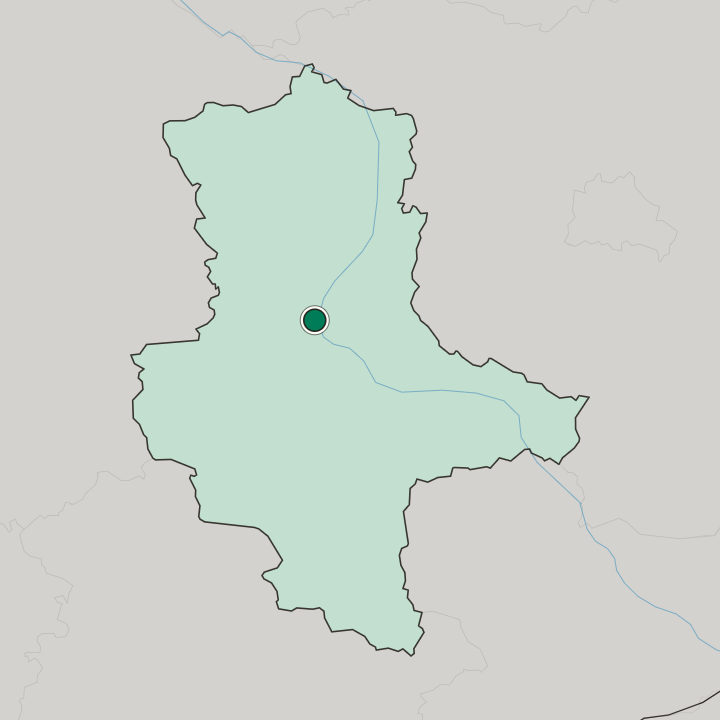
Werder is an elliptical island in the Elbe about four and a half kilometres from north to south, facing Alte Neustadt, Altstadt and Buckau across the Stromelbe, with the Alte Elbe on its eastern side and the Zollelbe cutting the northern end.
Good for
More areas in Magdeburg
Updated October 2026