Germany
Saxony-Anhalt, Germany — Towns & Travel Guide
Saxony-Anhalt is a landlocked state of central Germany, where the Elbe crosses the plain and the Harz rises in the south-west.
Hotel links are affiliate links: booking through them may earn us a commission, at no extra cost to you. It never affects how places are ranked. How this works


Towns & cities in Saxony-Anhalt
Pick a town or city — each links to where to stay.

 Germany
Magdeburg
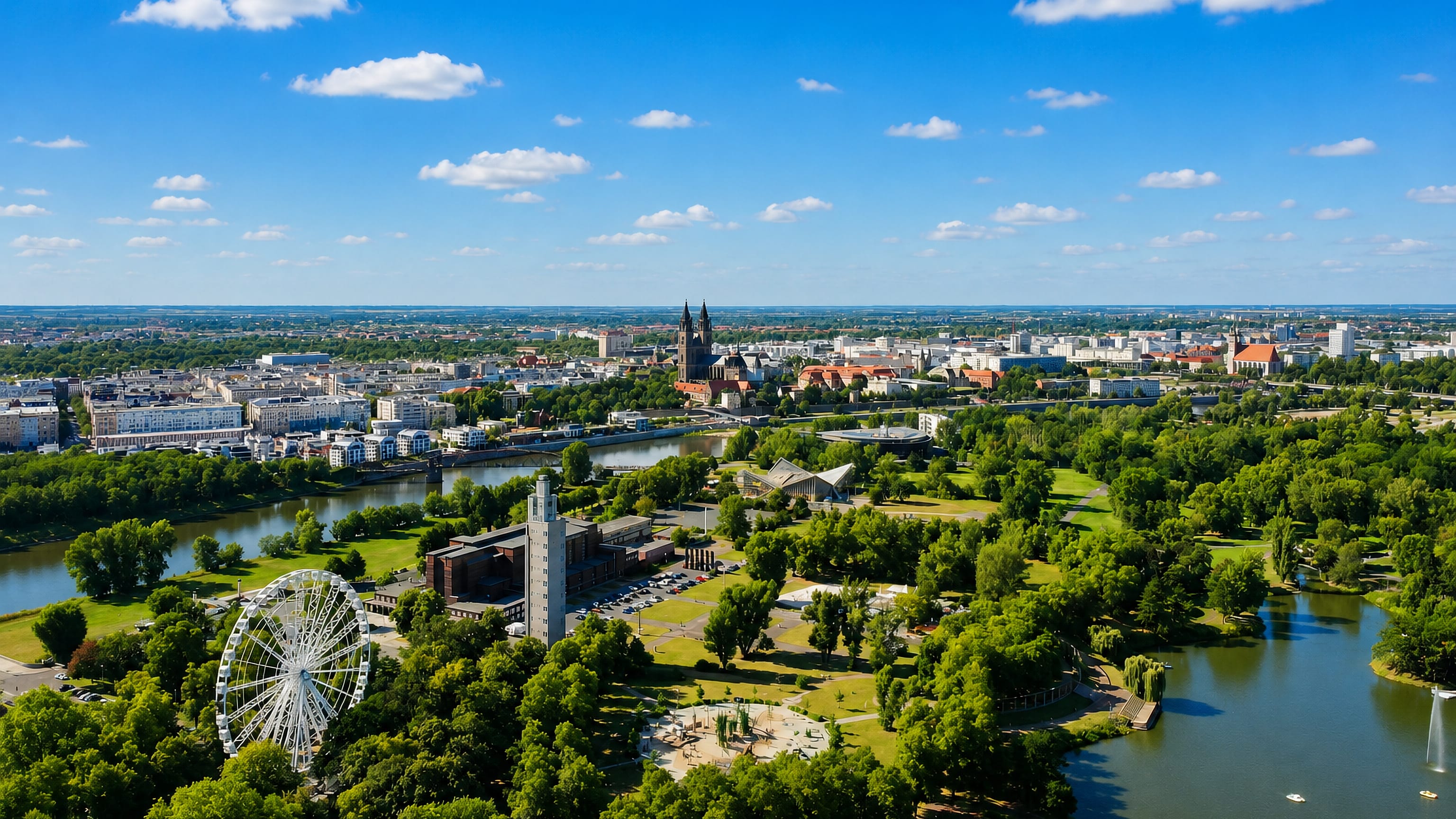
Two Gothic towers stand over the Elbe at Magdeburg, capital of Saxony-Anhalt, a city rebuilt wide and green after two destructions.Where to stay →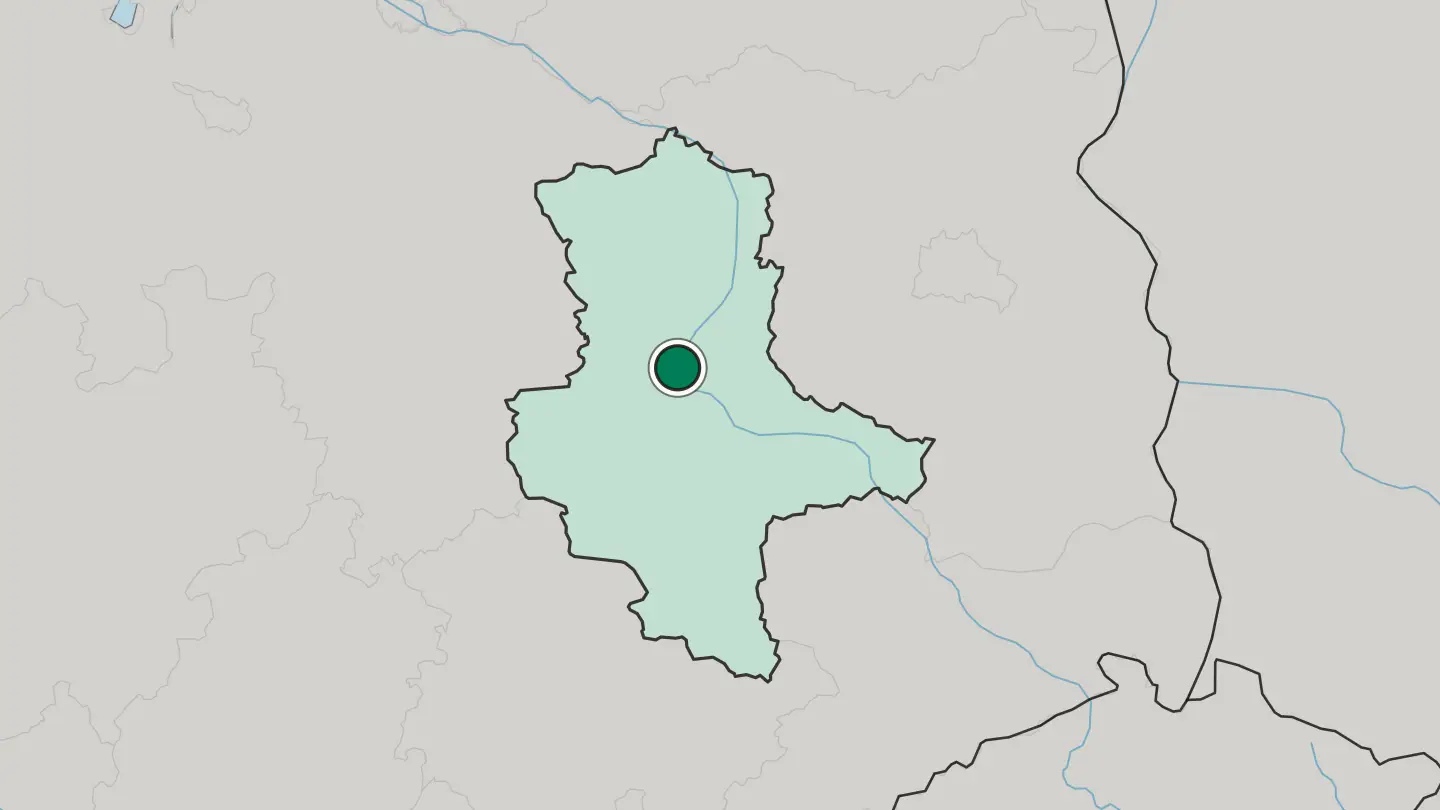
 Germany
Halle (Saale)
Halle (Saale), the second-largest city of Saxony-Anhalt, stands on the river Saale and keeps the Händel-Haus, Moritzburg and the Roter Turm.Where to stay →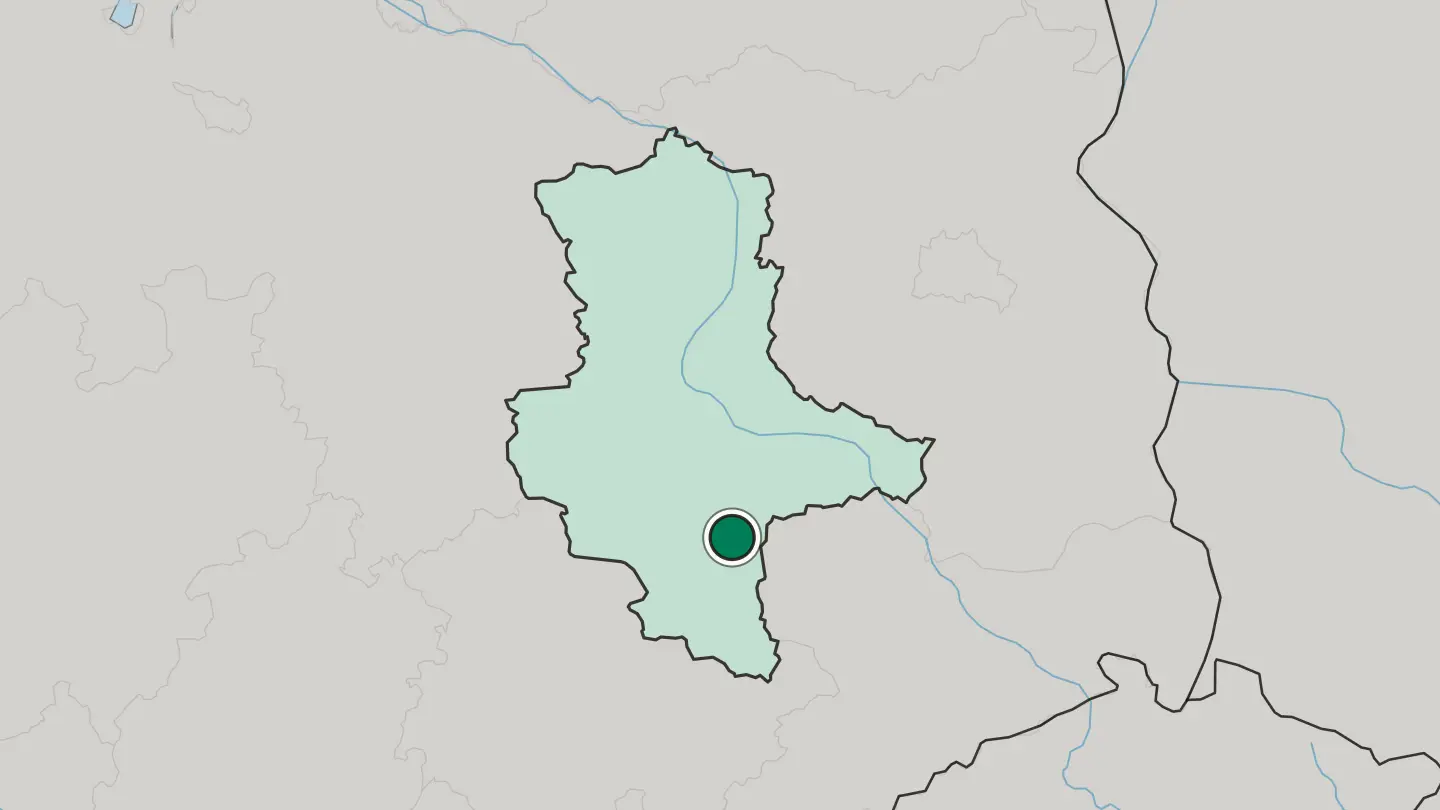
 Germany
Dessau
Dessau is a city in eastern Germany, world-famous for the Bauhaus, the school that shaped modern design.Where to stay →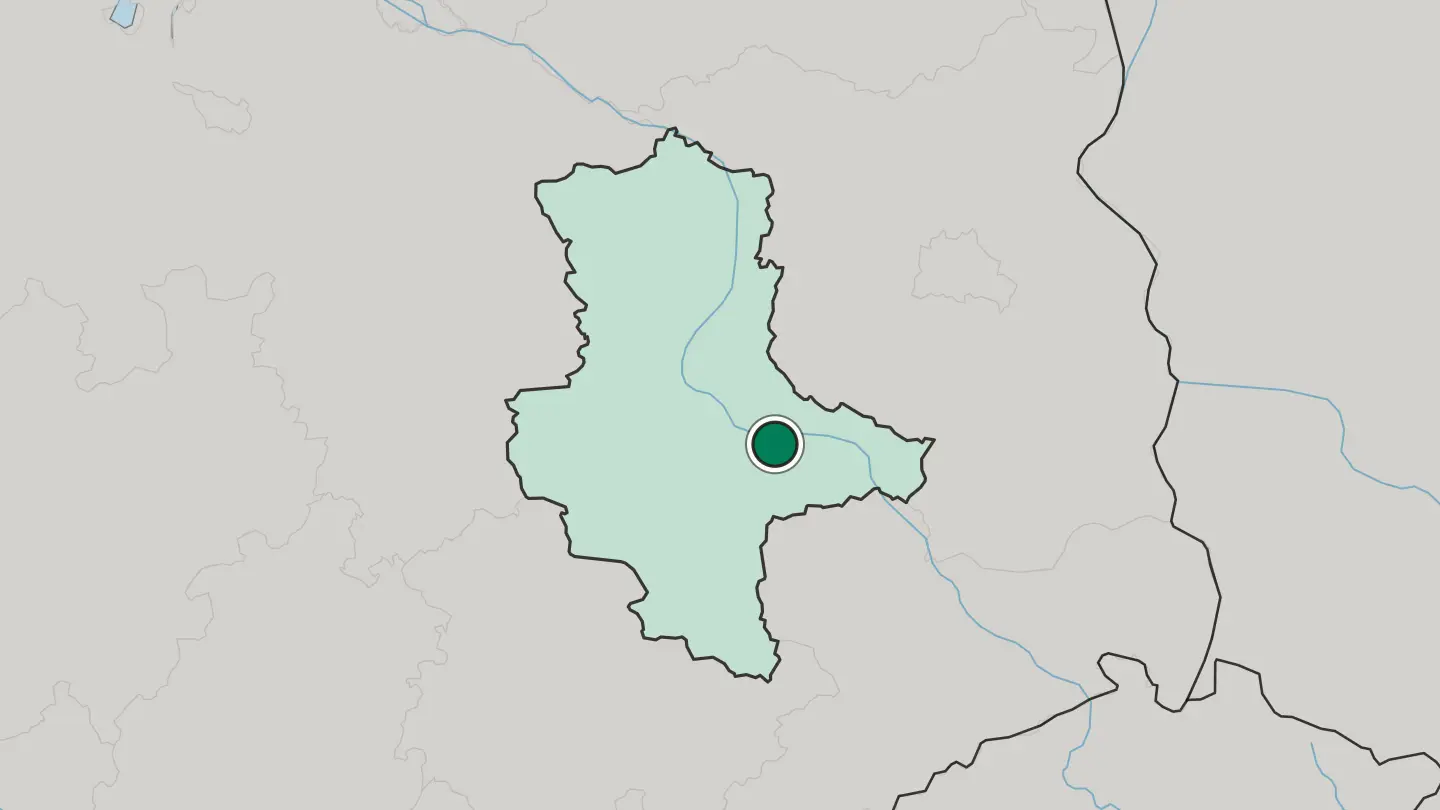
Hotel links are affiliate links: booking through them may earn us a commission, at no extra cost to you. It never affects how places are ranked. How this works
About Saxony-Anhalt
What is Saxony-Anhalt known for?
Saxony-Anhalt carries more UNESCO World Heritage sites per square kilometre than any other German state. That is its calling card. Martin Luther nailed his theses to the church door in Wittenberg in 1517, and the Reformation began here.
The Bauhaus school moved to Dessau in the 1920s and rebuilt itself in glass and concrete, while Quedlinburg kept more than 2,000 half-timbered houses standing across eight centuries. Magdeburg, the capital on the Elbe, holds the tomb of Otto the Great in a cathedral that counts among the oldest Gothic churches in the country.
Where is Saxony-Anhalt?
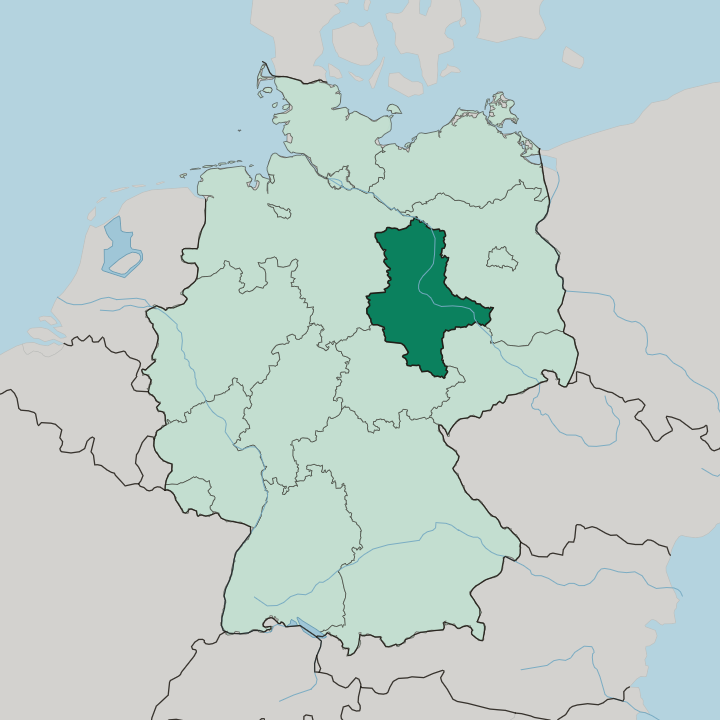
Saxony-Anhalt sits in central Germany, a landlocked state with no coast of its own. Four states ring it. Lower Saxony lies to the west, Brandenburg wraps the north and east, Saxony meets it at the south-east, and Thuringia closes off the south. Most of the land belongs to the North European Plain, flat and glaciated country that the ice sheets left behind.
The Elbe is the defining river, curving north through Magdeburg and draining the eastern and northern reaches of the state. In the south the Saale and the Mulde carry the water down toward it. The one break in the flatness comes at the south-western corner.
There the Harz rises out of the plain, a compact range of wooded hills and granite tors. Its summit is the Brocken, the highest point in northern Germany at 1,141 metres, wrapped in cloud for much of the year. Below the peaks stretch the Harz Foreland and the old copper ground of the Mansfeld Land.
Plain and mountain sit side by side.
What is Saxony-Anhalt like?
Culture here is built out of stone and old ideas. The Reformation started at Wittenberg, where Luther preached and taught, and the town keeps his house, the Castle Church and the Melanchthon House as a set of memorial sites. Two towns over lies Eisleben, where Luther was born and where he died, its houses now part of the same World Heritage listing.
Faith left the deepest mark, but it was never the only one. Four centuries after Luther, Walter Gropius brought the Bauhaus to Dessau and made the town the birthplace of a new modernism in steel and glass. The older heritage runs back further still.
Quedlinburg preserves a medieval street plan and a collegiate church whose treasury survived the centuries intact. Naumburg Cathedral, in the south, holds the carved figures of Uta and her fellow donors, among the finest sculpture of the German Middle Ages. The Garden Kingdom of Dessau-Wörlitz laid out parks and canals in the spirit of the Enlightenment.
German is the language spoken across all of it. Six UNESCO sites crowd this one state.
What is the history of Saxony-Anhalt?
This was Ottonian heartland. Otto the Great made Magdeburg the seat of his rule, founded its archbishopric in 968, and was buried in the cathedral when he died in 973. Centuries later Prussia absorbed the northern lands ceded by the Kingdom of Saxony after 1815 and governed them as its Province of Saxony, alongside the small Duchy of Anhalt to the east.
The Soviet occupation authorities fused the two into a single state in 1945. It was dissolved under East Germany, then re-established in 1990 when the country reunified.
What is the climate of Saxony-Anhalt?
Saxony-Anhalt runs among the warmest and driest corners of Germany. The Harz blocks much of the weather coming off the west, so the plain in its lee, around Magdeburg and the lower Saale, sees relatively little rain. Summers turn warm on that lowland, while winters stay cool without extremes.
Up on the Brocken it is another world: cloud, wind and snow lie heavy on the summit for much of the year. The mountain makes its own climate.
How do you get to Saxony-Anhalt?
Most visitors fly into Leipzig/Halle Airport, just over the southern border, or come through Berlin from further afield. From either, the train does the rest. Fast intercity services run to Magdeburg and Halle, and the ride from Berlin to the capital takes under two hours with no change.
Inside the state, regional lines thread out to Wittenberg, Dessau and the Harz towns. A narrow-gauge steam railway still climbs the Brocken from Wernigerode.
Common questions
What is the best area to stay in Saxony-Anhalt?
Magdeburg: getting to know Saxony-Anhalt. Halle (Saale): the southern Saale country. Wernigerode and Quedlinburg: the Harz mountains and old towns. Dessau-Rösslau: Bauhaus and the garden landscape.
Good for
More regions in Germany
Updated September 2026