Estonia · Valgamaa
Where to Stay in Valga, Valgamaa
Valga sits on Estonia's border with Latvia, one half of a town split from Valka in 1920 and rejoined without checkpoints in 2007.
Hotel links are affiliate links: booking through them may earn us a commission, at no extra cost to you. It never affects how places are ranked. How this works


Where to stay in Valga
Where the beds are, and what that means for the visit.
The choice in Valga is which country you wake up in. Rooms on the Estonian side cluster near Valga Holy Spirit Church and the streets that run down toward the border, which is where the shops and the parish offices sit. That side is the bigger one.
Valga is the seat of Valgamaa, so its centre carries more civic weight than a town this size usually would. Anyone who wants everything within a flat ten-minute walk should book there, since Valga's built-up ground is compact enough that the churches, the shops and the crossing all fall inside one stroll. Valka lies across the line, smaller and quieter, and a bed there puts you in Latvia while leaving the Estonian church towers a short walk behind you.
That crossing is the whole point for some visitors. Travellers arriving by car often prefer the outer streets, where parking is easier and the drive south toward Latvia or north into Valgamaa starts without threading the centre. The border road runs straight through.
Jumalaema Vladimiri Pühakuju kirik stands among the older residential blocks, so even the quieter lanes put a landmark at the end of the street.
Find hotels in Valga
Direct booking searches for these neighbourhoods.
Valga
The Estonian half and the seat of Valgamaa, where the parish offices, the shops and the Holy Spirit church tower all sit inside one flat grid.Find hotels in Valgasleeping in Latvia with the Valga church towers ten minutes behind youValka
The Latvian half of the divided town, smaller and quieter since the 1920 partition, reached on foot along streets that lost their fences in 2007. Beds are limited here, so book early.Find hotels in ValkaHotel links are affiliate links: booking through them may earn us a commission, at no extra cost to you. It never affects how places are ranked. How this works
About Valga
Valga is known for being half a town.
What is Valga known for?
The other half is Valka, over the Latvian line, and until 1920 the two formed one municipality that was divided between two new republics rather than growing apart on its own. Border posts came down in 2007. Crossing between the countries takes a couple of minutes on foot, along streets that carry no barrier and no checkpoint.
Valga is the larger side.
What are the main landmarks in Valga?
Three churches stand out. Valga Holy Spirit Church gives the Estonian half its most visible tower, and the streets running down toward the Latvian line keep it in view for most of the walk. A few blocks off stands St. John's Church.
Jumalaema Vladimiri Pühakuju kirik carries the third of the town's church names, and all three can be walked between in well under an hour.
What is the history of Valga?
The record begins in 1286. What the record names is a single town, not a pair of neighbours. For most of the centuries that followed, Valga and Valka were one town rather than two, and the line that divides them did not exist in any form.
That changed in 1920. The new republics of Estonia and Latvia divided the town between them in that year, leaving Valga with the larger share and Valka with the smaller, and what had been a single municipality became two. The border hardened, then softened.
Both countries joined the Schengen Agreement, and on 21 December 2007 every border-crossing point between the two towns was removed, with the roads and fences opened along the whole line. Passport checks ended with it. Streets that had ended at a fence ran through again.
The two are formally twin-towns, a single urban area under two flags, which is roughly what they were before 1920. Valga kept its role as the seat of Valga County and of Valga Parish, so the Estonian half holds the county offices while Valka answers to Latvia.
Where is Valga?
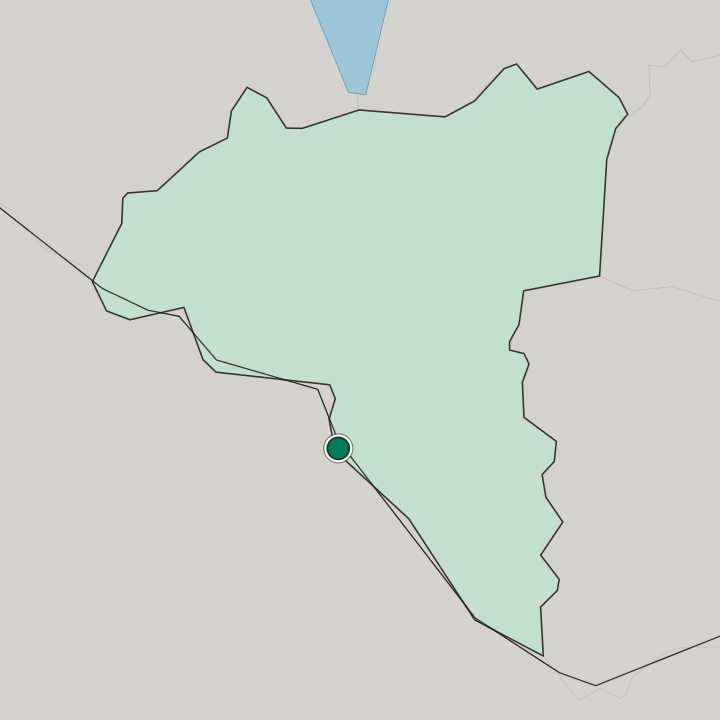
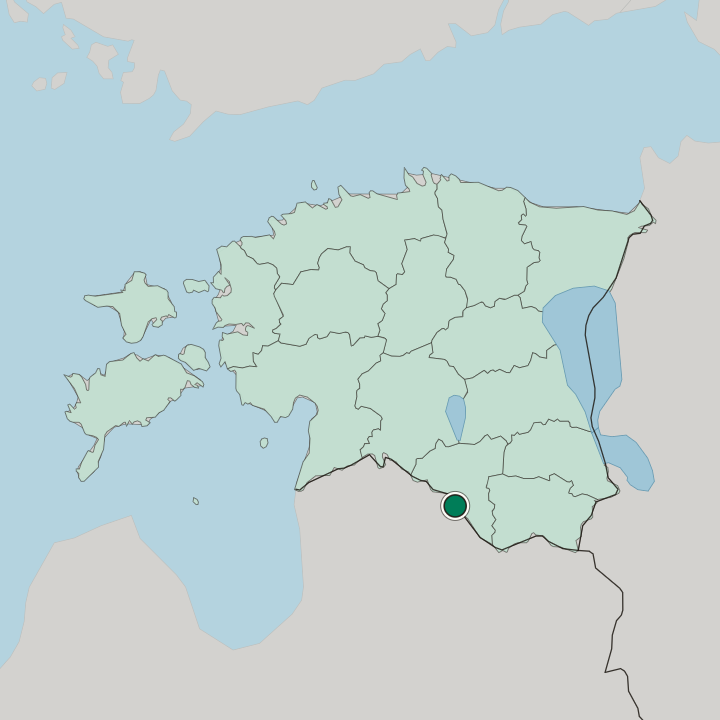
Valga stands in southern Estonia, hard against the Latvian border, with Valka continuing the same street pattern on the other side. Its ground covers about sixteen and a half square kilometres. That is small enough that the built-up area reads as one place, and the frontier runs through it as a line on the map rather than as anything visible on the ground.
Valgamaa spreads north from here.
What is the climate of Valga?
The Baltic keeps southern Estonia off the worst of the continental extremes, so Valga's winters bite without reaching the depths found further east. Cold arrives early and stays. Spring arrives late and briefly, then summer opens out into long pale evenings that keep the walk across to Valka comfortable long after the shops have shut.
Rain spreads thinly through the year.
How do you get to Valga?
Tartu is the nearest large city to the north, and the road and rail routes from it end at Valga's border with Latvia. Trains terminate here. Riga lies south beyond Valka, reachable by road through streets that carry no checkpoint, since every border-crossing point between the two towns was taken out in 2007. Drivers cross without stopping.
Common questions
What is the best area to stay in Valga?
Valga: walking to Valga Holy Spirit Church and stepping over the Latvian line the same morning. Valka: sleeping in Latvia with the Valga church towers ten minutes behind you.
Good for
Updated September 2026