Estonia: Regions, Cities & Travel Guide
Estonia is the northernmost and smallest of the Baltic states, set on the eastern shore of the Baltic Sea and scattered with over 2,300 islands.
Hotel links are affiliate links: booking through them may earn us a commission, at no extra cost to you. It never affects how places are ranked. How this works


Top destinations in Estonia
Cities to start from, then drill into areas and hotels.
 Estonia
Tallinn
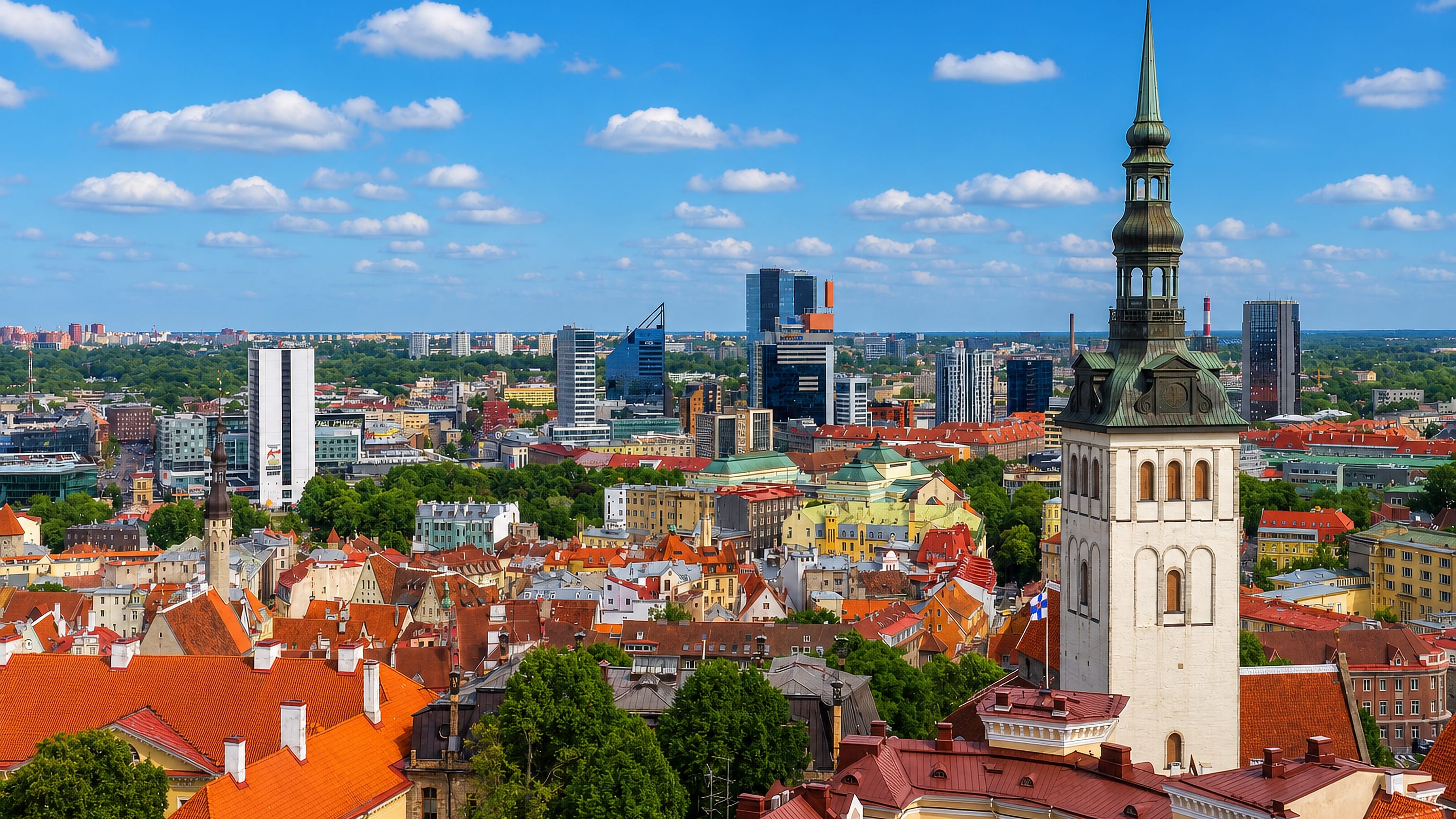
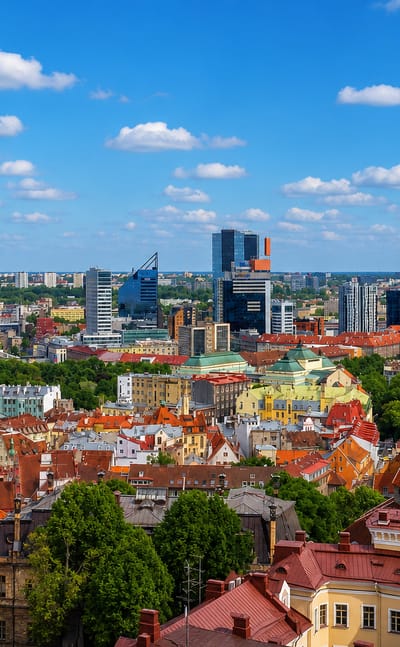
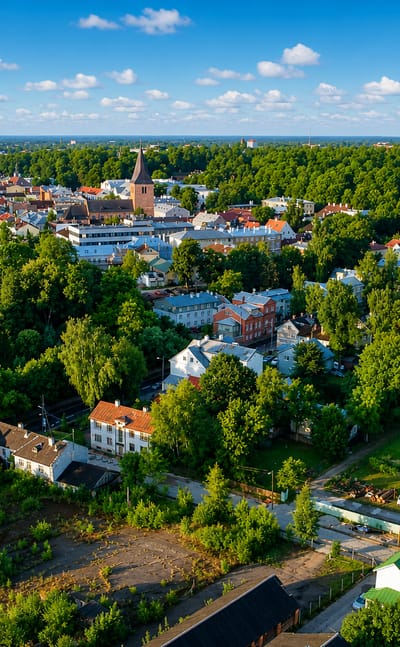
Tallinn is the capital and largest city of Estonia, its walled medieval Old Town rising on a hill above the Gulf of Finland.Where to stay →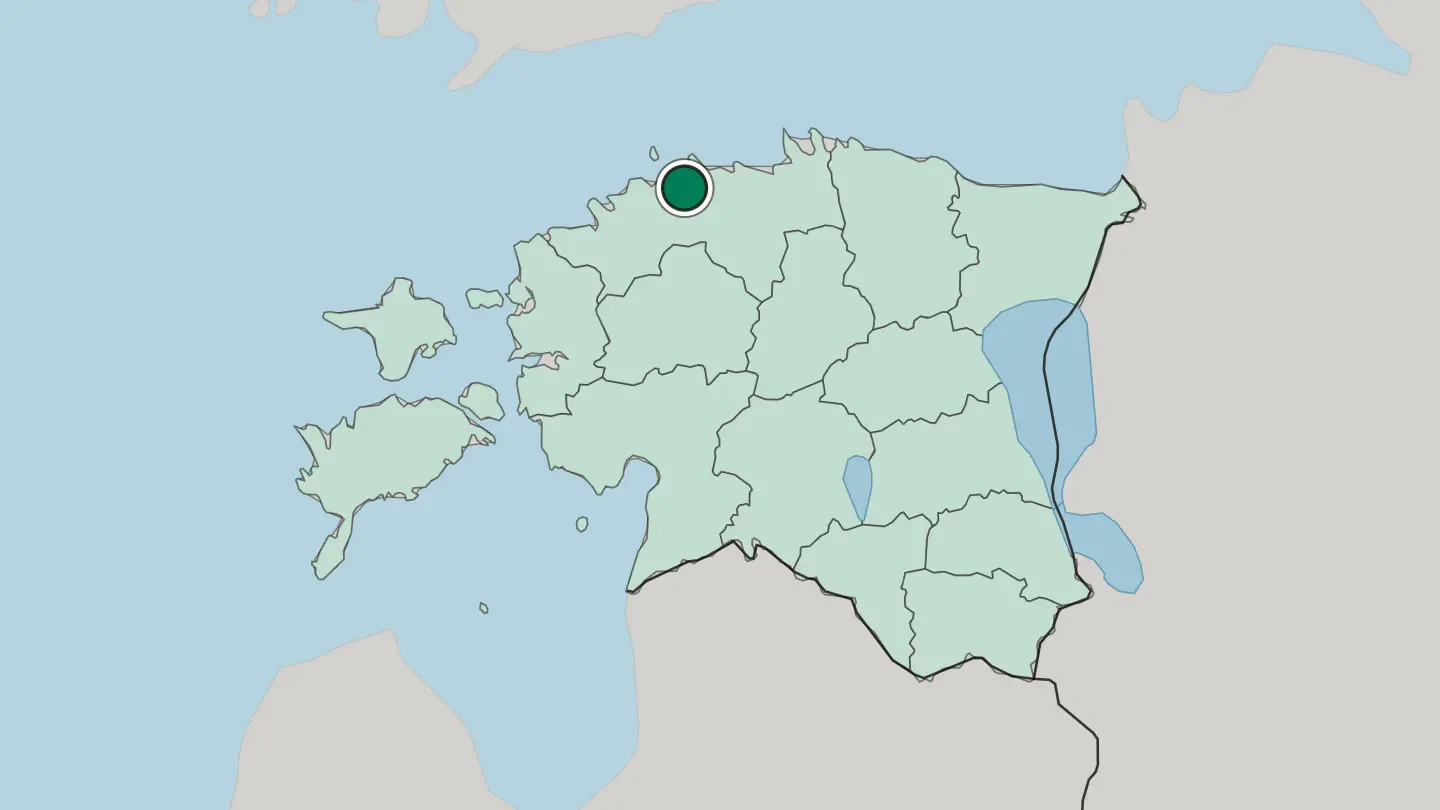
 Estonia
Tartu
The Emajõgi slides through the heart of Tartu, a university city in Tartumaa and the oldest town in the Baltics, southeast of Tallinn.Where to stay →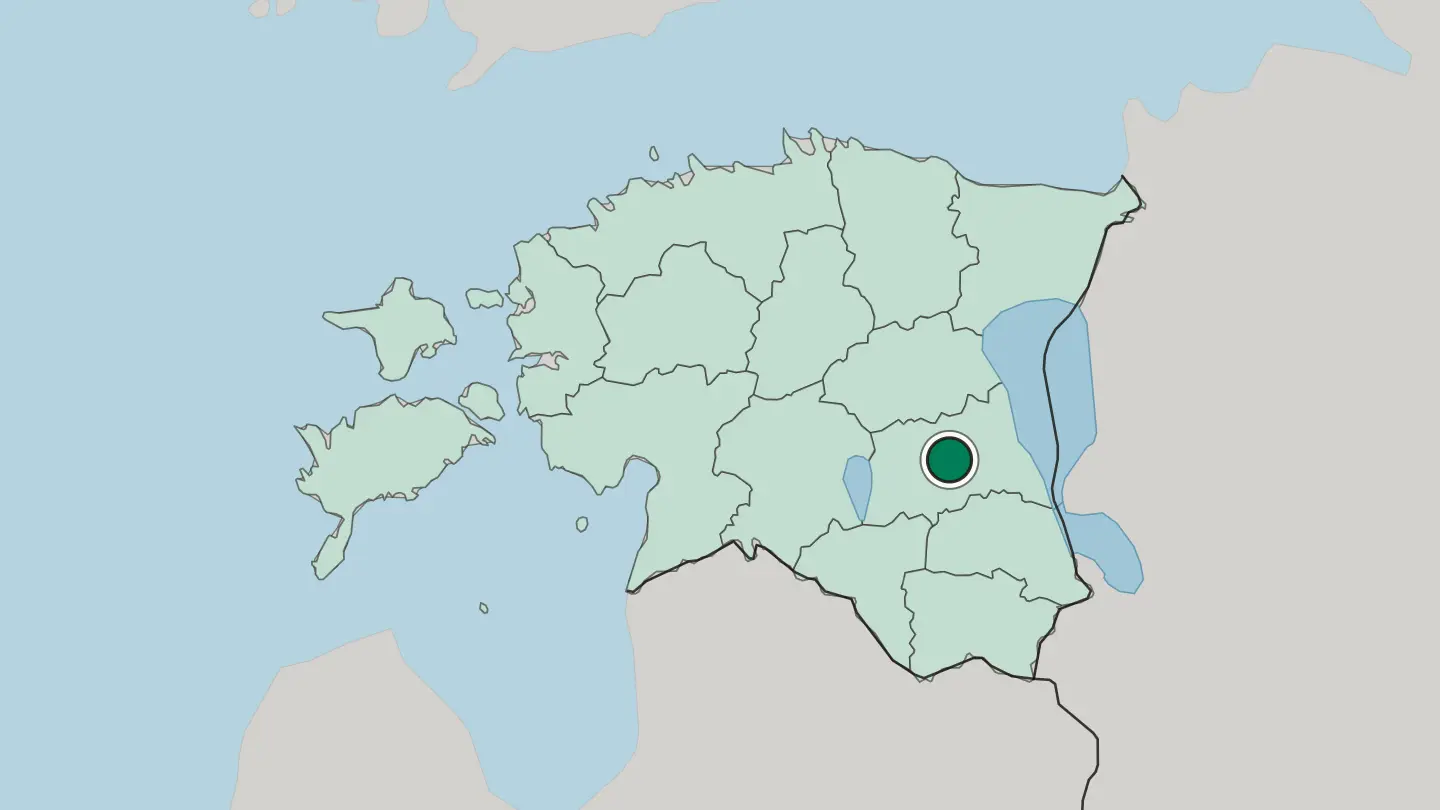
 Estonia
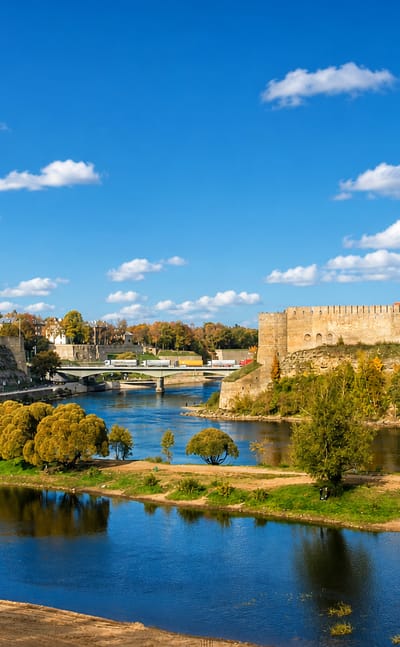
Narva
Hermann Castle rises above the Narva river, the easternmost city in Estonia, set in Ida-Virumaa on the west bank of the border stream.Where to stay →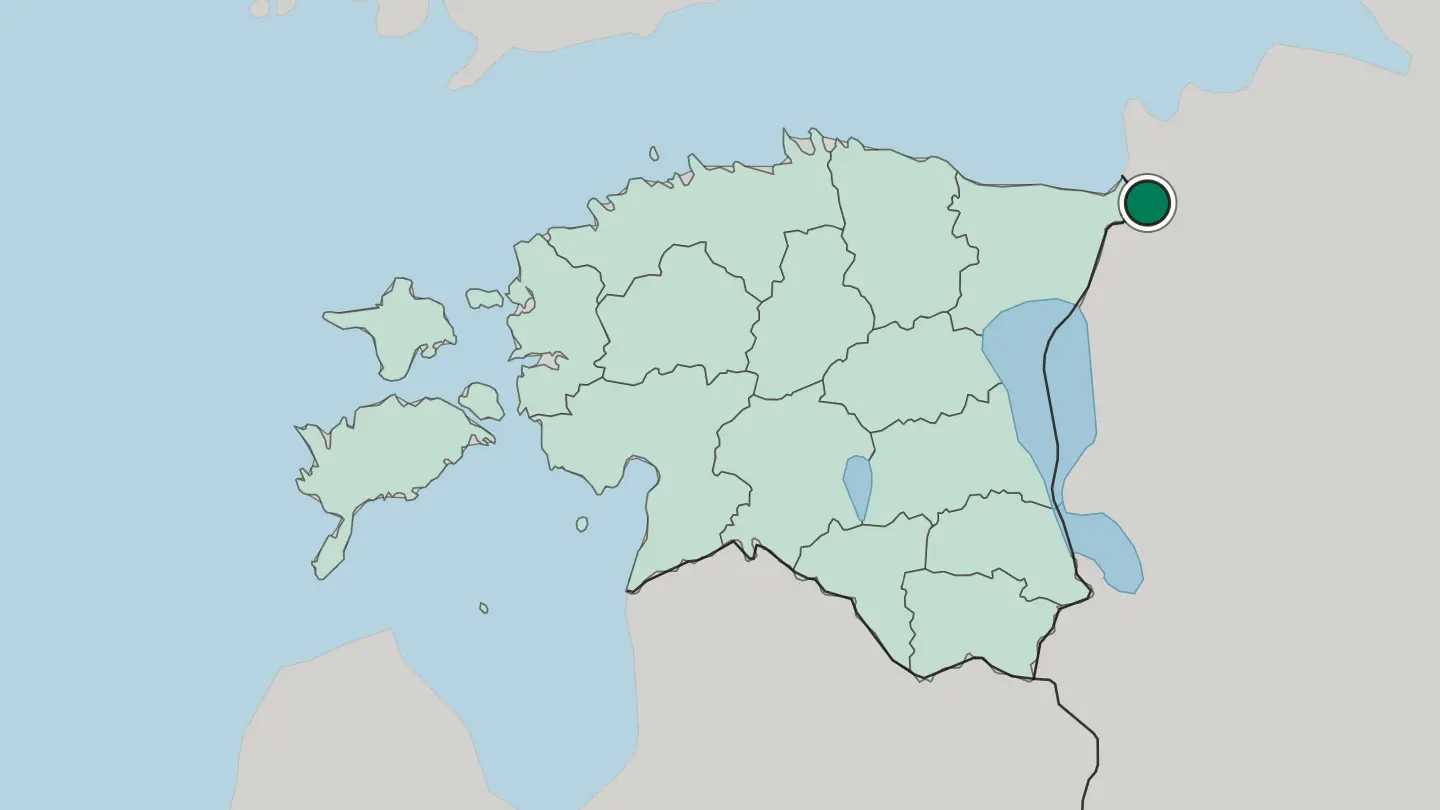 Estonia
Pärnu
Pärnu is Estonia's main seaside resort, a spa town of parks and pale sand on the Gulf of Riga.Where to stay →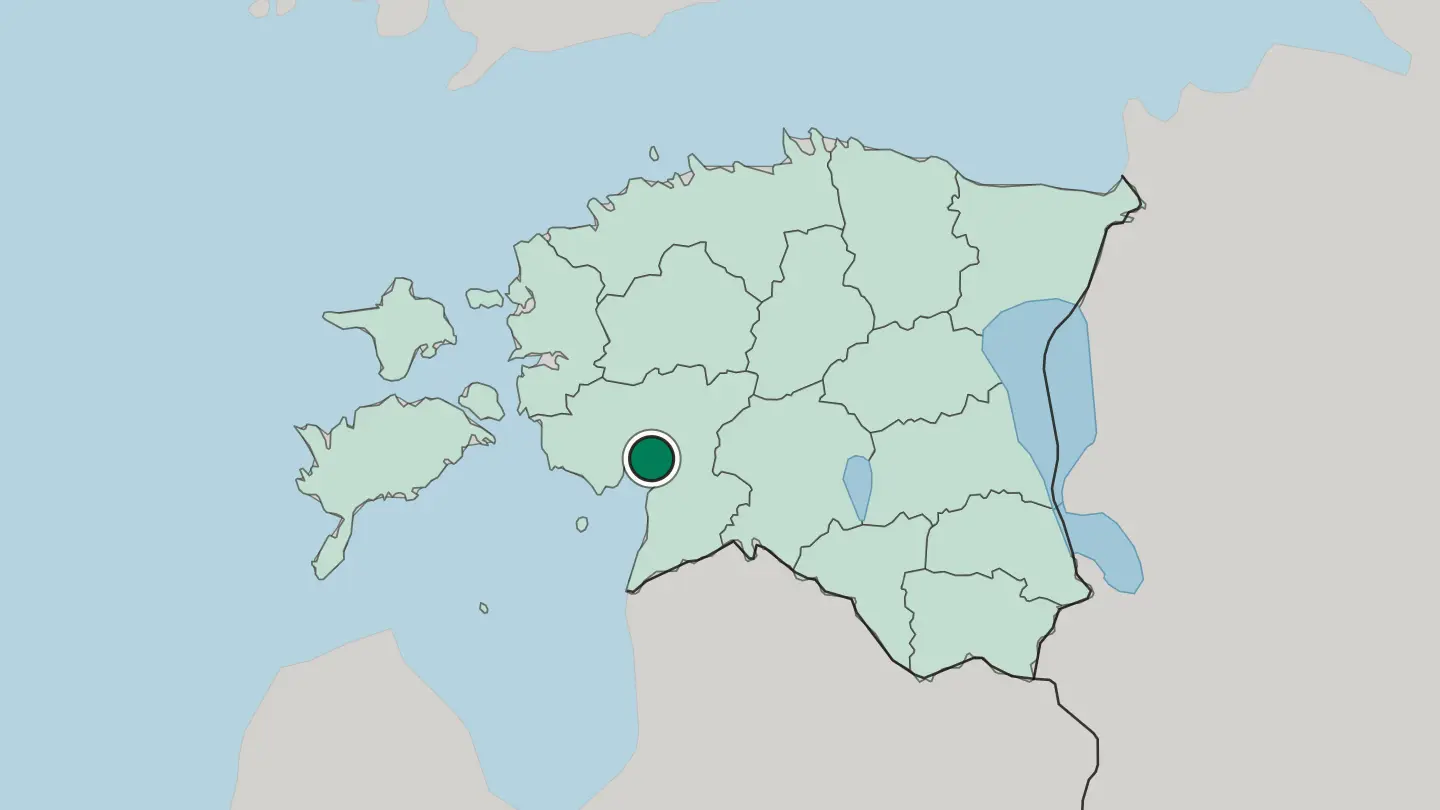 Estonia
Kuressaare
Kuressaare is the capital of Saaremaa, Estonia's largest island, a low Baltic town gathered around a moated dolomite castle.Where to stay →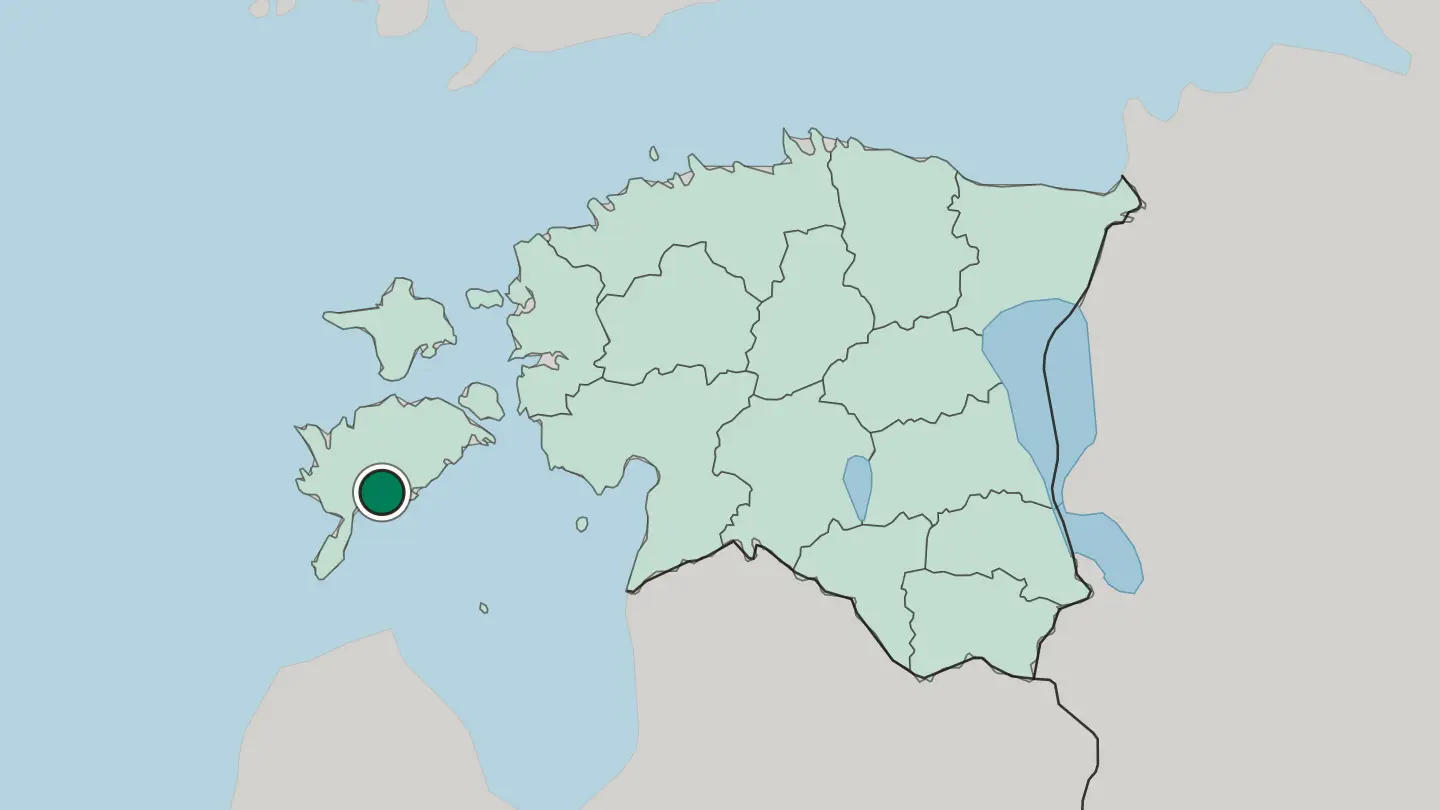 Estonia
Viljandi
Viljandi is a hill town and county seat in southern Estonia, set on steep ground midway between Pärnu and Tartu.Where to stay →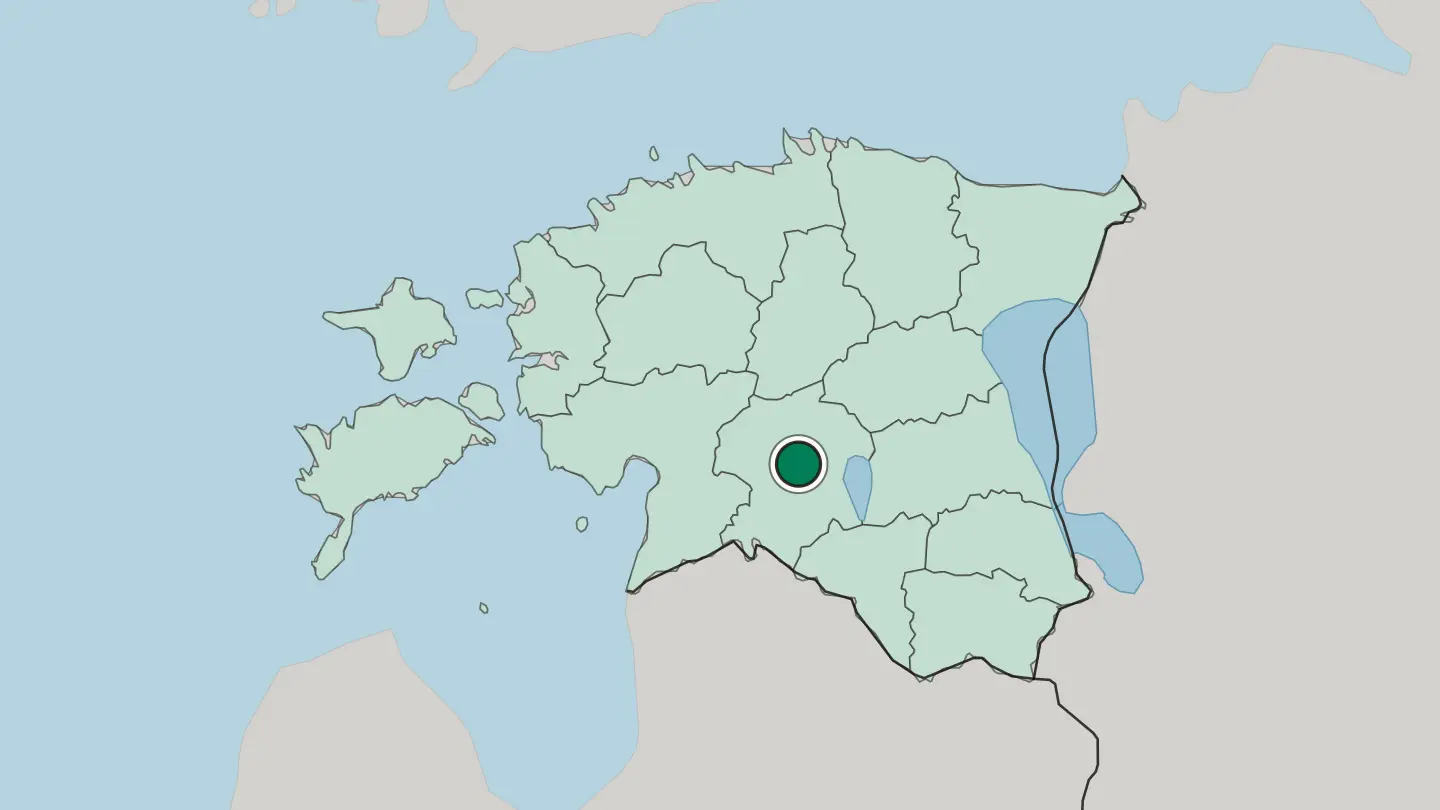 Estonia
Haapsalu
Haapsalu is a seaside resort town on Estonia's west coast, the seat of Läänemaa, chartered in 1279 and built low around a shallow bay.Where to stay →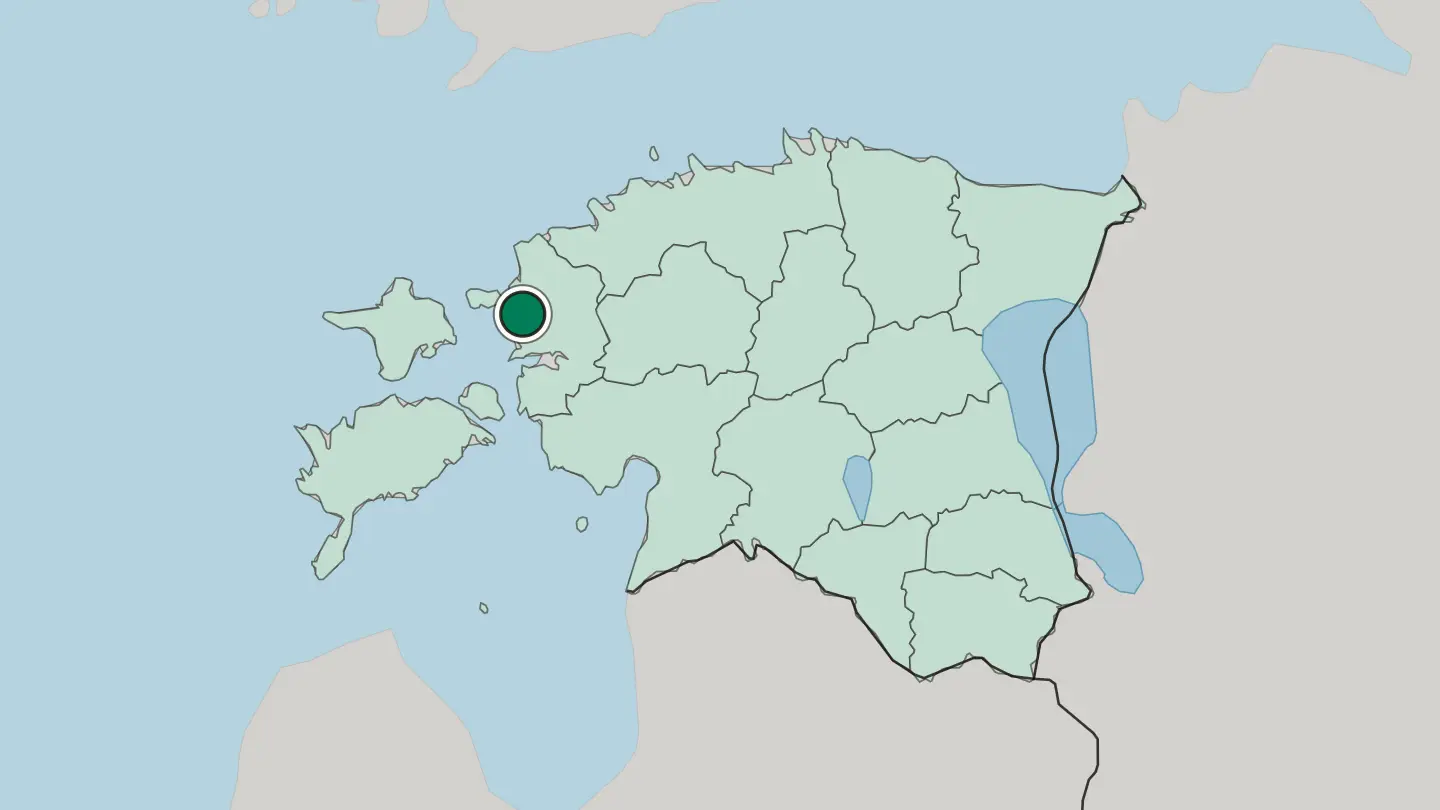 Estonia
Rakvere
Rakvere, county seat of Lääne-Virumaa, is Estonia's fifth largest city, and Rakvere Castle stands over its middle.Where to stay →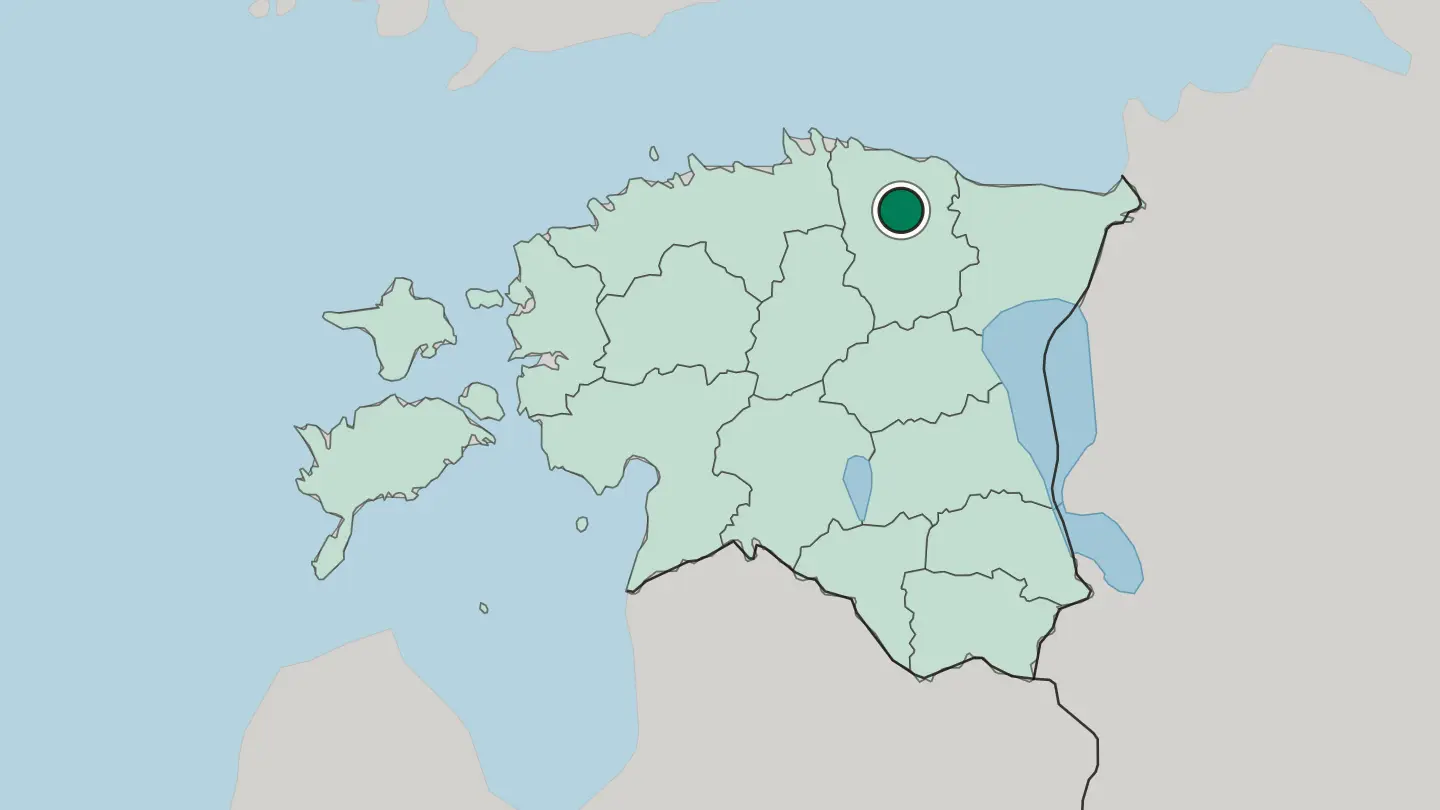 Estonia
Valga
Valga sits on Estonia's border with Latvia, one half of a town split from Valka in 1920 and rejoined without checkpoints in 2007.Where to stay →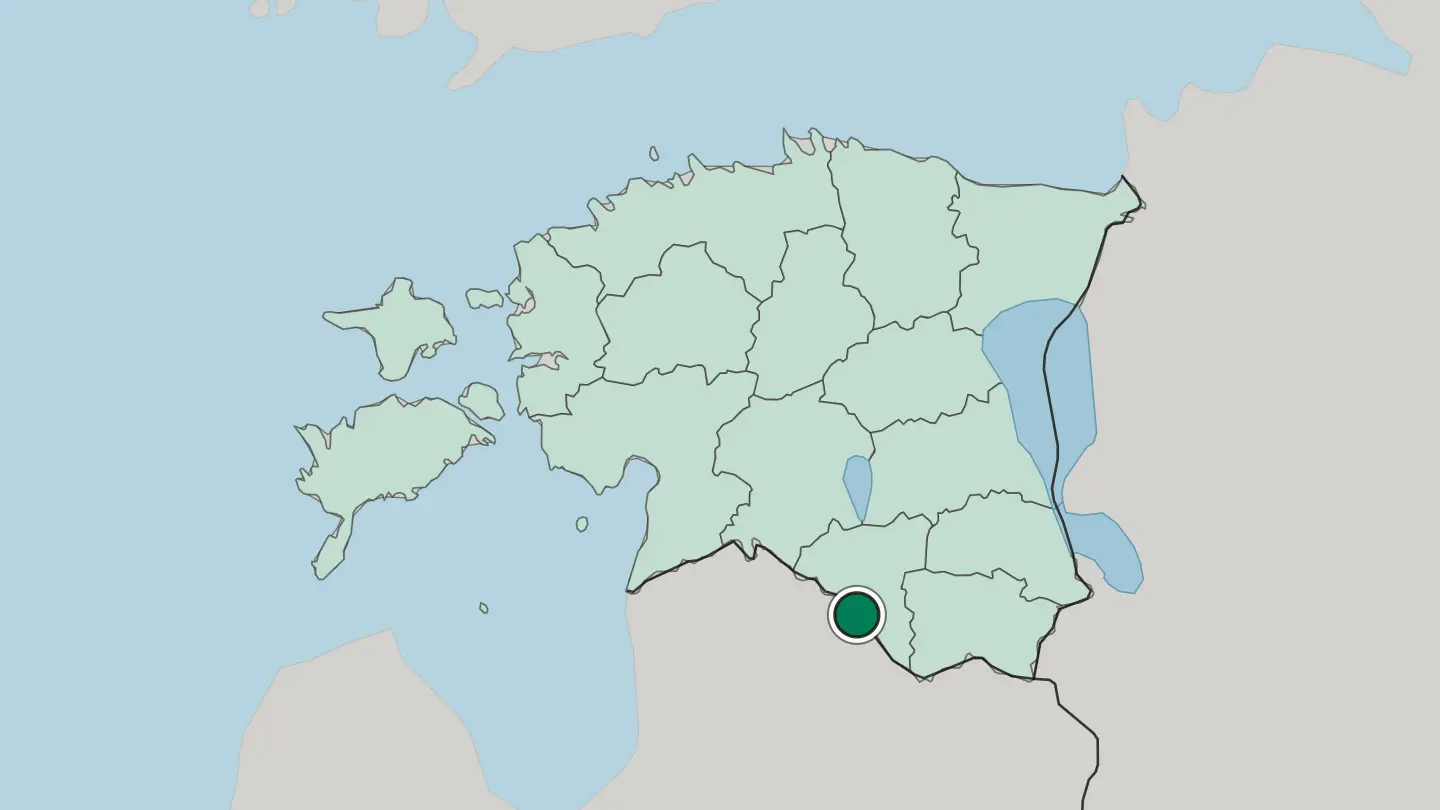
Hotel links are affiliate links: booking through them may earn us a commission, at no extra cost to you. It never affects how places are ranked. How this works
Regions of Estonia
Estonia
Harjumaa
Harjumaa is the county around Tallinn on the southern shore of the Gulf of Finland, the capital region and civic heart of Estonia.Towns & cities →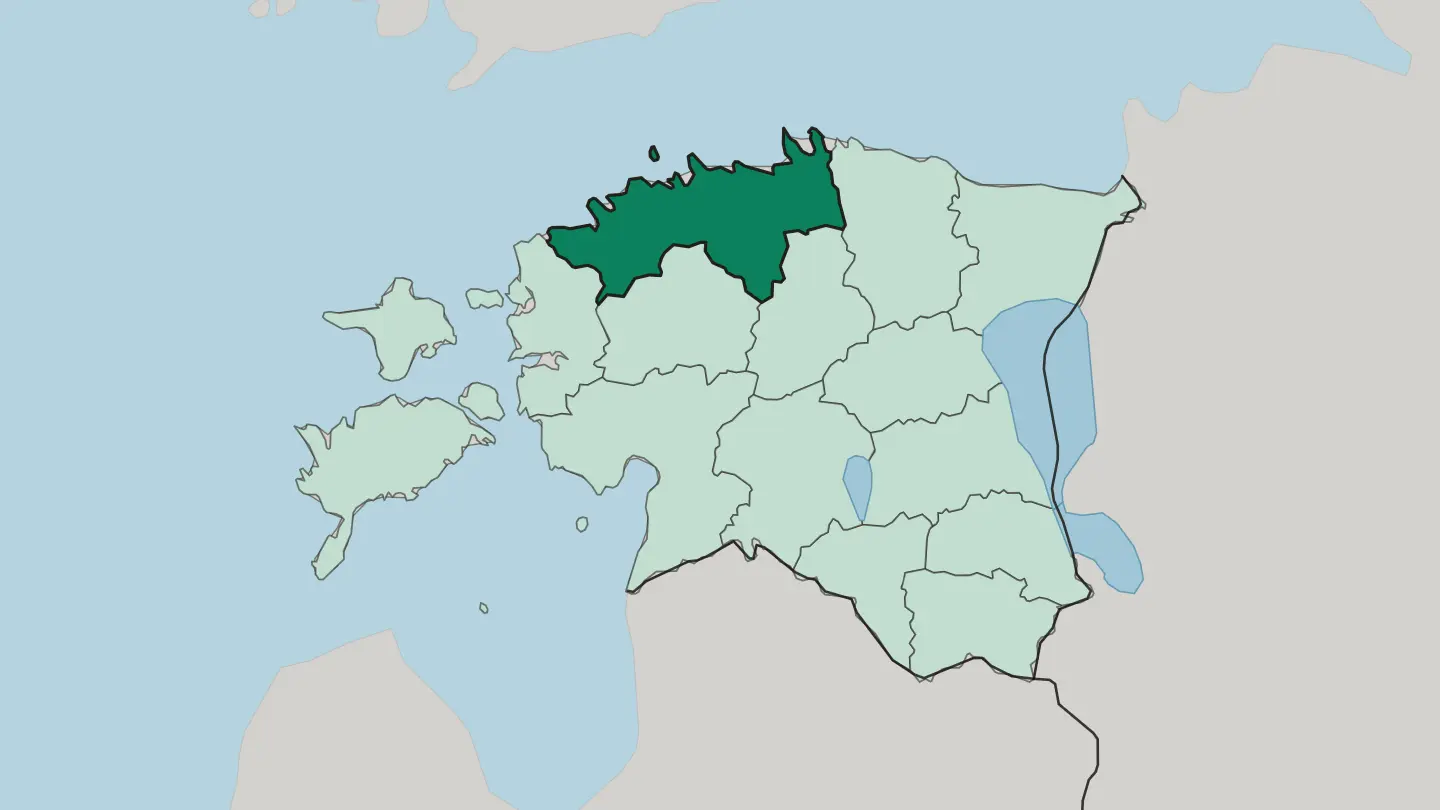 Estonia
Hiiumaa
Hiiumaa is Estonia's second-largest island, a low green expanse of pine forest and lighthouses in the Baltic Sea.Towns & cities →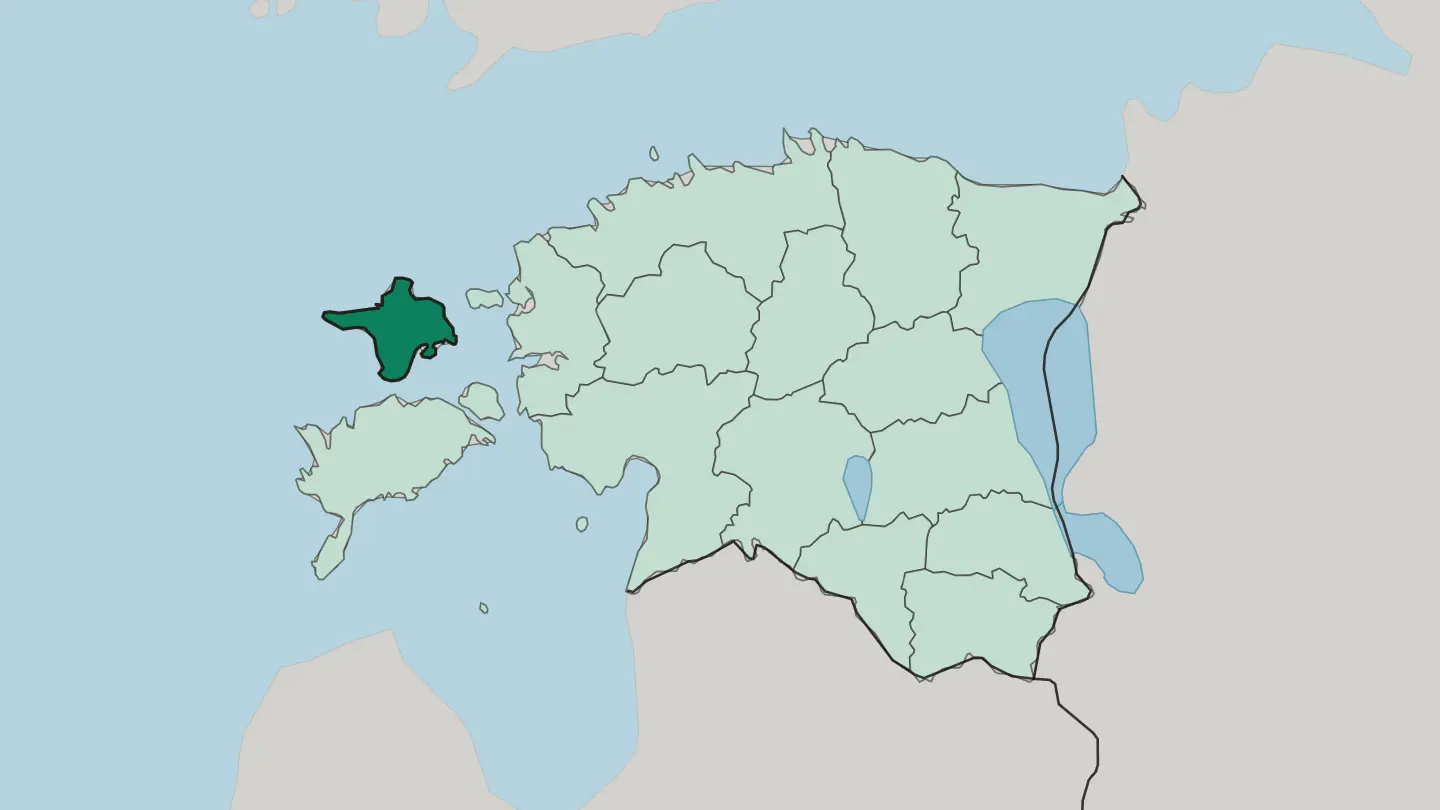 Estonia
Ida-Virumaa
Ida-Virumaa is Estonia's north-eastern corner, where the Narva River draws the border with Russia and oil shale built the towns.Towns & cities →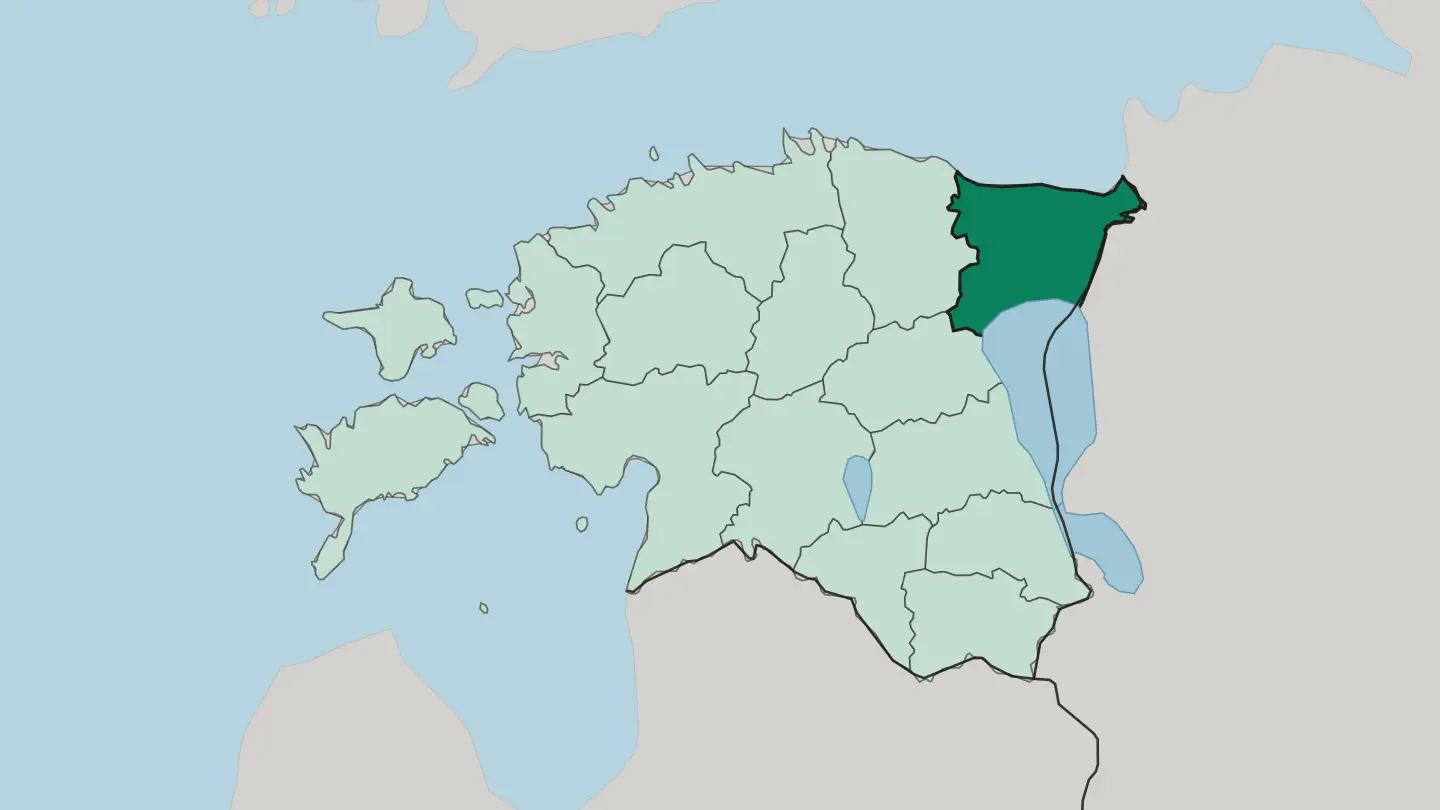 Estonia
Järvamaa
Järvamaa sits at the middle of Estonia, a county of grain fields, bogs and springs around the limestone town of Paide.Towns & cities →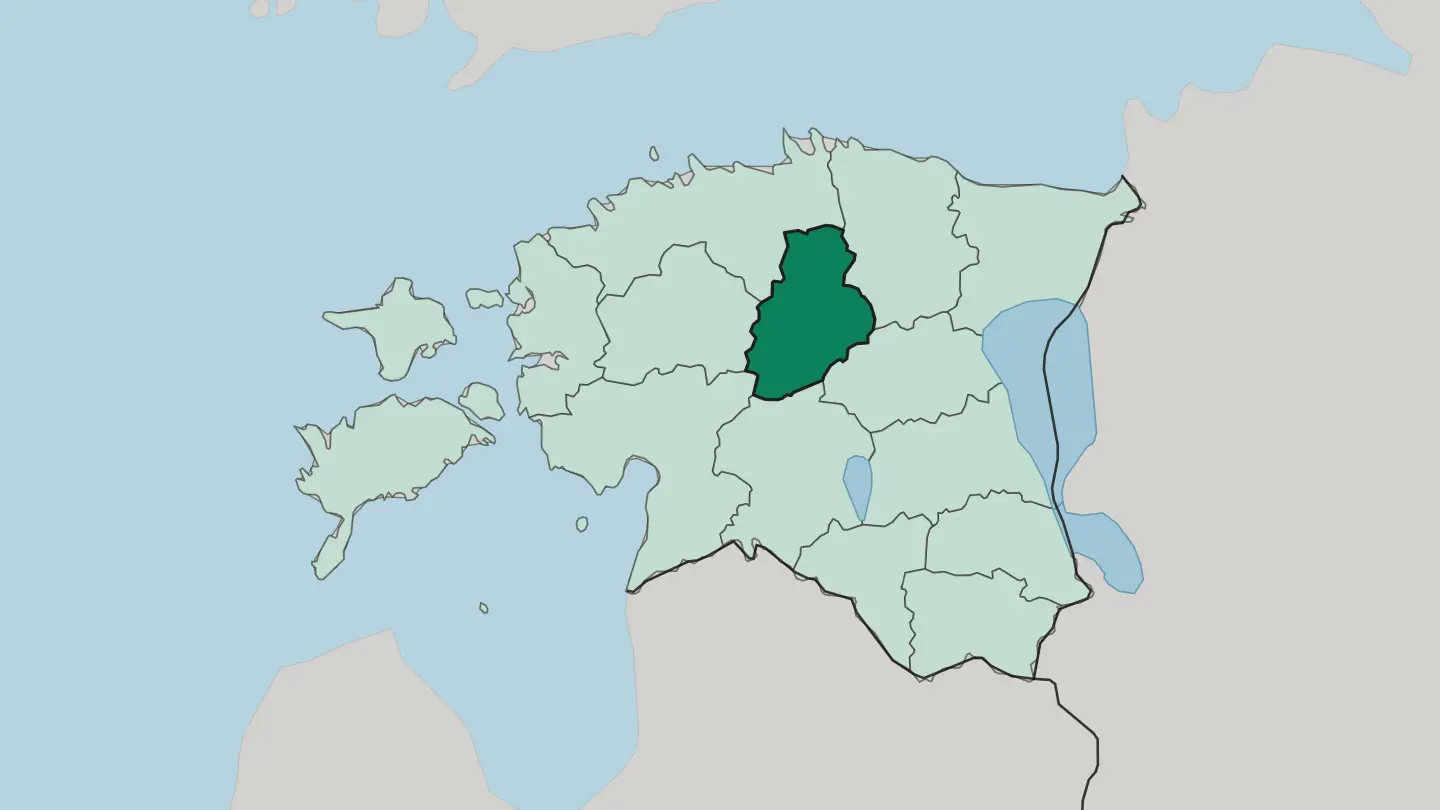 Estonia
Jõgevamaa
Jõgevamaa is an eastern Estonian county of drumlin ridges, bogs and old lakeside fishing towns along the shore of Lake Peipus.Towns & cities →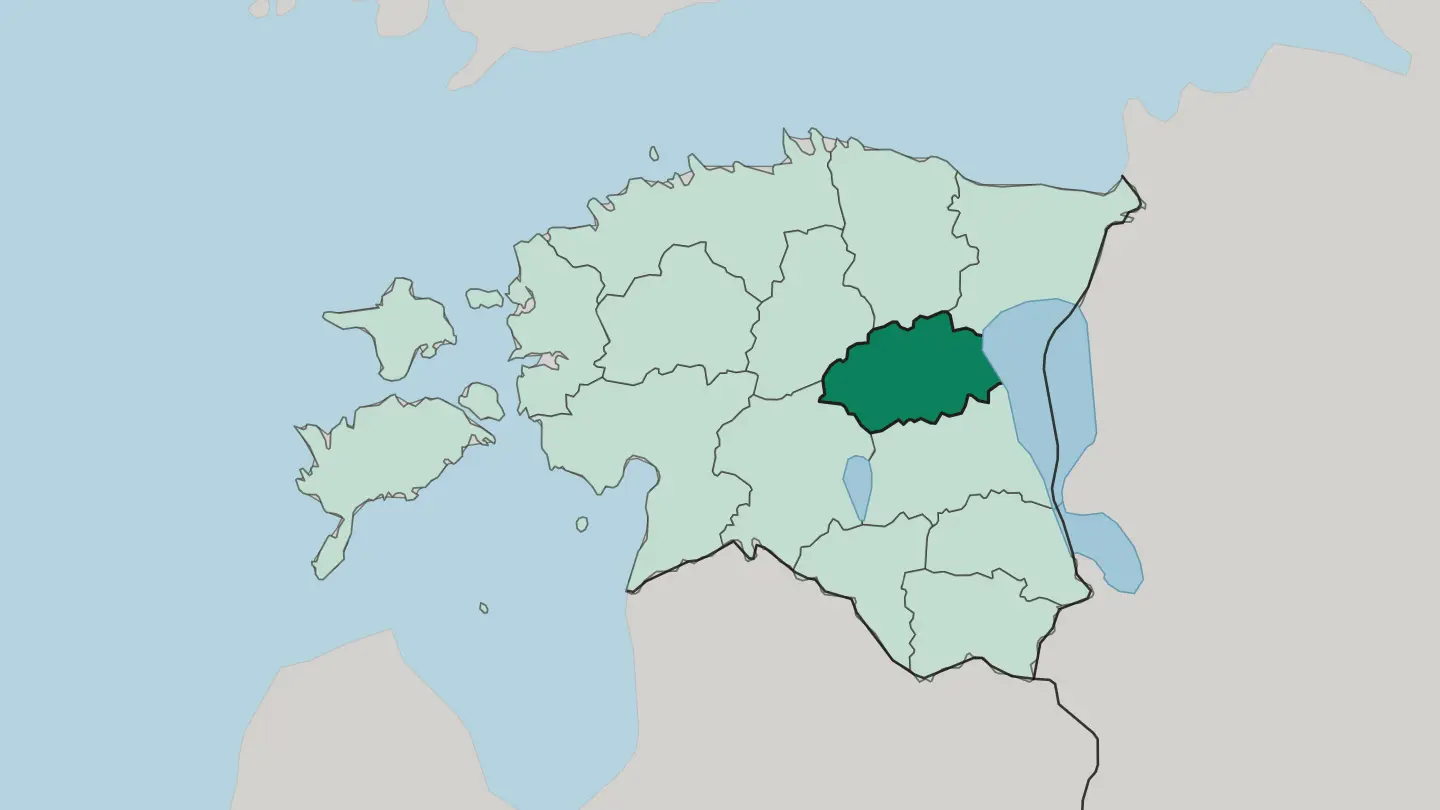 Estonia
Lääne-Virumaa
Lääne-Virumaa is a county on Estonia's north coast, where limestone uplands meet the manors and bogs of Lahemaa National Park.Towns & cities →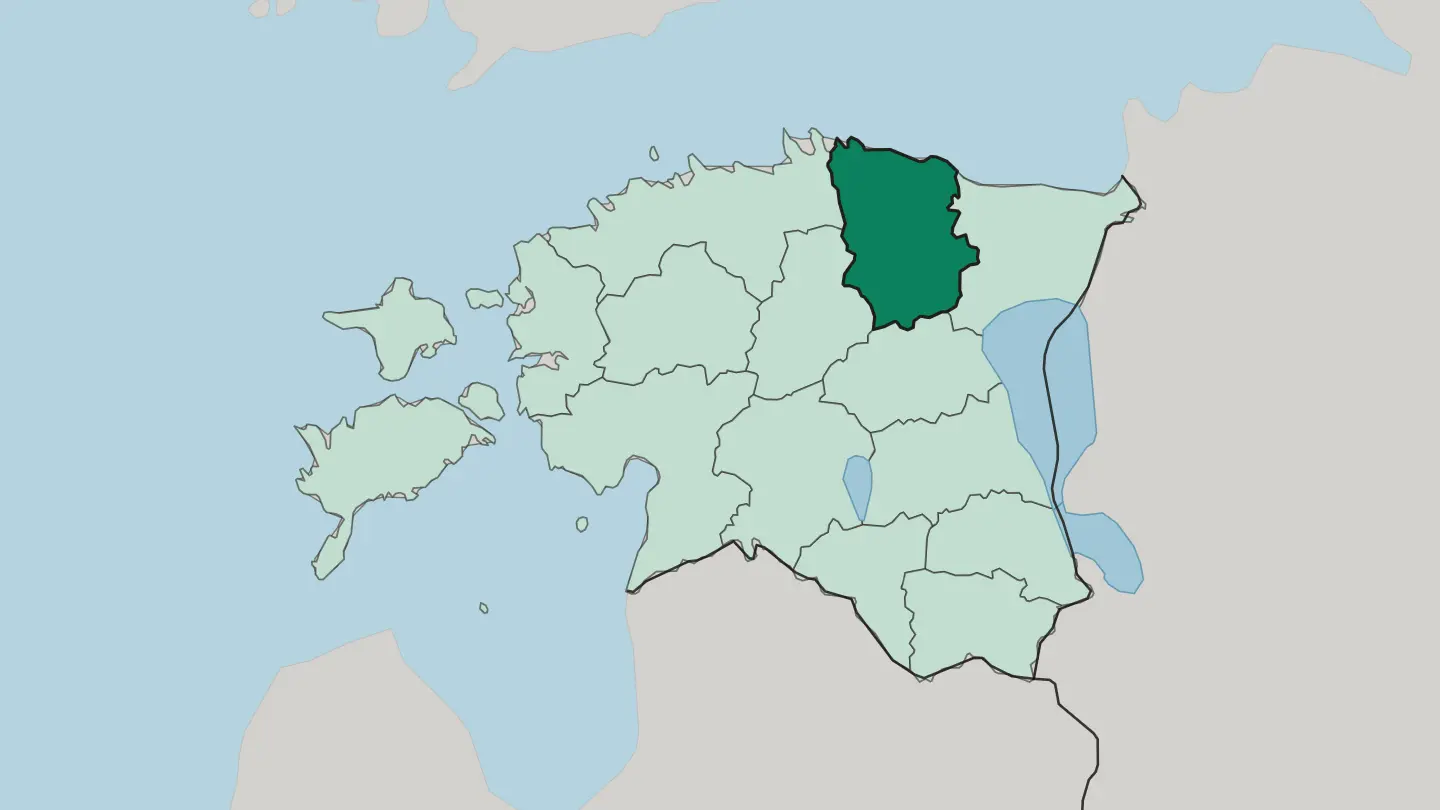 Estonia
Läänemaa
Läänemaa is Estonia's westernmost mainland county, a flat, bay-cut coast around the resort town of Haapsalu on the Baltic Sea.Towns & cities →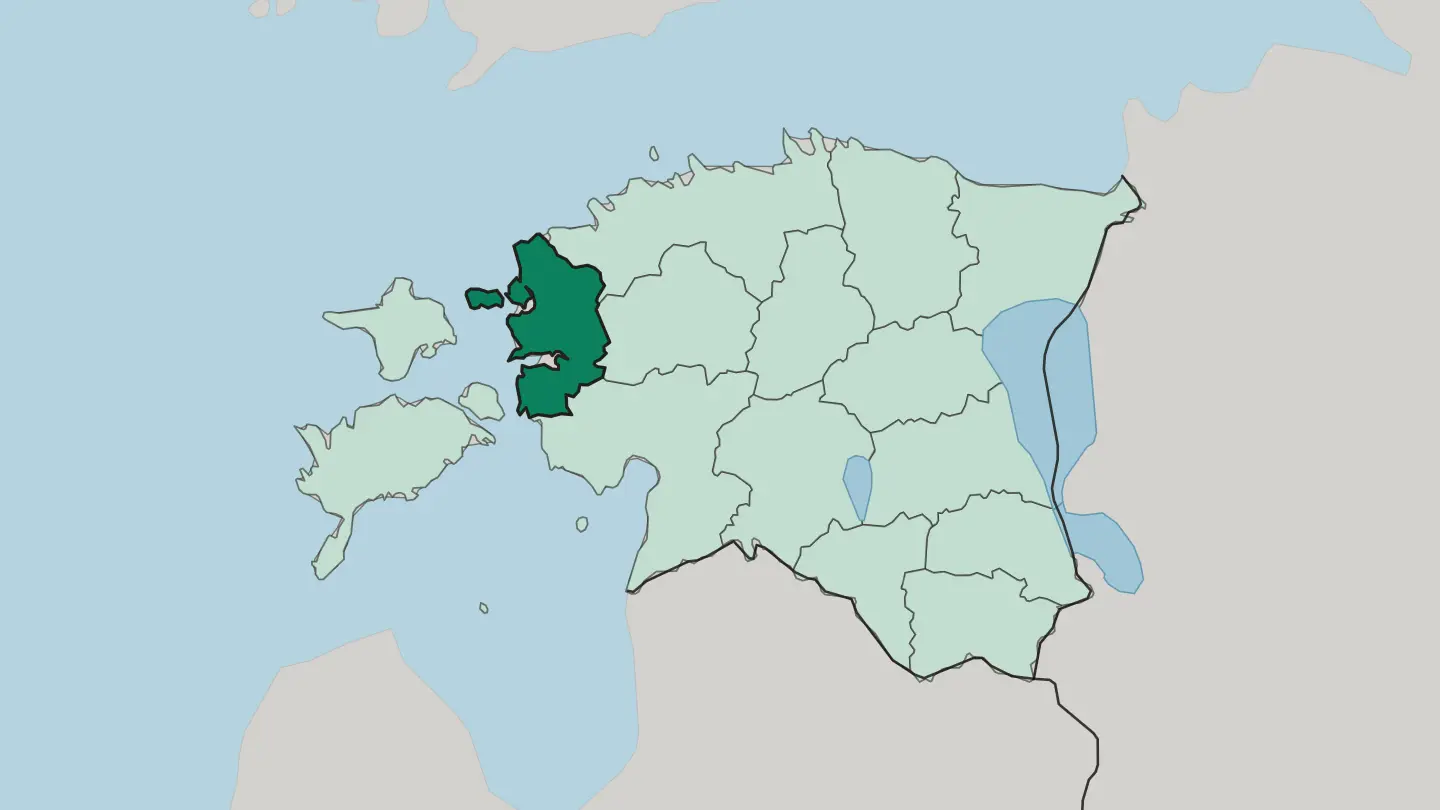 Estonia
Pärnumaa
Pärnumaa is Estonia's largest county, a low coastal land on the Gulf of Riga built around the beach city of Pärnu.Towns & cities →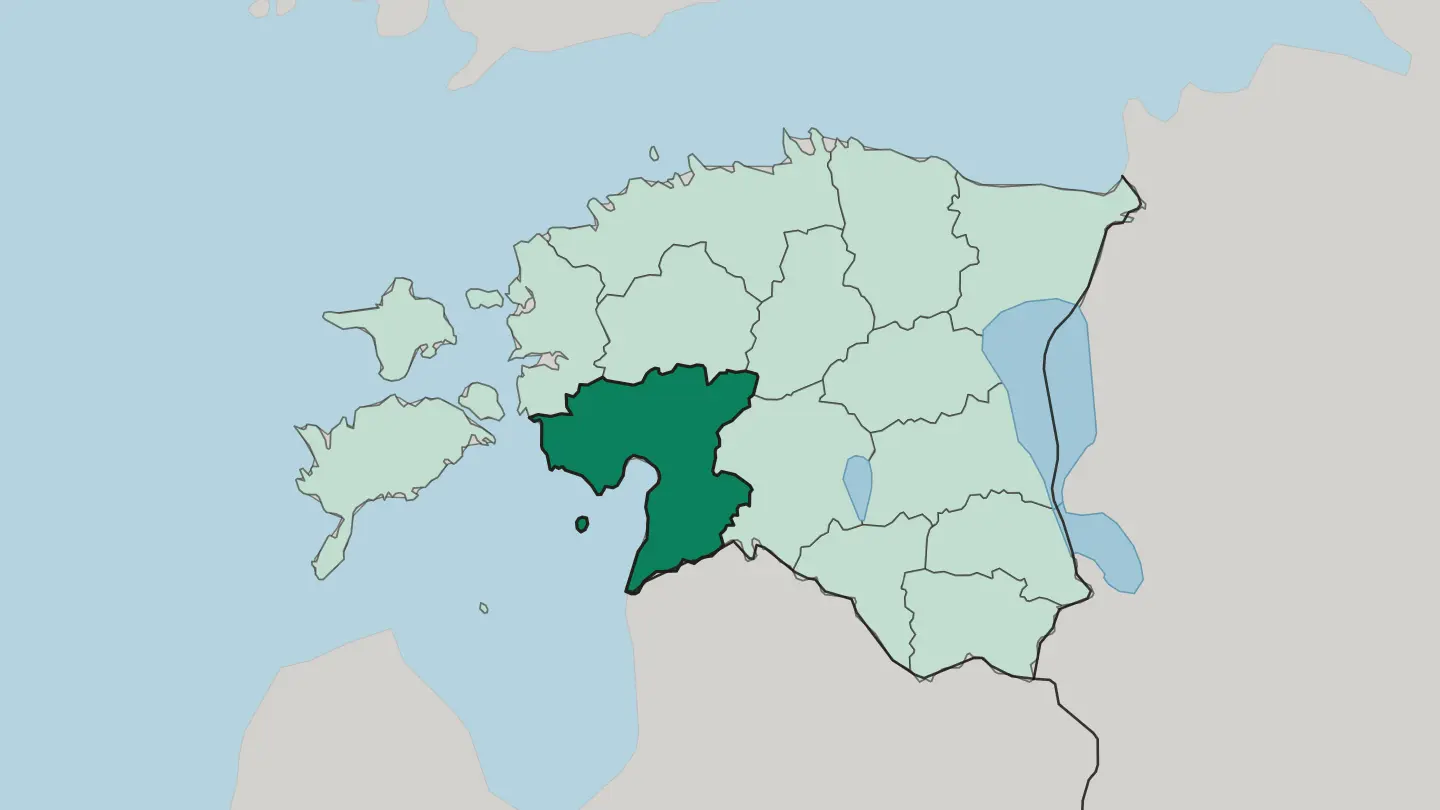 Estonia
Põlvamaa
Põlvamaa is a rural county in south-eastern Estonia, land of the Ahja's sandstone cliffs, the Seto people, and the shore of Lake Peipus.Towns & cities →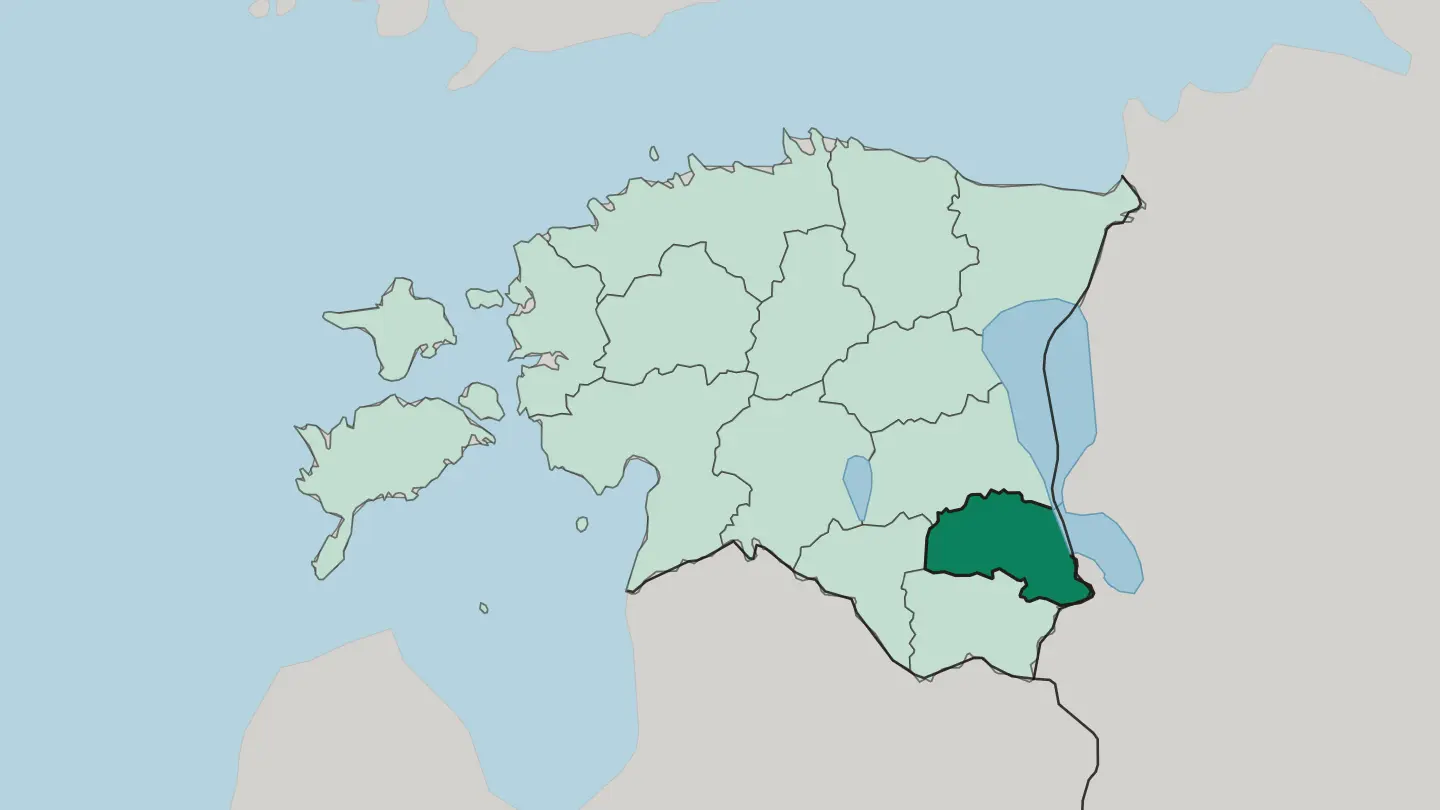 Estonia
Raplamaa
Raplamaa is Estonia's inland county of limestone plains, deep bogs, and old manors, an hour south of Tallinn with Rapla at its centre.Towns & cities →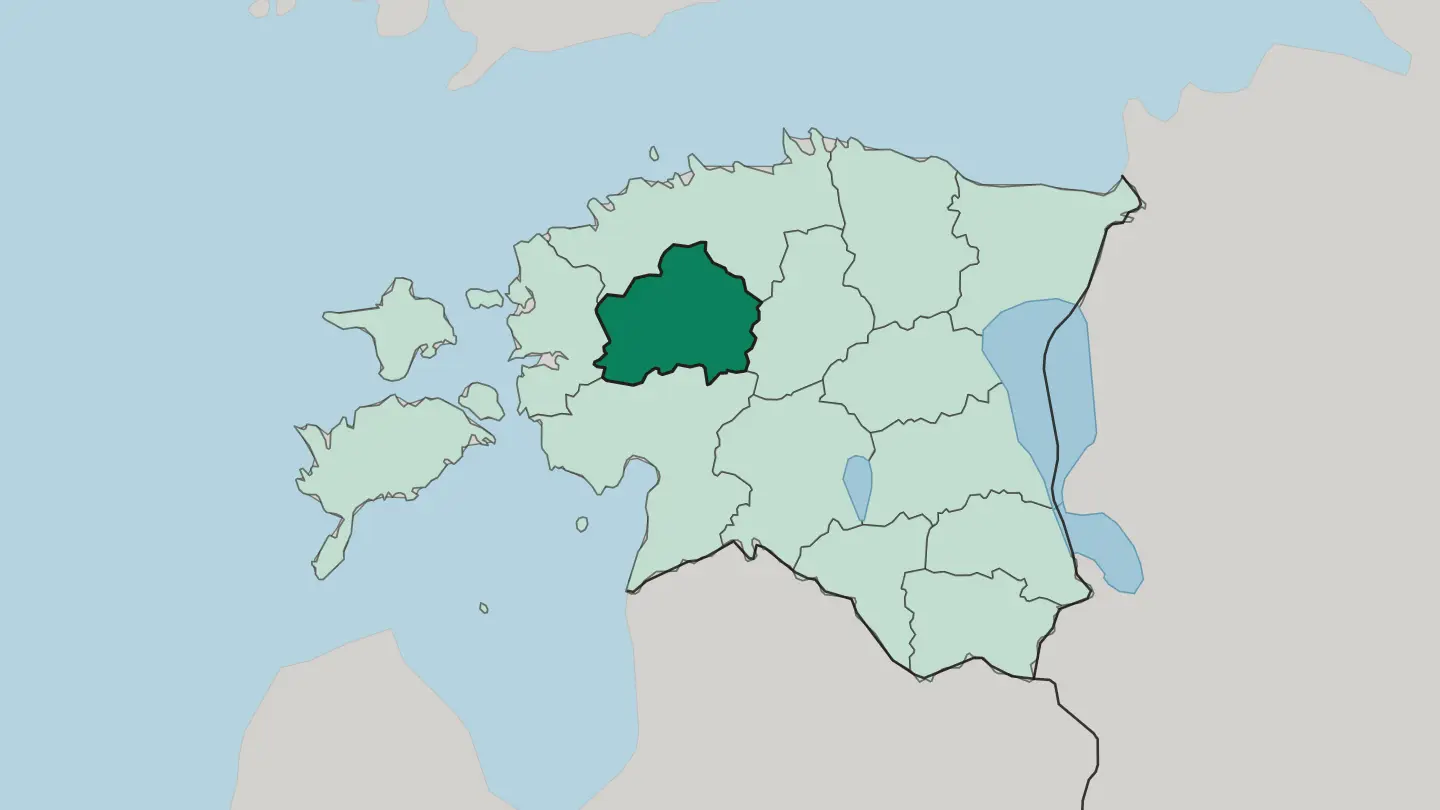 Estonia
Saaremaa
Saaremaa is Estonia's largest island, a low limestone land of windmills, juniper heath and the spa town of Kuressaare.Towns & cities →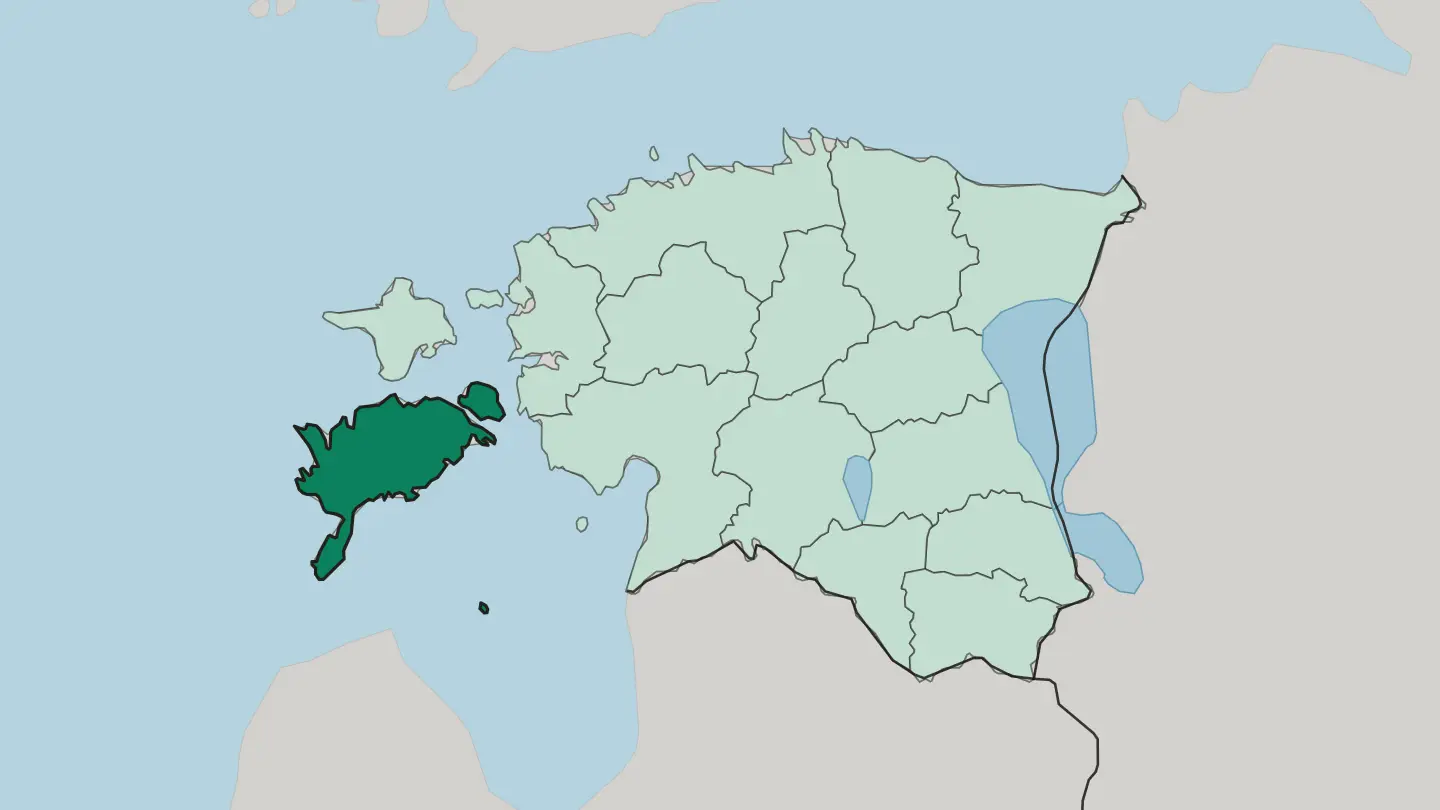 Estonia
Tartumaa
Tartumaa is the South Estonian county built around Tartu, the university city on the Emajõgi between Lake Võrtsjärv and Lake Peipus.Towns & cities →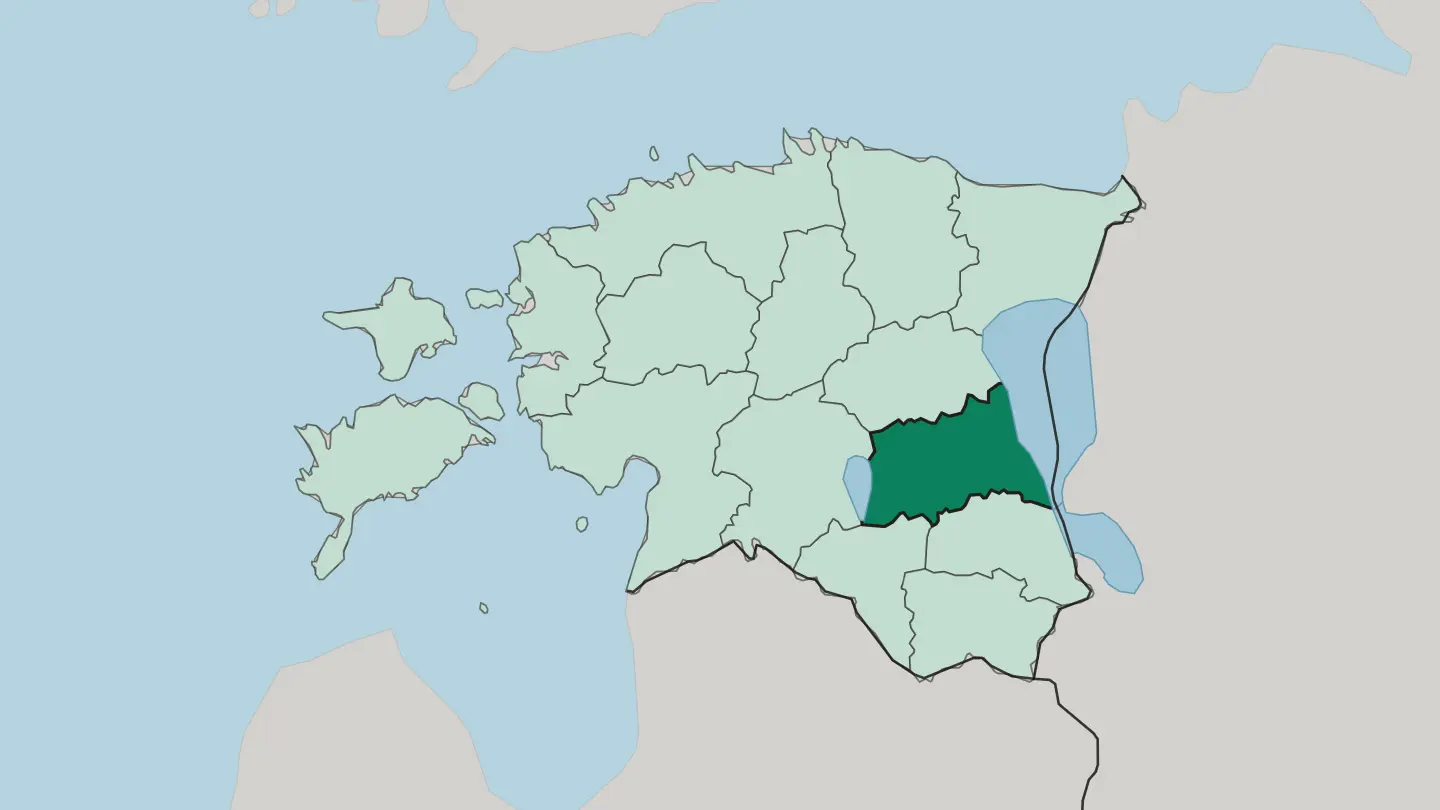 Estonia
Valgamaa
Valgamaa is a hilly county in southern Estonia, home to Otepää, the country's winter capital, and the border town of Valga.Towns & cities →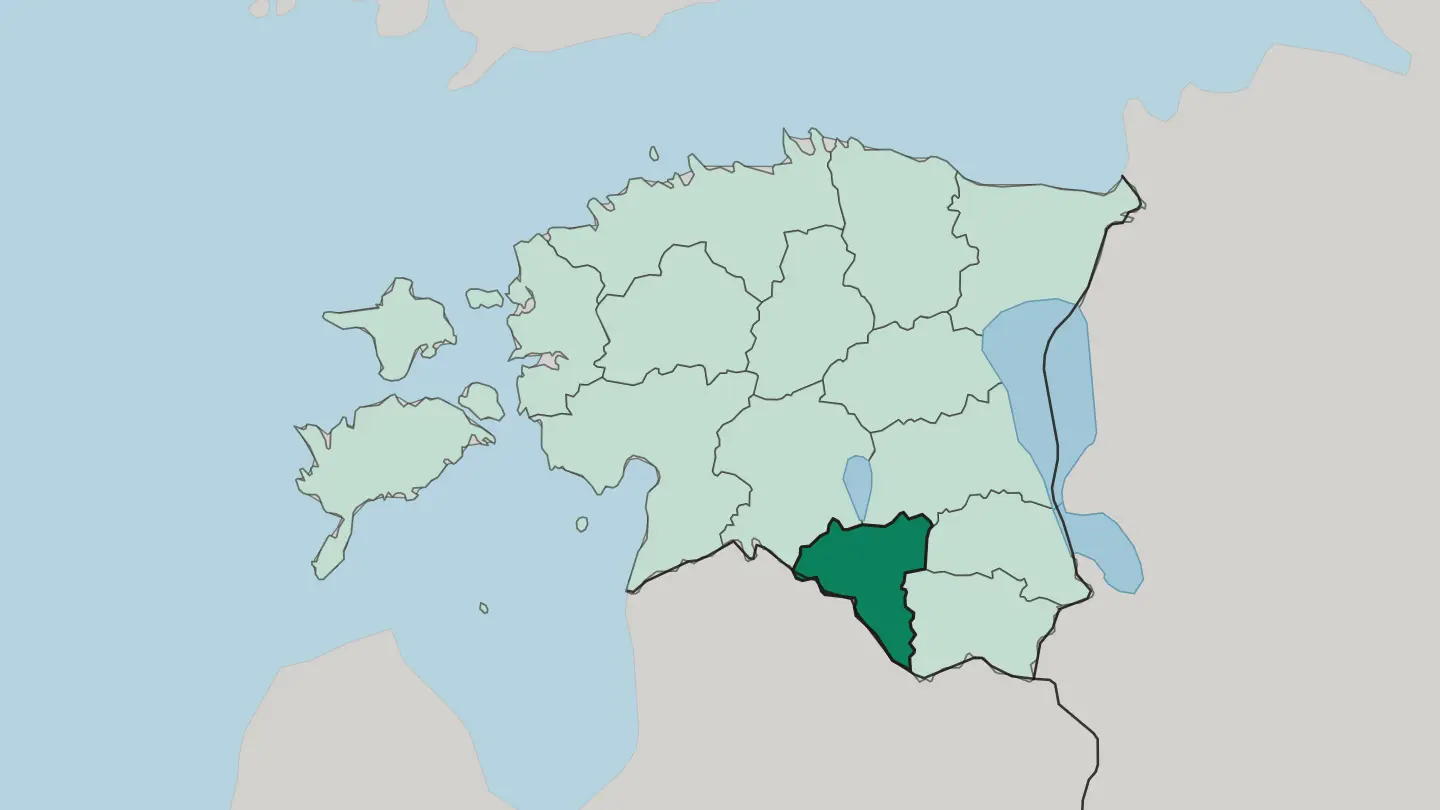 Estonia
Viljandimaa
Viljandimaa is a county of southern Estonia built around Viljandi, its castle-ruin town, and the shores of Võrtsjärv.Towns & cities →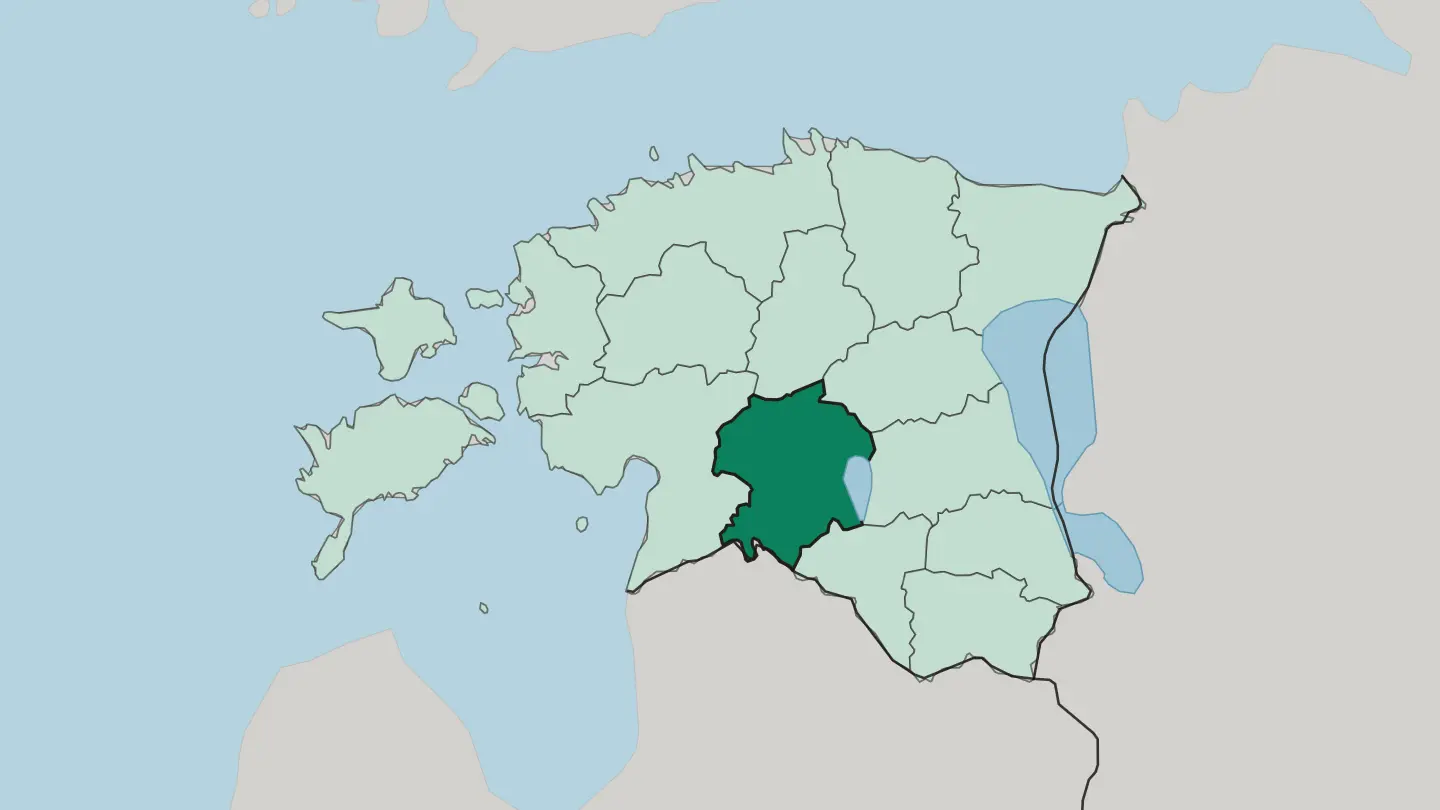 Estonia
Võrumaa
Võrumaa fills Estonia's south-eastern corner, rolling uplands around Suur Munamägi, above lake-dotted forest.Towns & cities →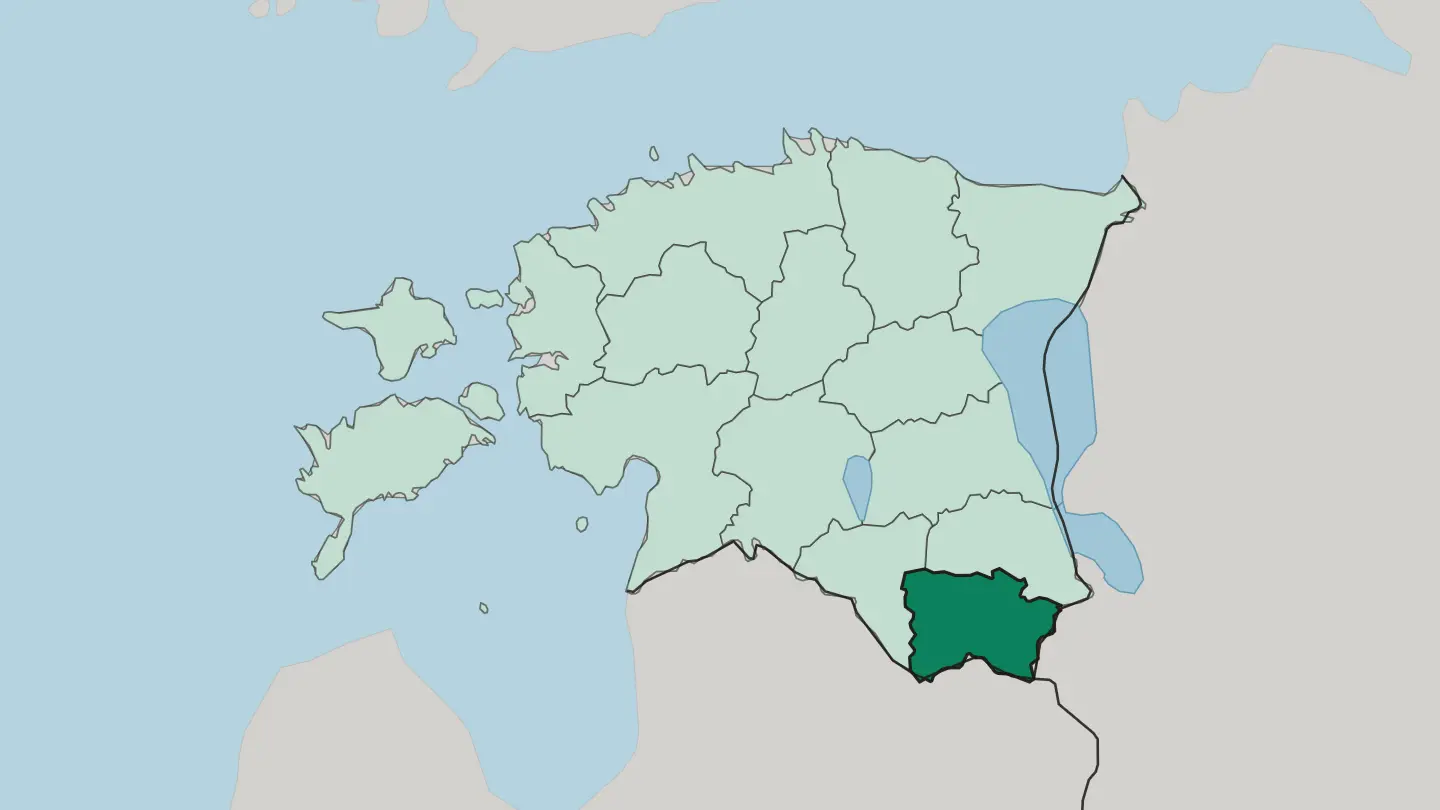
Explore by experience
Not sure which place? Start from how you want to travel.
About Estonia
Estonia carries its name on a handful of things.
What is Estonia known for?
First, the medieval old town of Tallinn, its walls and towers almost wholly intact and counted among the finest in Europe; then the Hanseatic League that raised it. The Baltic Sea frames the rest. Its islands, Saaremaa and Hiiumaa among more than two thousand, and the Estonian language, a Finnic tongue closer to Finnish than to any neighbour, round out what the country is known for.
Where is Estonia?
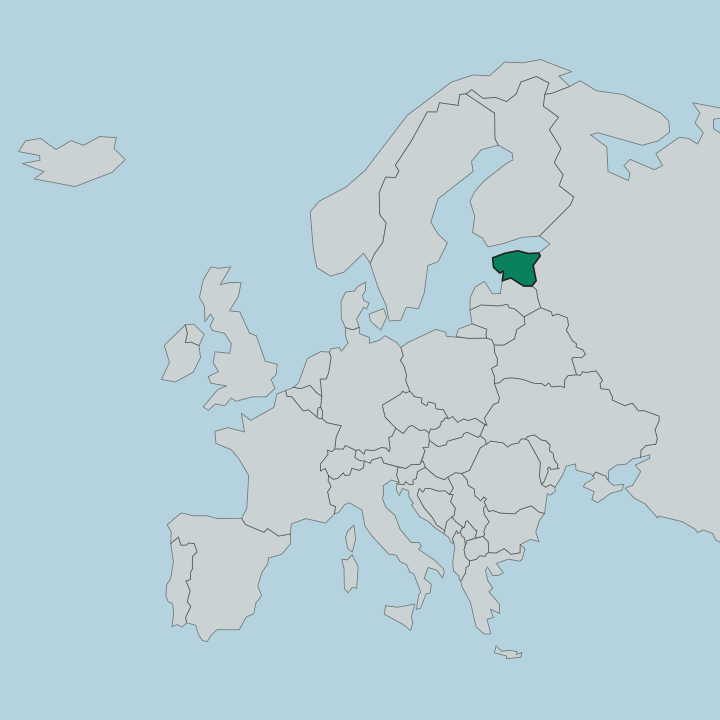
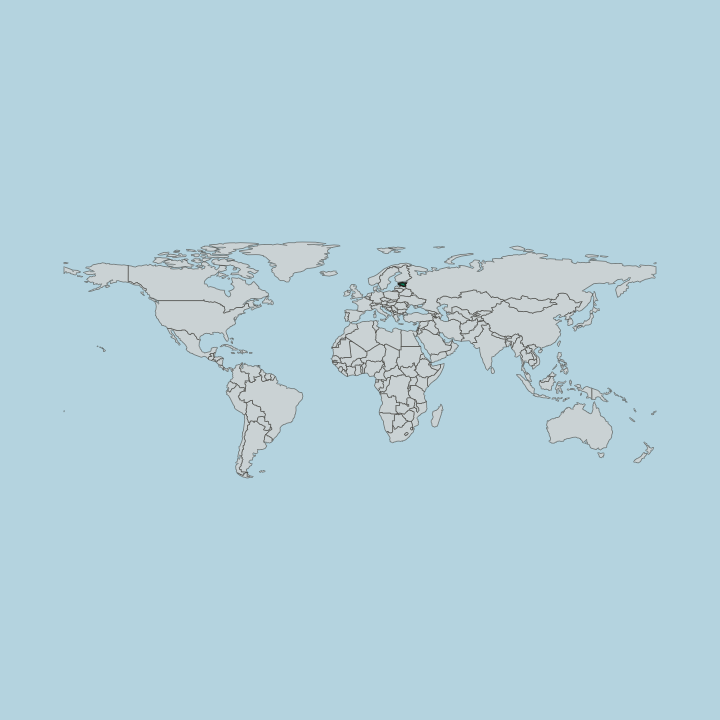
Estonia lies in the Baltic region of Northern Europe, on the eastern shore of the Baltic Sea. The Gulf of Finland runs along its northern coast, with Finland on the far side of the water, while the open Baltic Sea washes the western shore across from Sweden. Latvia adjoins it to the south. Russia closes the eastern border.
Between these edges the country is small, a stretch of mainland and islands set between the Baltic and its neighbours. Water and islands define the map as much as the mainland does. Off the western coast lie the large islands of Saaremaa and Hiiumaa, the biggest of more than 2,300 islands and islets that fringe the east coast of the Baltic Sea.
The shoreline is long and broken. Tallinn stands on the Gulf of Finland in the north, and Tartu sits inland to the south-east, the country's two largest urban centres. Between and around them lie the islands, the bays, and the low mainland, a quiet land held between the Baltic Sea, the Gulf of Finland, and the borders with Latvia and Russia.
What is the history of Estonia?
Estonia's recorded story runs through its coastal towns and the Baltic trade that made them. In the Middle Ages Tallinn grew into a walled Hanseatic port, its ring of stone walls and towers built to guard a merchant town that traded across the Baltic Sea. Much of that town still stands.
The old core of Tallinn survives almost intact, one of the best-kept medieval old towns in Europe, a record in stone of the Hanseatic League and the long reach of Baltic commerce. Trade bound it to the sea. The modern state is far younger than the old towns that stand within it.
The Republic of Estonia, Eesti Vabariik, was founded in 1918, gathering the Estonian-speaking lands along the eastern Baltic into a single country. That date still marks the nation's beginning. It took its place among the three Baltic states.
Since then the small nation on the Gulf of Finland has held to its own Finnic language and its medieval heritage, from the walls of Tallinn to the town of Tartu, keeping a long past alive within a young republic on the shore of the Baltic Sea.
What is Estonia like?
Estonian life turns on a language and a coast. The Estonian language, part of the small Finnic family, is closer to Finnish across the Gulf of Finland than to any of the country's other neighbours, and it anchors a strong sense of a distinct nation between larger lands. The tongue is the heart of it.
Carried down the centuries, Estonian holds the identity of the people along the eastern Baltic, a Finnic voice set apart from the Baltic and Slavic tongues that surround it. The other thread is the sea and the medieval past. Estonians keep close ties to the Baltic Sea, its islands, and the old Hanseatic towns that grew along the coast, above all Tallinn, whose medieval walls and towers still frame daily life in the capital.
Summers pull people to the islands. Saaremaa, Hiiumaa, and the long shoreline draw a warm-season life of coast, water, and open country, while the towns of Tallinn and Tartu carry the year-round culture of a small northern nation that guards its own language, its medieval heritage, and its place on the shore of the Baltic Sea.
What is the climate of Estonia?
Estonia has a cool temperate climate shaped by the Baltic Sea. Summers are short, mild, and light, with long northern days along the Gulf of Finland, while winters run cold and dark, bringing frost, snow, and ice to the coast and the islands. The sea tempers the extremes.
Spring and autumn are grey and changeable, wet with weather blowing in off the Baltic across the northern land.
How do you get to Estonia?
Estonia is easy to reach across the Baltic. Tallinn holds the main airport and a busy passenger port on the Gulf of Finland, where ferries cross from Finland, and roads and rail run south into Latvia and on across the wider Baltic region. Most arrive through the capital.
From Tallinn the small country is quick to cross, with the islands of Saaremaa and Hiiumaa reached by ferry off the western coast of the Baltic Sea.
Good for
Updated September 2026