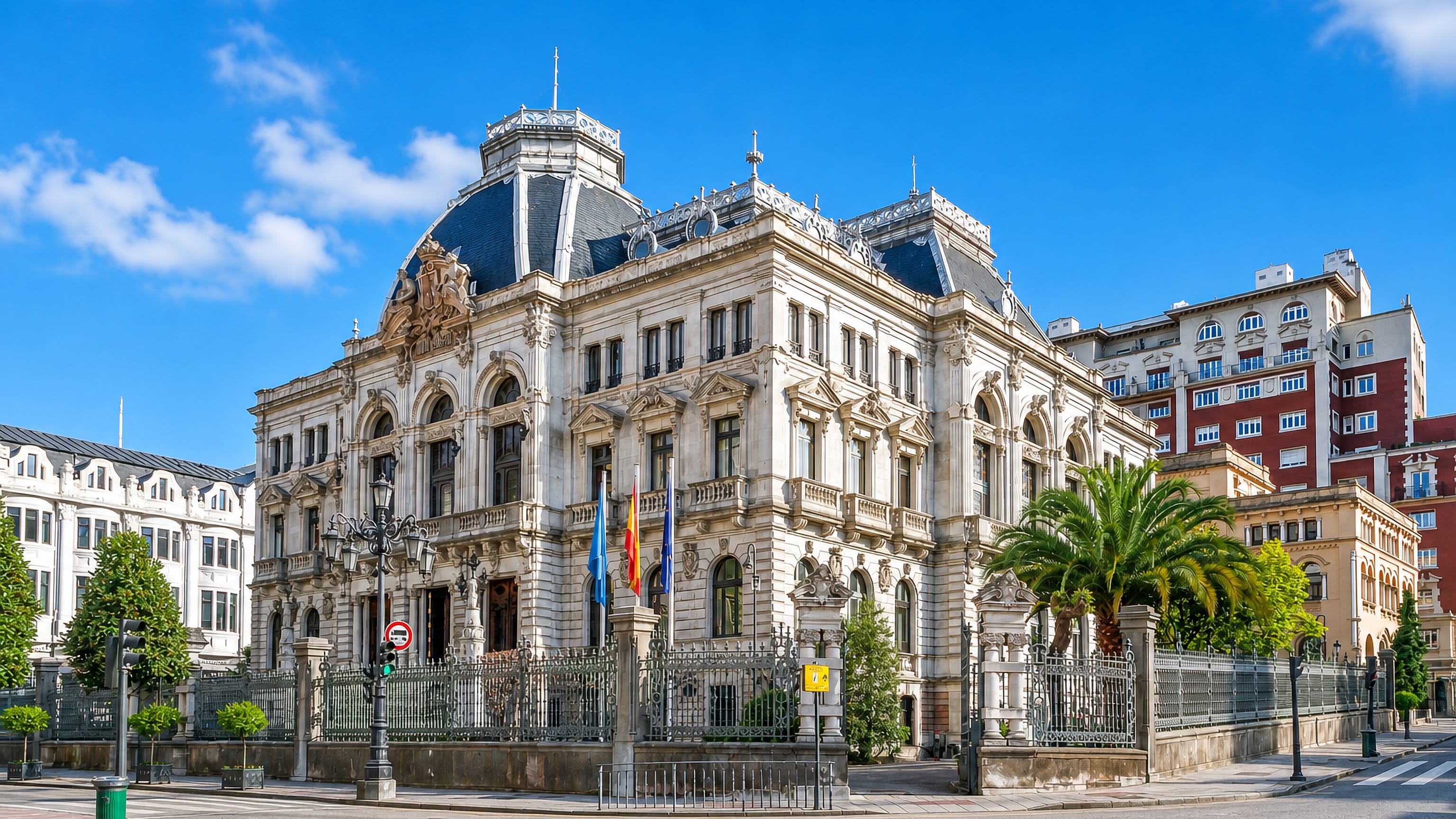
Spain · Principality of Asturias
Where to Stay in Oviedo, Principality of Asturias
Pre-Romanesque stone stands on Monte Naranco above Oviedo, Asturian capital known for its cathedral and the cider houses of Calle Gascona.
Hotel links are affiliate links: booking through them may earn us a commission, at no extra cost to you. It never affects how places are ranked. How this works


Where to stay in Oviedo
Where the beds are, and what that means for the visit.
Oviedo puts its rooms either in the granite old town or along the Uría axis west of it. The Casco Antiguo wraps the Catedral de San Salvador, the arcaded Plaza del Fontán, and the Monastery of San Pelayo in a few hundred metres of paved street, and the cider houses of Calle Gascona run off one side of it. Everything closes on foot.
Noise carries up the narrow blocks once the sidrerías fill, so light sleepers do better a street or two back toward San Tirso and the Museo de Bellas Artes de Asturias. Calle Uría runs the other way. That avenue links the Renfe station to the Campo de San Francisco, and the Hotel de la Reconquista and the shops of the Ensanche fill the blocks between.
You want this side for trains, taxis, and a level walk to everything, and the old town for the evening. Both are ten minutes apart. Monte Naranco rises behind the city.
The road up passes Santa María del Naranco and San Miguel de Lillo before it reaches the pasture, and rooms on that slope trade the sidrerías for a view down over the whole basin. A car helps up there.
Find hotels in Oviedo
Direct booking searches for these neighbourhoods.
Casco Antiguo
The Catedral de San Salvador, the arcaded Plaza del Fontán and the Monastery of San Pelayo stand within a few paved blocks.Find hotels in Casco AntiguoArrivals by train who want level pavementUría and the Ensanche
Calle Uría runs from the Renfe platforms past the Hotel de la Reconquista to the lawns of the Campo de San Francisco.Find hotels in Uría and the EnsancheWalkers heading up to Santa María del NarancoThe Naranco slope
The hill road climbs past San Miguel de Lillo to open pasture, with the whole Oviedo basin laid out below it.Find hotels in The Naranco slopeHotel links are affiliate links: booking through them may earn us a commission, at no extra cost to you. It never affects how places are ranked. How this works
Things to do in Oviedo
Ranked by global recognition; descriptions from Wikidata (CC0).
Museums & Galleries
3- Fine Arts Museum of Asturias Heritage
- Archaeological Museum of Asturias Heritage
- University of Oviedo
Churches & Religious Sites
8- Santa María del Naranjo Heritage
- Metropolitan Cathedral Basilica of the Holy Saviour, Oviedo Heritage
- San Miguel de Lillo Heritage
- San Julián de los Prados Heritage
- Iglesia de San Isidoro Heritage
Show 3 more →
- Church of San Tirso, Oviedo Heritage
- San Vicente of Oviedo Heritage
- Church of Santa María de la Corte Heritage
Castles & Historic Sites
8- Hotel de la Reconquista Heritage
- Camposagrado Palace Heritage
- Buenavista Bullring Heritage
- Palacio de los Condes de Toreno Heritage
- City walls of Oviedo Heritage
Show 3 more →
- fountain of the Cuatro Caños Heritage
- Casona de Regla Heritage
- spring of Pando Heritage
worth knowingacross 3 categories in Oviedo
About Oviedo
What is Oviedo known for?
Oviedo is known for its pre-Romanesque churches, the Cámara Santa of its cathedral, and the cider poured along Calle Gascona. The stone predates Romanesque Europe. Santa María del Naranco and San Miguel de Lillo were raised on the hillside for Ramiro I before the year 850, and San Julián de los Prados still carries the painted walls Alfonso II ordered.
The Camino Primitivo leaves from the cathedral square.
What are the main landmarks in Oviedo?
Oviedo carries its oldest stone on the slope of Monte Naranco, at Santa María del Naranco and San Miguel de Lillo. San Julián de los Prados stands lower down. In the old town the Catedral de San Salvador rises over the square, its Cámara Santa holding the Cruz de la Victoria, and San Tirso, San Isidoro, and the Monastery of San Pelayo fill the streets behind.
The Museo de Bellas Artes de Asturias, the Palacio de los Condes de Toreno, and the Mafalda statue in the Campo de San Francisco round out the walk. Fragments of the city walls survive.
What is the history of Oviedo?
Oviedo began with a monastery on a bare hill. Two monks, Máximo and Fromestano, raised a church to San Vicente there in the eighth century, and a generation later Alfonso II made the place the seat of the Asturian kingdom. That court built in stone.
San Julián de los Prados went up with its walls painted in Roman fashion, Ramiro I added Santa María del Naranco and San Miguel de Lillo on the Naranco slope, and the Cámara Santa was cut to hold the relics carried out of Toledo. The capital moved to León. Oviedo stayed a pilgrim town after that, the start of the Camino Primitivo and the place where the Cruz de los Ángeles and the Cruz de la Victoria were kept.
The university opened in 1608. Fernando de Valdés Salas endowed it, and its lecture rooms carried the Asturian enlightenment through the following centuries until fire gutted the building in the civil war. Coal and steel came next.
The Asturian mines filled the valleys south and east, and Oviedo took the administration rather than the furnaces, which left it the government town of the Principality of Asturias while Gijón and Avilés took the industry. The pilgrims still leave from the cathedral.
Where is Oviedo?
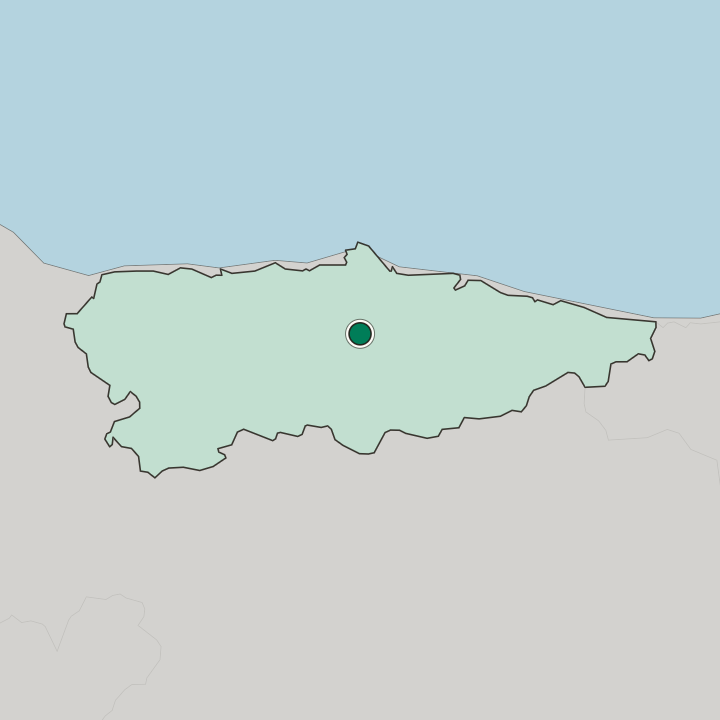
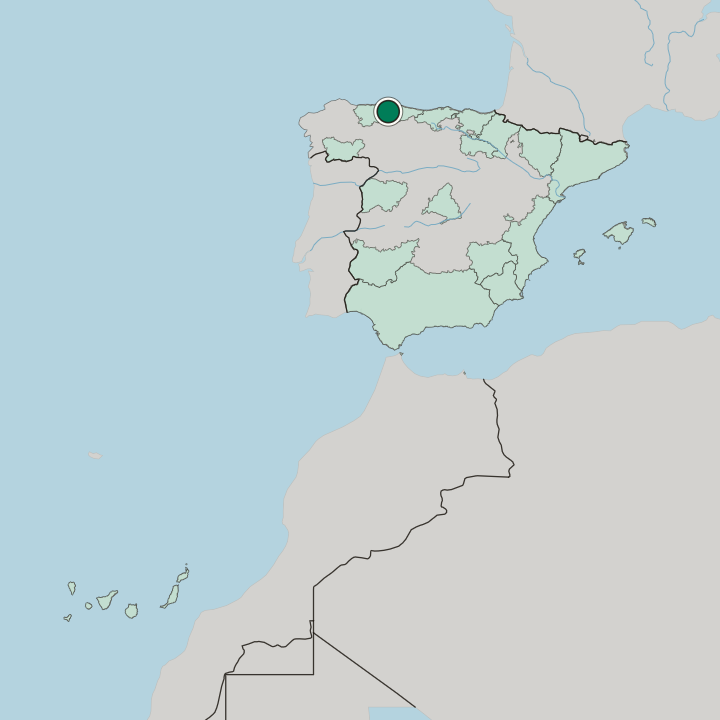
Oviedo sits in a basin between Monte Naranco and the ridges south of it, inland from the Bay of Biscay in central Asturias. The land is all slope. Green valleys of the Nalón and the Caudal cut south toward the coal country, the Cordillera Cantábrica walls off León beyond them, and the coast lies a short run north past Gijón.
Meadow reaches the last streets.
What is the climate of Oviedo?
The Bay of Biscay keeps Oviedo wet and mild through most of the year. Atlantic fronts run in over the coast and pile against the Cordillera Cantábrica, so the orbayu drifts across the basin in a fine grey drizzle that soaks without ever quite raining. Summer is cool and short.
August rarely turns oppressive, snow settles on the Naranco pastures more often than on the streets, and the hills stay green because the rain never really stops. Waterproofs earn their keep.
How do you get to Oviedo?
Oviedo lies on the A-66 where it comes down from the Pajares pass into Asturias. That road and the AP-66 carry traffic from León, while the A-8 runs east and west along the coast and the Y-shaped motorway ties the city to Gijón and Avilés in twenty minutes each. Trains use the Estación del Norte.
Renfe runs south to León and Madrid through the Pajares tunnels, the narrow-gauge FEVE lines work the coast and the mining valleys, and Asturias Airport sits west of the city near Avilés.
Common questions
What is the best area to stay in Oviedo?
Casco Antiguo: Cider houses along Calle Gascona. Uría and the Ensanche: Arrivals by train who want level pavement. The Naranco slope: Walkers heading up to Santa María del Naranco.
Good for
More cities in Principality of Asturias
Updated October 2026