Finland · Pohjois-Karjala
Where to Stay in Kitee, Pohjois-Karjala
Kitee is a lakeland town of Pohjois-Karjala, in eastern Finland, gathered around the Kiteen kirkko.
Find your area →


Where to stay in Kitee
Each area has its own feel; here's who each one suits.
Kitee keeps a modest stock of rooms, the kind of small lakeland town of Pohjois-Karjala where a town hotel, a guesthouse or a lakeside cottage is the usual bed. The centre is the simplest base, gathered around the Kiteen kirkko, with a room there putting the shops, the parish church and the day-to-day of the town within an easy walk. Stay in the centre for convenience.
From here it is a short way out to the water that fills this corner of eastern Finland. Out across the municipality, rental cottages and holiday cabins stand along the lakeshores and near the island of Kiurusaari, a quiet base for boating, fishing and the slow Karelian summer of the lakeland. Stock is thin away from the centre.
Visitors drawn by the old mill landscape of Puhos, the giant's kettle of Pirunpöytä or the village churches of Kesälahti often stay close to the Kiteen kirkko, while many travellers instead sleep in the larger town of Joensuu to the north and drive down to Kitee for the day. Book ahead in summer, when the lakeside cottages fill early.
Things to do in Kitee
Ranked by global recognition; descriptions from Wikidata (CC0).
Churches & Religious Sites
3- Kiteen kirkko Heritage
- Pyhän Kolminaisuuden ja Pyhän Nektarios Eginalaisen kirkko kitee Orthodox Church
- Kesälahden kirkko
Nature & Outdoors
1- Kiurusaari Heritage island
worth knowingacross 2 categories in Kitee
About Kitee
What is Kitee known for?
Kitee is known as a Karelian lake town, a parish of farms and water in the lakeland of eastern Finland where the Kiteen kirkko marks the centre. Lakes shape the country. The town keeps a strong church tradition across its villages, from the Kiteen kirkko to the Orthodox church of Pyhän Kolminaisuuden ja Pyhän Nektarios Eginalaisen kirkko, and the old industrial mill landscape of Puhos and the giant's kettle of Pirunpöytä draw visitors into this corner of Pohjois-Karjala.
What are the main landmarks in Kitee?
The Kiteen kirkko is the landmark of the town, the parish church that holds the centre of Kitee in Pohjois-Karjala. Churches mark every village. The Orthodox Pyhän Kolminaisuuden ja Pyhän Nektarios Eginalaisen kirkko and the Kesälahden kirkko with its belfry, the Kesälahden tapuli, speak to the Karelian faith of eastern Finland, while the giant's kettle of Pirunpöytä, the island of Kiurusaari and the old mill landscape of Puhos round out a parish of churches, water and worked stone.
What is the history of Kitee?
Kitee is an old Karelian parish. Its roots run deep into the border country of eastern Finland, where the lakeland of Pohjois-Karjala lay long contested between Sweden and Russia, and the parish around the Kiteen kirkko was chartered in 1631, one of the older foundations of the region. Faith ran in two streams here.
The Lutheran church and the Orthodox tradition of Pyhän Kolminaisuuden ja Pyhän Nektarios Eginalaisen kirkko both took root in this borderland, leaving Kitee a parish of mixed Karelian faith over the lakes. For centuries the town lived by farming, forestry and the lakes. The old mill and industrial landscape of Puhos worked the timber and waters of the parish, the mansions and manor houses of the Pohjois-Karjalan hovit marking the Karelian gentry, while ancient stone like the giant's kettle of Pirunpöytä spoke to a far older land.
In later years Kitee took in the neighbouring parish of Kesälahti, gathering the Kesälahden kirkko and its lakes into the municipality, so the town now spreads across a wide reach of churches, villages and water in the eastern lakeland of Finland.
Where is Kitee?
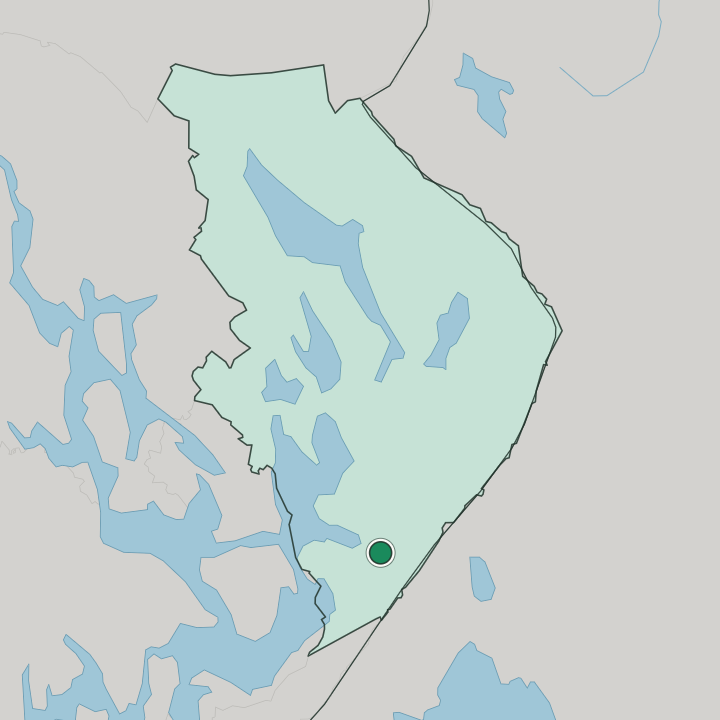
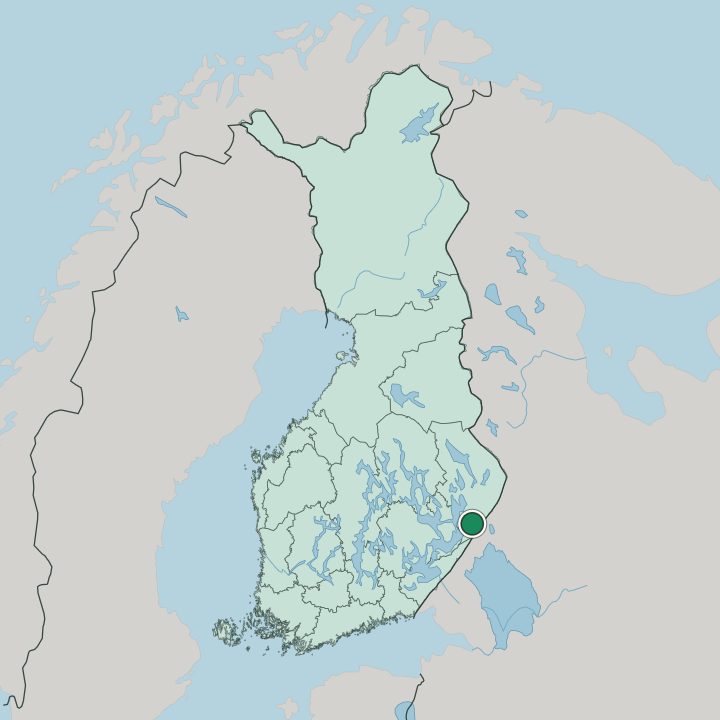
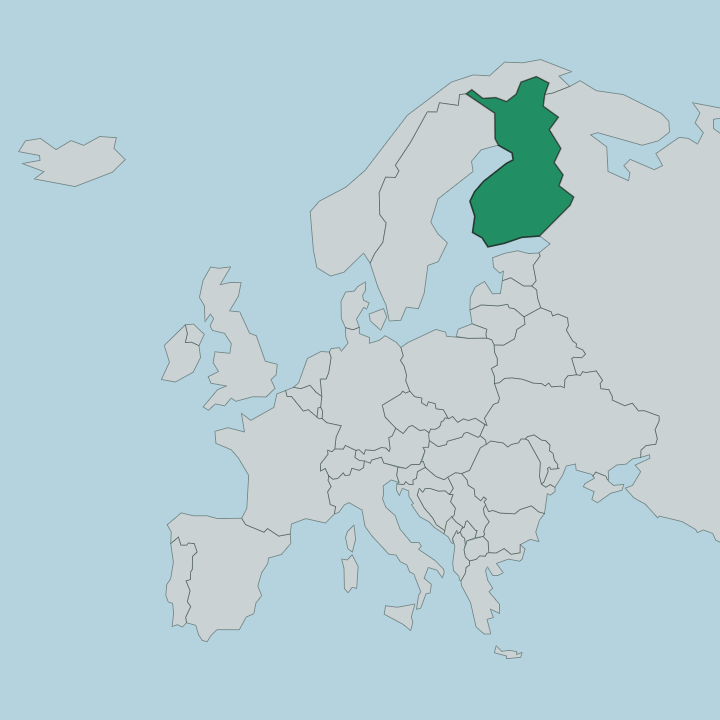
Kitee lies in the lake-laced country of Pohjois-Karjala, in eastern Finland near the Russian border. Lakes fill the municipality, ringed by farmland, forest and the low ridges of the Karelian lakeland, with islands like Kiurusaari rising from the water. Stone marks the land too.
The giant's kettle of Pirunpöytä was ground from ancient rock, the town centre stands by the Kiteen kirkko, and the parish reaches out across its waters toward the village churches of Kesälahti and the larger town of Joensuu to the north.
What is the climate of Kitee?
Kitee has a cold continental climate, the lakeland winters of eastern Finland running long and snowbound across Pohjois-Karjala. Kitee endures a hard, biting winter. The lakes around Kitee freeze solid for months, snow lies deep over the fields and the woods by the Kiteen kirkko, and the short days hold the Karelian country in cold.
The summer turns warm and green, the long northern light drawing boats and bathers onto the open water near Kiurusaari before the autumn closes in.
How do you get to Kitee?
Kitee is reached by road and rail through the lakeland of Pohjois-Karjala. The railway across eastern Finland calls at Kitee. The line that crosses eastern Finland carries services through the town, while the main road links Kitee north to Joensuu and on into the wider Karelian region.
Most visitors drive or take the train. Buses connect the town centre by the Kiteen kirkko to Joensuu and the surrounding villages, and from there the Finnish road and rail network reaches the rest of the country past the lakes of Kitee.
Good for
More cities in Pohjois-Karjala
Updated September 2026