Finland · Satakunta
Where to Stay in Eurajoki, Satakunta
Eurajoki is a coastal municipality of Satakunta in south-western Finland, on the Eurajoki river.
Find your area →


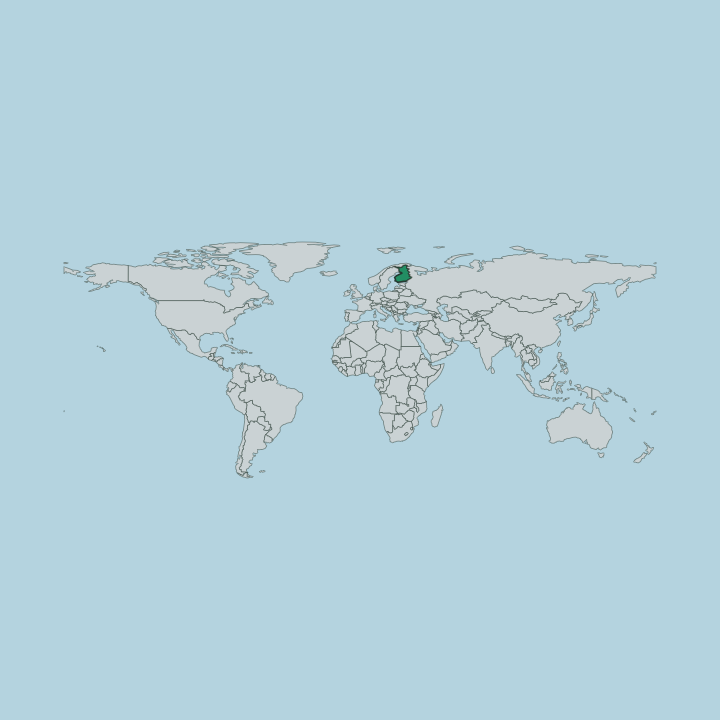
Where to stay in Eurajoki
Each area has its own feel; here's who each one suits.
Eurajoki keeps a modest stock of beds for a coastal municipality of south-western Finland, where a guesthouse, a farm room, or a seaside cabin is the usual lodging rather than a hotel. The church village around the Eurajoen kirkko and the Vuojoen kartano manor suits visitors who want the parish heart, with the shops, the river, and the old centre within an easy walk. It is the obvious place to start.
Even by the parish church, beds run short. Out toward the archipelago around Luvia, cabins and fishing cottages stand by the shore and the islands, a fine base for boating, fishing, and slow days on the Satakunta coast. Stock thins on the outer isles.
Travellers drawn to the open sea should look toward the island of the Säpin majakka and the shoreline near the ruined Liinmaan linna, while many simply break the coastal journey here for a single night. Book ahead in high summer, when the few rooms of Eurajoki fill early.
About Eurajoki
What is Eurajoki known for?
Eurajoki is known as a coastal parish of the Satakunta region, a farming and seafaring municipality of south-western Finland that takes its name from the river running to the sea. The Vuojoen kartano manor crowns the centre. Its coast carries the rest.
The ruined Liinmaan linna recalls a medieval stronghold near the shore, the Säpin majakka stands far out on its island guarding the sea lanes, and the old churches of the Eurajoen kirkko and the Luvian kirkko anchor the parishes that the river and the archipelago bind together.
What are the main landmarks in Eurajoki?
The Vuojoen kartano is the grandest landmark of the municipality, a neoclassical manor at the centre of this coastal parish of Satakunta. Older marks lie by the sea. The ruins of the Liinmaan linna recall a medieval coastal stronghold, the Säpin majakka rises on its island far out in the sea lanes, and the wreck of the Laitakarin hylky lies off the shore, while the churches of the Eurajoen kirkko, the Luvian kirkko, and the Irjanteen kirkko mark the old parishes gathered along this stretch of south-western Finland.
What is the history of Eurajoki?
Eurajoki grew where a river met the sea. Settlers worked the fertile valley and the coast of Satakunta over the centuries, living by farming, fishing, and the trade of the Bothnian shore, and the medieval stronghold of the Liinmaan linna once guarded this stretch of south-western Finland before it fell to ruin. Faith gathered the parishes early.
The Eurajoen kirkko rose at the centre, the Irjanteen kirkko served the old village of Irjanne, and along the shore the Luvian kirkko anchored the seafaring community of Luvia, the three churches marking the spread of settlement across the river country and the coast. The manor age left its grandest mark. Vuojoen kartano was built as a great estate, its neoclassical house and grounds standing among the fields as the seat of the local gentry, and far out at sea the Säpin majakka was raised to guide the ships of the coast.
Eurajoki took its formal charter in 1869, and through the long farming and seafaring centuries it has stayed a coastal municipality of Satakunta, its life still set by the river, the archipelago, and the open sea.
Where is Eurajoki?
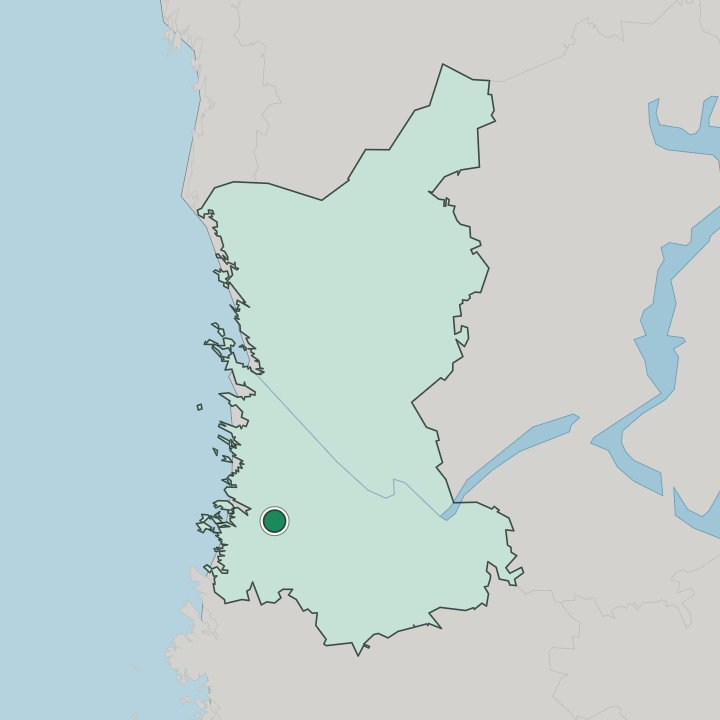
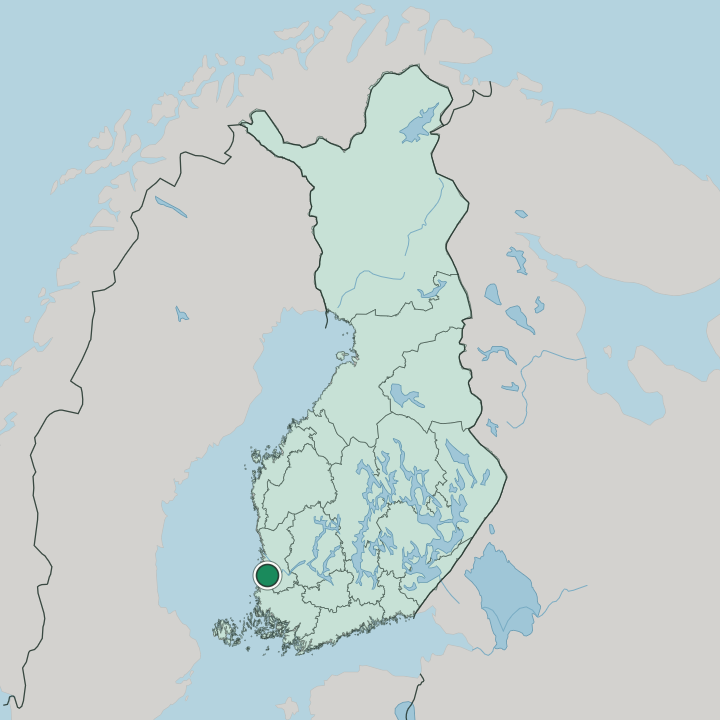
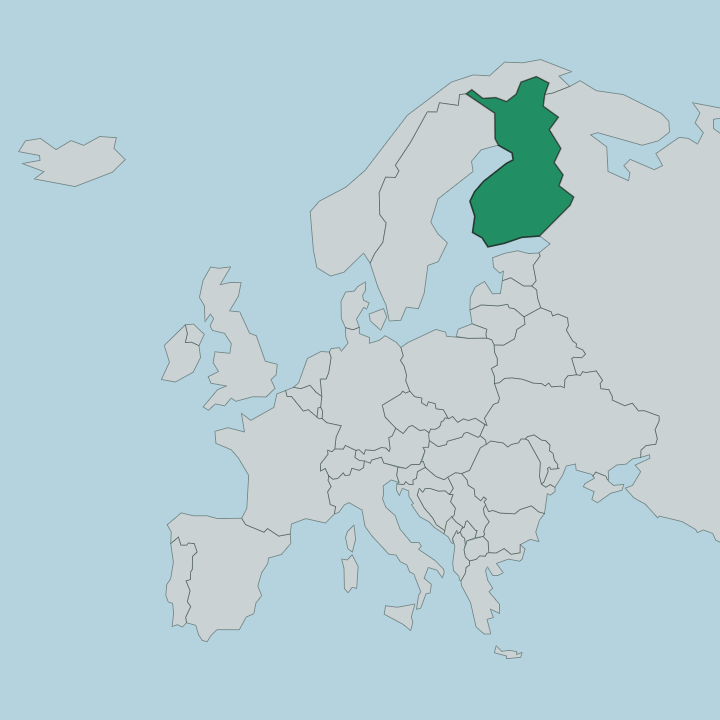
Eurajoki lies on the coast of Satakunta in south-western Finland, where the river of the same name runs down its fertile valley to the sea. The shore breaks into islands. The archipelago around Luvia scatters skerries and low isles off the coast, with the Säpin majakka standing far out on its island, while the river country inland carries the farms and the church village around the Eurajoen kirkko.
Sea and field share the land. Flat farmland and pine forest spread along the valley, the long shoreline and the islands edge the west, and the open water of the coast runs out beyond the Eurajoki shore.
What is the climate of Eurajoki?
Eurajoki has a cool coastal climate, tempered by the sea yet still sharply seasonal on this shore of south-western Finland. Winter brings ice to the bays. The archipelago around Luvia freezes along the coast, snow lies over the river valley and the fields, and the cold settles over the parish and the Eurajoen kirkko for months.
Then the summer turns mild and long. The sea breeze cools the warm months on the Satakunta coast, the islands and the waters off the Säpin majakka draw the boats out, and the river country greens around Eurajoki.
How do you get to Eurajoki?
Eurajoki lies on the coastal road network of Satakunta, and the highway is the way in. The main shore road runs along the coast of south-western Finland past the church village, carrying buses and cars to the centre near the Eurajoen kirkko and the Vuojoen kartano manor. Boats reach the islands.
Local craft cross to the archipelago around Luvia and out toward the Säpin majakka, while most travellers come to Eurajoki by road along the Satakunta shore.
Good for
More cities in Satakunta
Updated September 2026