France · Auvergne-Rhône-Alpes · Lyon
La Duchère, Lyon — Area Guide & Where to Stay
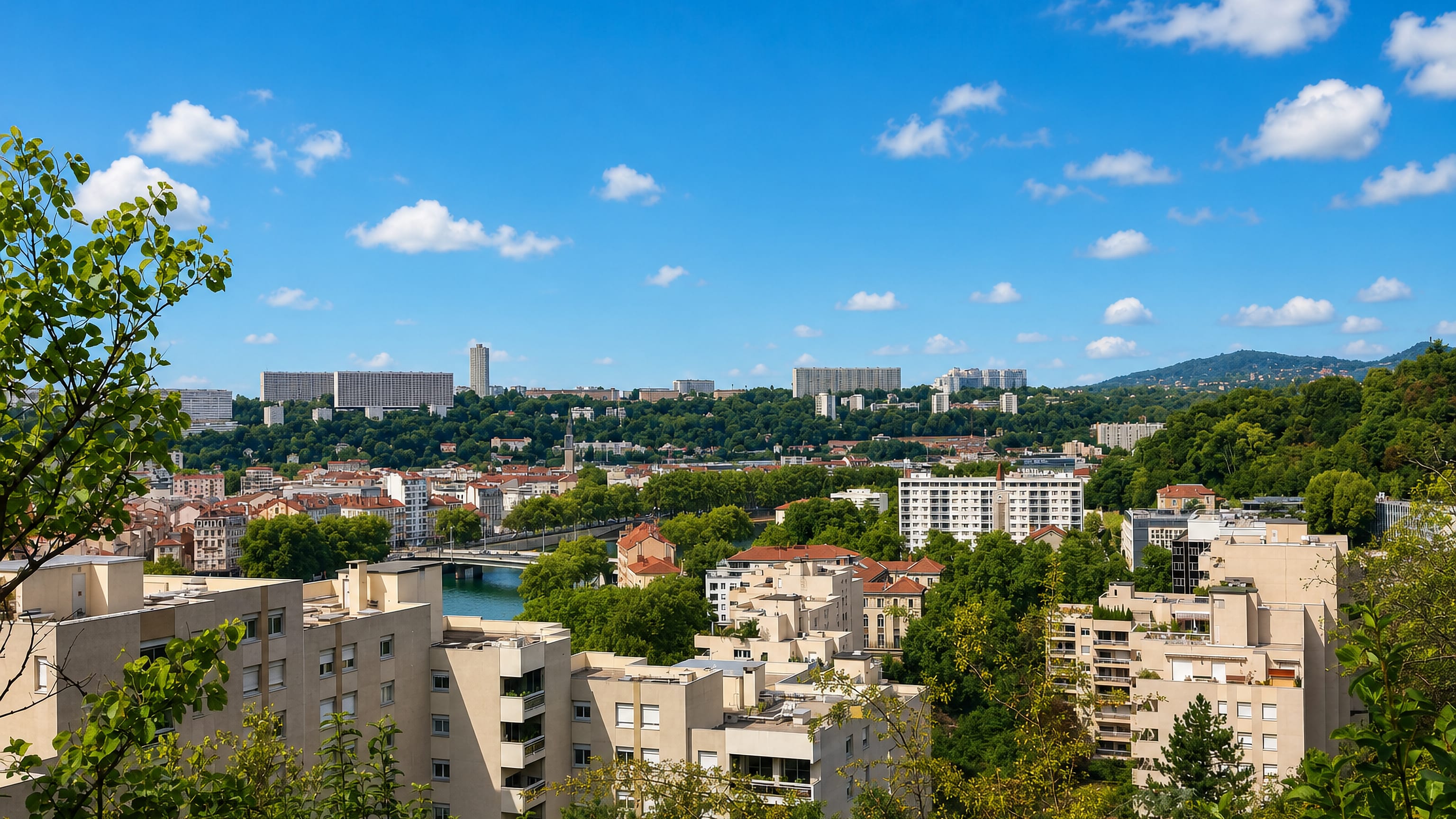
La Duchère is a quarter of Lyon's 9th arrondissement on the plateau above the Saône, often called Lyon's third hill after Fourvière and La Croix-Rousse.
Hotel links are affiliate links: booking through them may earn us a commission, at no extra cost to you. It never affects how places are ranked. How this works


Where to stay in La Duchère
The practical side of choosing where to sleep.
This is a housing estate with a view. La Duchère stands on the plateau of western Lyon and looks down over the Saône and the Vaise quarter, which is what earns it the third hill nickname, and the panoramic tower on the Plateau is visible from a long way off. Four sub-quarters divide it.
Le Plateau holds the Lycée de la Martinière and the tower, La Sauvegarde and Balmont run out from it, and Le Château keeps the name of the house that stood there. Champagne-au-Mont-d'Or and Écully begin at the boundary.
Things to do in and around Lyon
Ranked by global recognition; descriptions from Wikidata (CC0).
Churches & Religious Sites
1- Église Saint-Louis Roi de Champagne-au-Mont-d'Or
Stadiums & Sports
3- Genae
- Maison des sports d'Écully
- académie de billard de l'Ouest Lyonnais
Landmarks & Notable Places
1- Maison d'Anthouard Heritage
worth knowingacross 3 categories in and around Lyon
About La Duchère
What are the main landmarks in La Duchère?
The tower is the marker. François-Régis Cottin's panoramic tower was begun in 1969 and finished in 1972, rising just over a hundred metres from basement to spire, and the same architect built the churches on the Plateau. The fort came a century earlier.
The fort de la Duchère was raised between 1844 and 1851 as one of the twenty-four strongholds of Lyon's first defensive ring, served as a recruiting centre and then as a transit place for people repatriated from Algeria after 1957, and the stade de la Duchère now occupies its ground. Nothing is left of the château. Built in the 14th century and enlarged between the 15th and the 17th, let out and then abandoned in the 1960s, it was pulled down between 1972 and 1973 against Cottin's advice, and all that survives is the remains of a washhouse of 1661.
What is the history of La Duchère?
Farmland until the 1950s. A first outline plan was asked of François-Régis Cottin by the reconstruction and housing ministry in July 1953 and a second in 1957, and Louis Pradel launched the building project in 1958 to clear the bad housing of the Vaise workers' quarters. The Lycée de la Martinière came first, in 1959.
Land buying and site works went to the SERL, the Château sector started going up in 1961, and people were living there between 1962 and 1963, with the église Notre-Dame-de-Balmont by Pierre Genton built between 1963 and 1965. Algeria changed who lived here. Repatriated families from North Africa arrived first and made up about a third of the quarter by 1965, the war memorial of the city of Oran was moved here in 1968, and populations of mainly Maghrebi origin followed them.
The estate has been unbuilt as deliberately as it was built. The Notre-Dame-de-Balmont church was deconsecrated in 1995 and became the Ciné Duchère, the three slab blocks known as the barre des mille came down between 2005 and 2015, and the quarter was labelled an écoquartier in 2013.
Where is La Duchère?
La Duchère covers 120 hectares in the northwest of Lyon on the plateau above the Saône and Vaise, bordering the communes of Champagne-au-Mont-d'Or, Écully and Saint-Didier-au-Mont-d'Or.
Good for
More areas in Lyon
Updated October 2026