France · Bourgogne-Franche-Comté
Where to Stay in Besançon, Bourgogne-Franche-Comté
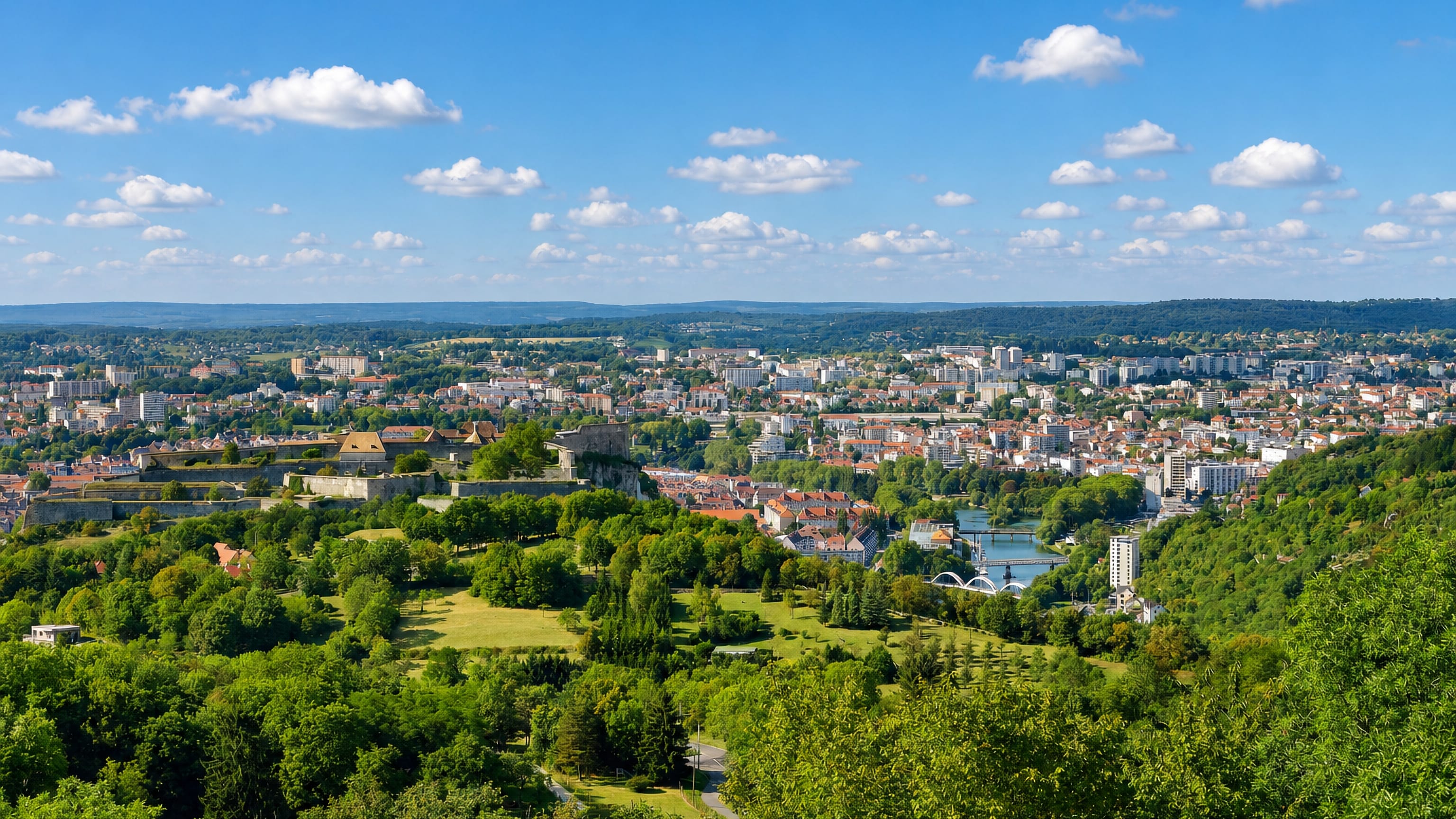
Besançon is a city in Bourgogne-Franche-Comté, wrapped below the Citadel of Besançon on the site of Roman Vesontio.
Hotel links are affiliate links: booking through them may earn us a commission, at no extra cost to you. It never affects how places are ranked. How this works


Where to stay in Besançon
Where visitors usually base themselves, and why.
The old town of Besançon fills the ground the Citadel of Besançon guards, and most visitors base themselves inside it. The central quarter around the Musée des Beaux-Arts et d'Archéologie de Besançon and the Église Saint-Pierre keeps the museums, the shops, and the Roman remains of Square Castan within one flat, walkable stretch, and it suits travellers who want the historic core on the doorstep. It is the easiest first base.
North across the water, the Battant quarter around the Église des Dames de Battant is the old vine-growers' district, steeper and quieter, close to the Musée des Beaux-Arts. Up toward the ridge, the streets that climb to the Citadel and the Église de la Madeleine trade level ground for the long view over the town. Old stone houses like the Maison espagnole and the Maison Brigonnet stud the centre.
Each pocket sits within a short walk of the rest, so the choice is mood over distance.
Find hotels in Besançon
Direct booking searches for these neighbourhoods.
Old town centre
The flat central quarter around the Musée des Beaux-Arts et d'Archéologie de Besançon, the Église Saint-Pierre, and the Roman columns of Square Castan.Find hotels in Old town centrethe old vine-growers' quarter, quieter and steepBattant
North across the water around the Église des Dames de Battant, the historic vintners' district of Besançon.Find hotels in Battantlong views over the townCitadel slope
The streets climbing toward the Citadel of Besançon and the Église de la Madeleine, trading flat ground for the ridge-top vista.Find hotels in Citadel slopeHotel links are affiliate links: booking through them may earn us a commission, at no extra cost to you. It never affects how places are ranked. How this works
Things to do in Besançon
Ranked by global recognition; descriptions from Wikidata (CC0).
Museums & Galleries
2- Musée des Beaux-Arts et d'Archéologie de Besançon
- Time museum
Churches & Religious Sites
6- Basilica of Saint-Ferjeux Heritage
- Église de la Madeleine Heritage
- Église Saint-Pierre Heritage
- Temple du Saint-Esprit (Besançon) Heritage
- Église Saint-Maurice (Besançon) Heritage
Show 1 more →
- Église des Dames de Battant Heritage
Castles & Historic Sites
4- Citadel of Besançon Heritage
- Château de la Juive Heritage
- Square Castan Heritage
- vestiges archéologiques Heritage
Stadiums & Sports
1- Léo Lagrange stadium
Landmarks & Notable Places
7- Tour de Montmart Heritage
- Tour de Chamars Heritage
- Tour de Rivotte Heritage
- Tour de Bregille Heritage
- Maison Brigonnet, Besançon Heritage
Show 2 more →
- Maison espagnole Heritage
- maison ex Synagogue de Charmont Heritage
worth knowingacross 5 categories in Besançon
About Besançon
What is Besançon known for?
Besançon is known for the great Citadel of Besançon crowning the ridge above the old town. Watchmaking made the second name, told now in the Time museum. Roman Vesontio still shows through at Square Castan.
Add the Musée des Beaux-Arts et d'Archéologie de Besançon and the Église de la Madeleine, and the older city is drawn.
What are the main landmarks in Besançon?
Besançon reads from the ridge down. The Citadel of Besançon crowns the height above the old town, with the Time museum and the Musée des Beaux-Arts et d'Archéologie de Besançon below in the centre. Roman Vesontio surfaces at Square Castan.
Churches mark the quarters, the Église de la Madeleine and the Église Saint-Pierre in the core, the Basilica of Saint-Ferjeux out on its own hill, while the Maison espagnole keeps the Renaissance grain of the streets.
What is the history of Besançon?
Besançon began as Vesontio, the Gallo-Roman town whose theatre columns still stand at Square Castan. Geography made it a fortress. The old centre sits in a tight loop of high ground, and for two thousand years that natural bend has been walled, watched, and fought over, its defence finally perfected in the great Citadel of Besançon that Vauban raised on the ridge above the town.
The Roman domus buried under the modern streets, uncovered in digs across the centre, record the depth of the city beneath the medieval one. In the later Middle Ages and the Renaissance the town grew rich, and stone houses like the Maison espagnole and the Maison Brigonnet went up along its lanes, while a ring of old towers, the Tour Notre-Dame and the Tour de Rivotte among them, marked the walls. Watchmaking gave Besançon its modern trade, the craft gathered into the Time museum.
Across the water, the Battant quarter grew the vines that fed the town for century after century. The city is a braid of Roman fort, walled loop, and clockmakers' town.
Where is Besançon?
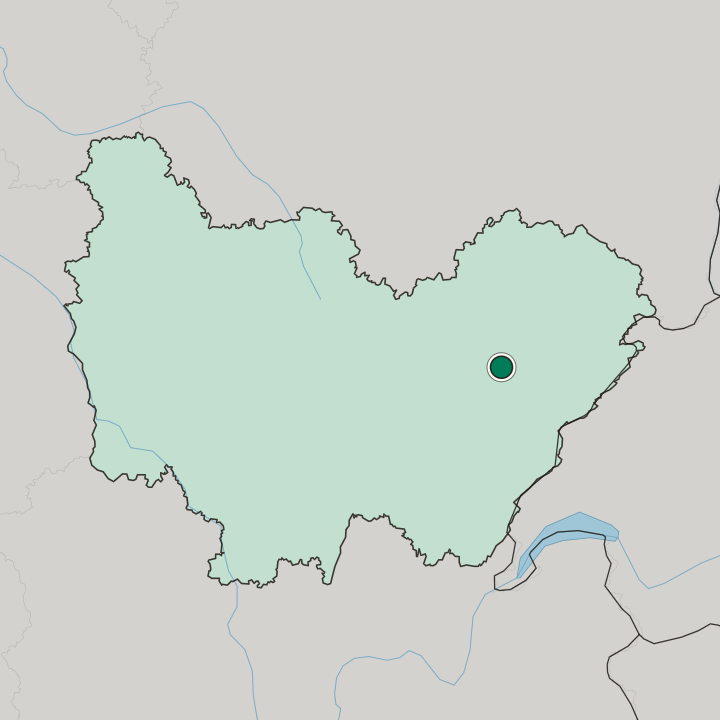
Besançon lies in Bourgogne-Franche-Comté, a principal city of the region. Hills wrap it close. The old town fills a tight loop of low ground below the ridge that carries the Citadel of Besançon, while the Battant quarter climbs the slope across the water.
The Basilica of Saint-Ferjeux stands apart on its own hill west of the centre.
What is the climate of Besançon?
Besançon has a cooler, wetter climate than much of France, set in the hill country of Bourgogne-Franche-Comté. Winters bite. Cold, damp spells and hard frost are common in the sheltered hollow the old town sits in, and snow settles on the ridge around the Citadel of Besançon more often than on the western plains.
Summers are warm and green, rain spread across the year. The hills hold the weather in.
How do you get to Besançon?
Besançon sits on the rail routes crossing Bourgogne-Franche-Comté, and most visitors come by train. Two stations serve it, one in the valley near the old town, one on the high-speed line out on the plateau. Buses link the two.
From the central station the old town below the Citadel of Besançon is a short walk, and once inside it the museums, the Église Saint-Pierre, and Square Castan all sit close enough to cross on foot.
Common questions
What is the best area to stay in Besançon?
Old town centre: museums and the Roman core on foot. Battant: the old vine-growers' quarter, quieter and steep. Citadel slope: long views over the town.
Good for
More cities in Bourgogne-Franche-Comté
Updated October 2026