France
Bourgogne-Franche-Comté, France — Towns & Travel Guide
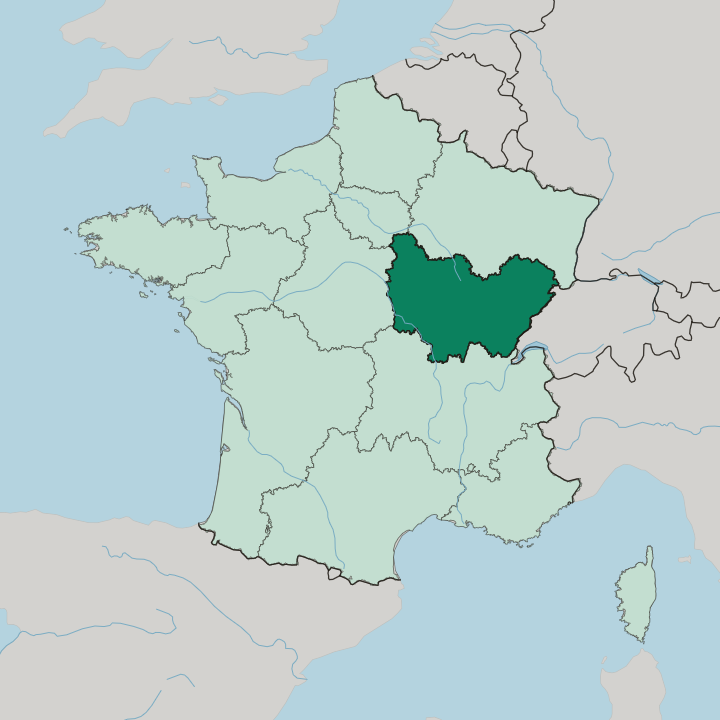
Bourgogne-Franche-Comté joins Burgundy's wine slopes to the Jura, running east from Dijon across eastern France to the Swiss border.
Hotel links are affiliate links: booking through them may earn us a commission, at no extra cost to you. It never affects how places are ranked. How this works


Towns & cities in Bourgogne-Franche-Comté
Pick a town or city — each links to where to stay.
 France
Dijon
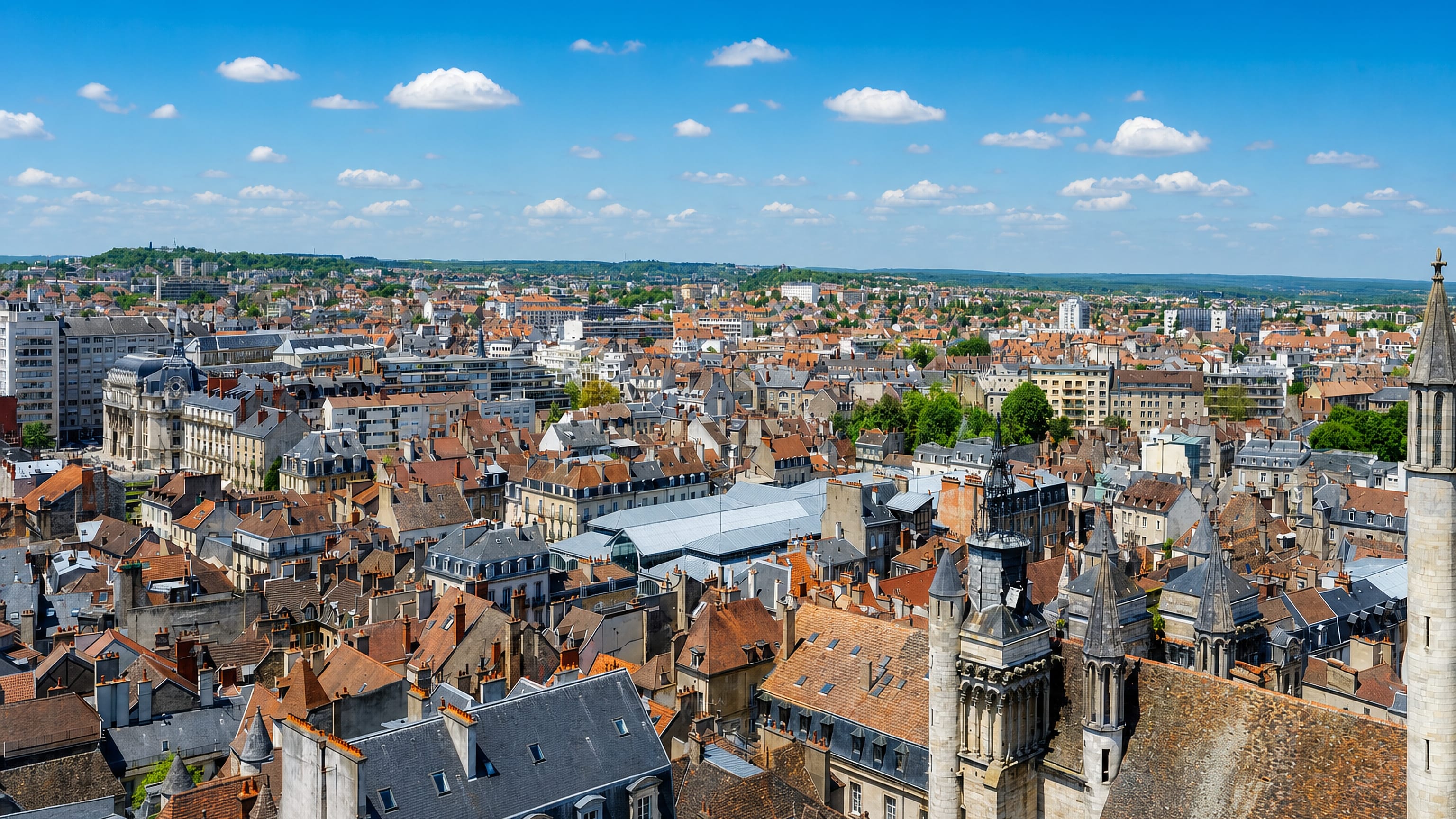
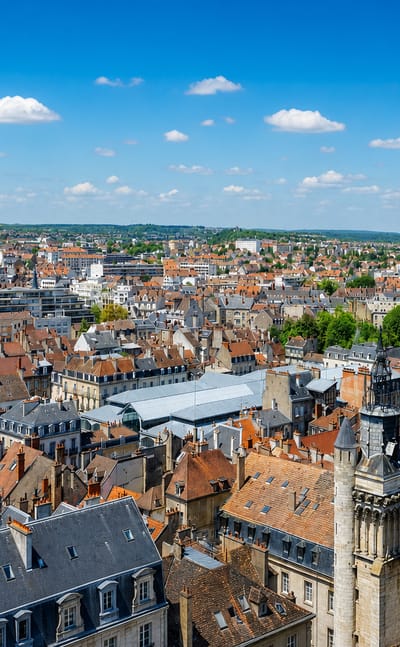
Tiled roofs catch the light in Dijon, prefecture of the Côte-d'Or in eastern France, old seat of Burgundy.Where to stay →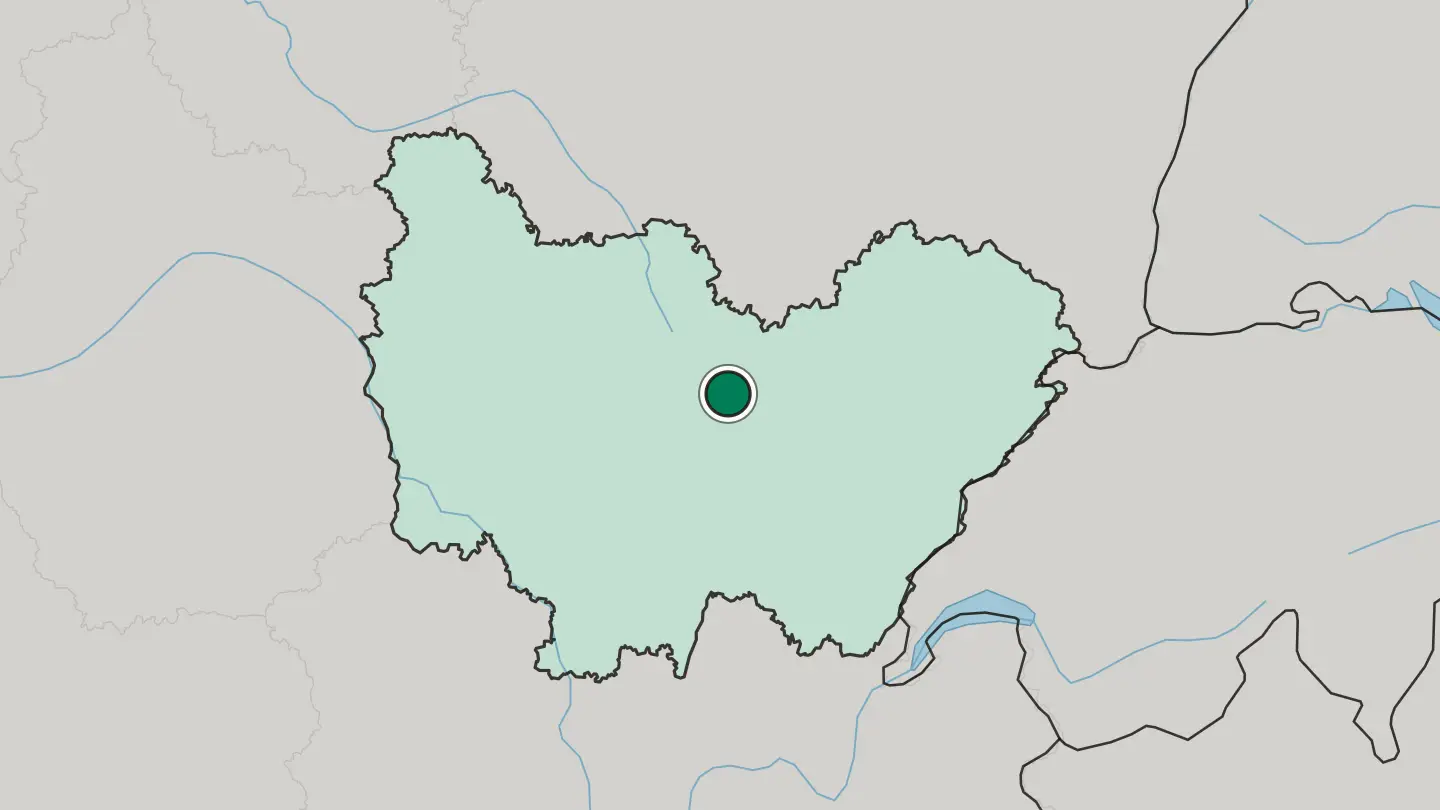
 France
Besançon
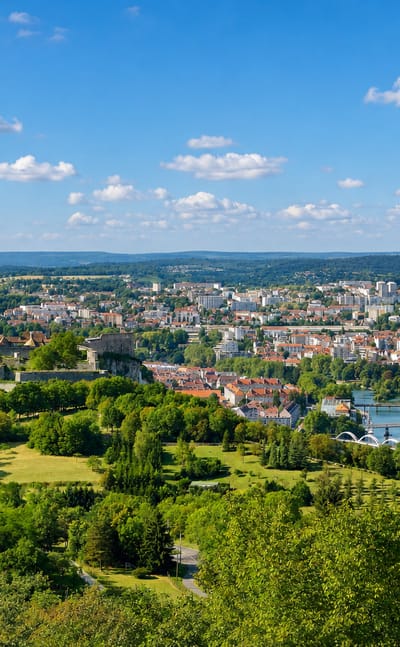
Besançon is a city in Bourgogne-Franche-Comté, wrapped below the Citadel of Besançon on the site of Roman Vesontio.Where to stay →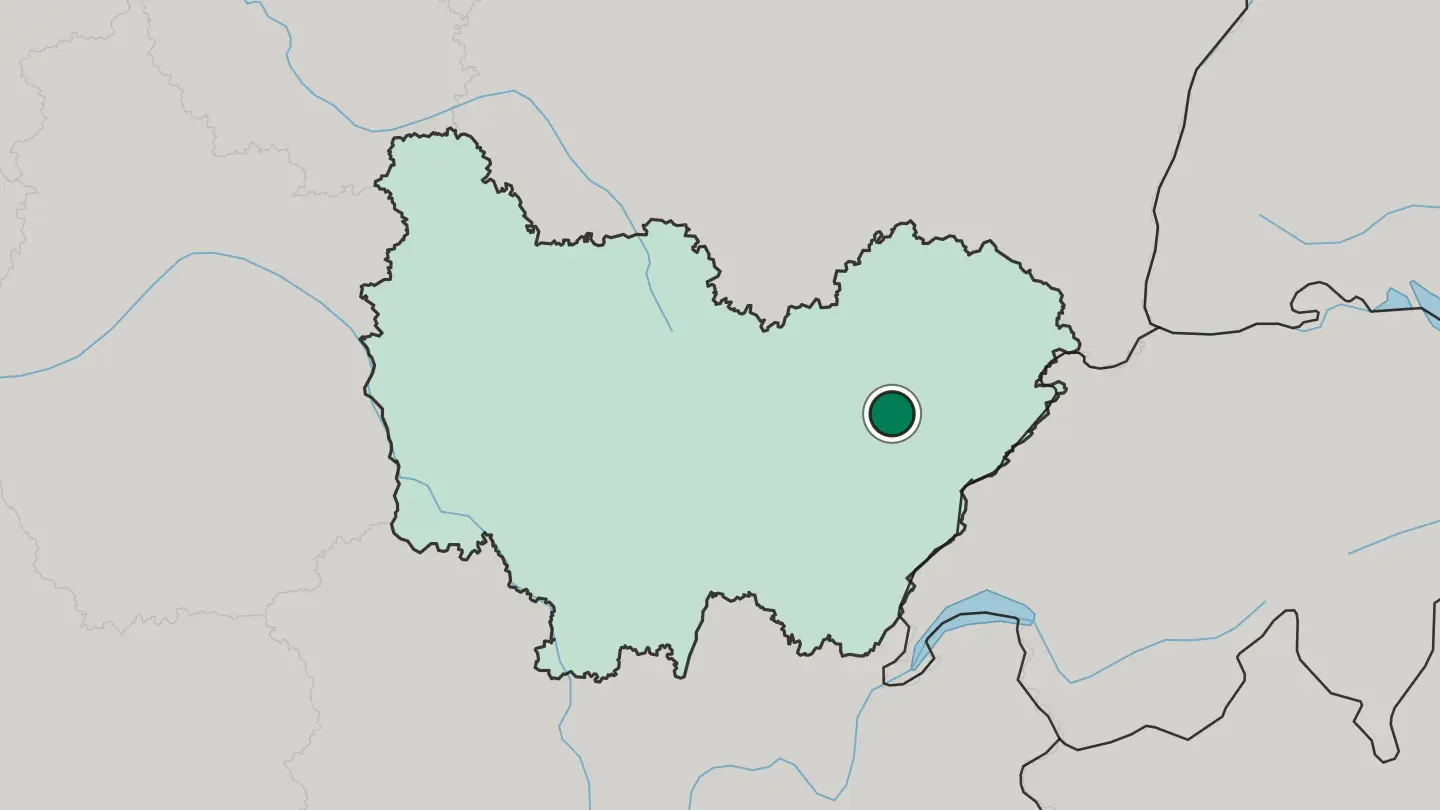
 France
Belfort
Belfort is a fortress city in eastern France, guarding the gap between the Vosges and the Jura, watched over by a colossal stone lion.Where to stay →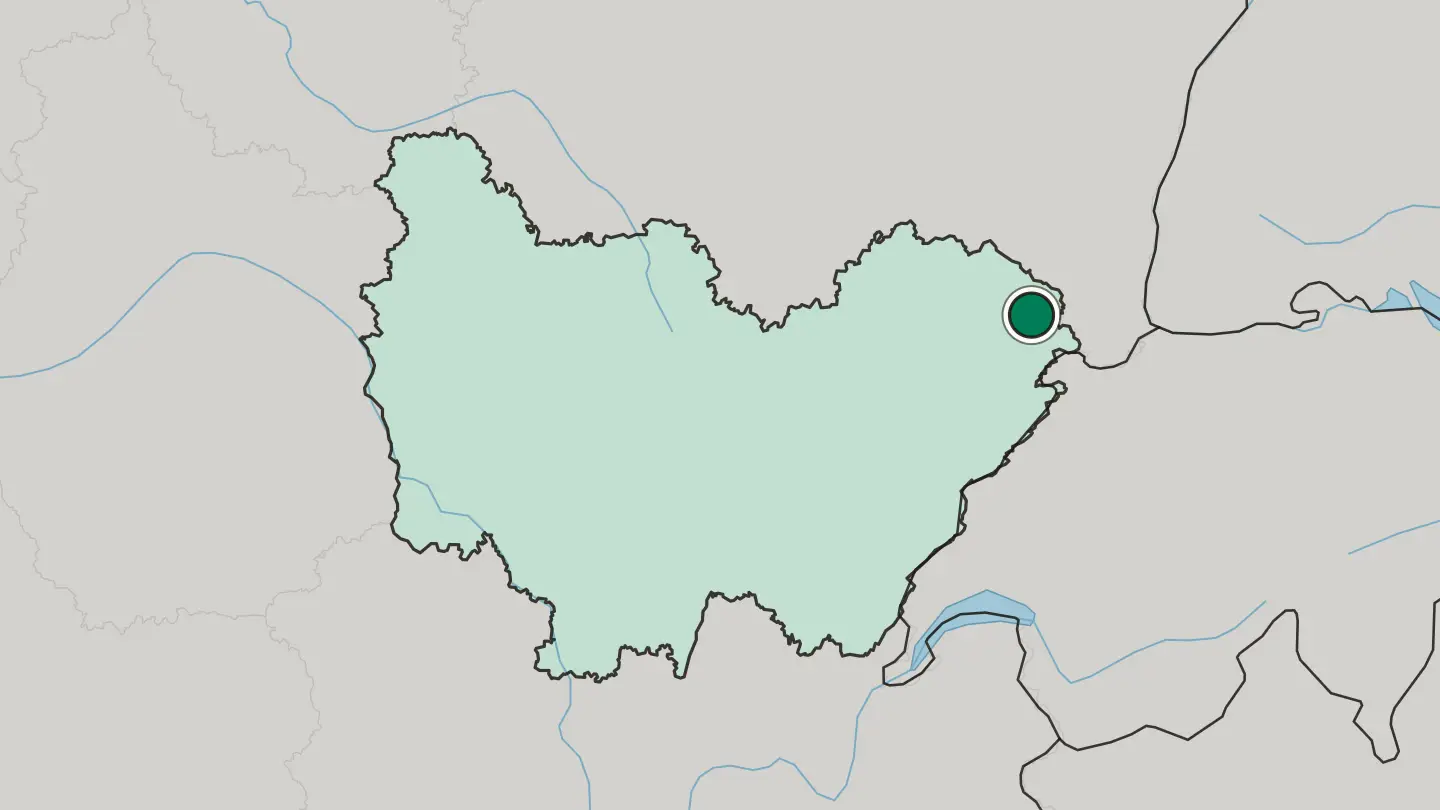
Hotel links are affiliate links: booking through them may earn us a commission, at no extra cost to you. It never affects how places are ranked. How this works
About Bourgogne-Franche-Comté
Wine, mostly.
What is Bourgogne-Franche-Comté known for?
The limestone slopes of the Côte d'Or between Dijon and Beaune grow the Pinot Noir and Chardonnay that made the name Burgundy famous, and the villages along them read like a wine list. East of the vineyards the land climbs into the Jura, a chain of forested ridges that carry the border with Switzerland and the herds behind Comté cheese. Dijon adds mustard, and the region carries more of France's UNESCO sites than almost any other.
Where is Bourgogne-Franche-Comté?
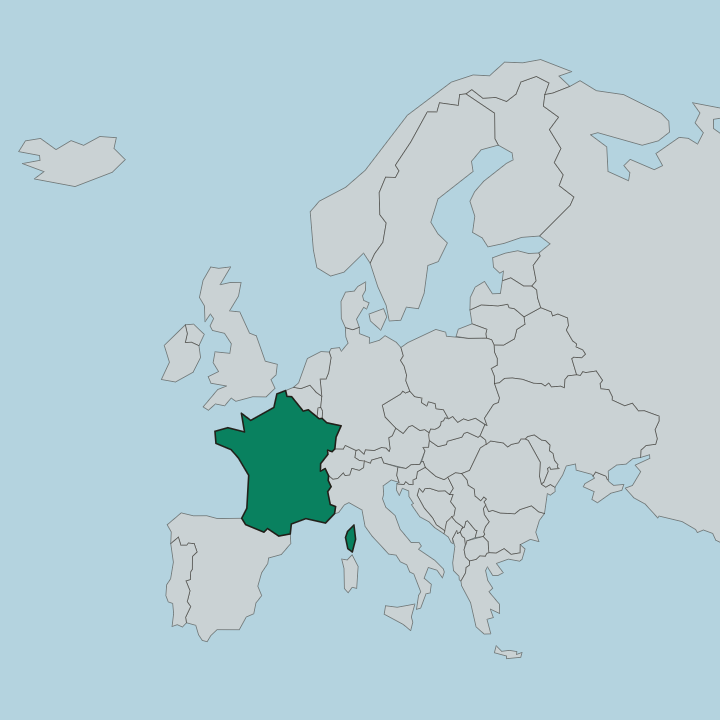
Bourgogne-Franche-Comté fills the middle of eastern France, tilted between the Paris basin and the Alps. Its whole eastern edge is the Swiss border. The land rises across the region from west to east, and the change is the whole story of its geography.
In the west the granite dome of the Morvan lifts out of the Burgundy farmland, a wooded island of the old Massif Central. From there the ground drops to a broad corridor where the Saône flows south, gathering the Doubs on its way and carrying the region's traffic and towns along the flat valley floor. On the far side the Jura climbs in long parallel ridges of folded limestone, forested and cut by gorges, until it meets Switzerland on the crest.
Between the Morvan and the valley runs the Côte d'Or, a narrow limestone scarp only a few hundred metres high whose east-facing slope is the wine country. Dijon stands at its northern end and Beaune at its heart. Besançon lies further east again, folded into a tight loop of the Doubs where the ground begins its climb into the Jura.
The Saône ties it all together. It runs the whole length north to south, the thread the region hangs from.
What is Bourgogne-Franche-Comté like?
This is a region that eats and drinks its own land. The name Burgundy is a wine before it is a place, and the culture of the western half turns on the vine: the harvest, the cellars cut into the scarp, the tiled roofs of the Hospices de Beaune above them. Beef bourguignon, coq au vin and snails come braised in the local red.
Dijon gives the world its mustard and its gingerbread. The table is the point. The eastern half keeps a different accent.
Franche-Comté spent centuries outside France, tied instead to the Habsburgs and Spain, and its uplands still feel more alpine than Burgundian. Its signature is Comté, a hard mountain cheese pressed in village dairies across the Jura and matured for months in stone cellars. Faith left tall marks on both halves.
The Romanesque basilica crowning the hill at Vézelay drew medieval pilgrims toward Spain, and the Cistercians raised austere grey abbeys in the northern valleys. Dijon and Besançon each carry a full old town of stone and ducal architecture. It is a quiet, rooted culture.
The land does the talking.
What is the history of Bourgogne-Franche-Comté?
The region is young. Its two halves are ancient and separate. Burgundy was a mighty medieval duchy, whose dukes ruled from Dijon and once rivalled the kings of France themselves.
Franche-Comté, the "free county" to the east, went another way. It passed to the Habsburgs and then to Spain, and stayed outside France for generations, until Louis XIV took it by force and sealed the annexation in 1678 by the Treaty of Nijmegen. The two provinces were finally married on paper in 2016, when France drew them into one region.
What is the climate of Bourgogne-Franche-Comté?
The climate is semi-continental, colder and more four-square than the Atlantic coast. Winters bite. In the Val de Saône and along the Côte d'Or the summers turn warm and dry enough to ripen the vineyards, but rain and snow fall harder as the land lifts east.
Up on the Jura plateaux above Besançon the winters are long and snow lies deep, feeding the streams that carve the gorges. The Morvan catches its own cloud in the west. The higher you go, the colder and wetter it gets.
How do you get to Bourgogne-Franche-Comté?
Rail serves Bourgogne-Franche-Comté well. The TGV runs from Paris to Dijon in well under two hours, and the same line drops down the Saône corridor through Beaune and on toward Lyon and the south. Besançon sits on the high-speed spur to the Swiss border.
Flyers can land in Paris, Lyon or Geneva and finish by rail or road. Once here, the flat valley makes for easy driving, but the vineyard villages and the Jura ridges reward a slower pace.
Common questions
What is the best area to stay in Bourgogne-Franche-Comté?
Dijon: a first visit to Burgundy. Beaune: the Burgundy vineyards. Besançon: the Doubs and the Jura. The Morvan: forest and lakes.
Good for
More regions in France
Updated October 2026