France · Provence-Alpes-Côte d'Azur · Marseille
Les Crottes, Marseille — Area Guide & Where to Stay
Les Crottes is the south tip of Marseille's 15th arrondissement, industrial ground from the mid-19th century that Euroméditerranée has rebuilt since 2007.
Hotel links are affiliate links: booking through them may earn us a commission, at no extra cost to you. It never affects how places are ranked. How this works


Where to stay in Les Crottes
Where visitors usually base themselves, and why.
Two Metro stations serve it. Bougainville was the end of line M2 from 1984 until 2019, when the terminus moved to the Capitaine Gèze interchange with its bus station and park-and-ride, and the T3 tram now ends there too, off the rue de Lyon. The quarter is not built for visitors.
This is warehouse and works country between the port and the motorways, crossed by the avenue du Cap-Pinède and the boulevard Ferdinand de Lesseps, and a bed here is a bed near the A7 rather than near anything to look at. Two footbridges cross the freight yards.
About Les Crottes
What are the main landmarks in Les Crottes?
The chapel is older than the quarter. A chapel and a mill on the Aygalades stream are attested at Petites Crottes by the end of the 13th century, and the Carmelites in the hermitage grotto nearby dedicated it to Notre-Dame de Jérusalem, which is why the parish carries that name. It was sold off in the Revolution.
Reopened in 1802, it was replaced in 1841 by a new parish church in the working suburb growing to the south, and the graveyard beside the old chapel gave way to one opened in 1784 and enlarged twice. That one became the cimetière des Italiens. Italian labour poured into the factories of La Cabucelle and Les Crottes and gave the burial ground its name, and after it closed in 1905 and was deconsecrated in 1926 it served as an industrial tip, until archaeologists dug the site for the Capitaine Gèze station.
What is the history of Les Crottes?
The name means a vault. It goes back through the Provençal cròta to the Latin crypta and the Greek word for an underground vault, and Frédéric Mistral put it down to the vaulted inns that once stood here, quoting the local saying about a good cellar making good wine. Farmland until about 1850.
By the 1870s Les Crottes was one of the industrial quarters of Marseille, and the parish it had been shrank as new ones were carved out, Saint-Lazare to the south in 1834 and Saint-Trophime to the north in 1865. The works arrived in a rush. A shipyard, a gasworks and a mineral-oil distillery went up in open country in the 1850s and 1860s, a chemical fertiliser plant followed in 1879, and the oil mills, soapworks and boiler shops of the Marseille trades then filled almost everything west of the rue de Lyon for a century.
Older ground still turns up. A dig in 2025 near the boulevard de Vintimille found vineyards worked for four centuries under Greek Marseille, about 2 km north of the city walls, and another in 2023 uncovered the Petites Crottes mill and chapel along with part of the Rocca, Tassy and de Roux oil works.
Where is Les Crottes?
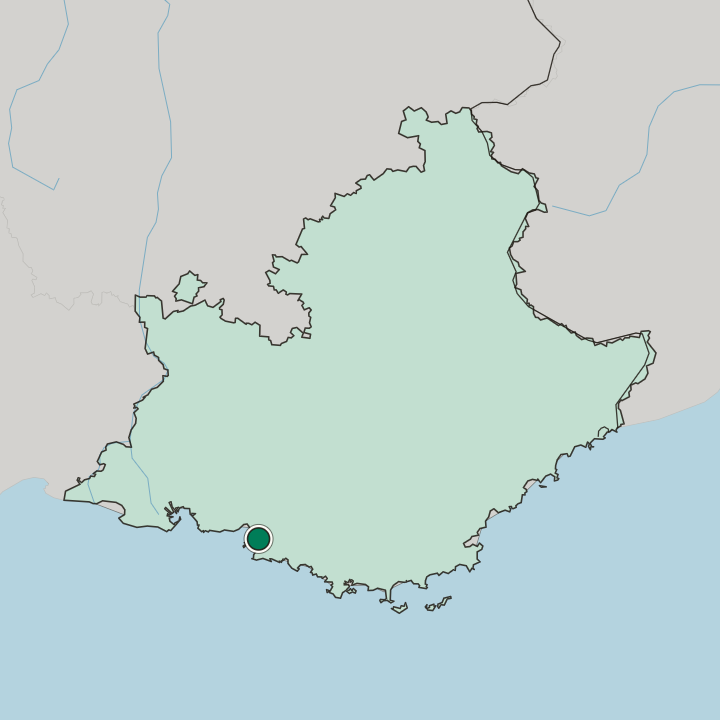
Les Crottes runs north to south along the old Grand chemin d'Aix, now the rue de Lyon and the avenue Roger Salengro, with La Cabucelle and Les Arnavaux to the north, Le Canet to the east, Saint-Mauront to the south and Arenc to the west.
Good for
More areas in Marseille
Updated September 2026