Georgia
K'alak'i T'bilisi, Georgia — Towns & Travel Guide
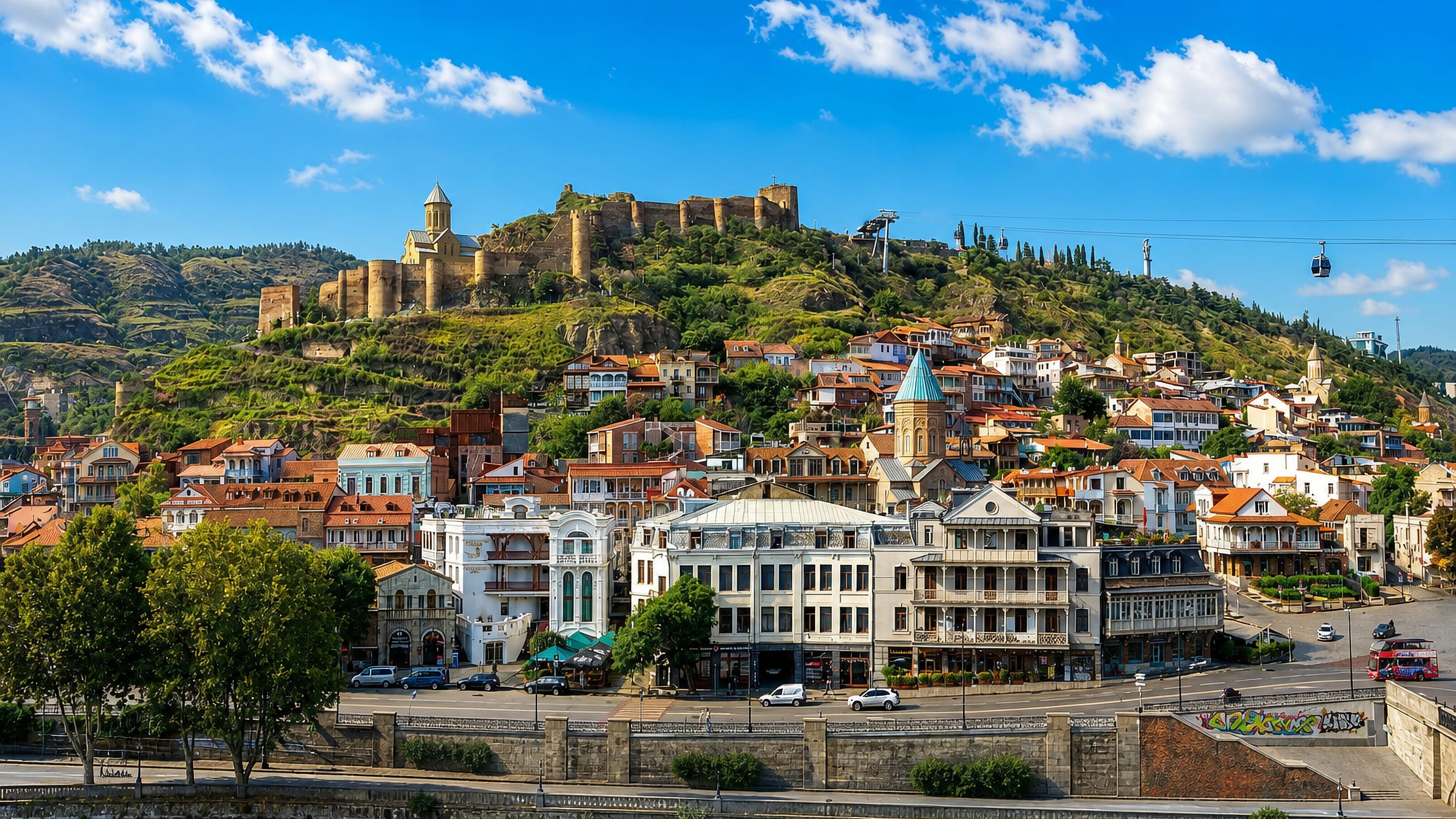
The Mtkvari River bends through K'alak'i T'bilisi, the self-governing capital region of Georgia gathered around the old town of Tbilisi below the Caucasus.
Hotel links are affiliate links: booking through them may earn us a commission, at no extra cost to you. It never affects how places are ranked. How this works


Towns & cities in K'alak'i T'bilisi
One town here has its own guide — it links to where to stay.
 Georgia
Tbilisi
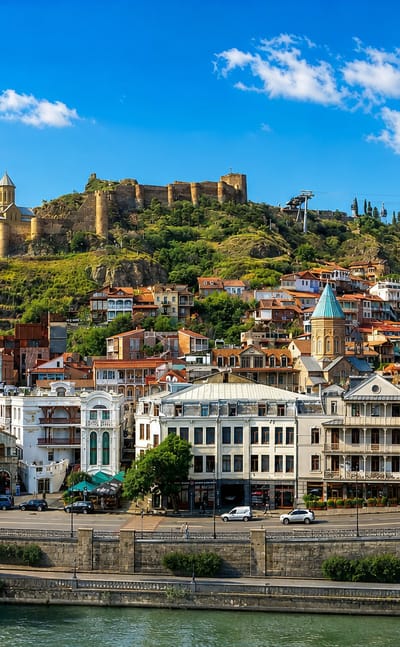
Warm sulphur water rises under Tbilisi, the capital of Georgia strung along the Mtkvari River below a fortress hill, known for its baths and old town.Where to stay →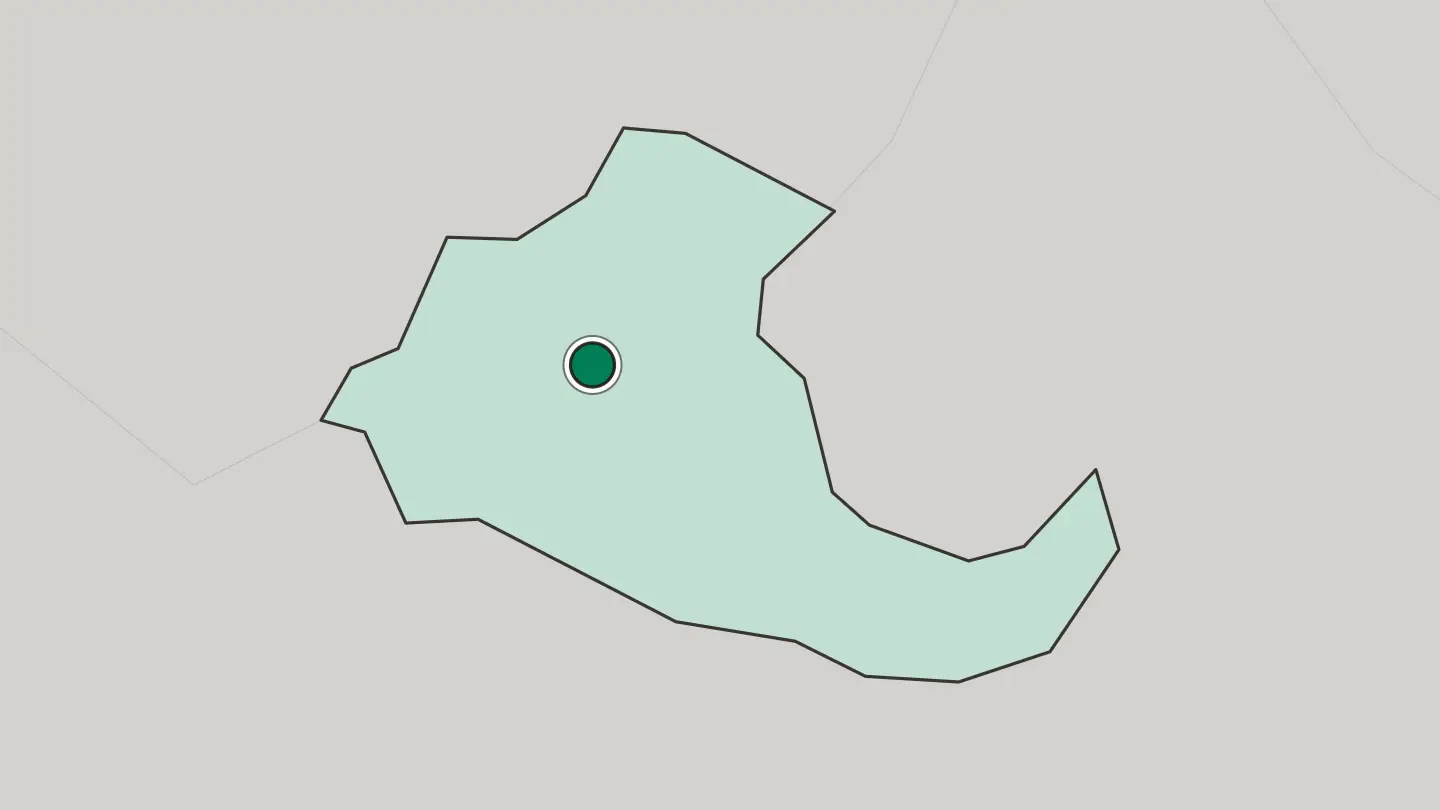
Hotel links are affiliate links: booking through them may earn us a commission, at no extra cost to you. It never affects how places are ranked. How this works
About K'alak'i T'bilisi
What is K'alak'i T'bilisi known for?
K'alak'i T'bilisi is the capital region of Georgia, a single-city administrative unit built around Tbilisi on the Mtkvari River. The old town climbs the slopes above the water, where Vakhtang I of Iberia is remembered as the founder who raised the city in the fifth century. It holds the seat of Georgian government and the country's largest concentration of people.
Sulphur springs gave the place its name. Their warm water still feeds the domed bathhouses in the quarter below the fortress hill.
Where is K'alak'i T'bilisi?
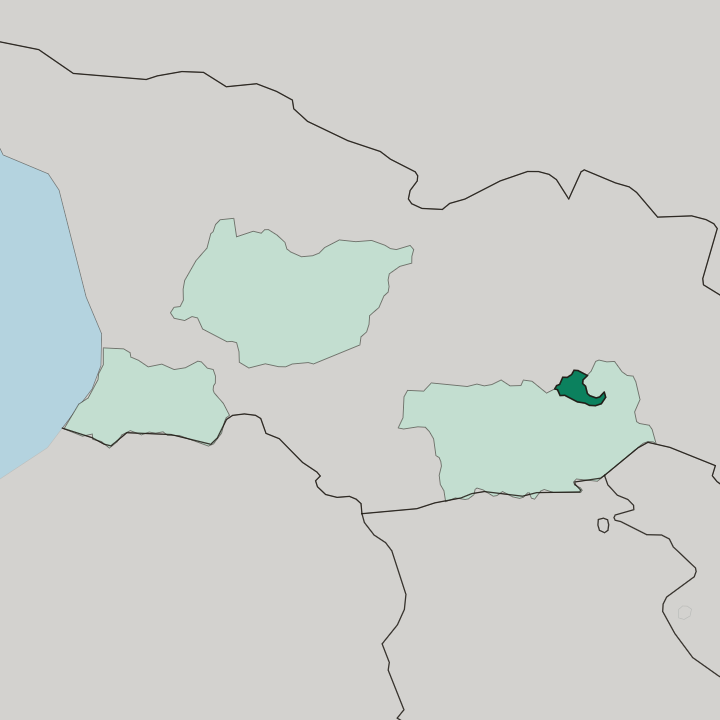
K'alak'i T'bilisi sits in eastern Georgia, a compact capital region folded into the valley of the Mtkvari River. The river cuts the city in two as it runs down from the highlands toward the Caspian basin, and Tbilisi grew along both banks where the water narrows below a line of hills. Ridges wall the valley on either side.
The wooded Mtatsminda slope lifts over the western bank, while the eastern cliffs carry the older churches above the bend. Beyond the built-up floor, the region climbs quickly into folded country on the southern edge of the Greater Caucasus. That mountain wall shelters the valley from the north.
The old caravan roads between the Black Sea and the Caspian met here, drawn to the crossing of the Mtkvari, and the modern region still holds that gathering role for the country. It is small in area but dense, the single most populous corner of Georgia. Warm sulphur springs rise through the valley floor, and it was these that first fixed a settlement on this stretch of the river.
What is K'alak'i T'bilisi like?
Georgian life centres on this region. Tbilisi has drawn together Georgian, Armenian, Azerbaijani, and other communities across its long history as a crossing point, and their churches, mosque, and synagogue still stand within a few streets of one another in the old town. The Georgian language and its own alphabet run through the city's signs, songs, and script.
Feasts anchor the year. The supra, the long Georgian table with its ordered toasts led by a tamada, is kept here as the heart of hospitality, poured through with the country's wine. That wine tradition reaches back thousands of years across Georgia, and the capital is where its vintages are gathered and drunk.
Sulphur bathing is the city's own ritual. Bathers still soak in the domed hammams over the springs, a custom older than most of the standing town. Song carries the rest.
Georgian polyphony, its interlocking three-voice harmony, is sung at the table and in the churches, and the capital keeps its choirs and its old church chants alive.
What is the history of K'alak'i T'bilisi?
K'alak'i T'bilisi carries the long story of Georgia's capital. Vakhtang I of Iberia founded Tbilisi on the Mtkvari in the fifth century, and it grew into the seat of successive Georgian kingdoms perched between the empires of the region. Between 1801 and 1917 the city lay within the Russian Empire, serving as the seat of the Caucasus Viceroyalty that governed both flanks of the mountains.
Conquest kept returning. Waves of siege and rebuilding left their layers along the river, and the region holds the government of an independent Georgia.
What is the climate of K'alak'i T'bilisi?
Climate here follows the sheltered valley. The Greater Caucasus to the north blocks the coldest air, so winters stay moderate along the Mtkvari, with occasional snow that rarely lingers on the valley floor. Summers turn hot and dry in the basin.
The surrounding hills warm quickly under a strong sun, and the city bakes through the long afternoons of the season. Rain comes mainly in spring and autumn, greening the ridges above Tbilisi.
How do you get to K'alak'i T'bilisi?
K'alak'i T'bilisi is the country's main gateway. Tbilisi's international airport lies east of the centre and carries the bulk of Georgia's air traffic, threading the capital into the wider region and onward to the routes that cross the Caucasus. Trains leave for the coast.
Rail lines run west toward the Black Sea and south across the highlands, while the old road between the sea and the Caspian still follows the valley of the Mtkvari through the city. Highways climb from here in every direction.
Common questions
What is the best area to stay in K'alak'i T'bilisi?
Old Tbilisi: the sulphur-bath quarter and the fortress slopes. Mtatsminda side: the hillside above the river valley. Left-bank Tbilisi: a base across the water from the old town.
Good for
More regions in Georgia
Updated September 2026