Indonesia · North Sumatra
Where to Stay in Sibolga, North Sumatra
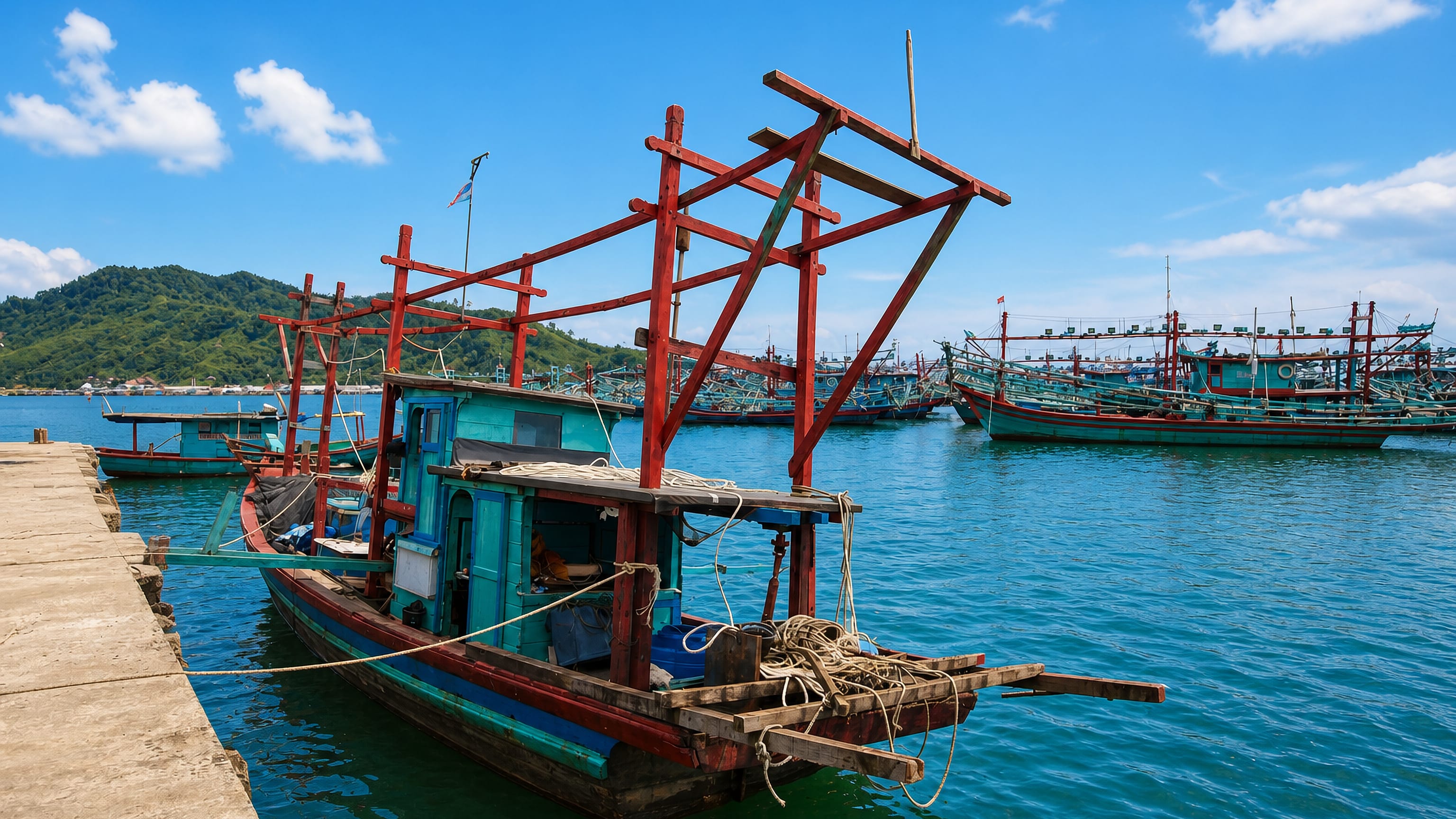
Sibolga is a port city on Teluk Tapian Nauli, the sheltered bay on the west coast of North Sumatra where the boats for Nias load.
Hotel links are affiliate links: booking through them may earn us a commission, at no extra cost to you. It never affects how places are ranked. How this works


Where to stay in Sibolga
Where visitors usually base themselves, and why.
Sibolga is small enough to cross on foot. The whole city occupies a shelf between Teluk Tapian Nauli and the mountains behind it, the smallest land area of any city in Indonesia, so no bed sits far from the water. Most hotels stand in the north-west.
Hotel Prima Indah on Jalan Brigjen Katamso and Hotel Syariah CN Darussalam on Jalan Imam Bonjol both put Sibolga Square within a few minutes of walking, and that old Chinese street is where the satay grills, woks, and juice blenders come out after dark. Which end of town suits a stay depends on the boat. The Nias ferries leave from the port on the south-eastern side, where KM Lambelu and KM Umsini also berth on the Gunungsitoli and Padang run, so an early sailing becomes a walk rather than a scramble across town.
Buses are a separate matter. They go from the station beside the pasar, and they run the long hauls to Medan, Parapat, Padangsidimpuan, and Padang. North of Pasar Belakang the character shifts again, since the bay road there passes fishing villages and a large industrial plant, ground that few visitors reach and that a becak covers most easily.
Swimming is not the draw. Locals get into the water near Hotel Wisata Indah, though the harbour is a working one and cleanliness is not its strength.
Find hotels in Sibolga
Direct booking searches for these neighbourhoods.
Sibolga Square
Hotel Prima Indah stands a short way south of the north-western end of Sibolga Square, where the woks and juice blenders work the pavement once the light goes.Find hotels in Sibolga Squareboarding the Gunungsitoli crossing without a taxiThe Nias ferry port
The south-eastern quays take the Nias ferries and the KM Umsini calls, so a room on that side turns an early sailing into a short walk.Find hotels in The Nias ferry portfishing villages along Teluk Tapian NauliThe bay road north of Pasar Belakang
Past Pasar Belakang the road runs beside Teluk Tapian Nauli through fisher villages toward a large industrial plant, ground best covered by becak and thin on beds. Few places to stay nearby — book ahead.Find hotels in The bay road north of Pasar BelakangHotel links are affiliate links: booking through them may earn us a commission, at no extra cost to you. It never affects how places are ranked. How this works
About Sibolga
Fish and ferries pay for this city.
What is Sibolga known for?
Trawlers working out of the harbour land kerapu, tuna, kakap, and teri, while the passenger boats KM Lambelu and KM Umsini tie Sibolga to Gunungsitoli and Padang along the same quays. The motto is Negeri Berbilang Kaum. Batak, Minangkabau, Nias, Tionghoa, and Jawa families share the four kecamatan packed onto this shelf of coast, and the coastal Malay called bahaso Baiko carries between them.
What are the main landmarks in Sibolga?
The fort is gone but its island is not. Poncan Ketek carried a bastion that British, Dutch, French, and American traders called at, and a hired boat still crosses the bay to it. Datuk Itam's grave survives ashore.
In town stand mosques, an older church, and three temples, one to Guanyin on the old Chinese street, one built around a large tiger statue, and a Maitreya vihara off the northern road. Mursala lies further out, an island whose waterfall drops straight into the sea and which is held to have served as a King Kong location in 1933.
What is the history of Sibolga?
The city began offshore. A small trading port stood on Poncan Ketek in Teluk Tapian Nauli from about the eighteenth century, opened by Minangkabau merchants working the west coast of Sumatra and ruled by Datuk Itam under the title Datuk Bandar, with British oversight from 1801. The Dutch took it in 1837.
Judging the island harbour incapable of growth, they built a replacement on the mainland in 1841, and the islanders followed to open a fresh market at Pasar Belakang while traders arrived from Barus and Sorkam. Poncan Ketek emptied. Nothing of that first harbour is visible now except the grave of its ruler.
Batak families from Silindung under Ompu Hurinjom had been settling this shore since the same century, and when his grandson Tuanku Dorong Hutagalung married a daughter of Datuk Itam the two customs fused into the practice known as adat sumando. Custom was written down on 1 March 1851 before the Residen Tapanuli, creating the hereditary office of Datuk Pasa over the town and its islands and the kepala kuria line that ended with Sultan Parhimpunan Muhamad Sahib. Resistance came late in the century.
In 1906 the Dutch shifted the capital of Keresidenan Tapanuli inland to Padangsidimpuan, and a fire somewhere between 1890 and 1920 took much of the timber-built town. Japanese troops arrived in 1942 and held European men at a camp on Taroetoengweg in the centre. A. M. Djalaluddin took charge in 1947, and the place governed itself as Kotamadya Sibolga until 1998.
Where is Sibolga?
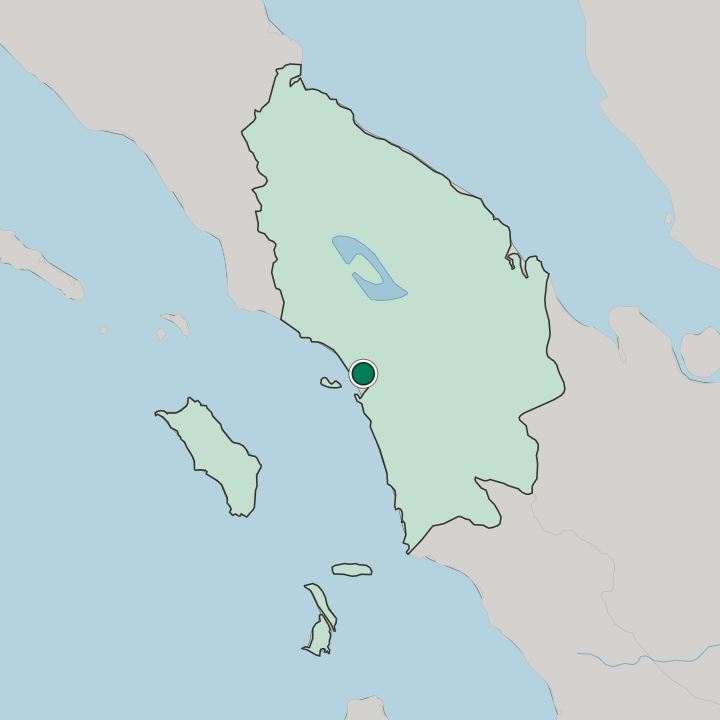
Four rivers cross the city on their way down. Aek Doras, Sihopo-hopo, Aek Muara Baiyon, and Aek Horsik drain the mountains behind Sibolga into Teluk Tapian Nauli, and the ground between them climbs from beach through slope to ridge without ever getting far from the water. Central Tapanuli Regency wraps the city on three sides.
Offshore sit Poncan Gadang, Poncan Ketek, Sarudik, and Panjang, and the Mentawai Strait opens west toward Nias.
What is the climate of Sibolga?
Rain is the constant here. The Indian Ocean lies open to the west with nothing to break the air coming ashore, which gives Sibolga the tropical rainforest climate that the Koppen system files without a real dry season. November is the wettest month.
Highs sit in the low thirties, nights seldom drop far below the low twenties, and December delivers more days of rain than any other month on the calendar.
How do you get to Sibolga?
Ferdinand Lumban Tobing Airport handles the flights, sitting about forty kilometres south at Pinang Sori with services to Medan and Jakarta. Boats matter more. The car ferry to Nias runs overnight and the fast passenger boat takes roughly three hours, while KM Lambelu and KM Umsini call at the port on the Gunungsitoli and Padang run.
Buses leave the station beside the pasar for Medan, Parapat, Padangsidimpuan, and Padang.
Common questions
What is the best area to stay in Sibolga?
Sibolga Square: evening satay stalls on the old Chinese street. The Nias ferry port: boarding the Gunungsitoli crossing without a taxi. The bay road north of Pasar Belakang: fishing villages along Teluk Tapian Nauli.
More cities in North Sumatra
Updated September 2026