Indonesia
North Sumatra, Indonesia — Towns & Travel Guide
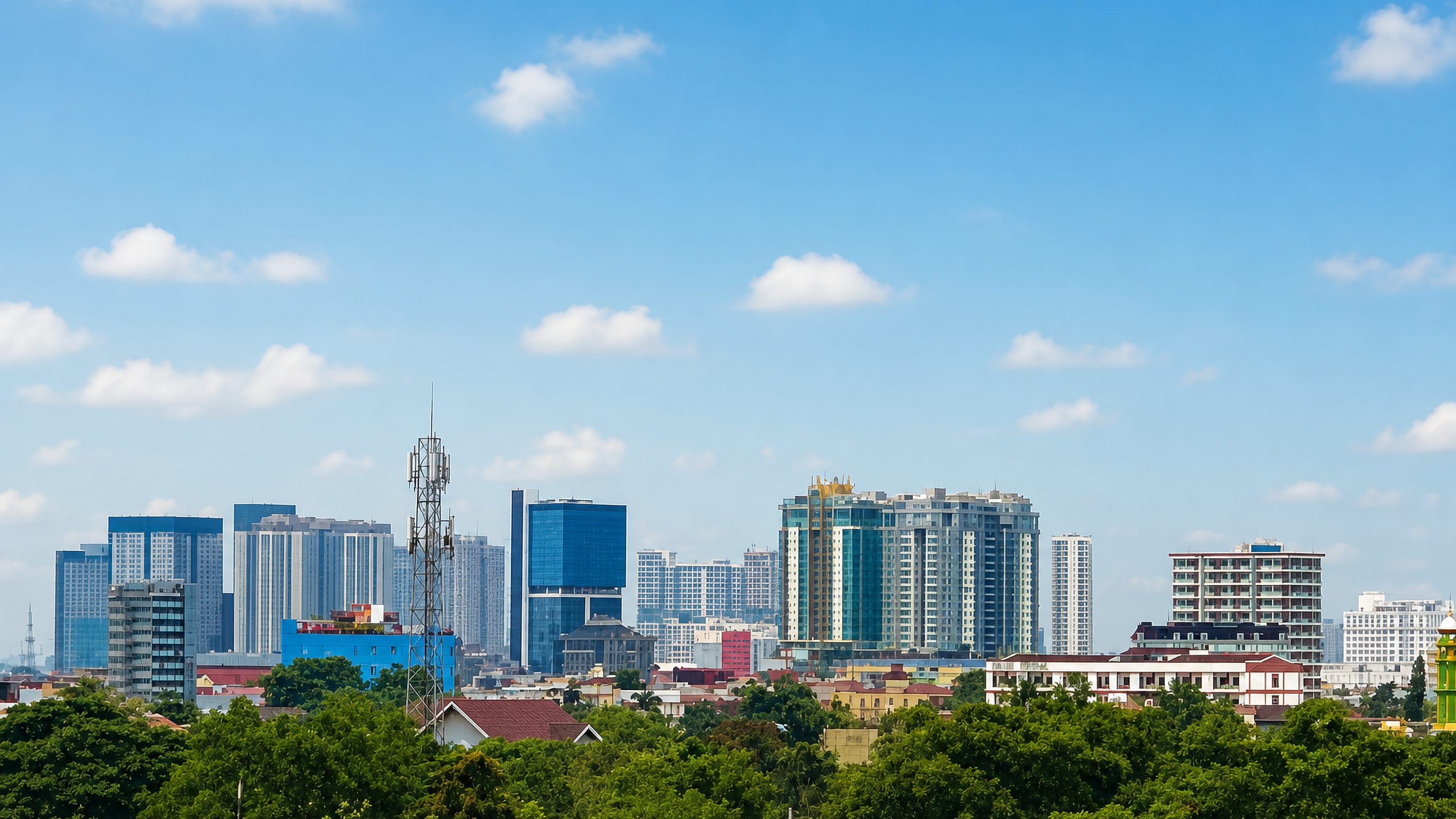
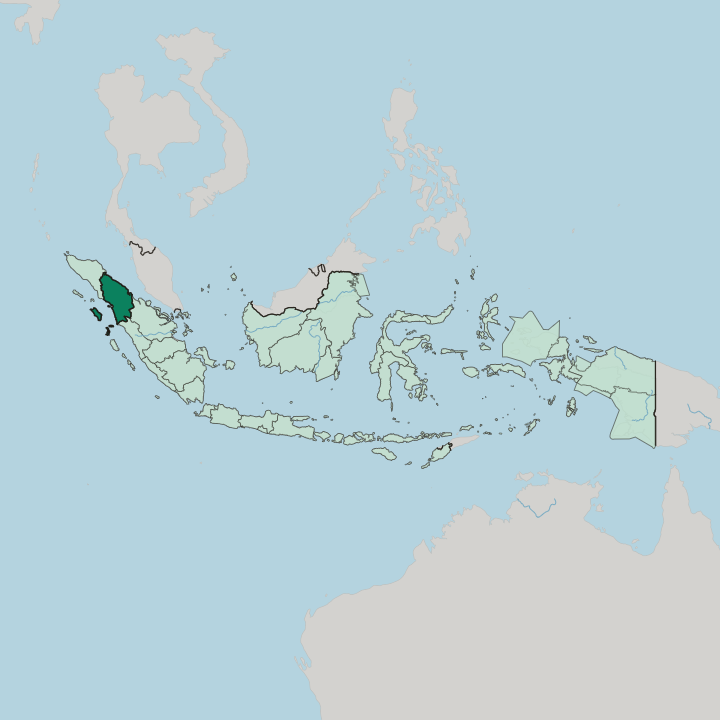
North Sumatra spans the island's north, from Medan and the Strait of Malacca across the Batak highlands to Lake Toba and Nias.
Hotel links are affiliate links: booking through them may earn us a commission, at no extra cost to you. It never affects how places are ranked. How this works


Towns & cities in North Sumatra
Pick a town or city — each links to where to stay.
 Indonesia
Medan
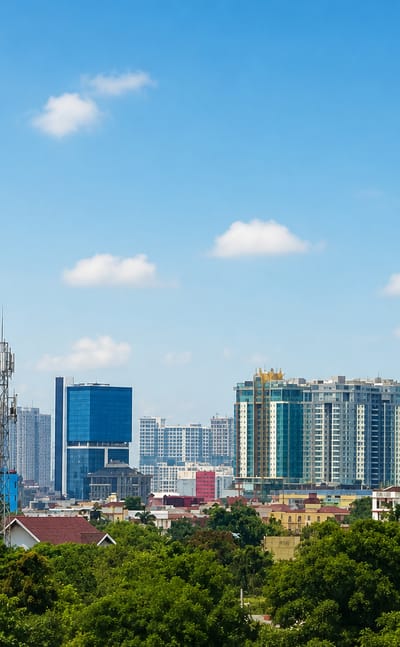
The Strait of Malacca laps the north coast of Sumatra at Medan, capital of North Sumatra, known for the Tjong A Fie Mansion and Lake Toba beyond.Where to stay →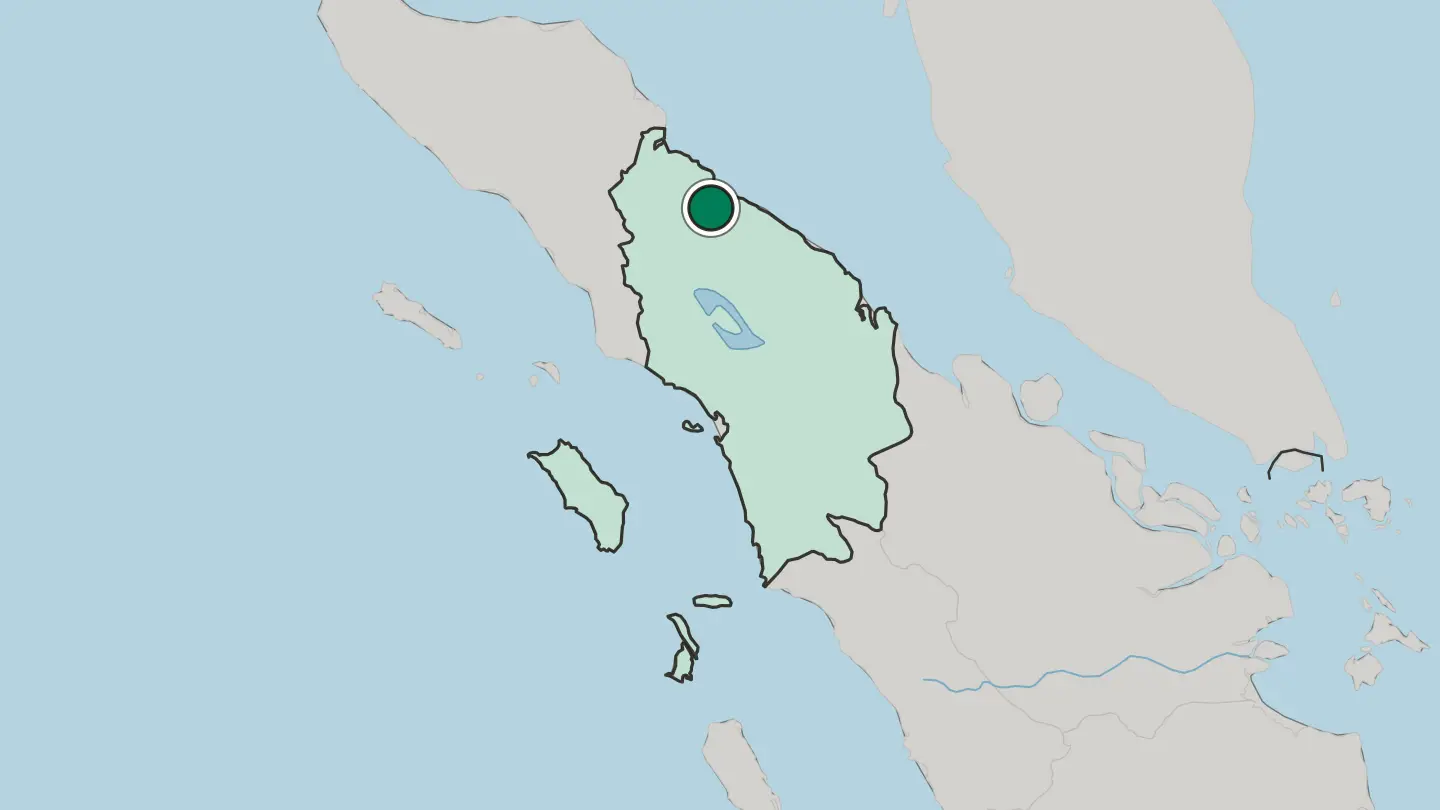
 Indonesia
Binjai
Binjai is an independent city in North Sumatra, dated to 1872, between Langkat Regency and Deli Serdang Regency on the highway from Medan to Banda Aceh.Where to stay →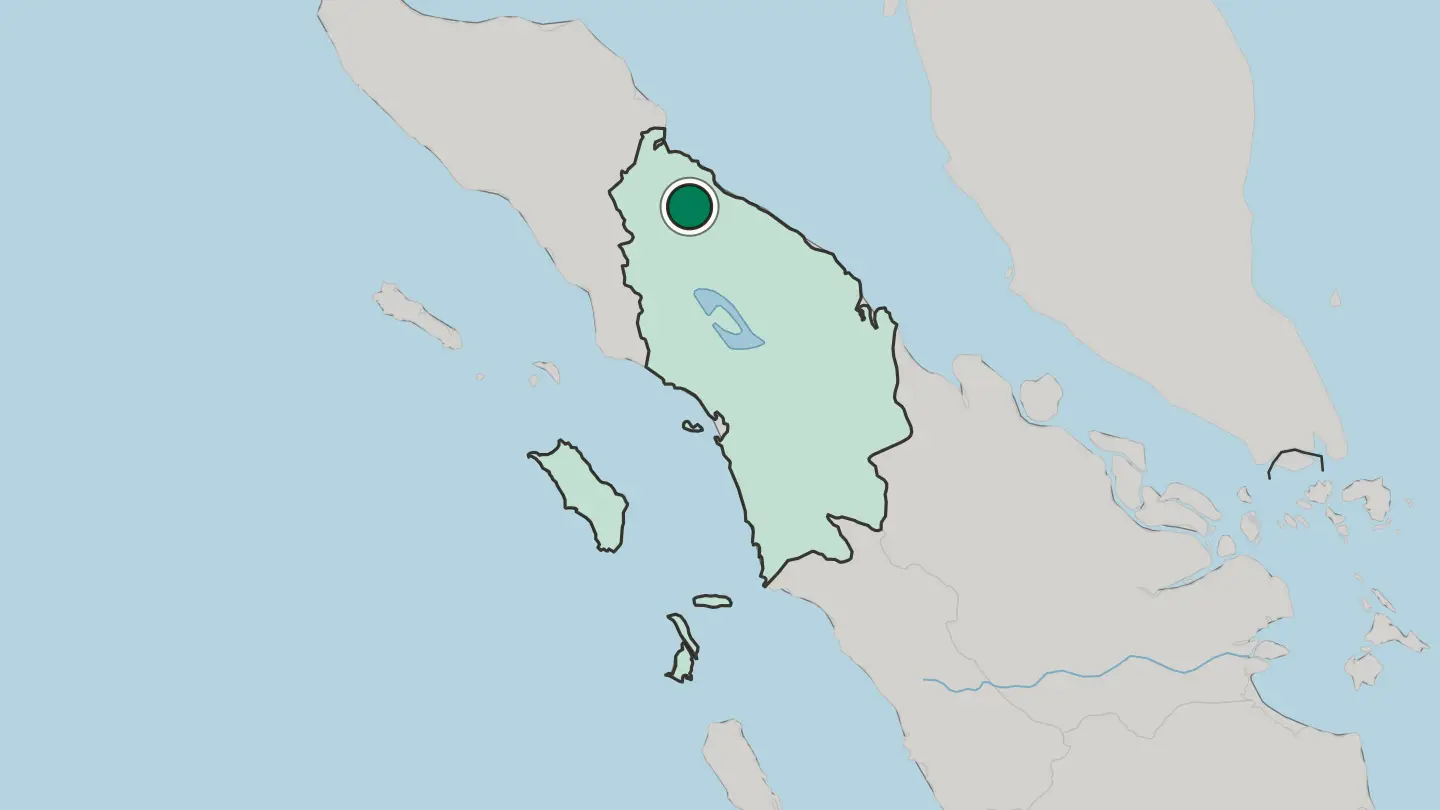 Indonesia
Pematangsiantar
Pematangsiantar is an independent city ringed by Simalungun Regency in North Sumatra, an enclave with a zoo and four museums of its own.Where to stay →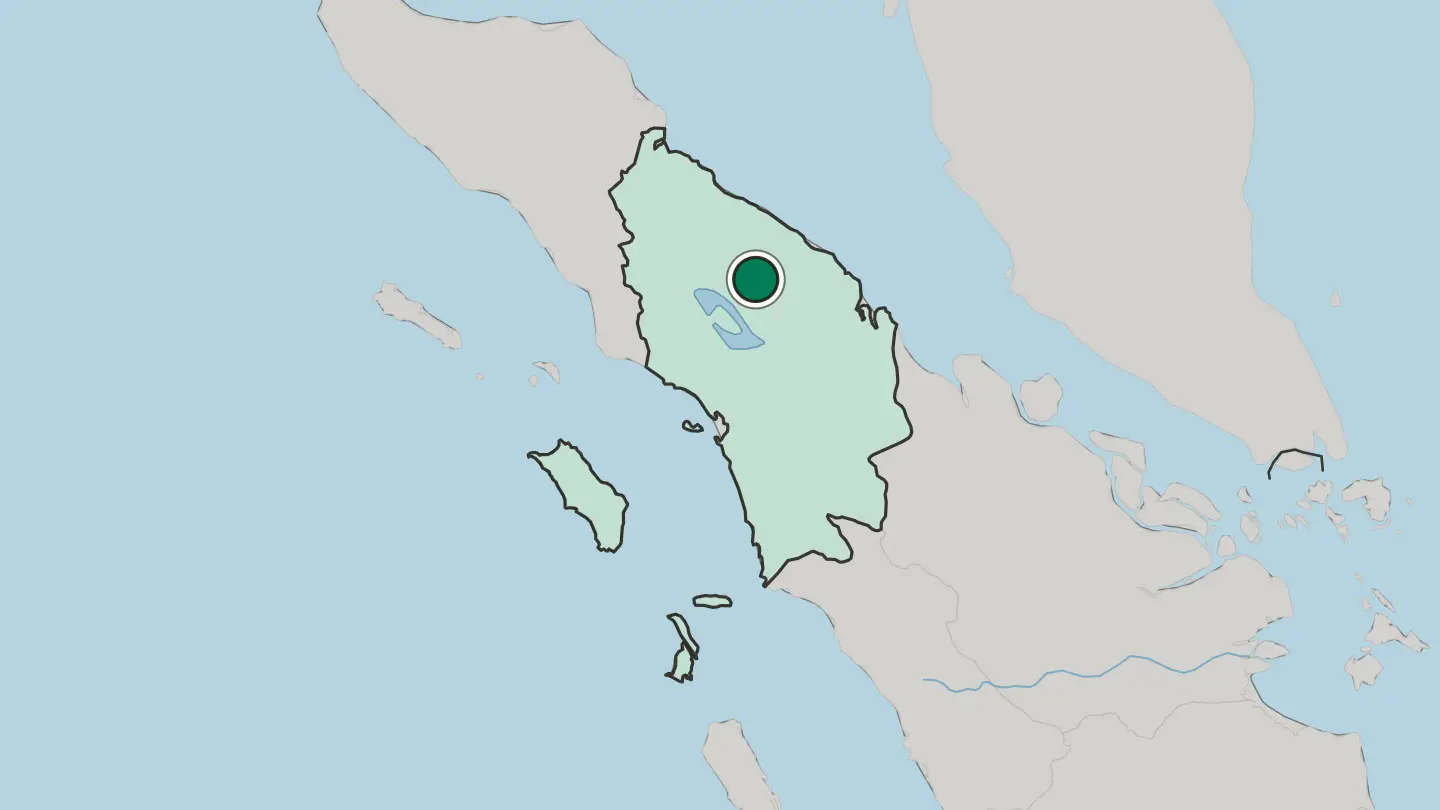 Indonesia
Tanjungbalai
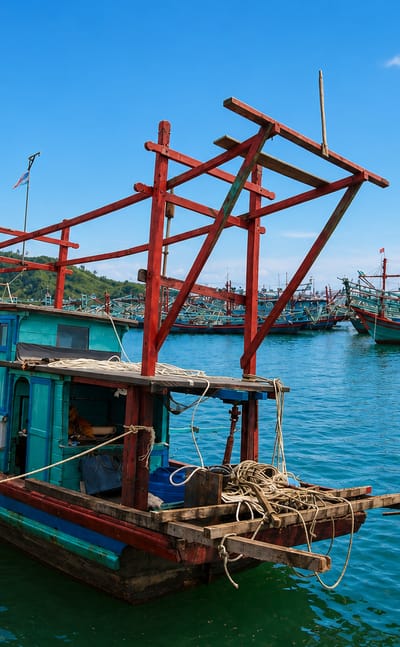
Tanjungbalai stands on the estuary of the Asahan River in North Sumatra, a port city with ferry links across to Malaysia and Singapore.Where to stay →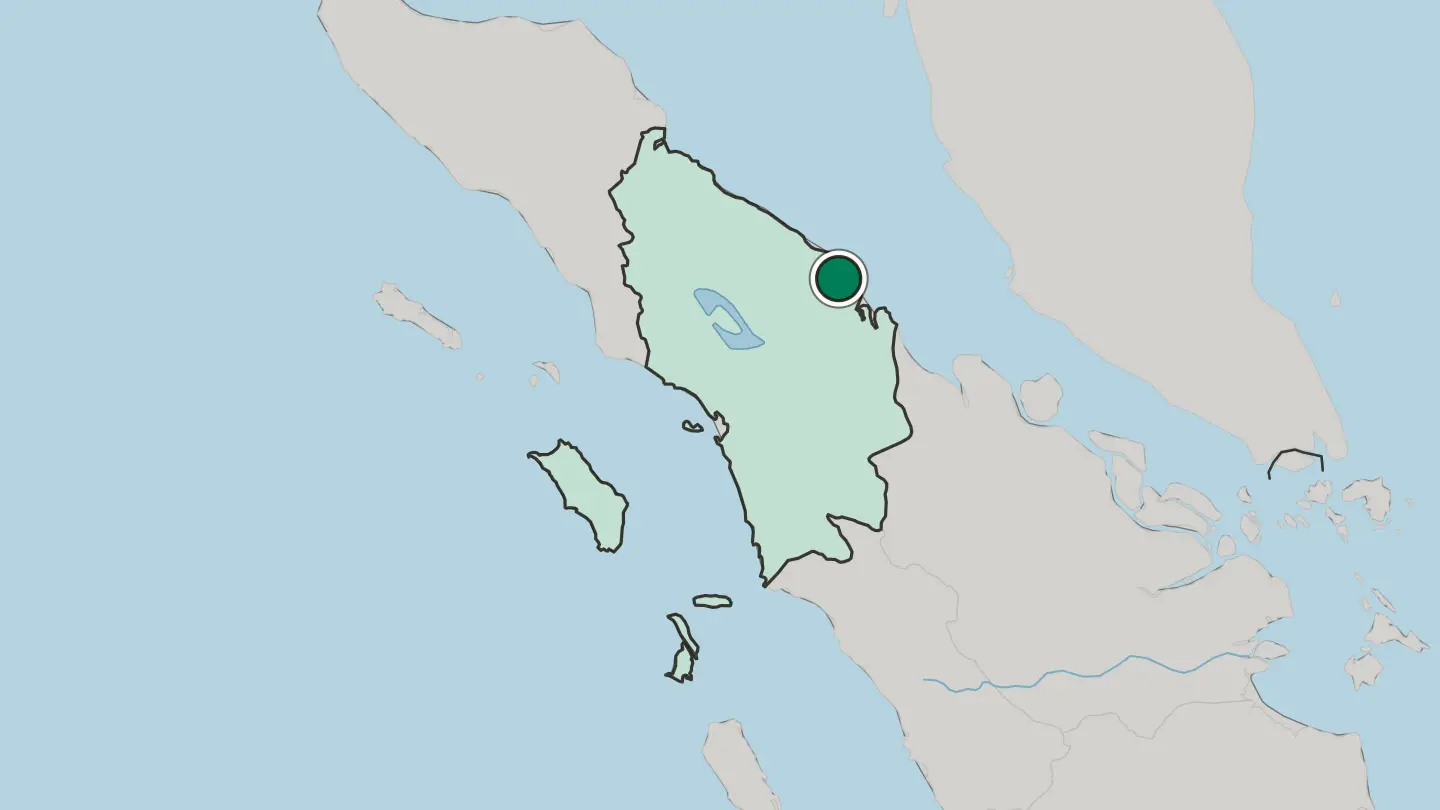
 Indonesia
Sibolga
Sibolga is a port city on Teluk Tapian Nauli, the sheltered bay on the west coast of North Sumatra where the boats for Nias load.Where to stay →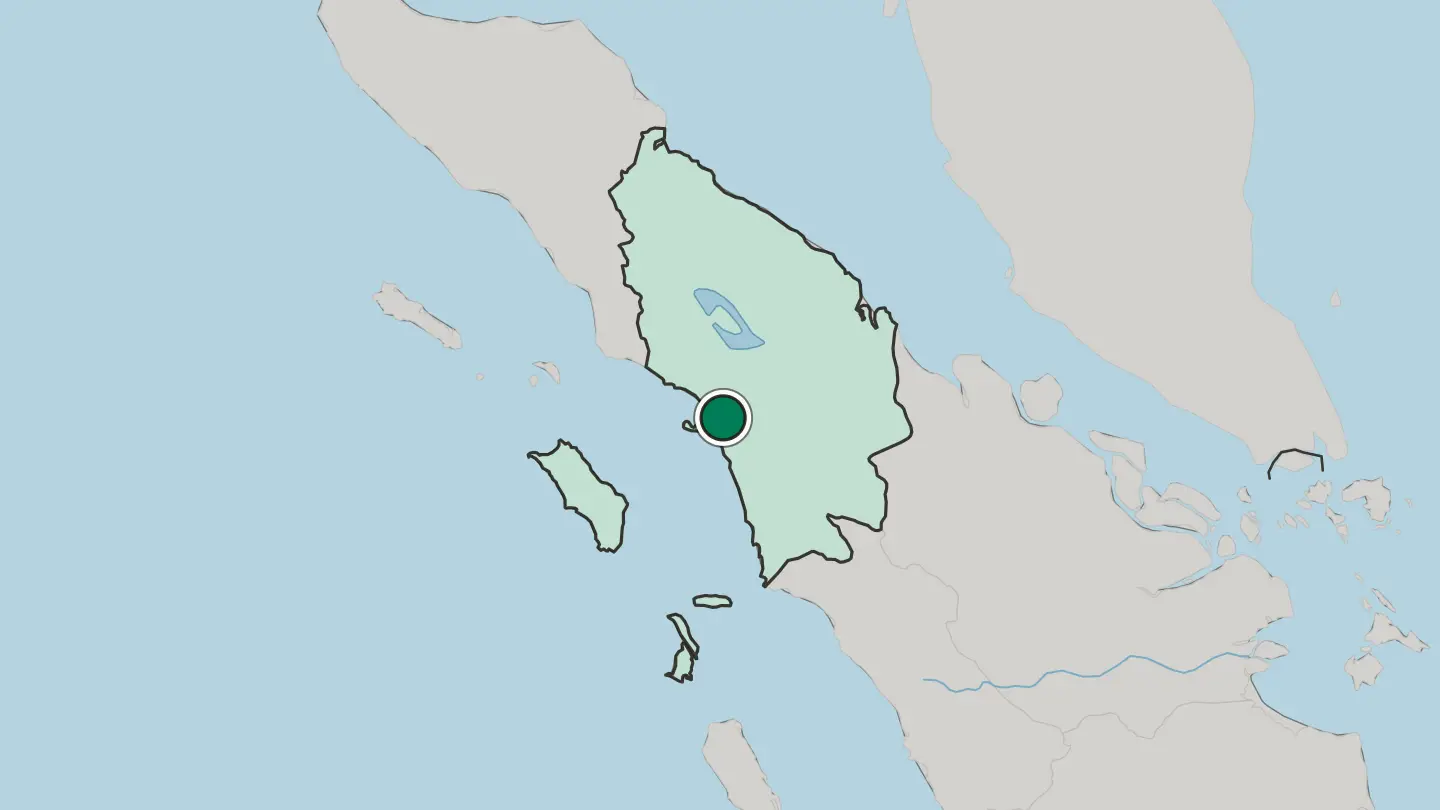
Hotel links are affiliate links: booking through them may earn us a commission, at no extra cost to you. It never affects how places are ranked. How this works
About North Sumatra
Lake Toba is the draw.
What is North Sumatra known for?
The flooded caldera of an ancient supervolcano holds Samosir, an island nearly the size of Singapore, ringed by Batak villages with high, saddle-backed roofs. Medan anchors the coastal plain as the province's capital and largest city. Travellers climb to Berastagi for cool air and the smoking cone of Mount Sinabung, trek to see orangutans at Bukit Lawang, and sail west to Nias for its reef breaks.
The Batak highlands give the whole province its character.
Where is North Sumatra?
North Sumatra occupies the northern third of Sumatra, between two very different coasts. The Strait of Malacca laps its eastern shore, one of the world's busiest shipping lanes, while the open Indian Ocean pounds the west. Aceh lies to the northwest, Riau to the southeast, and West Sumatra to the south. Down the spine run the Barisan Mountains, the volcanic backbone of the whole island, and here they broaden into the high Batak Plateau that covers roughly two-thirds of the province.
Medan and the tobacco lands sit below it, on the broad, low Deli plain that slopes to the Strait. Lake Toba fills the plateau's heart. It is the flooded caldera of a supervolcano whose eruption ranks among the largest known on Earth, and inside it sits Samosir, an island almost as large as the lake's own arms.
Active cones still smoke above the highlands. Mount Sinabung, dormant for centuries, roared back to life in 2010, and Mount Sibayak steams quietly behind Berastagi. West of the mainland, across a stretch of the Indian Ocean, lie Nias and the smaller Batu Islands, where swell from the open sea builds the reef breaks that surfers chase.
Rivers such as the Asahan drain the plateau east toward the Strait. Water and fire shaped all of it.
What is North Sumatra like?
The Batak define North Sumatra. They are not one people but several kindred groups, the Toba, Karo, Simalungun, Pakpak, Angkola and Mandailing, each with its own dialect and all bound by the clan-and-marriage code the Toba call Dalihan Na Tolu. The Batak kept their own script, the Surat Batak, and much of their older belief long after Islam reached the coast.
Faith still splits along the land itself. German missionaries turned the Toba highlands Protestant Christian in the nineteenth century, while the Mandailing of the south and the Malays of the coastal plain are Muslim. Medan tells a different story.
The port city grew on tobacco money under the Deli Sultanate and the Dutch, and it pulled in Javanese labourers, Tamil traders from South India and a large Chinese community, whose temples and shophouses still line its older quarters. The yellow walls of the Maimun Palace and the black domes of the Grand Mosque recall the sultans who ruled here. Food carries the mix.
Batak arsik carp, Mandailing spice, and Medan's famous durian all belong to the same table. Indonesian is the shared language everywhere, but the Batak tongues are what people speak at home in the hills.
What is the history of North Sumatra?
The coast and the highlands took different paths. Malay sultanates traded along the Strait of Malacca while the Batak kept to the interior, largely untouched by the Hindu and Muslim states below. The Deli Sultanate rose around Medan in 1632.
Two centuries later Dutch planters cleared the lowlands for tobacco and rubber, and the wealth built colonial Medan into eastern Sumatra's commercial capital. North Sumatra took its present form as a province in 1948, after independence.
What is the climate of North Sumatra?
Heat and rain hold over North Sumatra through every month. Medan and the coastal plain stew in humid, equatorial heat, with rain in every month and the heaviest downpours toward the close of the year. There is no real dry season.
The mountains change the rules, though. Up in Berastagi and around Lake Toba the altitude strips away the heat, and nights on the plateau can turn genuinely cold. Bring a jacket for the highlands.
How do you get to North Sumatra?
Almost everyone flies into Kualanamu International Airport, the main hub east of Medan. From there the roads climb inland. Lake Toba lies a half-day's drive south through Parapat, where ferries cross to Samosir, and Berastagi is a shorter run up into the Karo hills.
Reaching Nias means a flight or the overnight boat from the west-coast port of Sibolga. Buses also run north into Aceh and south along the Sumatran highway. The airport does most of the work.
Common questions
What is the best area to stay in North Sumatra?
Medan: arriving and the first night. Tuk Tuk, Samosir: settling in beside Lake Toba. Berastagi: the Karo highlands and volcanoes. Bukit Lawang: trekking for orangutans.
Good for
More regions in Indonesia
Updated September 2026