India · Assam
Where to Stay in Sibsāgar, Assam
Sibsāgar keeps the temple towers and royal burial grounds of the Ahom kingdom, at the head of its own district in Upper Assam.
Hotel links are affiliate links: booking through them may earn us a commission, at no extra cost to you. It never affects how places are ranked. How this works


Where to stay in Sibsāgar
The practical side of choosing where to sleep.
The temple ground is the anchor. Sivasagar Sivadol rises at the centre of Sibsāgar with Sivasagar Vishnudol and Sivasagar Devidol beside it, and a room within sight of that group puts the whole of the Ahom kingdom's surviving religious building inside one morning. Everything else is a short ride.
The Moidam burial sites of the Ahom kings lie outside the built-up part, inscribed as a UNESCO World Heritage Site, so they are visited from a base in town rather than slept beside. Working Sibsāgar is the other half. Tea and oil run the district economy, and the streets that serve them carry the newer rooms, taken by people whose reason for being in Upper Assam has nothing to do with temples.
Ghanashyam's house sits apart again. A stay near it trades the temple frontage for quiet, which suits travellers who want the monuments in reach without the traffic that collects at their gates. Sivasagar district holds no second town of this size.
That narrows the question to which quarter of one place to take, and the honest answer depends on whether the trip was arranged around the Ahom kingdom or around the business that came after it. Assam's larger cities are a long way off.
Find hotels in Sibsāgar
Direct booking searches for these neighbourhoods.
Sivadol temple quarter
The three Ahom towers of Sibsāgar stand as one group here, so the walk between them runs to minutes.Find hotels in Sivadol temple quarterQuiet nights a short ride from the Ahom monumentsGhanashyam's house side
Ghanashyam's house stands clear of the temple frontage, on streets that empty once the visitors have gone. Rooms are few around here — worth securing early.Find hotels in Ghanashyam's house sideWork trips into the tea and oil trade of Sivasagar districtTea and oil quarter
The newer rooms in Sibsāgar cluster where the tea and oil business of Upper Assam is actually done.Find hotels in Tea and oil quarterHotel links are affiliate links: booking through them may earn us a commission, at no extra cost to you. It never affects how places are ranked. How this works
About Sibsāgar
Three temple towers stand over it.
What is Sibsāgar known for?
Sivasagar Sivadol, Sivasagar Vishnudol and Sivasagar Devidol are the Ahom kingdom's building in its most concentrated form, and they account for most of the reason anyone turns off the road into the town at all. Ghanashyam's house adds a fourth name. Tea and oil pay for the working half of Sivasagar district, and the Moidam burial sites of the Ahom kings lie out past the built edge.
What are the main landmarks in Sibsāgar?
Four names do the work here. Sivasagar Sivadol is the one people give first, with Sivasagar Vishnudol and Sivasagar Devidol standing close by, and Ghanashyam's house completing the set of Ahom kingdom buildings the town is known for. The Moidam lie beyond them.
Those royal burial sites carry a UNESCO World Heritage Site inscription of their own.
What is the history of Sibsāgar?
The Ahom kingdom built here. Palaces and temples went up in and around the town, and that concentration is the reason Sibsāgar is read as a monumental centre of the kingdom rather than as one more district seat in Assam. Sivasagar Sivadol is the survivor named first.
Sivasagar Vishnudol and Sivasagar Devidol came out of the same programme of religious building, and Ghanashyam's house belongs to the same accumulation of Ahom construction on the same ground. Kings were buried outside the town. The Moidam sites hold those burials, and their inscription as a UNESCO World Heritage Site is the formal recognition of what the Ahom kingdom left behind in Upper Assam.
Two spellings outlived the kingdom. The place is written Sibsāgar and also Sivasagar, and both forms stay in use for the town and for the Sivasagar district it heads. Tea and oil arrived much later.
Both industries turned a monument town into an economic centre, a role quite separate from the temples that supports more of the working week than they do. The two layers sit side by side without much overlap. Visitors come for the first, the district lives off the second, and the buildings of the Ahom kingdom carry on standing between the two.
Where is Sibsāgar?
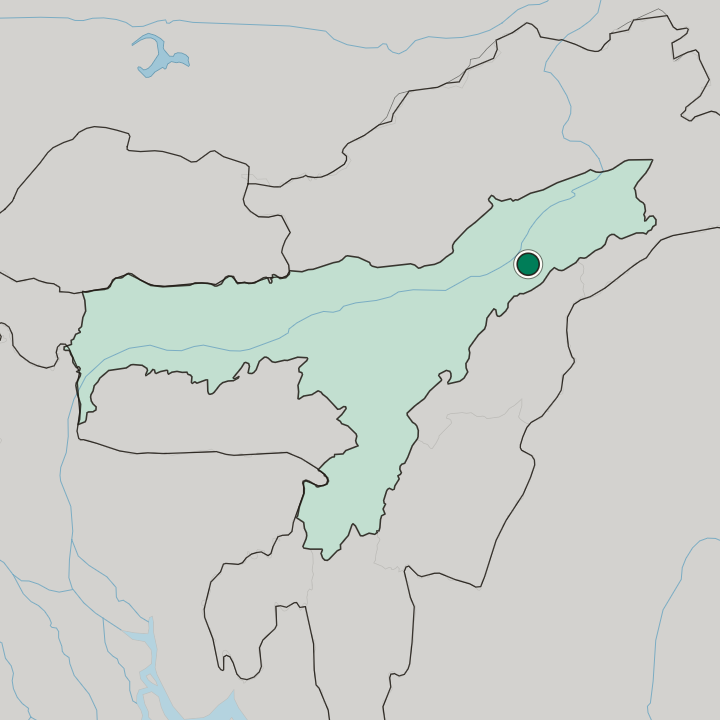
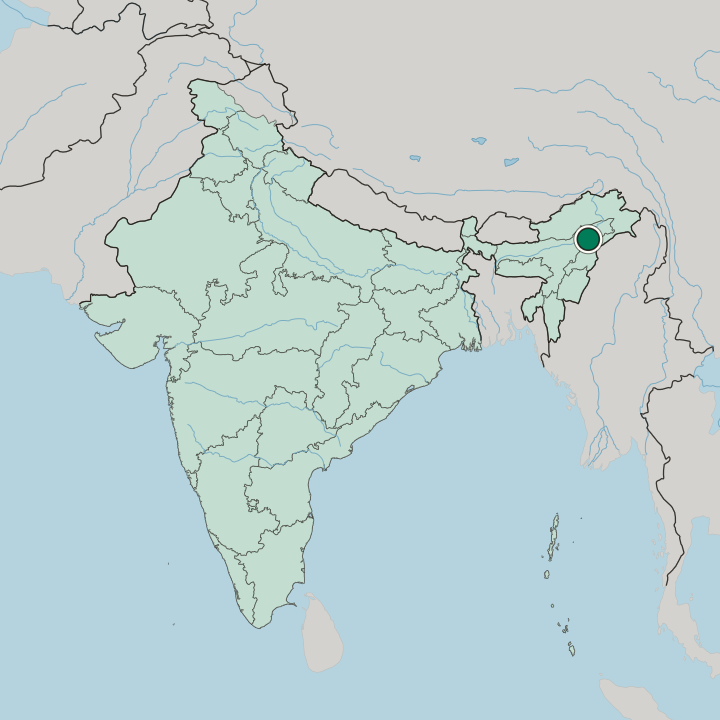
Upper Assam holds the town. Sibsāgar heads the Sivasagar district from inside it, with the temple group at the centre and the Moidam burial sites out past the built edge. Assam runs on around that.
The ground carries tea and oil in quantity, and those two crops and wells are what the district is worked for once the monuments are set aside.
What is the climate of Sibsāgar?
Upper Assam sets the calendar. Sibsāgar takes long warm months and a short cool break, the same subtropical pattern that governs tea growing across the Sivasagar district and the working year that follows from it. Assam varies little in this.
Oil and tea both answer to that year, and so does any trip made out to Sivasagar Sivadol or the Moidam.
How do you get to Sibsāgar?
Roads bring people in from Upper Assam. Sibsāgar has no separate approach for visitors, so arrivals reach the district headquarters along the same routes the tea and oil trade uses, which is why the last stretch runs through working country. The temple group is central.
Sivasagar Sivadol, Sivasagar Vishnudol and Sivasagar Devidol stand inside the built-up part, while the Moidam sites need a further leg out.
Common questions
What is the best area to stay in Sibsāgar?
Sivadol temple quarter: Temple mornings taking Sivadol, Vishnudol and Devidol on foot. Ghanashyam's house side: Quiet nights a short ride from the Ahom monuments. Tea and oil quarter: Work trips into the tea and oil trade of Sivasagar district.
Good for
More cities in Assam
Updated September 2026