India · State of Haryāna
Where to Stay in Jīnd, State of Haryāna
Jīnd grew around the Jayanti Devi Temple, took the name Jayantapura, and heads Jīnd district in Haryāna from the lanes by Rani Talab.
Hotel links are affiliate links: booking through them may earn us a commission, at no extra cost to you. It never affects how places are ranked. How this works


Where to stay in Jīnd
Where visitors usually base themselves, and why.
Beds in Jīnd answer to the district offices and to the lunar calendar, not to any hotel quarter. Rani Talab is the address most visitors can name, and a room by the tank puts the old lanes, the Jayanti Devi Temple, and the stalls of the Anaj Mandi within a walk of breakfast. That suits a one-night stop.
Jīnd Junction sits on the Delhi-Ferozpur route, so the station side favours anyone catching an early train or landing after the offices have shut. Chaudhary Ranbir Singh University sits out towards the edge of town, and its visitor traffic follows term dates rather than the seasons. Pilgrim dates change the arithmetic.
Pandu Pindara and Ramrai fill for the holy bath on Amavasya, when families arrive from across Jīnd district and every room within reach of the bathing tanks goes in a single morning. Check the date first. Narwana and Safidon, the other tehsil towns, carry none of the administrative weight of the headquarters, so an overflow night is usually solved by moving the arrival time rather than the town.
Arjun Stadium and the grain market keep the centre busy on ordinary days, and you will find the quieter rooms on the far side of the tank.
Find hotels in Jīnd
Direct booking searches for these neighbourhoods.
Rani Talab
The tank, the temple and the Anaj Mandi stalls sit inside the same few lanes, so a room here takes every transfer out of a one-night stop in Jīnd. Few places to stay nearby — book ahead.Find hotels in Rani TalabPilgrims timing an Amavasya bath at Pandu Pindara and RamraiPandu Pindara
Rooms on the Pandu Pindara side empty and fill with the lunar calendar rather than the tourist season, so the bathing dates govern availability more than the month does. Beds are limited here, so book early.Find hotels in Pandu PindaraEarly departures on the Delhi-Ferozpur line who want the platform within walking distanceJīnd Junction
Jīnd Junction is the railhead the district leans on while Jīnd City railway station sits nearer the centre, so the two stations split the choice between an early train and a short walk. Beds are limited here, so book early.Find hotels in Jīnd JunctionHotel links are affiliate links: booking through them may earn us a commission, at no extra cost to you. It never affects how places are ranked. How this works
About Jīnd
Rani Talab draws the day visitors.
What is Jīnd known for?
Devotees head instead to Pandu Pindara and Ramrai, where the holy bath falls on Amavasya and a crowd gathers, bathes, and disperses inside one lunar date. The Jayanti Devi Temple stands at the middle of the older streets. Grain moves through the Anaj Mandi.
Chaudhary Ranbir Singh University pulls students in from across Jīnd district.
What are the main landmarks in Jīnd?
Rani Talab is the tank at the centre of it all. The Jayanti Devi Temple, raised for the goddess of victory, gave the town its first name and its shape, and the lanes still wrap around the shrine rather than around any square. Bhuteshwar Temple stands nearby.
Jīnd Fort went up under Maharaja Gajpat Singh, and the Jayanti Archaeological Museum keeps what the district's soil has turned up. Arjun Stadium takes the other sort of crowd.
What is the history of Jīnd?
The ground here was worked early. Rakhigarhi, among the largest settlements of the Indus Valley Civilisation, lies some 15 kilometres away, and the land afterwards fell inside the Kuru kingdom that the epics place across this stretch of plain. Tradition reaches further back: the Pandavas are said to have raised the Jayanti Devi Temple before the Mahabharata, praying to the goddess of victory, and the town that gathered round the shrine took the name Jayantapura.
They came back after the Kurukshetra War. Mughal revenue lists enter it as a pargana under the sarkar of Hisar, and the Ain-i-Akbari notes the temple at Pandu Pindara in the same entry. Sikh rule arrived in 1763.
Maharaja Gajpat Singh of the Phulkian Misl took the tract from the Afghan governor Zain Khan, made the town the seat of Jīnd State, and raised Jīnd Fort in 1776. Maharani Jind Kaur later held it. Sangrur became the capital under Raja Sangat Singh, and for much of the eighteenth century the state answered to the suzerainty of the Maratha Empire.
After 1948 the territory sat in the Patiala and East Punjab States Union, and on 1 November 1966 the Jīnd and Narwana tehsils were cut out to form Jīnd district, one of seven in the new state of Haryāna. Safidon split off the year after.
Where is Jīnd?
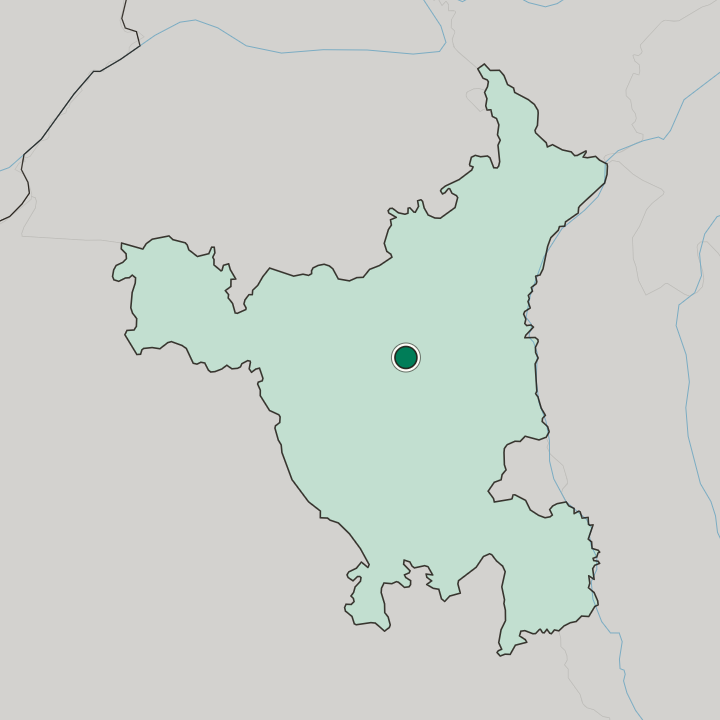
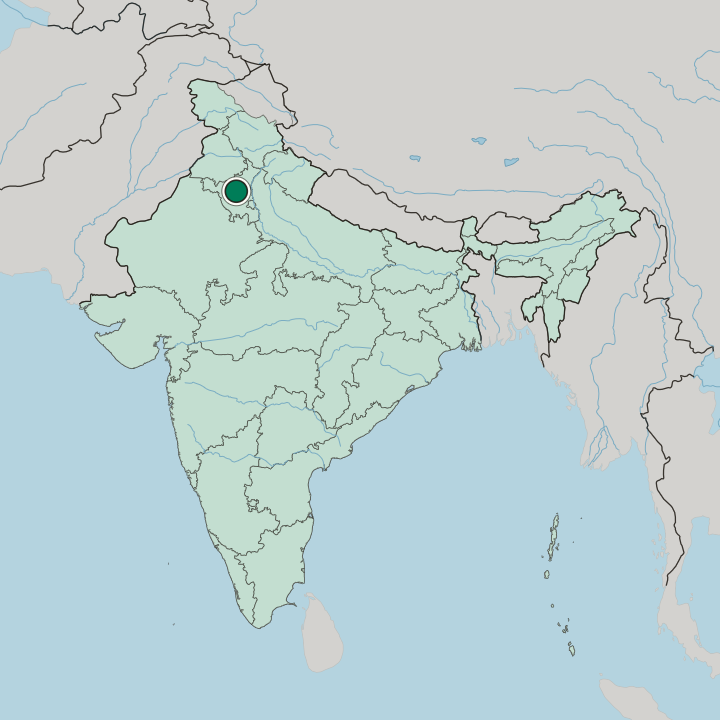
Alluvium carried down by the Ghaggar and the Yamuna makes the soil of Jīnd district. Canals and tube wells do the rest, the Western Yamuna Canal chief among them, with wheat and rice on most of the ploughed land and bajra, oilseeds, gram, and sugarcane filling the margins. Delhi lies about 125 km off. Panipat, Karnal, and Kaithal border the district to the east and northeast, Hisar and Fatehabad to the west, and Rohtak and Sonipat to the south.
Shisham, kikar, and eucalyptus shade the roads.
What is the climate of Jīnd?
Jīnd stands on the subtropical stretch of the northern plain, so the hot months run long and the mild ones are brief. Irrigation carries the difference. Canal water and tube wells decide the farming year here, not the rain, which is why wheat and rice hold ground through months that would otherwise go dry.
Pilgrims pay the weather little attention, since Amavasya falls where the lunar month puts it and the bath at Pandu Pindara draws its crowd in heat as readily as in cool. The walk to Rani Talab suits the cooler weeks.
How do you get to Jīnd?
Trains do most of the work. Jīnd Junction, the railhead the district leans on, sits on the Delhi-Ferozpur route, and a second stop, Jīnd City railway station, lies nearer the centre for anyone who would rather not cross town with luggage. Panipat links it eastward by rail.
National Highway 71 runs through the city, NH152 and NH352 carry the district's long-distance traffic, and Delhi is roughly 125 km down the road. The nearest airport is at New Delhi.
Common questions
What is the best area to stay in Jīnd?
Rani Talab: Short stays built around the Rani Talab tank and the Jayanti Devi Temple lanes beside it. Pandu Pindara: Pilgrims timing an Amavasya bath at Pandu Pindara and Ramrai. Jīnd Junction: Early departures on the Delhi-Ferozpur line who want the platform within walking distance.
More cities in State of Haryāna
Updated September 2026