India · State of Haryāna
Where to Stay in Palwal, State of Haryāna
Palwal, headquarters of Palwal district in Haryāna, holds the railway station where Mahatma Gandhi was arrested in 1919.
Hotel links are affiliate links: booking through them may earn us a commission, at no extra cost to you. It never affects how places are ranked. How this works


Where to stay in Palwal
The practical side of choosing where to sleep.
Palwal is small enough to cross. Roughly 22 square kilometres hold the whole municipal council, so the choice is less about distance than about which of the town's three anchors a traveller wants outside the door. Rail sets the first option.
Palwal railway station carries the town's best-known address, the platform where Mahatma Gandhi was pulled from a Punjab-bound train on 10 April 1919, and the Gandhi Seva Ashram together with the Gandhi Museum stands close by, which makes the station side the natural base for anyone here on that history. The old town offers the second. Matia Fort, also called Palwal Fort, went up during Sher Shah Suri's reign and stands in ruins over the buried evidence of a grand palace that excavations found at its base, and the cotton trade that gives the town its living works the streets around it.
Then there is the road. The Grand Trunk Road runs out towards Banchari, where the Dauji temple honours Balarama 25 km from Palwal, and a room on that flank saves an hour when the Baldev Chhat Ka Mela fills the village. Delhi is 60 kilometres off.
Travellers who cannot find what they want inside a district headquarters of this size can take the National Capital Region as their bed stock and still be at the Palwal district offices before mid-morning.
Find hotels in Palwal
Direct booking searches for these neighbourhoods.
The Palwal railway station side
The Gandhi Seva Ashram and its Gandhi Museum stand close to Palwal railway station, so a room here puts the site of the 1919 arrest a few minutes from the platform.Find hotels in The Palwal railway station sideAnyone circling the ruined fort of Sher Shah Suri's reign and the cotton streetsThe Matia Fort quarter
Matia Fort, also called Palwal Fort, anchors the older part of town, and the cotton dealing that gives Palwal its trade works the lanes below its walls. Beds are limited here, so book early.Find hotels in The Matia Fort quarterDrivers bound for the Dauji temple at Banchari and the Baldev Chhat Ka MelaOut along the Grand Trunk Road
Banchari and its Dauji temple lie 25 km from Palwal along the Grand Trunk Road, so a bed on that flank cuts the run when the Balarama festival fills the village. Rooms are few around here — worth securing early.Find hotels in Out along the Grand Trunk RoadHotel links are affiliate links: booking through them may earn us a commission, at no extra cost to you. It never affects how places are ranked. How this works
About Palwal
What is Palwal known for?
Gandhi's first political arrest happened here. Officers took Mahatma Gandhi off the train at Palwal railway station on 10 April 1919, as he pushed north into Punjab in defiance of the Rowlatt Act, and the Gandhi Seva Ashram keeps that morning on record. Cotton pays the bills.
Palwal trades the crop for the country around it, while every year the Baldev Chhat Ka Mela draws crowds to honour Balarama, the brother of Krishna.
What are the main landmarks in Palwal?
Two sites carry the town. Matia Fort, also known as Palwal Fort, was raised during the reign of Sher Shah Suri and lies in ruins over the grand palace excavators found beneath it, while the Gandhi Seva Ashram and its museum near Palwal railway station hold the record of Mahatma Gandhi's arrest. A third stands outside.
The Dauji temple at Banchari, 25 km out on the Grand Trunk Road, honours Balarama and fills each year for the Baldev Chhat Ka Mela.
What is the history of Palwal?
The name comes from a demon. Local legend ties Palwal to the Mahabharata and to an asura called Palwasura, slain by Balarama, the brother of Krishna, and the annual Baldev Chhat Ka Mela commemorates the killing. Tradition goes further.
It identifies the town with Apelava, named in the same epic and later restored by Vikramaditya, which gives Palwal a claim older than anything standing in it. Sher Shah Suri left the stone. Matia Fort, also called Palwal Fort, went up in his reign, and excavation at its base has turned up evidence of a grand palace, though the walls themselves have fallen.
The railway brought the rest. Mahatma Gandhi was arrested at Palwal railway station on 10 April 1919, having refused a British order barring him from Punjab under the Rowlatt Act; Mathura was the last stop before the train was halted, and he was taken to Mumbai and released. Netaji Subhas Chandra Bose laid a foundation stone here on 2 October 1938, the Gandhi Seva Ashram took shape around that memory, and a Gandhi exhibition opened in it in 1962 with pictures drawn from the National Gandhi Museum in Delhi.
Boundaries kept moving. Palwal fell into the new Faridabad district when Gurgaon district was split on 15 August 1979, and on 15 August 2008 the town became headquarters of Palwal district, the 21st district of Haryāna.
Where is Palwal?
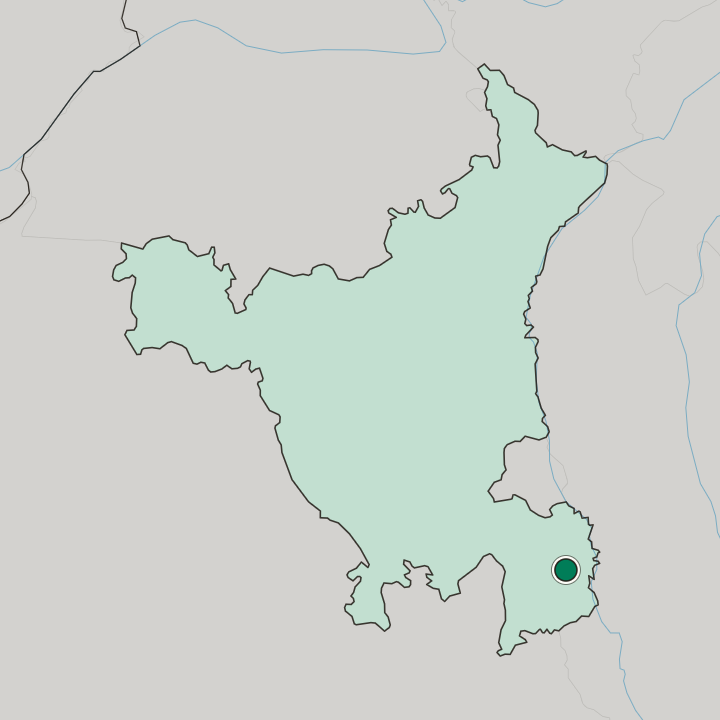
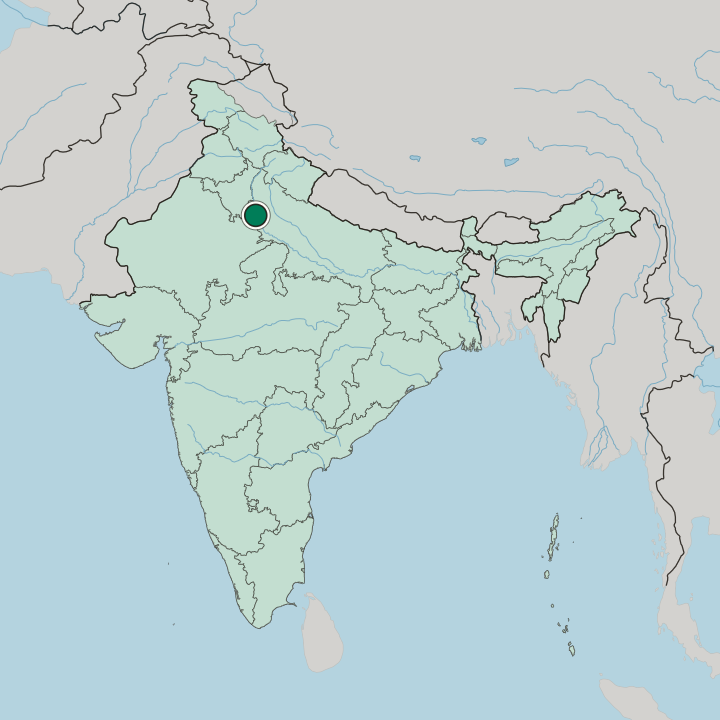
Flat ground, well inland. Palwal stands on the plain of northern India at an average elevation of 195 metres, with roughly 22 square kilometres inside the municipal council and the cotton country of Palwal district spreading past that edge. Distance does the placing.
Delhi lies 60 kilometres off, Faridabad 29 kilometres, Agra 143 kilometres, and Chandigarh 314 kilometres, so the Braj region and the National Capital Region both reach across this corner of Haryāna.
What is the climate of Palwal?
Cotton sets the working year. The crop that Palwal trades ripens through the warm months on the plain of northern India, so the market's heaviest weeks follow the harvest rather than any visitor calendar. Elevation offers no relief.
At 195 metres the town has no hill air to fall back on, and the cooler half of the subtropical year is simply the easier one for a walk to Matia Fort or a run out to Banchari on the Grand Trunk Road.
How do you get to Palwal?
Trains do most of it. Palwal railway station stands on the line that carried Mahatma Gandhi north from Mathura towards Punjab in April 1919, and it remains the town's main door for arrivals. Road covers the rest.
The Grand Trunk Road runs out to Banchari and its Dauji temple 25 km away, while Delhi at 60 kilometres and Faridabad at 29 kilometres keep Palwal within a short drive of the National Capital Region.
Common questions
What is the best area to stay in Palwal?
The Palwal railway station side: Travellers who came for the platform where Mahatma Gandhi was arrested in 1919. The Matia Fort quarter: Anyone circling the ruined fort of Sher Shah Suri's reign and the cotton streets. Out along the Grand Trunk Road: Drivers bound for the Dauji temple at Banchari and the Baldev Chhat Ka Mela.
More cities in State of Haryāna
Updated September 2026