India · State of Kerala
Where to Stay in Kumbalangy, State of Kerala
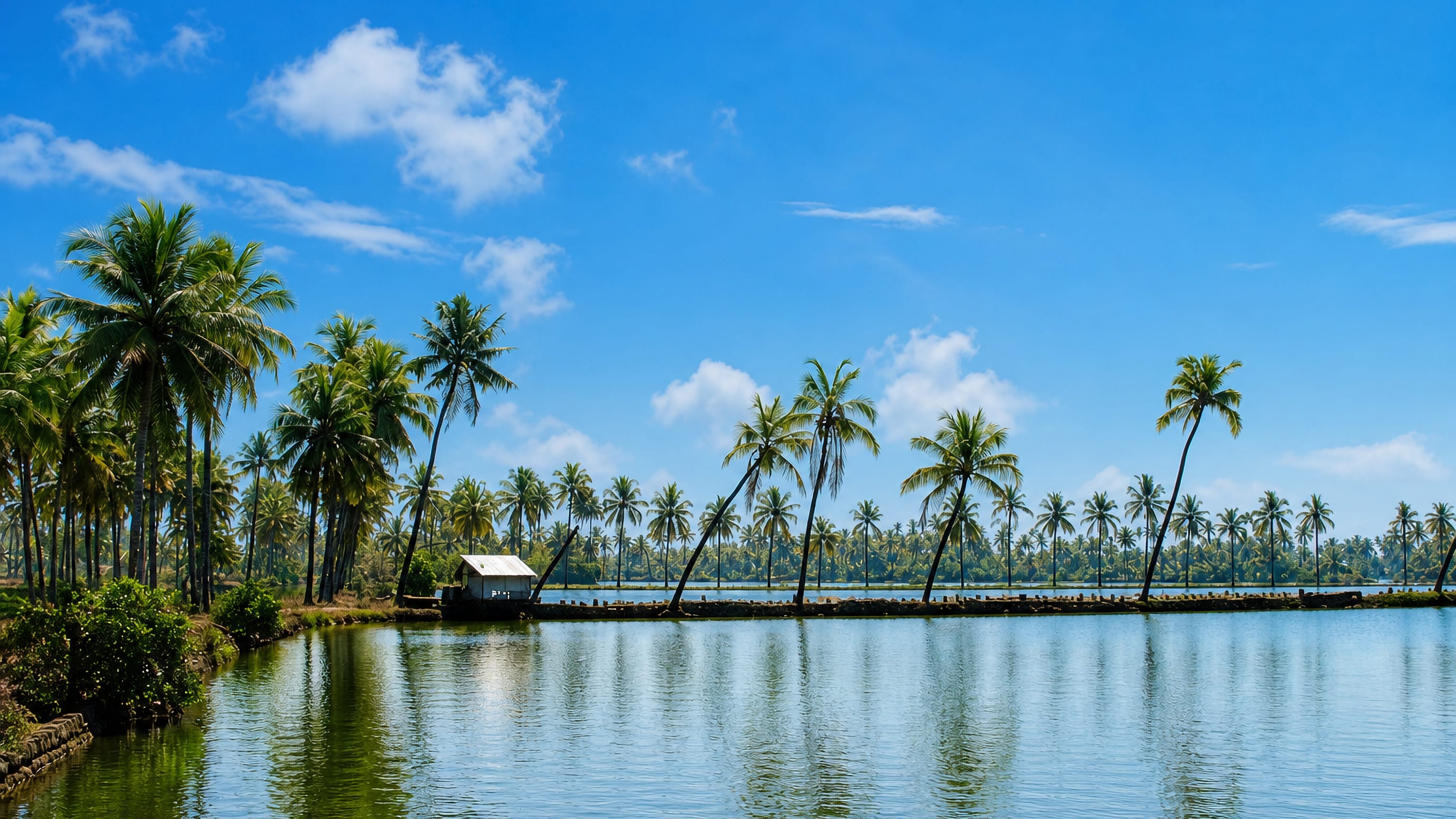
Kumbalangi is an island village in the backwaters on the edge of Kochi, known for its Chinese fishing nets and for the glow called Kavaru.
Hotel links are affiliate links: booking through them may earn us a commission, at no extra cost to you. It never affects how places are ranked. How this works


Where to stay in Kumbalangy
How the choice of base plays out on the ground.
Kumbalangi is a village of about twenty-one square kilometres of island and water, and it takes visitors on the strength of one designation: Kerala Tourism records it as the first eco-tourism village in India. Rooms follow that label. What lodging exists sits among the backwater channels rather than along any high street, close to the Chinese fishing nets and to the stretches of water where Kavaru appears after dark.
Kochi is the alternative, and the obvious one for anyone who wants a choice. The city centre lies about twelve kilometres off, with Santa Cruz Basilica, Saint Francis Church and the Indo-Portuguese Museum among its landmarks, Saint Mary's Syro-Malabar Catholic Cathedral Basilica and the CSI Immanuel Church at Ernakulam, and the Cochin Port Maritime Heritage Museum on the harbour, so a base there puts the whole city list within reach while the village stays a short drive away. Hill Palace sits further out.
Stay in the village if the nets, the water and the night glow are what you came for; take the city if you want museums and a wider choice of beds.
Find hotels in Kumbalangy
Direct booking searches for these neighbourhoods.
The backwater village
Island ground among the channels, where the Chinese fishing nets stand and Kavaru shows on the water after dark. Lodging is scarce in this area; reserve in advance.Find hotels in The backwater villagethe harbour museums and a full hotel choiceKochi city
The city twelve kilometres off, holding Santa Cruz Basilica, Saint Francis Church, the Indo-Portuguese Museum and the Cochin Port Maritime Heritage Museum.Find hotels in Kochi citycathedral ground away from the islandErnakulam
The Ernakulam side of Kochi, where Saint Mary's Syro-Malabar Catholic Cathedral Basilica and the CSI Immanuel Church stand.Find hotels in ErnakulamHotel links are affiliate links: booking through them may earn us a commission, at no extra cost to you. It never affects how places are ranked. How this works
Things to do in Kumbalangy
Ranked by global recognition; descriptions from Wikidata (CC0).
Museums & Galleries
3- Hill Palace
- Indo-Portuguese Museum
- Cochin Port Maritime Heritage Museum
Churches & Religious Sites
3- St. Francis Church Heritage
- St. Mary's Syro-Malabar Catholic Cathedral Basilica
- CSI Immanuel Church, Ernakulam
Stadiums & Sports
1- Rajiv Gandhi Indoor Stadium
worth knowingacross 3 categories in Kumbalangy
About Kumbalangy
Water is the whole subject.
What is Kumbalangy known for?
Kumbalangi lies among the backwaters about twelve kilometres from the centre of Kochi, an island village where Chinese fishing nets stand over the channels and where the water itself produces Kavaru, the bioluminescence that lights the surface on some nights. Kerala Tourism calls it the first eco-tourism village in India. Kumbalangy is the other spelling of the name.
What are the main landmarks in Kumbalangy?
The Chinese fishing nets are the picture everyone takes home, tilted over the channels that surround the village. Kavaru is the other one. On some nights the backwater lights up with bioluminescence, a sight Kumbalangi has become known for, and beyond the village the Kochi list takes over: Santa Cruz Basilica, Saint Francis Church, the Indo-Portuguese Museum, the Cochin Port Maritime Heritage Museum and Hill Palace further out.
What is the history of Kumbalangy?
No founding year attaches to Kumbalangi. The village occupies backwater country on the outskirts of Kochi, and what the record holds is fishing rather than charters, with the Chinese fishing nets leaning over its channels and the water setting the terms of everything else. Change came with a designation.
Kerala Tourism recorded Kumbalangi as the first eco-tourism village in India, and that label is what now brings most visitors the twelve kilometres out from Kochi to see the nets, the channels and the Kavaru nights. Kochi supplies the deeper history, and the village sits at its edge. Santa Cruz Basilica, Saint Francis Church and the Indo-Portuguese Museum all belong to the harbour city's older story; Saint Mary's Syro-Malabar Catholic Cathedral Basilica and the CSI Immanuel Church stand at Ernakulam; Hill Palace and the Cochin Port Maritime Heritage Museum hold the collections.
Kumbalangi keeps none of that. Its island ground stayed a working landscape of water and nets while the city built its churches and its museums, and the eco-tourism designation attached itself to that working landscape rather than to the streets of Ernakulam.
Where is Kumbalangy?
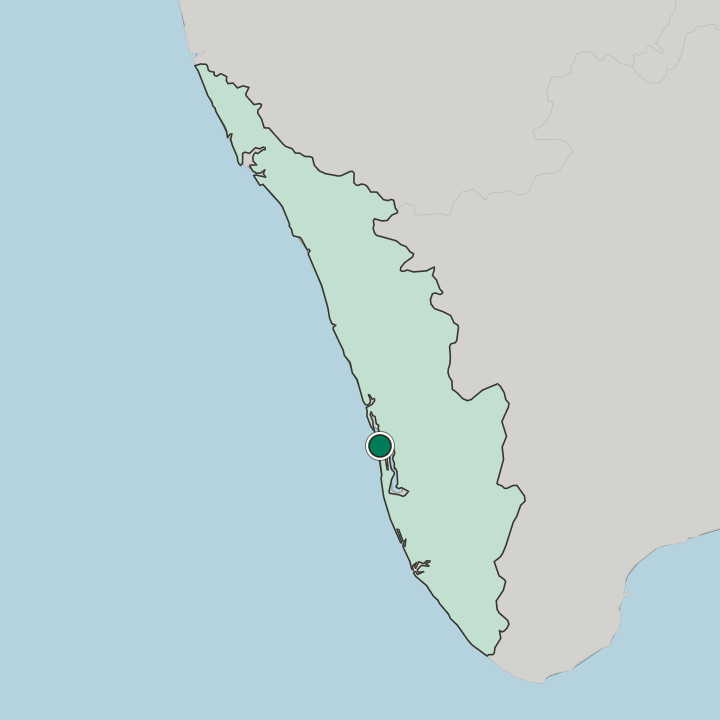
Kumbalangi is an island, about twenty-one square kilometres of it, lying in the backwaters roughly twelve kilometres from the centre of Kochi. Channels do the dividing here. Water surrounds and crosses the village, so the Chinese fishing nets and the boats do work that roads do elsewhere, and the city of Kochi begins only a short run away.
What is the climate of Kumbalangy?
Humidity is the constant here. Kumbalangi keeps the tropical year of the Kochi backwaters, warm from one end of it to the other, with the wet months lifting the channels and the drier stretch drawing the boats out for the Kavaru nights. Evening air comes off the water.
Nets and tides answer the same calendar, and the visiting season follows the drier half of it.
How do you get to Kumbalangy?
Kochi is the way in. The city centre lies about twelve kilometres off, and the run out to the village crosses backwater country before reaching the island, which puts Kumbalangi within an easy half-day of anywhere in Ernakulam. Arrivals come through the city.
Visitors bound for the Chinese fishing nets and the Kavaru water generally sleep in Kochi or on the island itself and cover the distance by road.
Common questions
What is the best area to stay in Kumbalangy?
The backwater village: eco-tourism stays on the Kumbalangi channels. Kochi city: the harbour museums and a full hotel choice. Ernakulam: cathedral ground away from the island.
Good for
More cities in State of Kerala
Updated October 2026