India
State of Kerala, India — Towns & Travel Guide
Kerala is a long, green state on India's south-western coast, a land of backwaters, Western Ghats tea country and old spice ports on the Arabian Sea.
Hotel links are affiliate links: booking through them may earn us a commission, at no extra cost to you. It never affects how places are ranked. How this works


Towns & cities in State of Kerala
Pick a town or city — each links to where to stay.
 India
India
Thiruvananthapuram
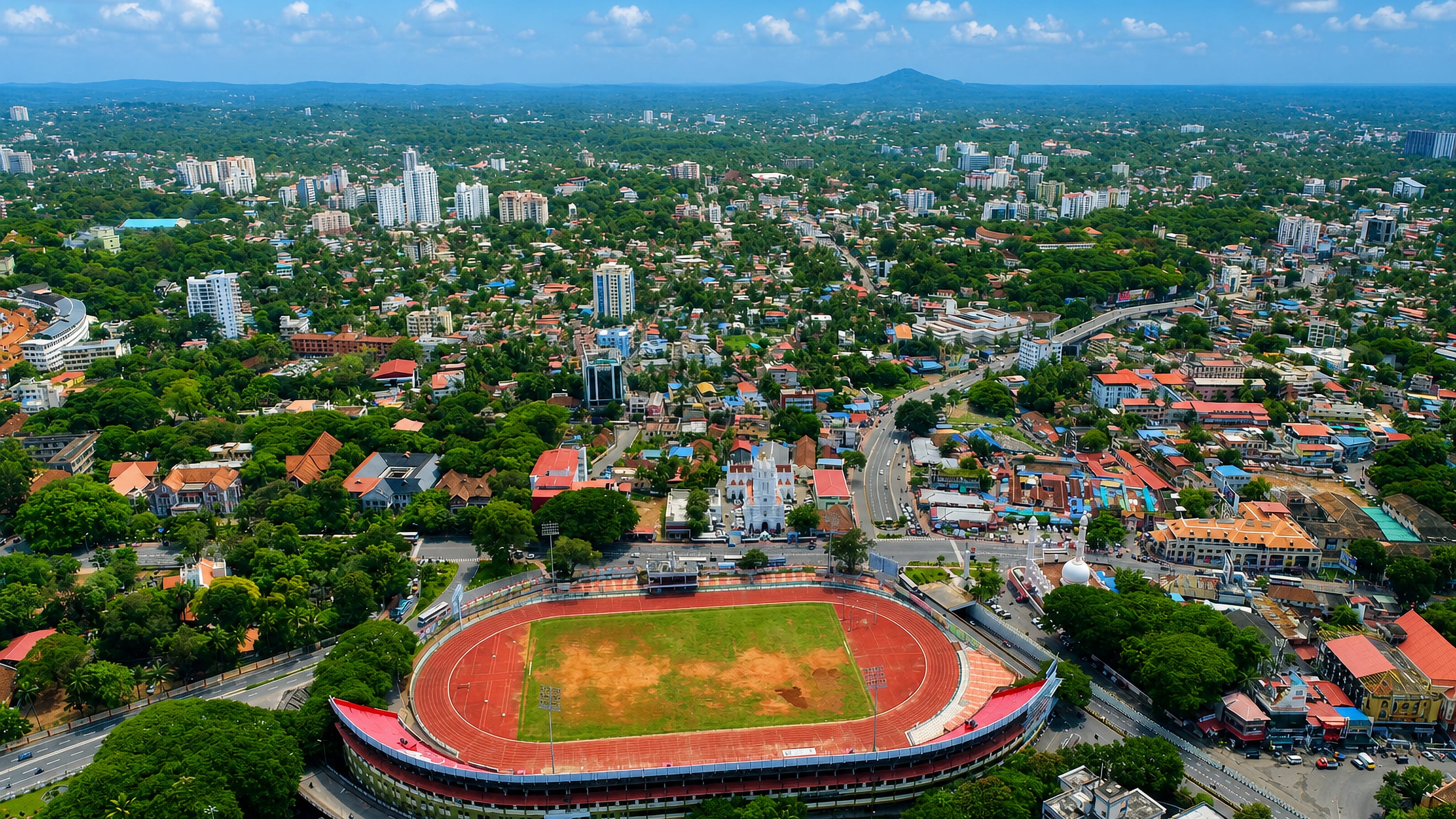
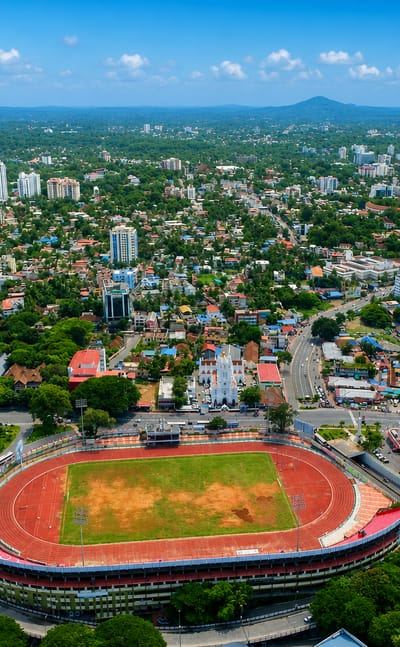
The sea edges a low ridge at Thiruvananthapuram, the coastal capital of Kerala also called Trivandrum, known for the Napier Museum and its cathedrals.Where to stay →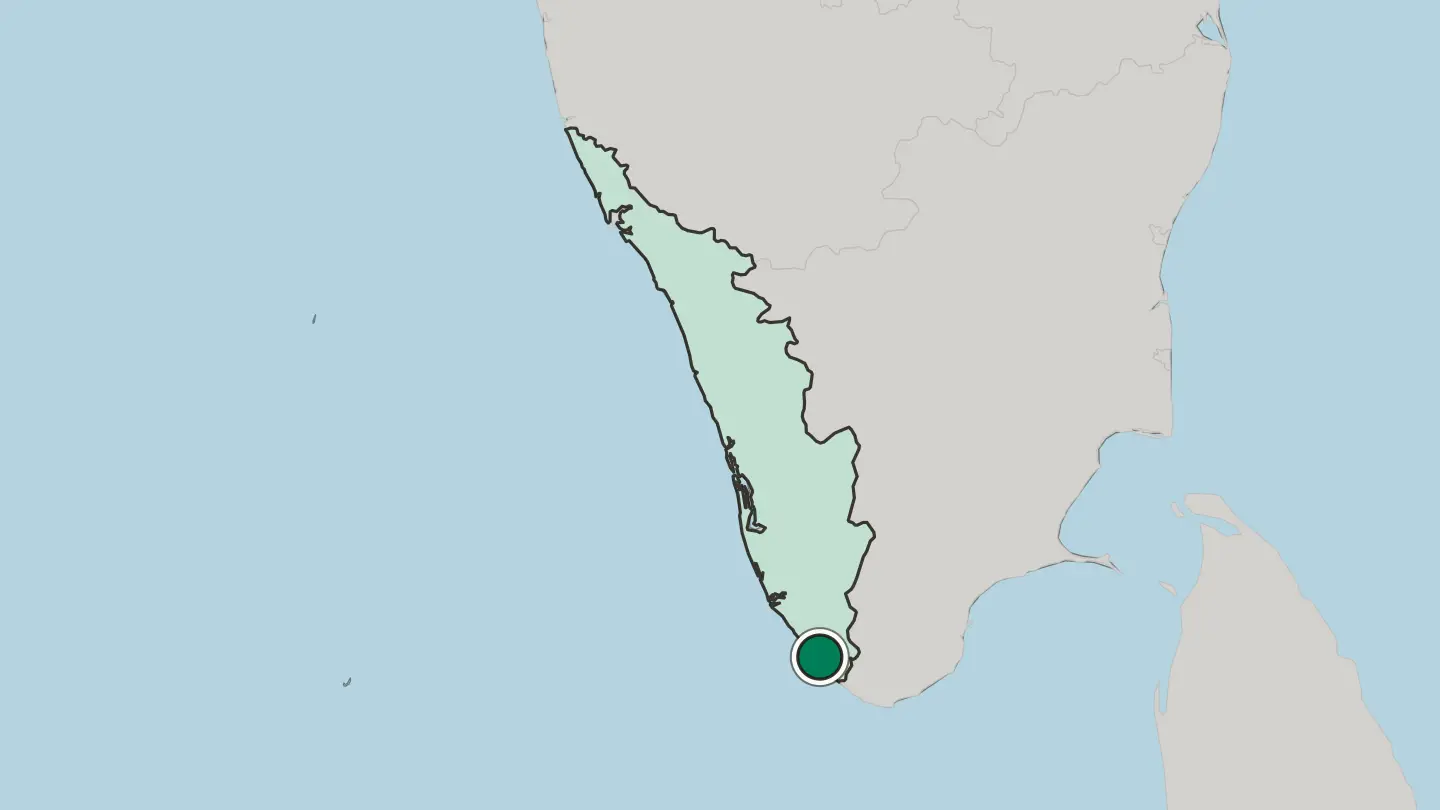
 India
India
Kochi
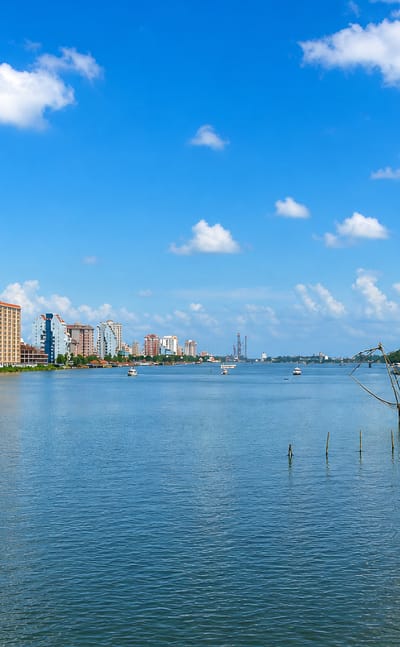
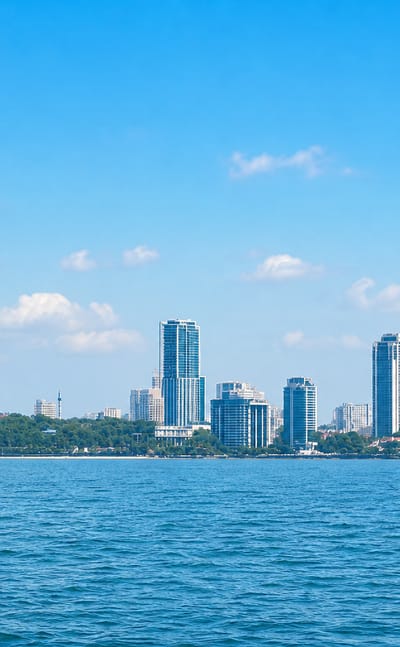
Salt air off the Laccadive Sea reaches Kochi, a port city on the Malabar Coast in Kerala, India, long known as Cochin.Where to stay →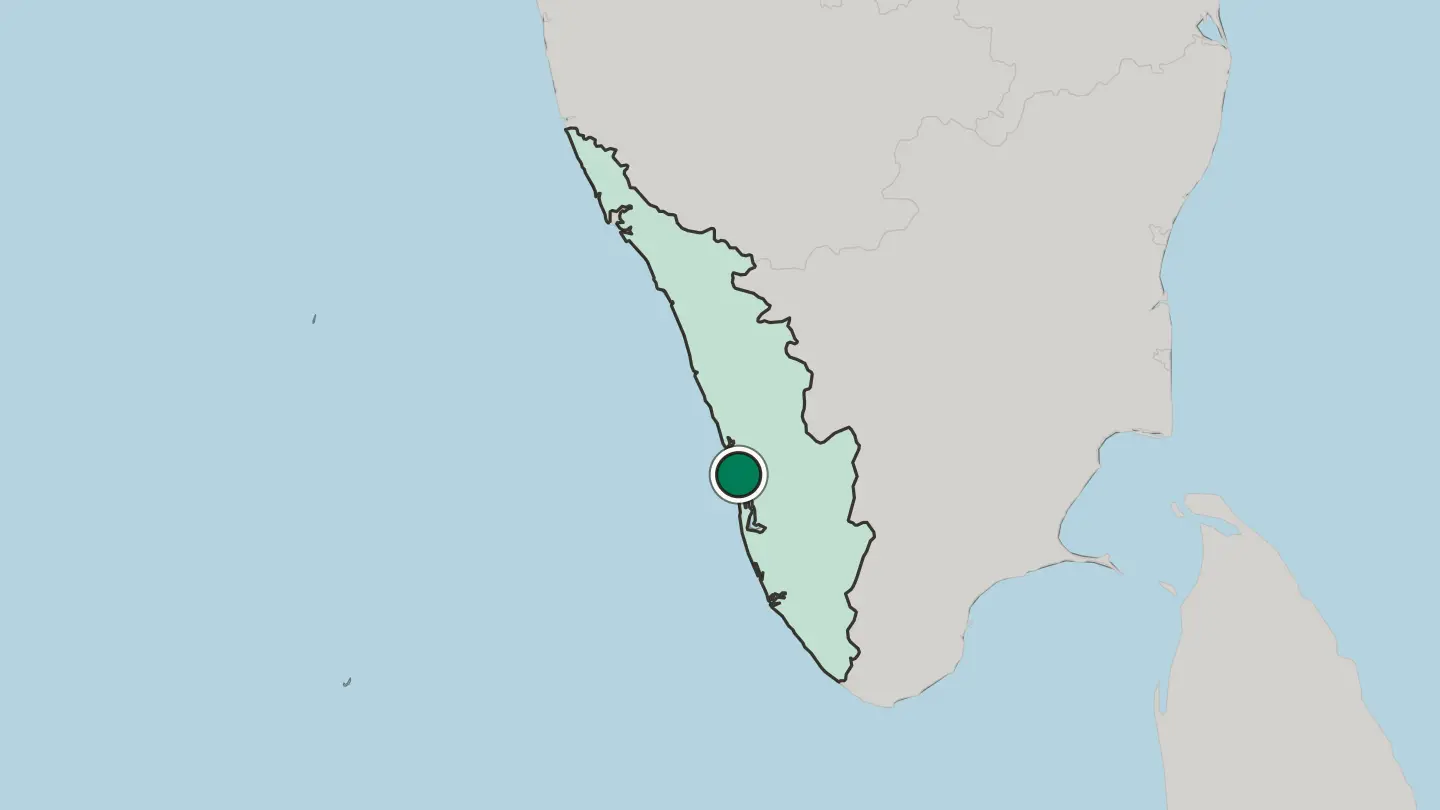
 India
India
Kozhikode
Kozhikode is a city in Kerala, India, a long-standing coastal centre marked by its old churches and its trading past.Where to stay →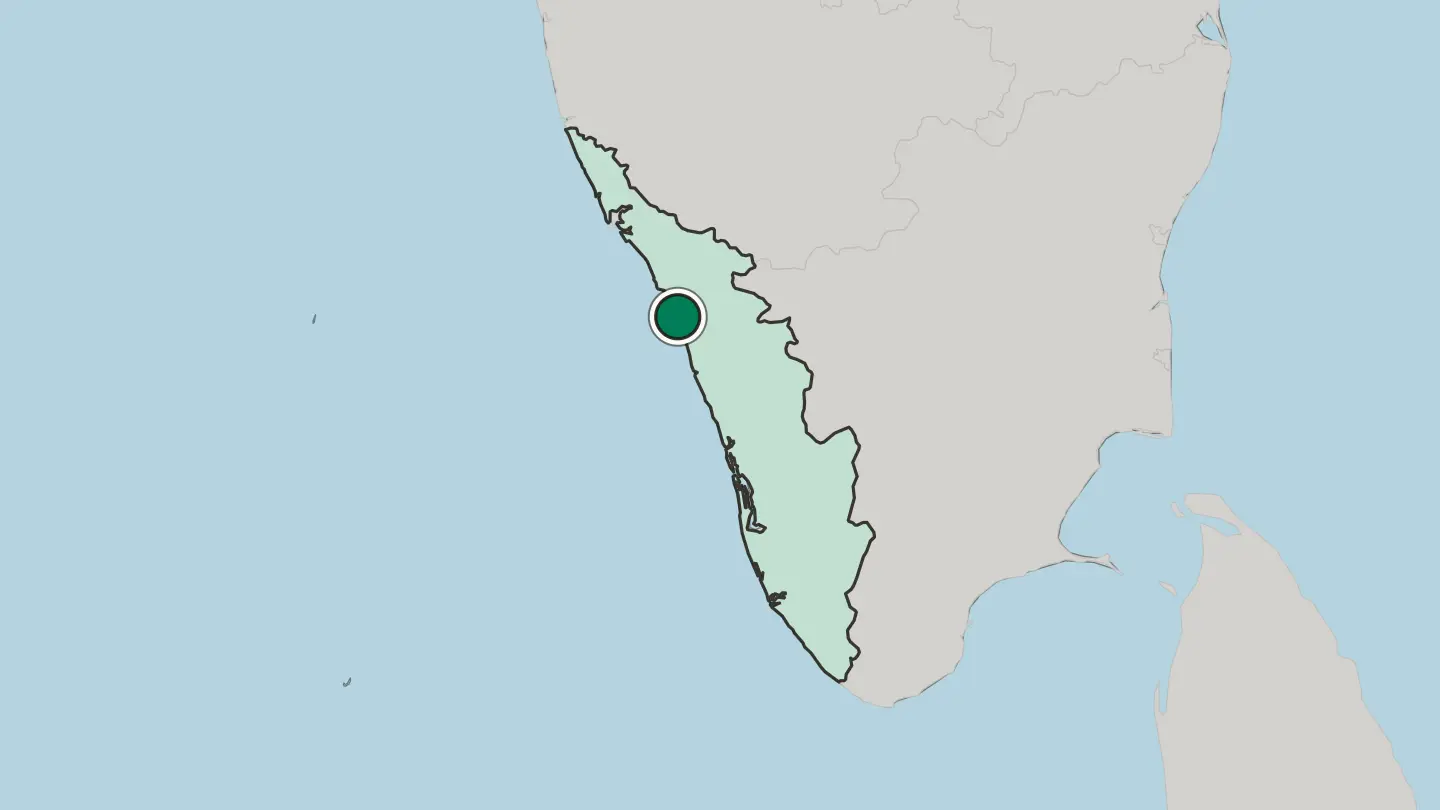
 India
India
Kollam
Kollam, the Quilon of earlier record, is an ancient seaport on Ashtamudi Lake, fourth largest of Kerala's cities and the way into its backwaters.Where to stay →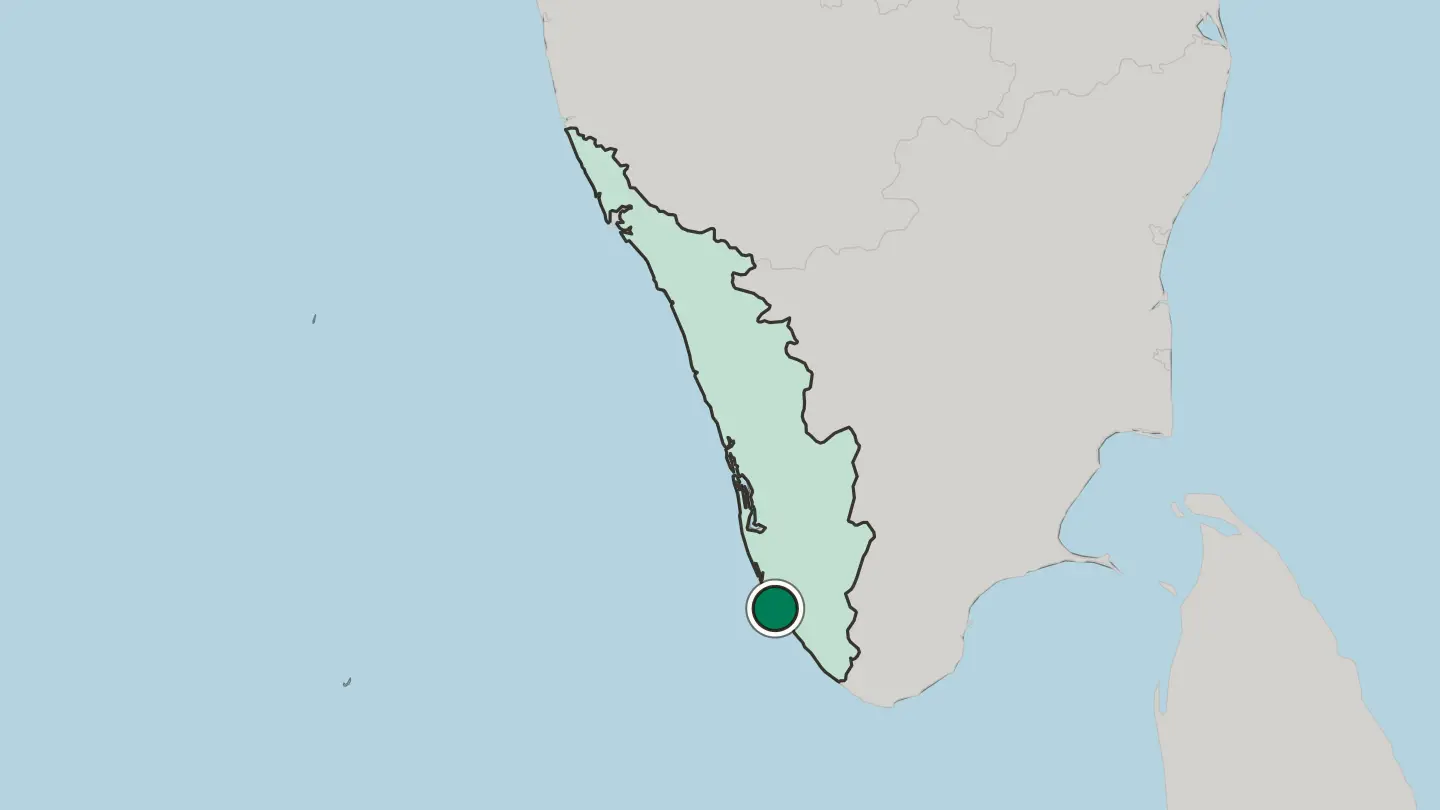
 India
India
Thrissur
Thrissur is a city of Kerala in southern India, the state's cultural capital, famed for its temples and churches and the festival of the Thrissur Pooram.Where to stay →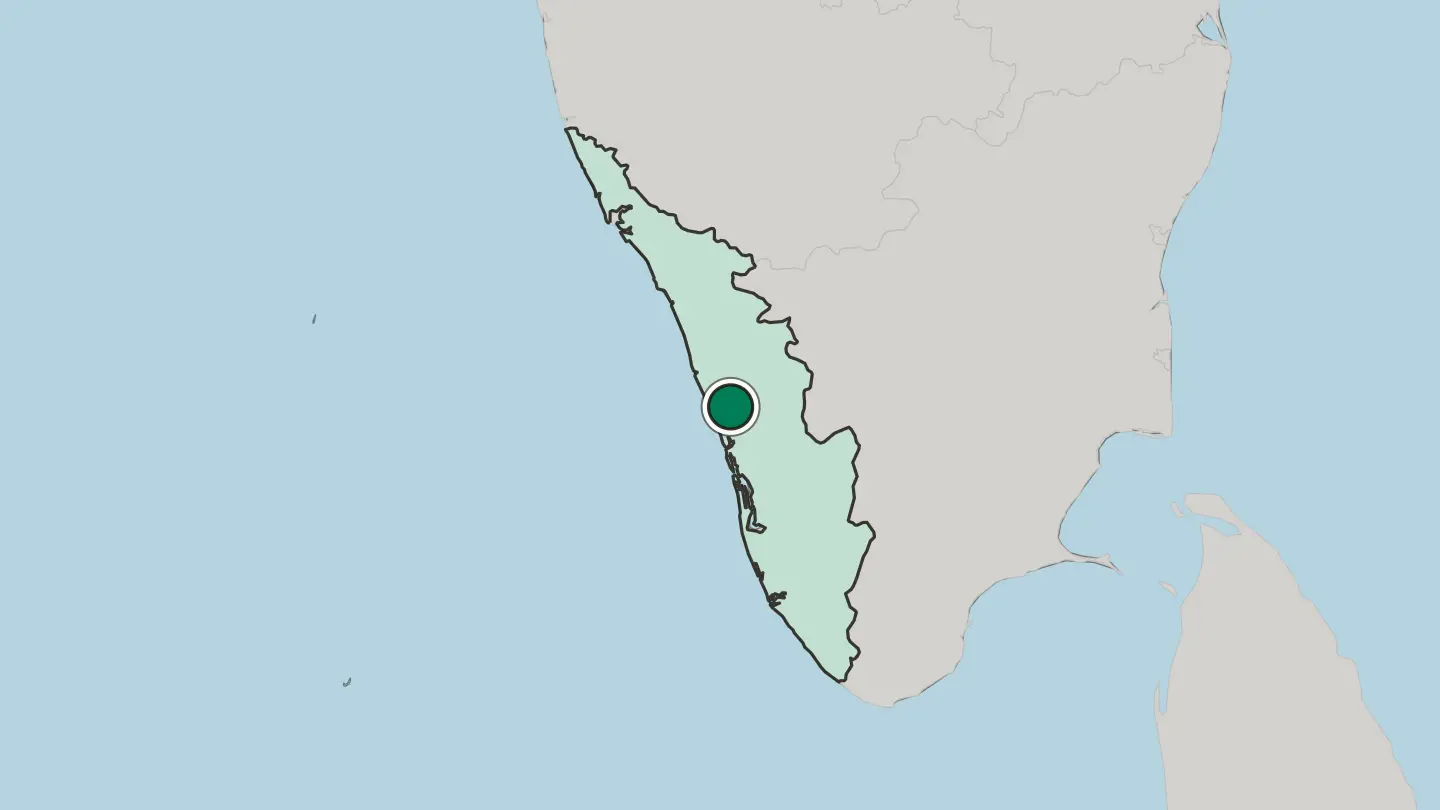
 India
India
Alappuzha
Alappuzha is a city of Kerala in southern India, the heart of the backwaters, a town of canals and houseboats known as the Venice of the East.Where to stay →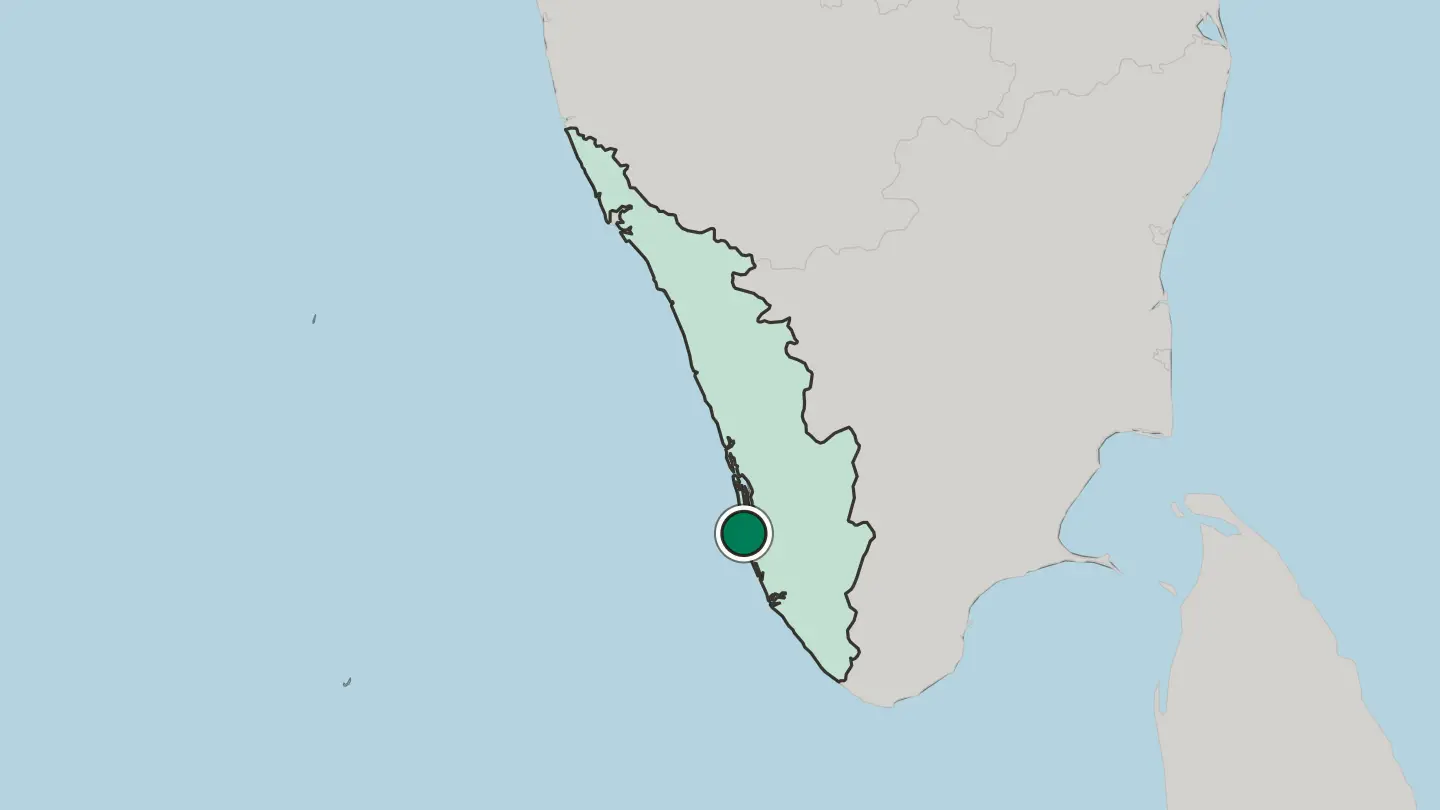
 India
India
Palakkad
Palakkad, once Palghat, heads Palakkad District in Kerala and keeps at its centre the fort that Hyder Ali captured and rebuilt in 1766.Where to stay →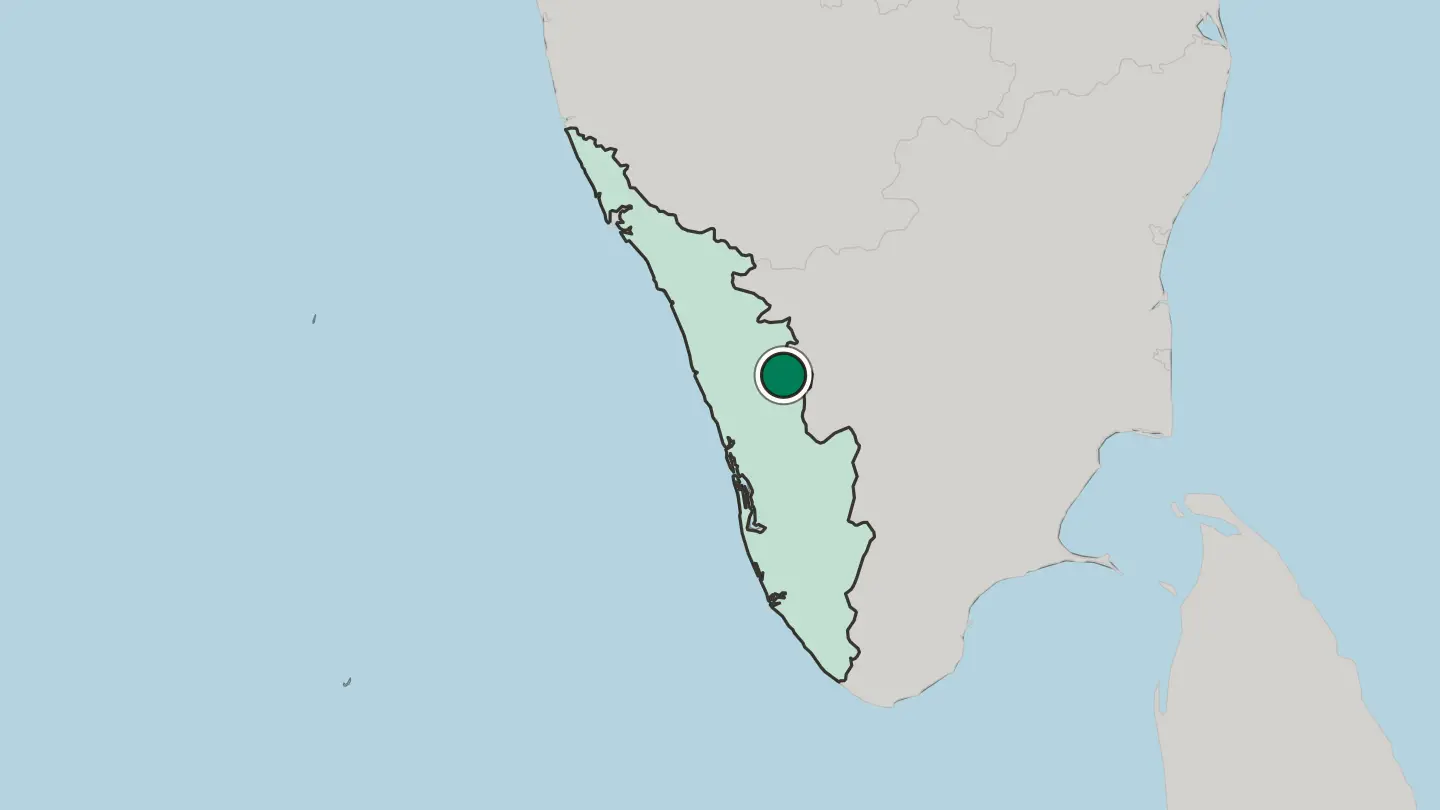
 India
India
Ponnāni
Ponnāni is a Kerala municipality at the estuary of the Bharatappuzha, seat of Ponnani Taluk in Malappuram District, with the Arabian Sea to its west.Where to stay →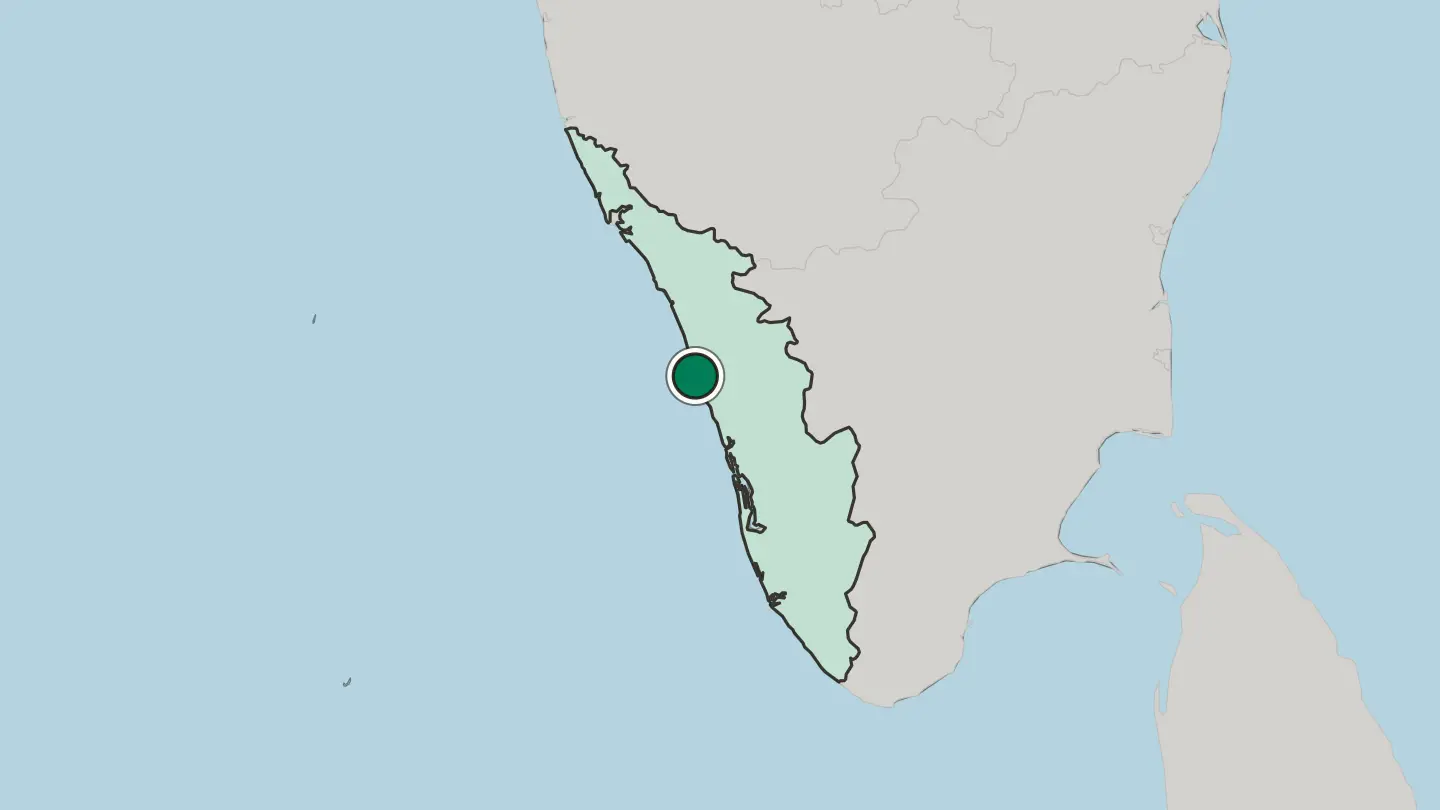
All towns & cities (26)
 India
India
Malappuram
Malappuram, a municipal town in the Malabar region, is the seat of Malappuram district in Kerala and dates as a municipality from 1969.Where to stay →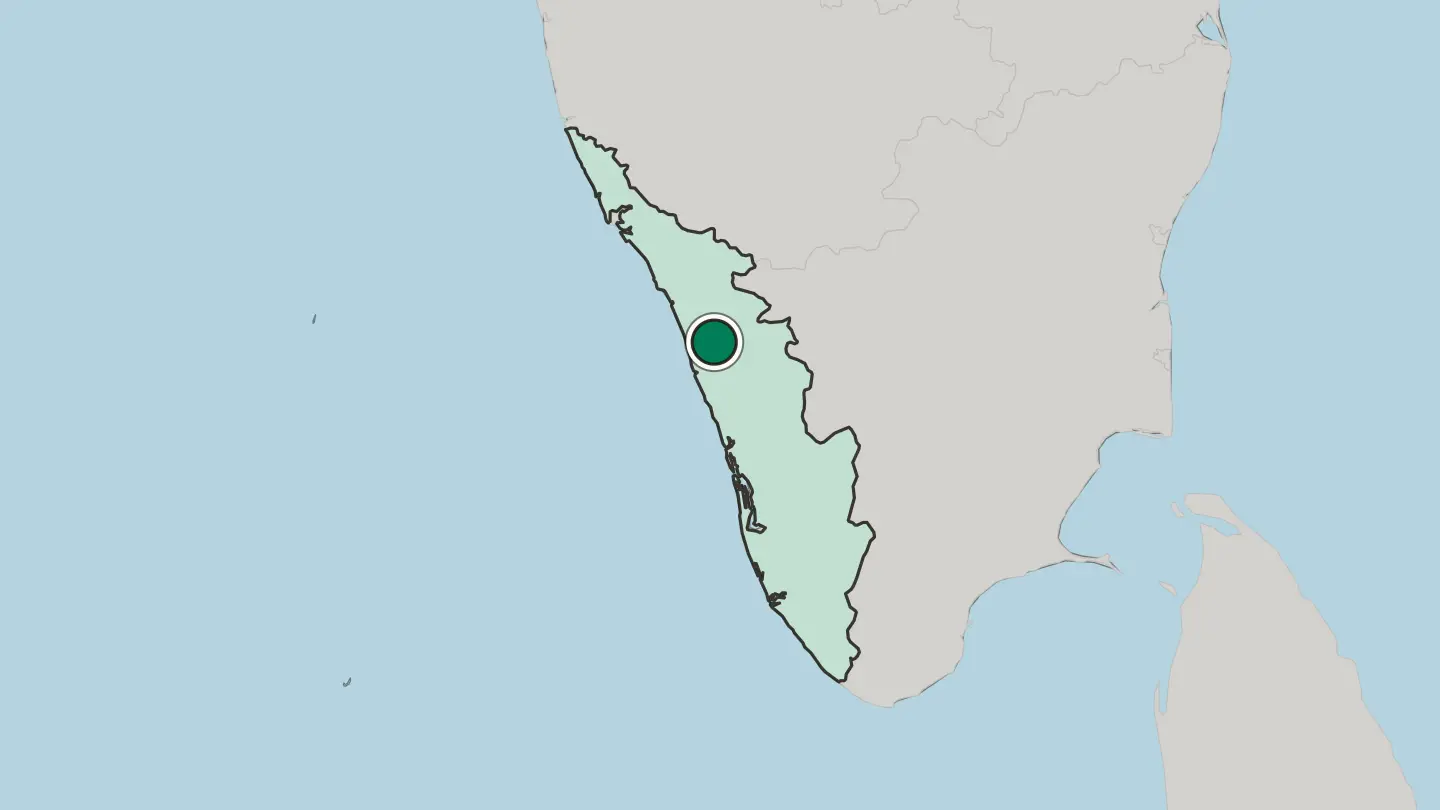 India
India
Tellicherry
Tellicherry, or Thalassery, is a Malabar Coast municipality in Kannur district where Rajya Samacharam, the first Malayalam newspaper, was printed.Where to stay →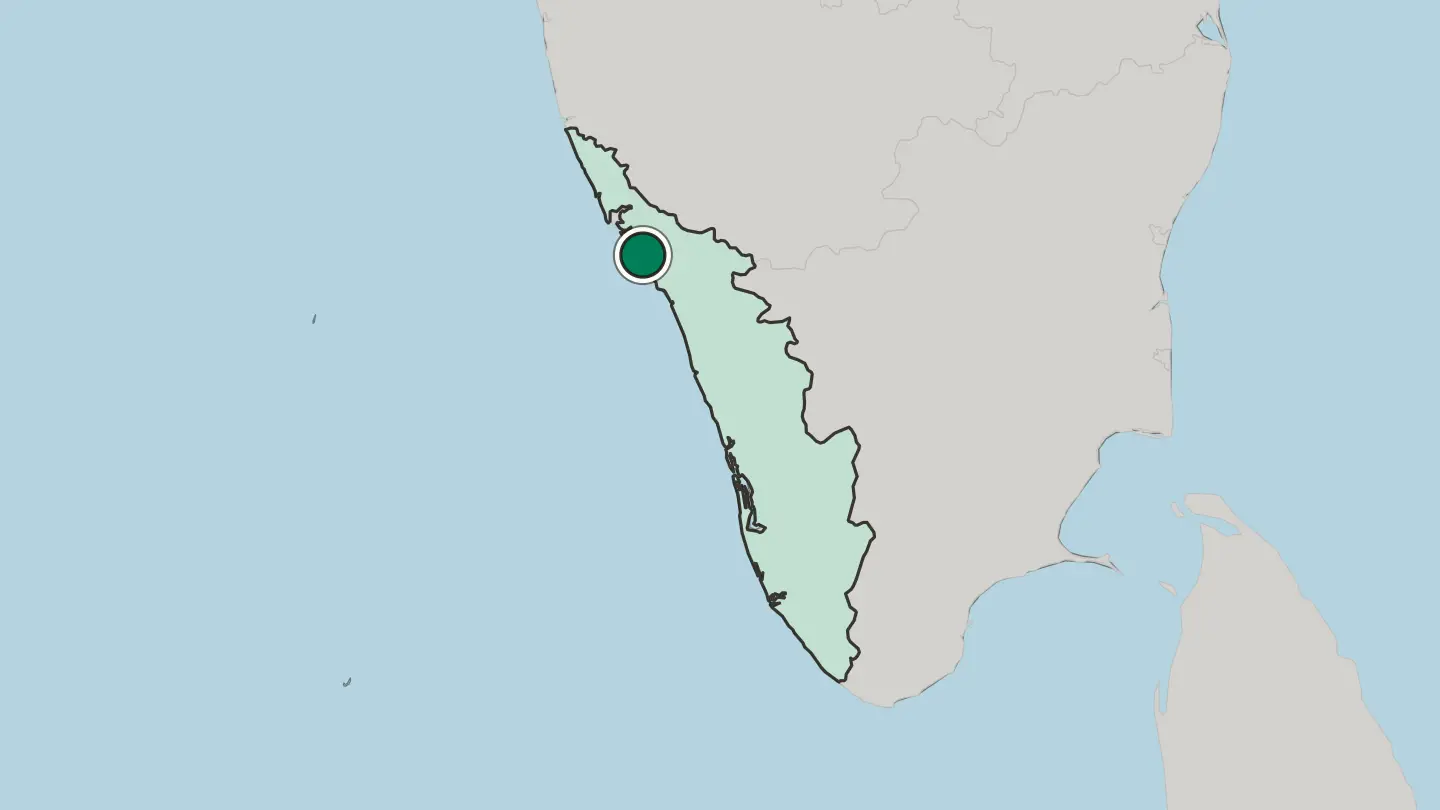
 India
India
Manjeri
Manjeri heads Eranad Taluk in Malappuram district, a Malabar commercial town in Kerala with the hill park of Kottakkunnu above its streets.Where to stay →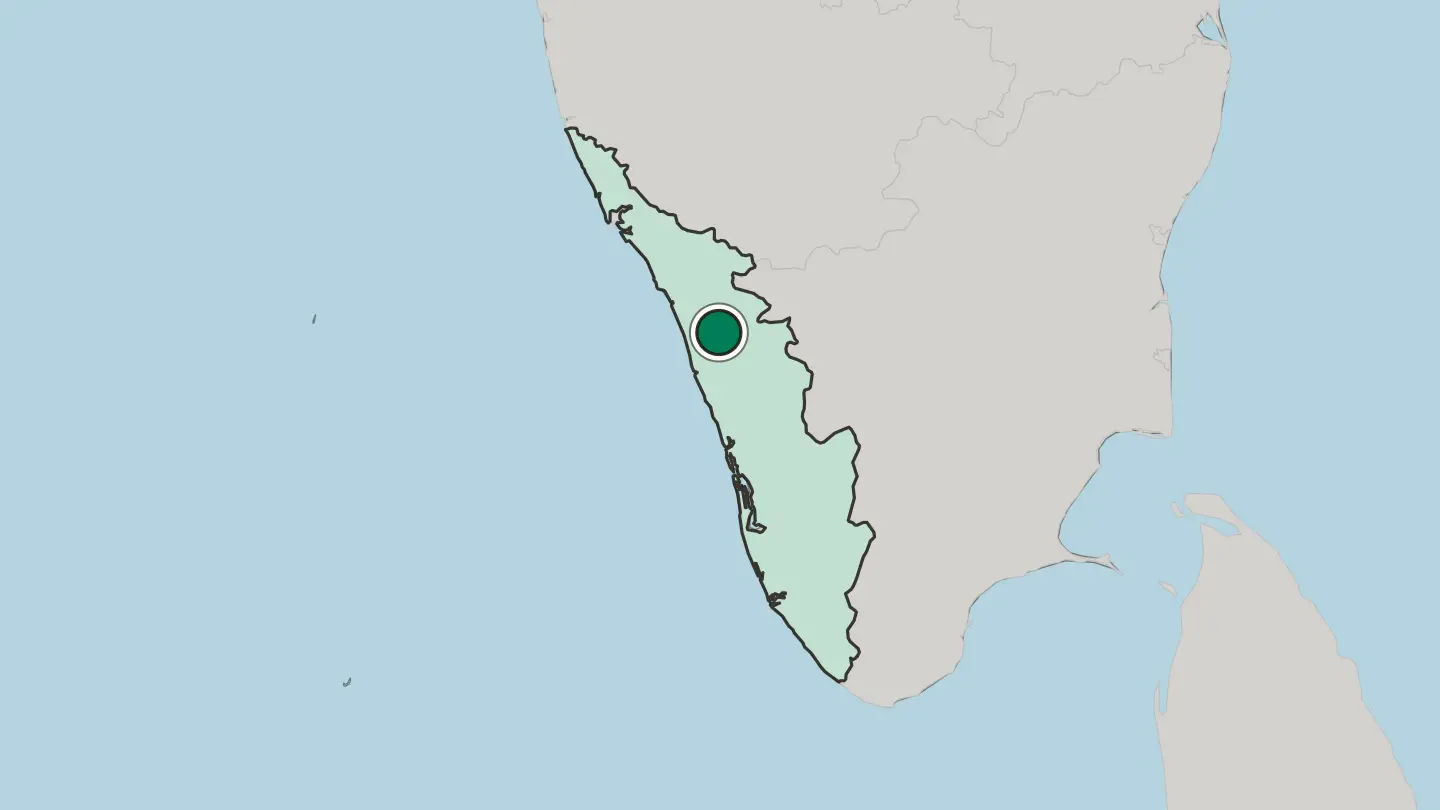
 India
India
Badagara
Vatakara, or Badagara, is a coastal municipality of the Kozhikode district in Kerala, with Mahé to its north and Payyoli along the shore south.Where to stay →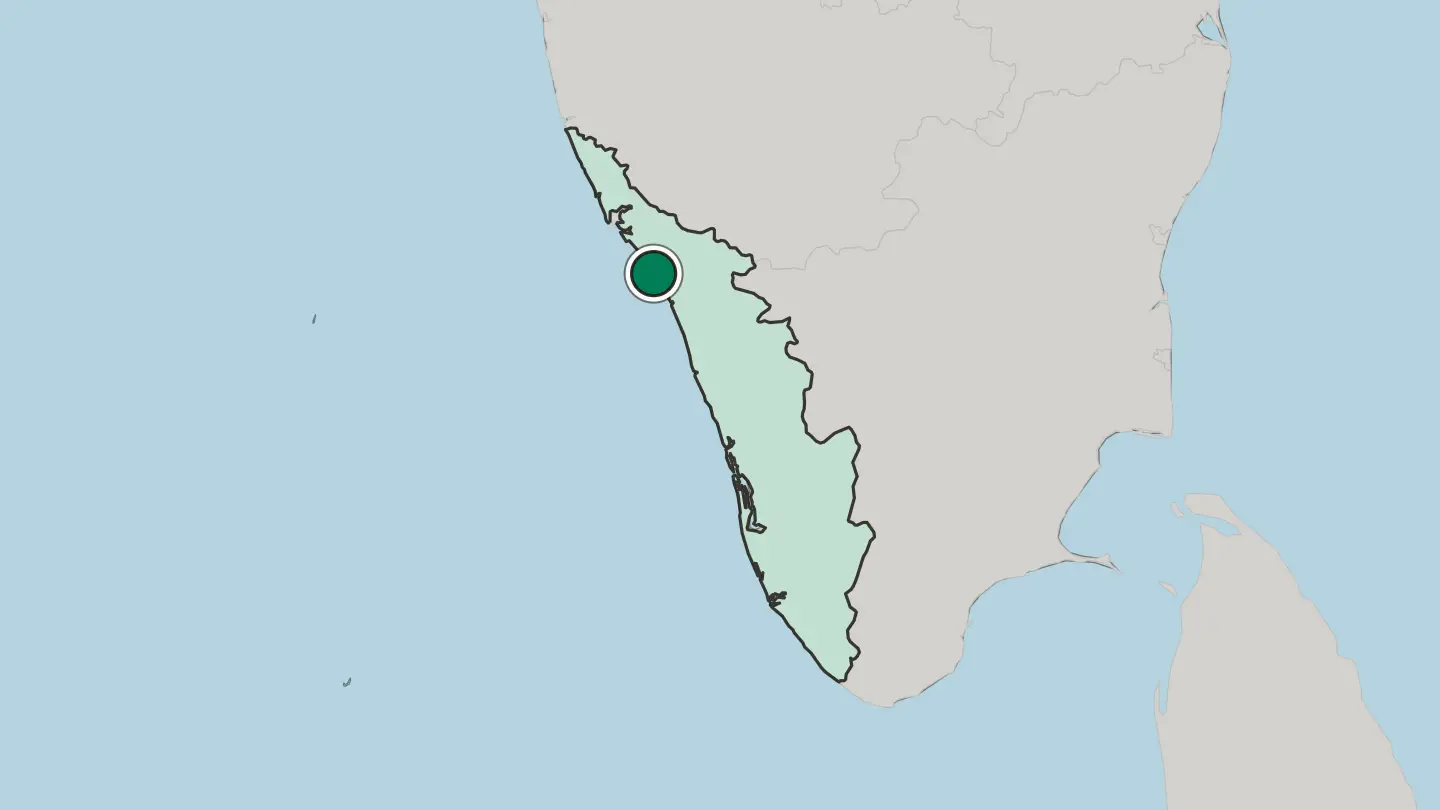 India
India
Taliparamba
Taliparamba is a municipal town and taluk seat of Kannur district, in the Malabar region of Kerala, and site of the Parassinikkadavu Snake Park.Where to stay →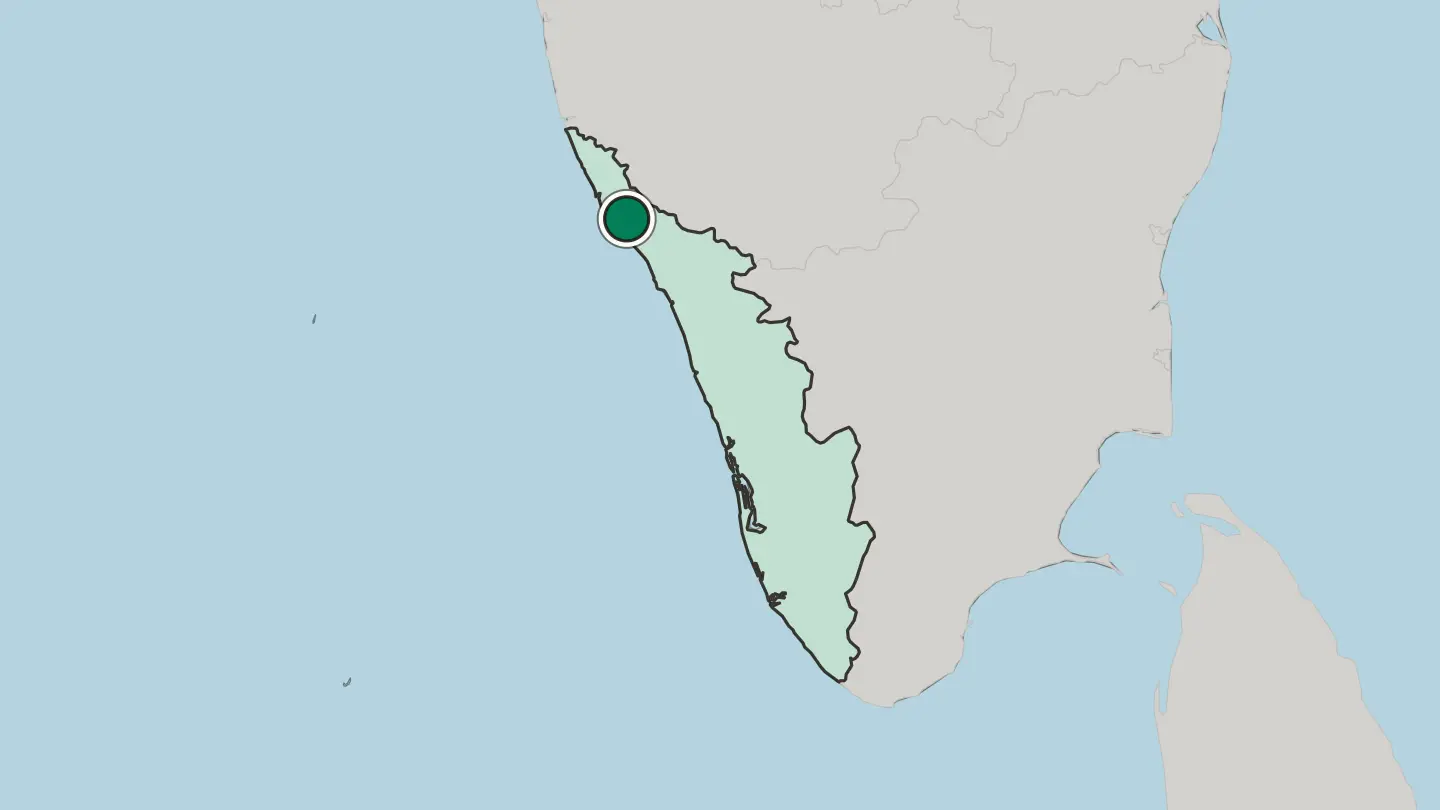 India
India
Payyanur
Payyanur is a municipal town on the Perumba River in the Kannur district of Kerala, in the Malabar region, and heads a taluk of its own.Where to stay →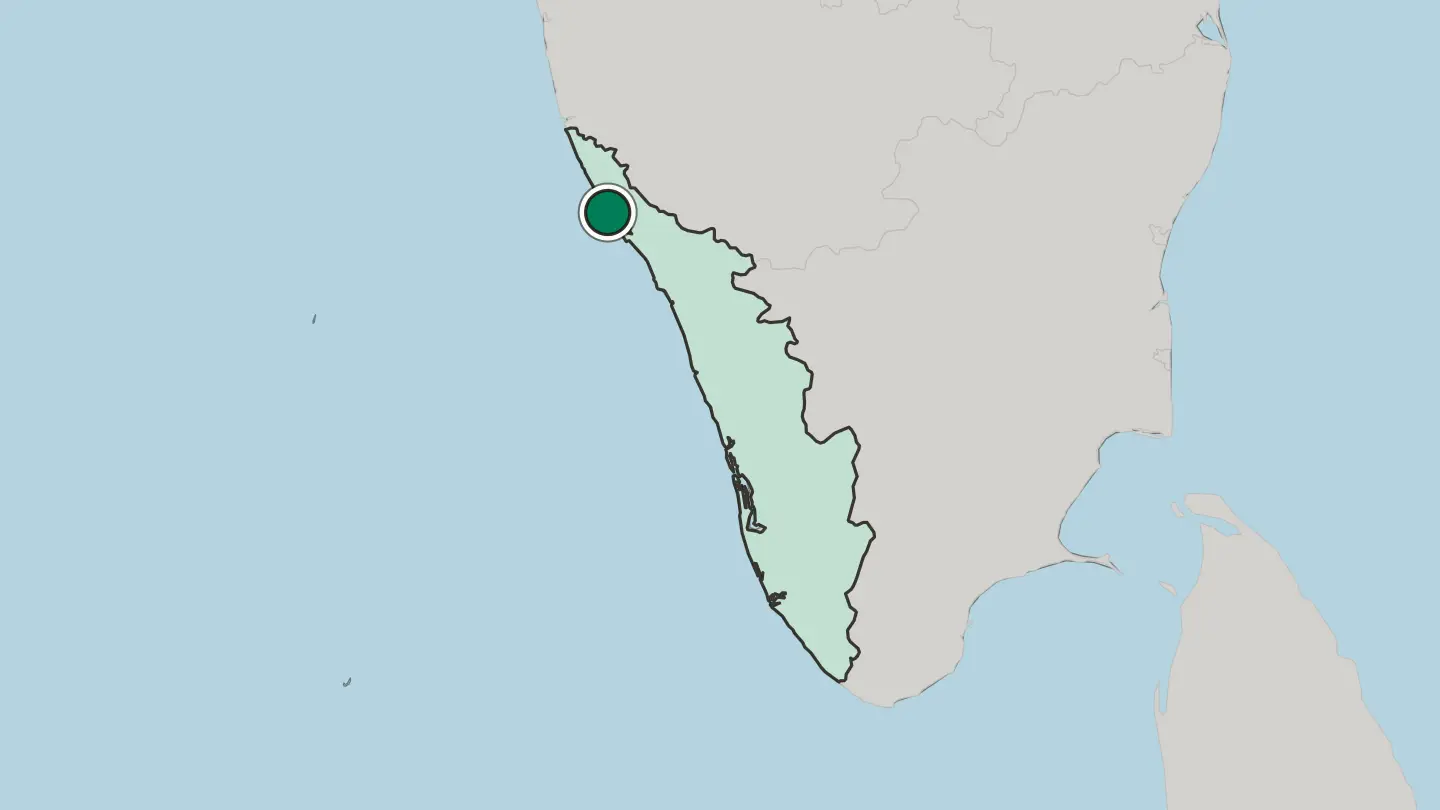 India
India
Kayamkulam
Kayamkulam, an old maritime trading town of Kerala's Alappuzha district, lies almost equidistant from Alappuzha and Kollam, near Krishnapuram Palace.Where to stay →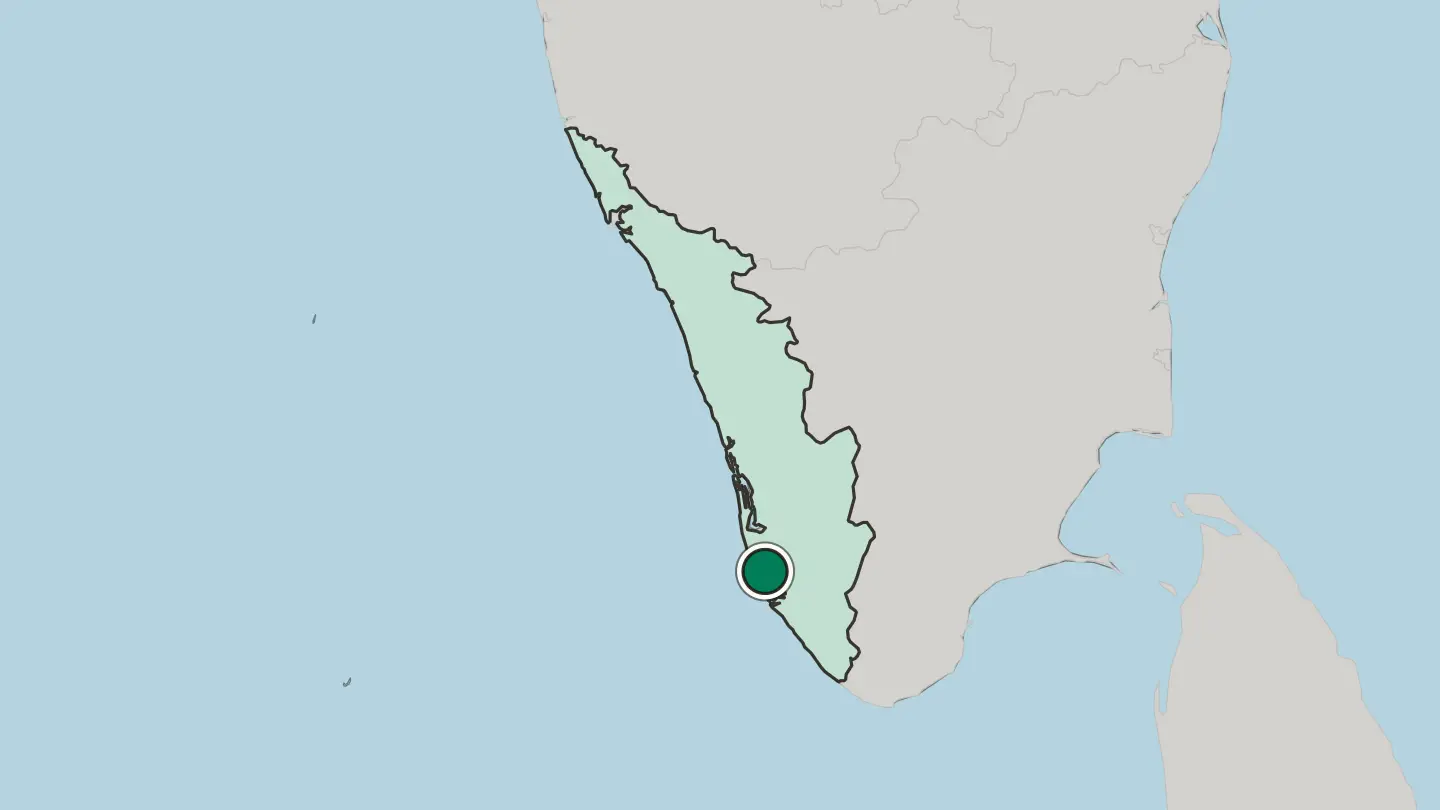
 India
India
Munnar
Munnar is a tea-plantation hill station in the Idukki district of Kerala, set high in the Western Ghats and holding two tea museums.Where to stay →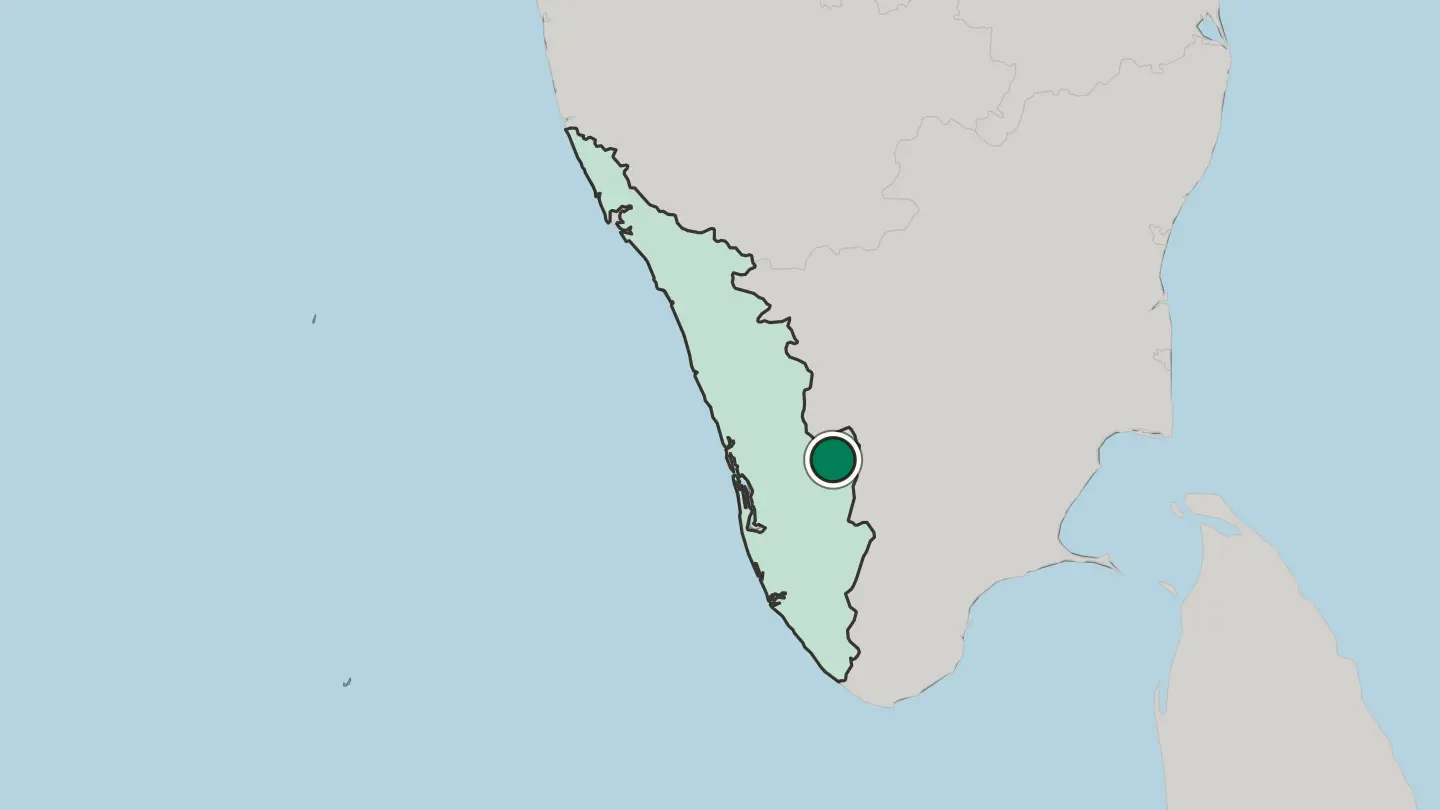
 India
India
Kannur
Kannur, the Cannanore of British-era maps, is a seaside city and the administrative seat of Kannur district in Kerala, India.Where to stay →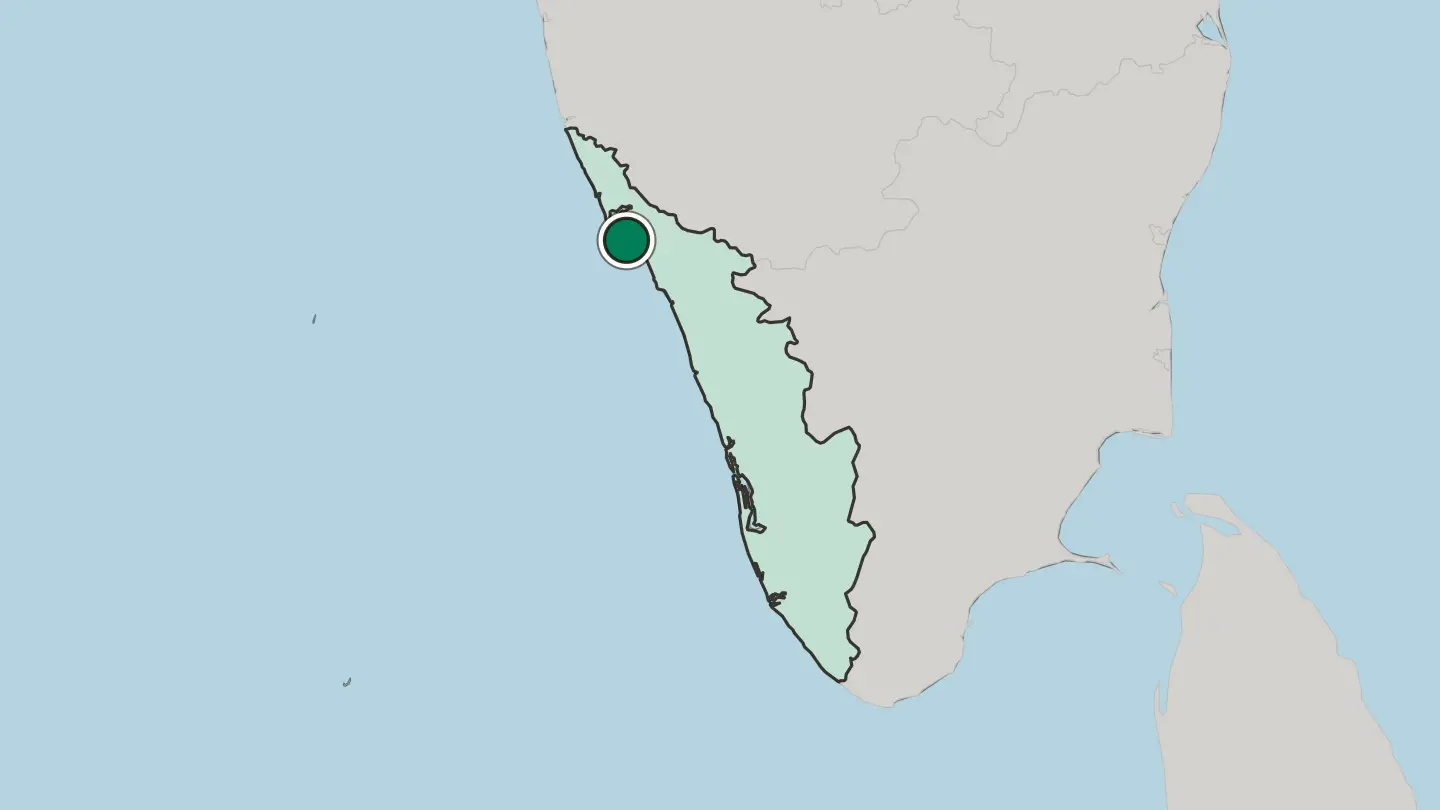
 India
India
Kodungallūr
Kodungallūr stands on the banks of the Periyar in Thrissur district, an old Malabar Coast port at the entrance to the Kerala backwaters.Where to stay →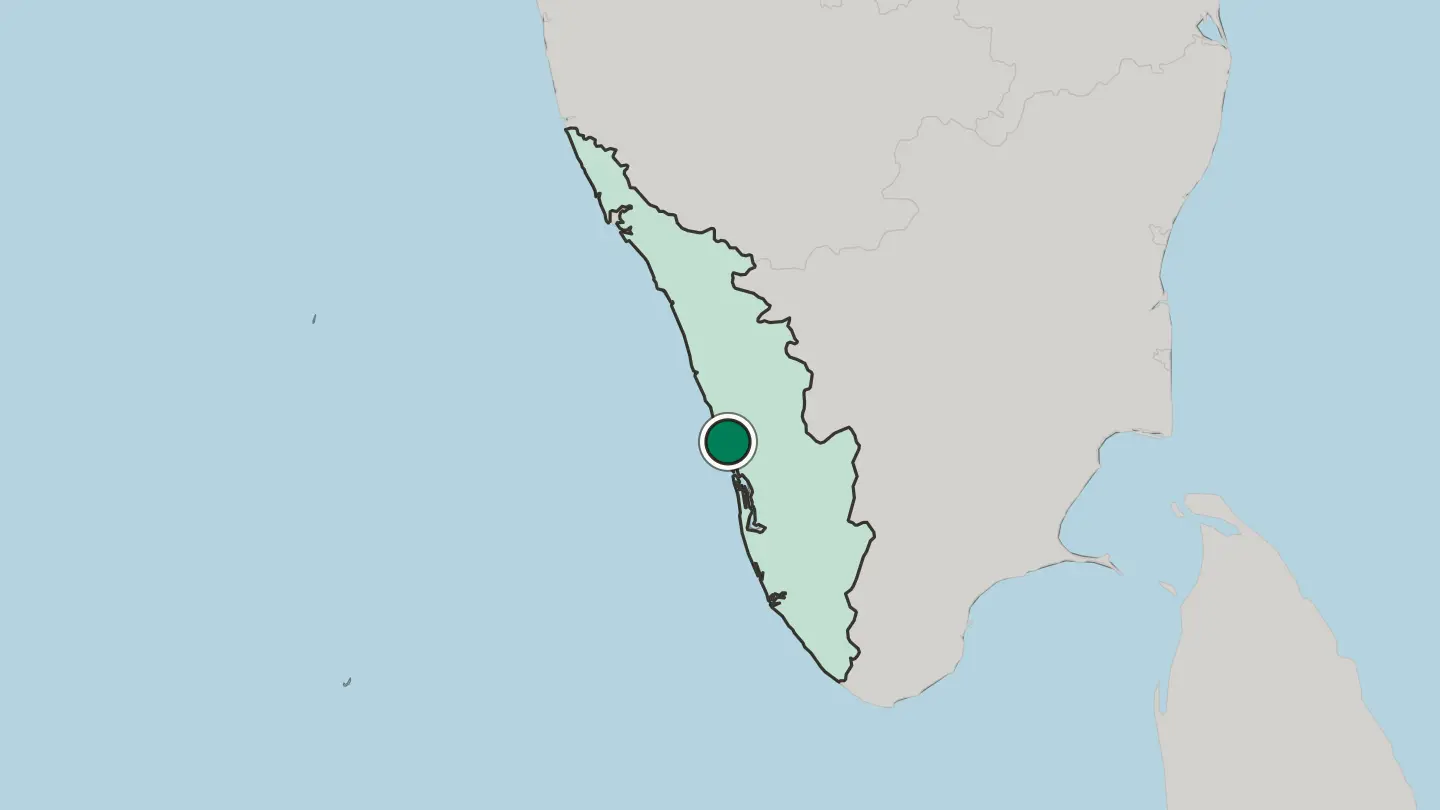
 India
India
Tiruvalla
Tiruvalla, also spelled Thiruvalla, is a municipality on the northern bank of the Manimala River in Pathanamthitta district, Kerala.Where to stay →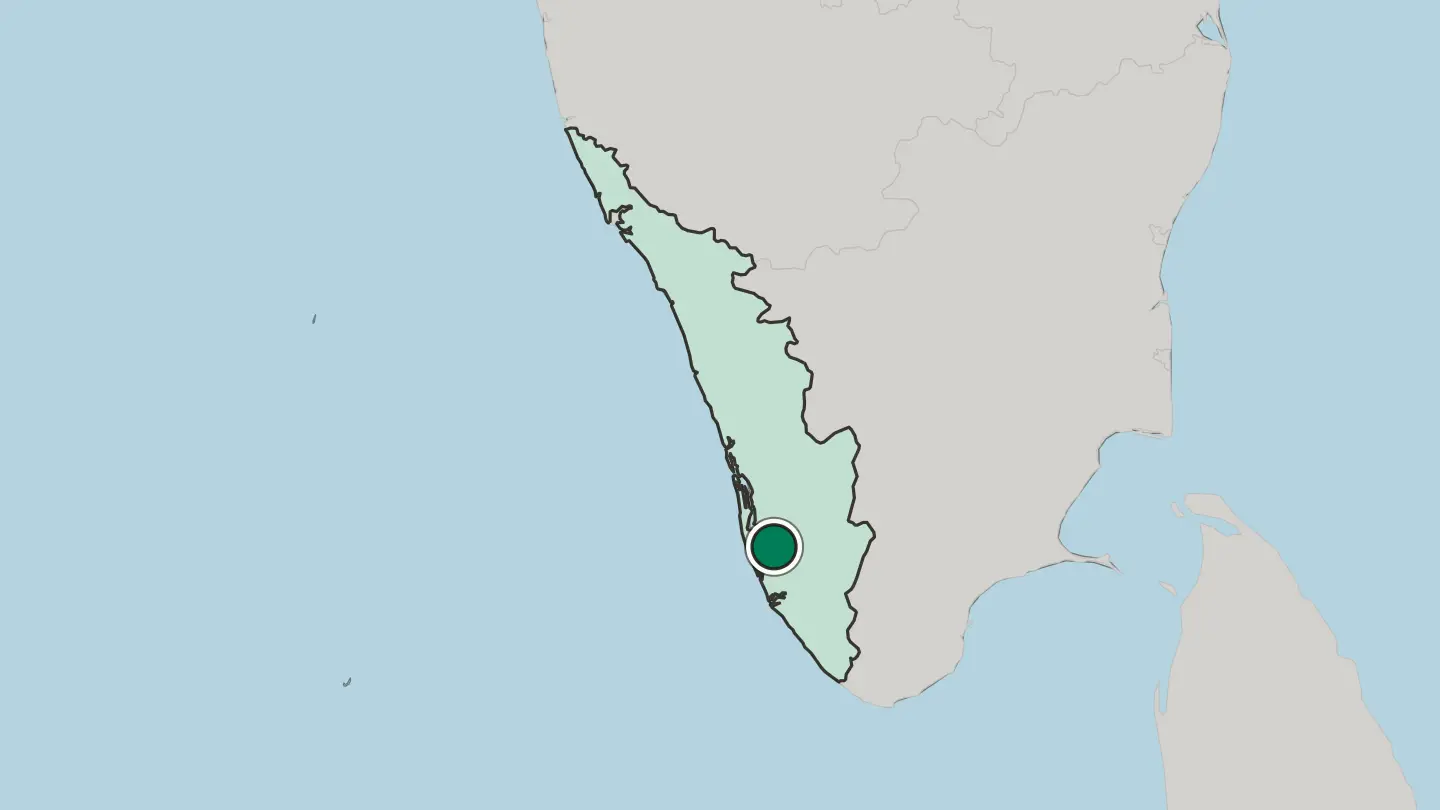
 India
India
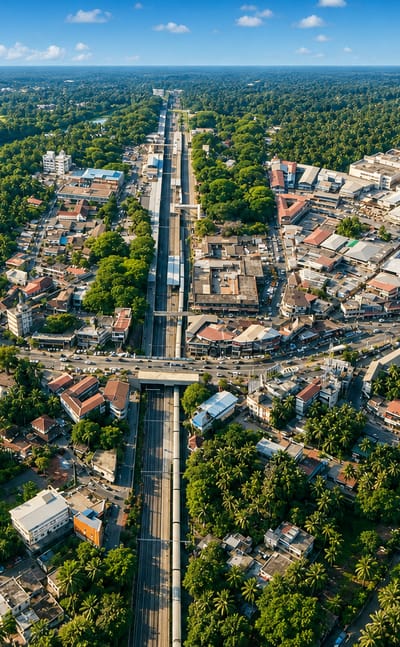
Tirur
Tirur is a municipal town in Malappuram district, Kerala, India, a trading centre on the Southern Railway whose station is the oldest in the state.Where to stay →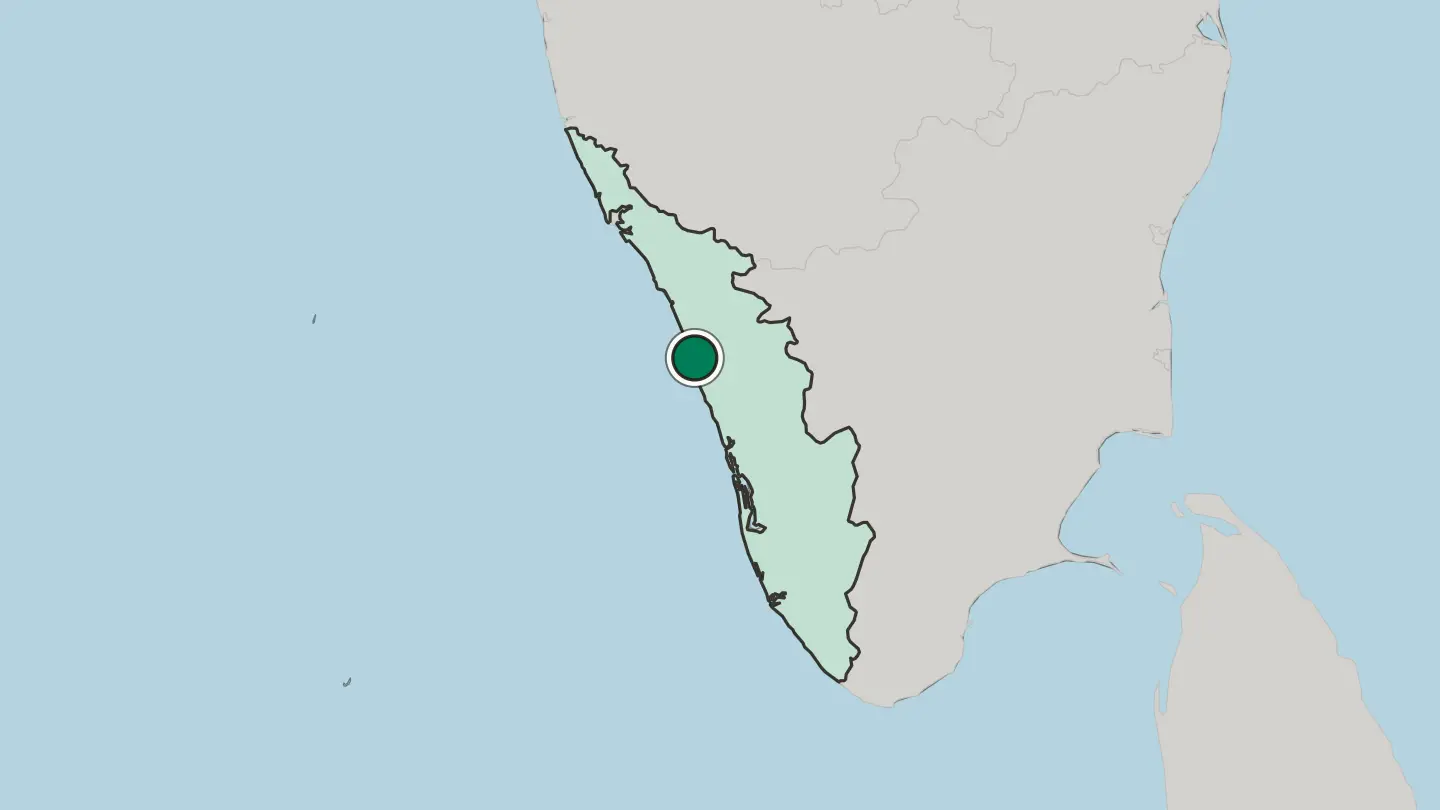
 India
India
Kottayam
Kottayam is the City of Letters, a district seat in Kerala where many of Malayalam's first daily newspapers were started and are headquartered still.Where to stay →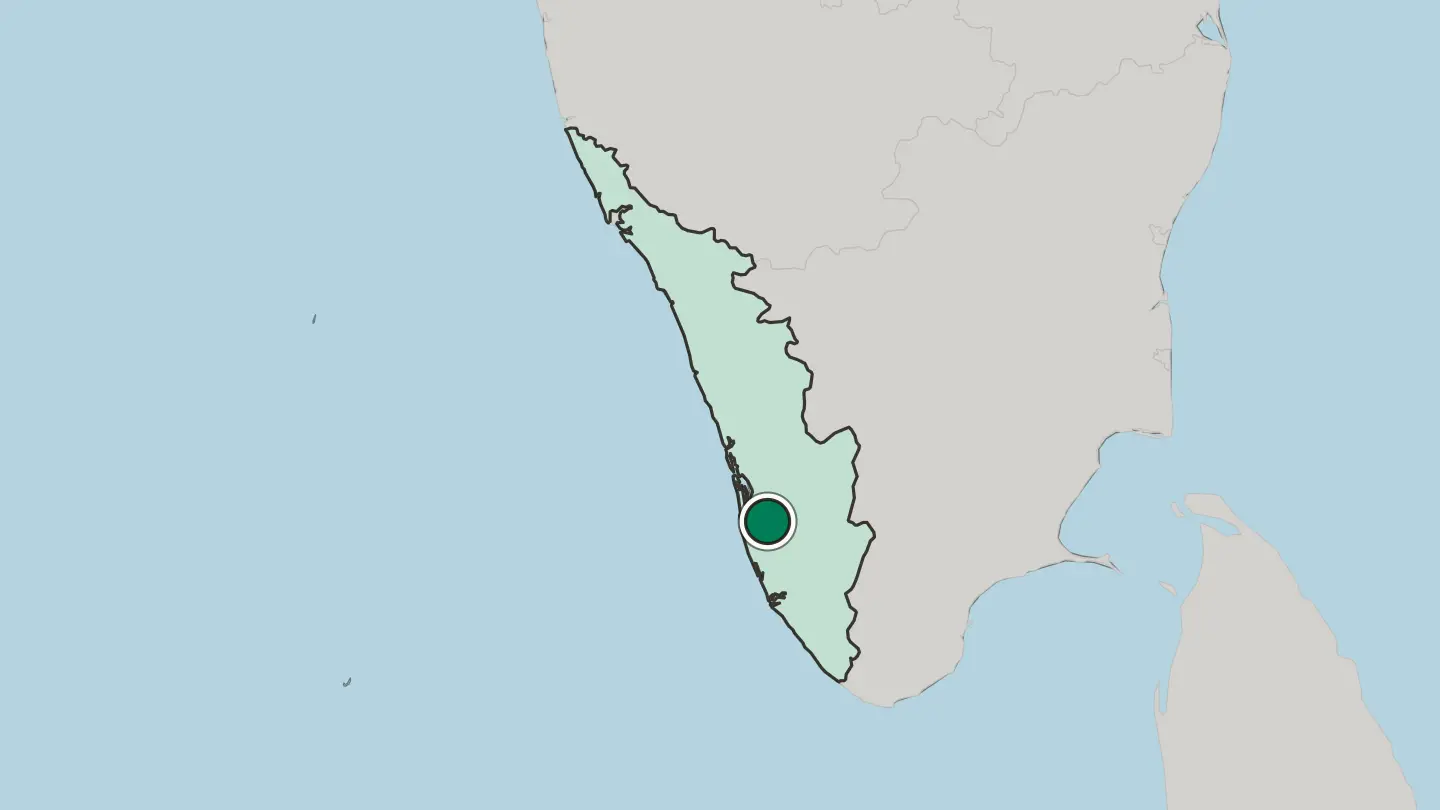
 India
India
Kāsaragod
Kāsaragod heads the northernmost district of Kerala, a municipal town established in 1966 and known as Sapta Bhasha Sangama Bhumi.Where to stay →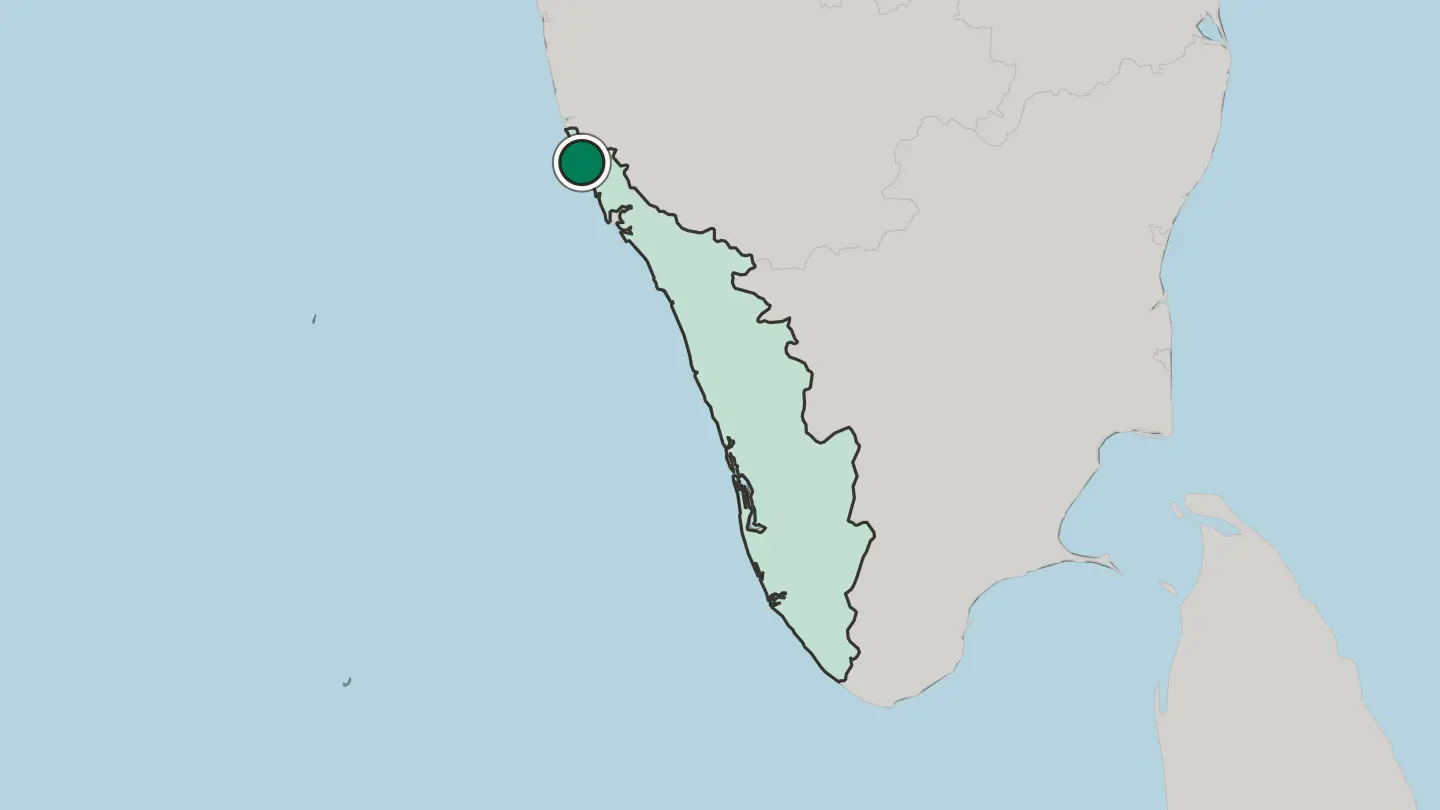
 India
India
Ottapalam
Ottapalam is a town of the Palakkad District in Kerala, headquarters of its taluk, standing on the banks of the Bharathapuzha in the Malabar region.Where to stay →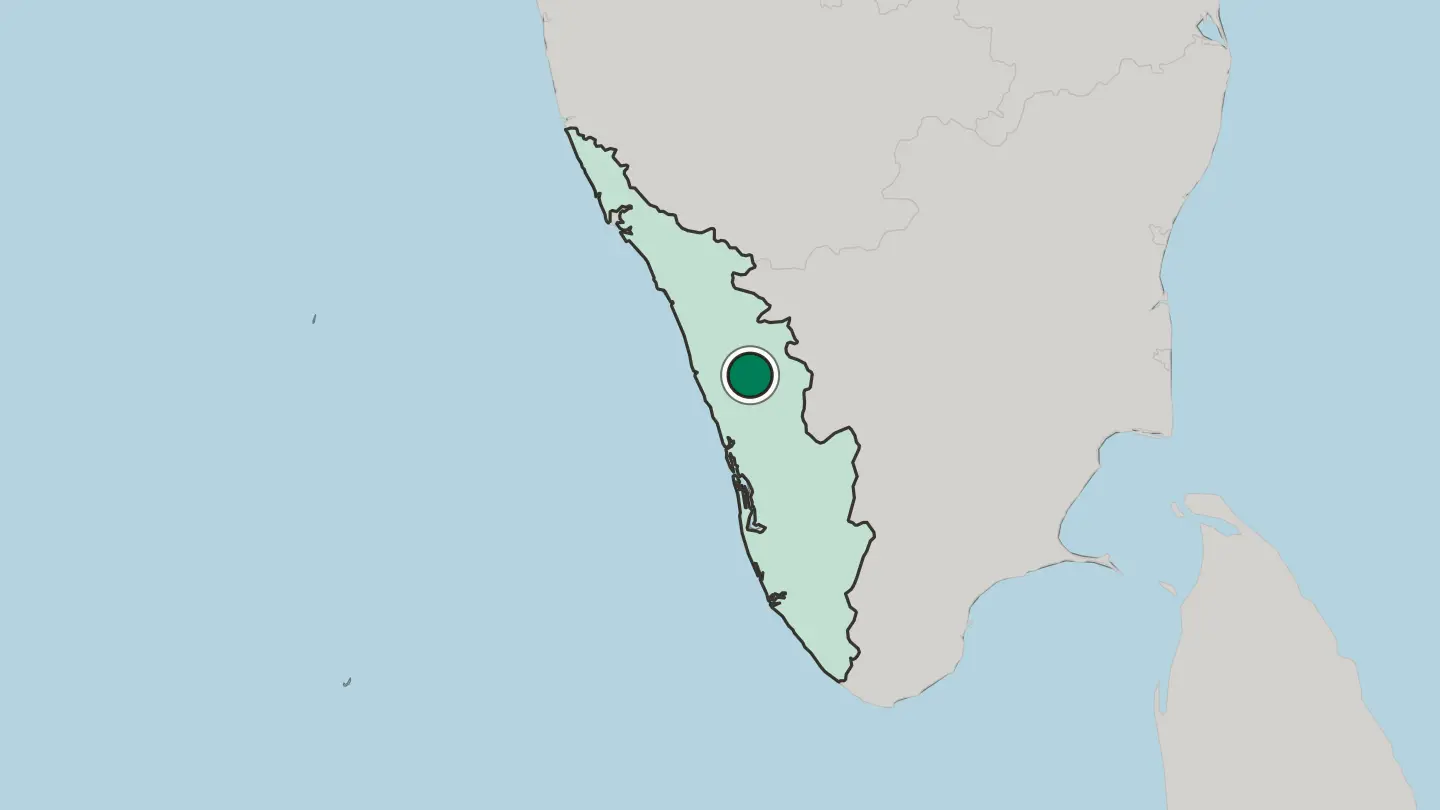
 India
India
Thodupuzha
Thodupuzha is a municipality and taluk town of Idukki district in Kerala, on the Thodupuzha River roughly 55 kilometres west of Painavu.Where to stay →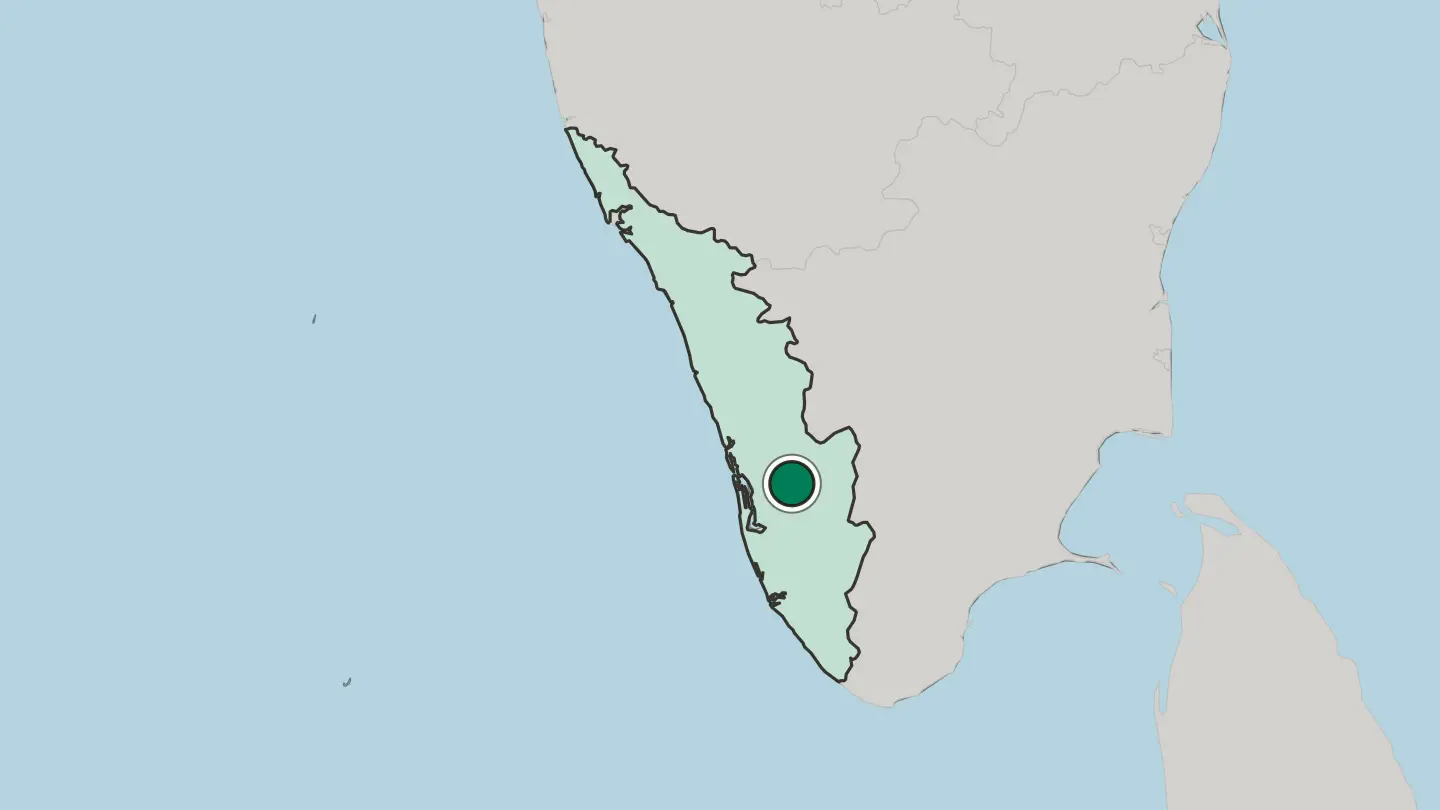
 India
India
Changanācheri
Changanassery, or Changanācheri, is a municipality of the Kottayam district in Kerala, lying south of Kottayam and north of Thiruvananthapuram.Where to stay →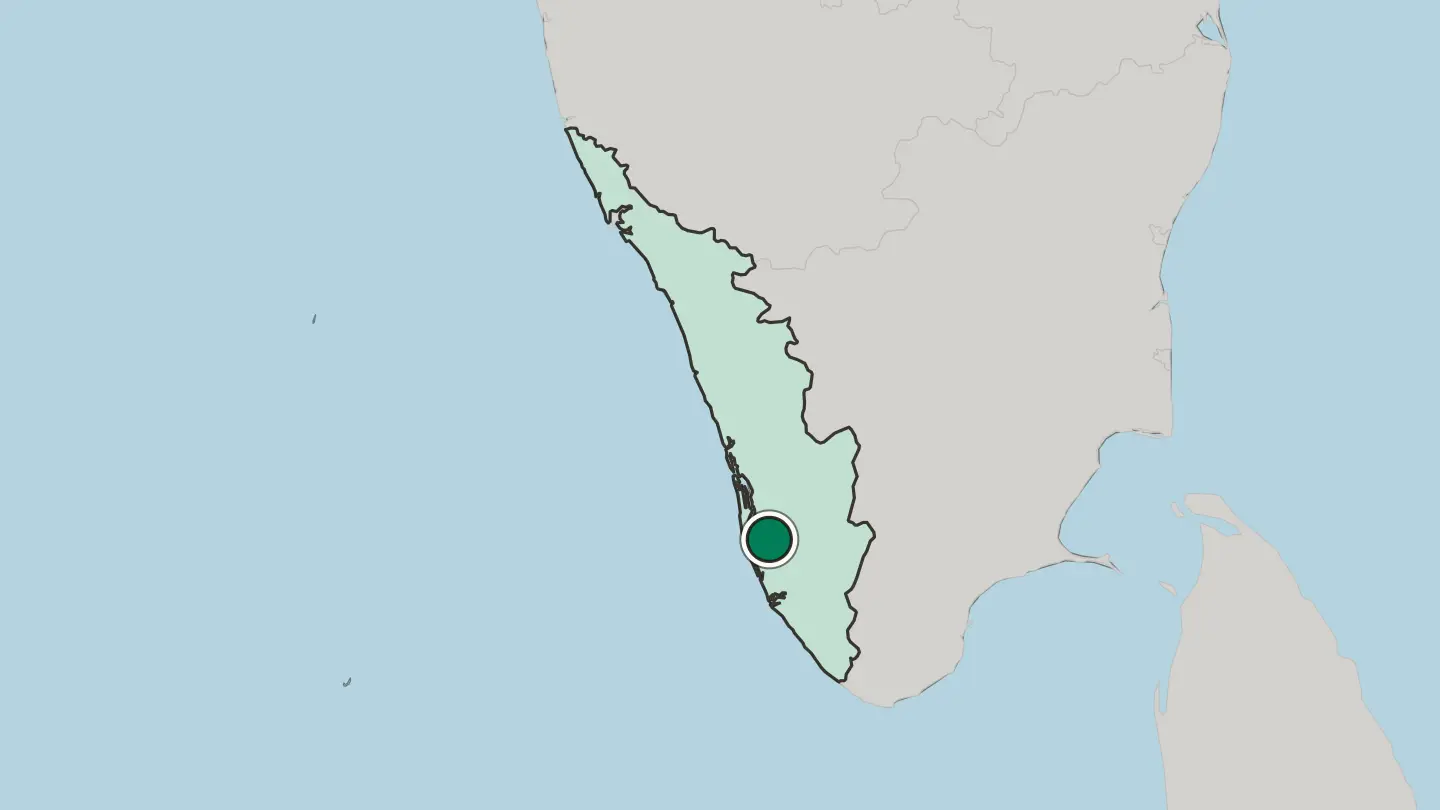
 India
India
Kumbalangy
Kumbalangi is an island village in the backwaters on the edge of Kochi, known for its Chinese fishing nets and for the glow called Kavaru.Where to stay →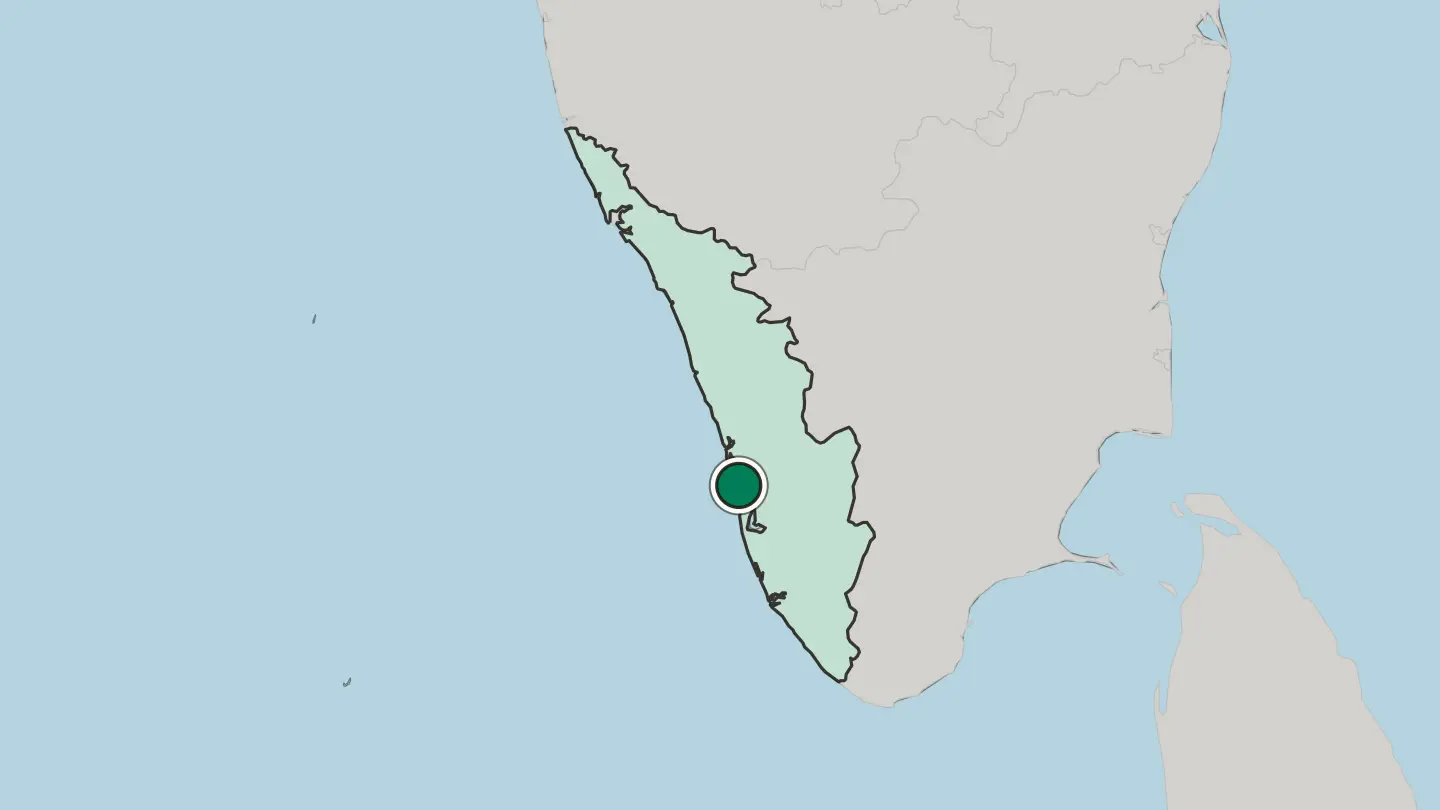
Hotel links are affiliate links: booking through them may earn us a commission, at no extra cost to you. It never affects how places are ranked. How this works
About State of Kerala
What is State of Kerala known for?
Kerala runs down India's south-western edge, a narrow green strip pinned between the Western Ghats and the Arabian Sea. Kerala is shaped by water above all. A chain of brackish lagoons and canals known as the Kerala backwaters threads the coast for hundreds of kilometres, and slow houseboat cruises through them are the image most travellers carry away.
Inland the land climbs fast into the Western Ghats, where tea and spice estates cover the slopes around hill towns like Munnar. The state is also the home of Ayurveda, of the masked dance-drama Kathakali, and of Onam, the ten-day harvest festival that marks its calendar.
Where is State of Kerala?
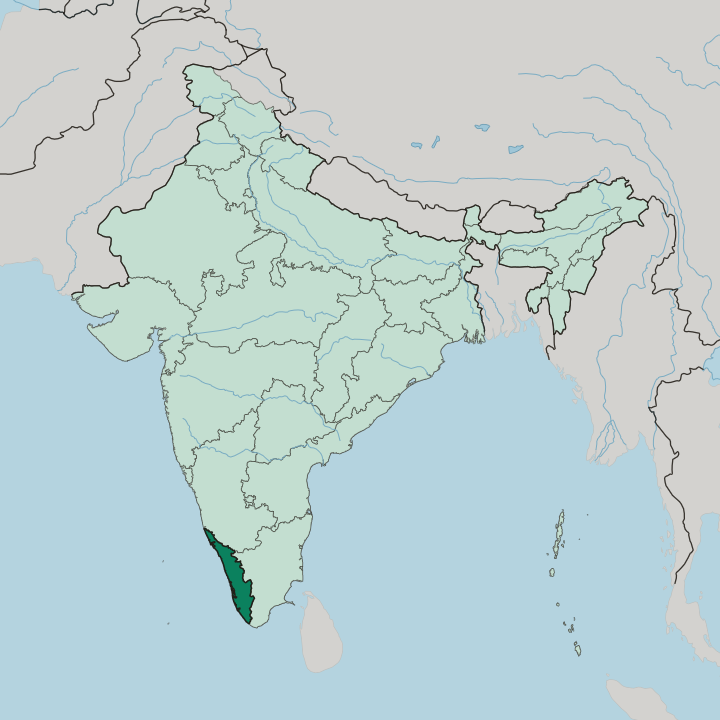
Kerala forms a long, narrow band down the south-western coast of India, wedged between the Western Ghats and the Arabian Sea. It is never wide. The Arabian Sea runs the whole western edge, while the Western Ghats wall off the eastern side, dividing Kerala from Tamil Nadu on the far slopes. Karnataka lies to the north.
Between the mountains and the sea sit the coastal lowlands, and it is here that the Kerala backwaters spread, a maze of lagoons, shallow lakes and canals fed by the rivers coming off the hills. Forty-four rivers drain the state, and all but three flow west from the Western Ghats down to the Arabian Sea. The highest ground is inland and southern.
Anamudi rises to 2695 metres in the Ghats, the tallest peak in southern India, and around it the ranges hold the tea country of Munnar and the forests of the Periyar reserve. The coast itself, the old Malabar Coast, is low, wet and thickly settled, a green ribbon of palm groves and paddy. Distances here are short but the land changes fast, climbing from sea-level backwater to misted mountain in the space of a single morning's drive.
Water is the constant.
What is State of Kerala like?
Kerala thinks of itself as a place apart, and Malayalam, the language spoken by almost everyone here, is a large part of why. The state was drawn along that language when it was formed, and Malayalam carries a literature, cinema and press that give the region a strong single identity. Performance runs through the culture.
Kathakali, the masked dance-drama with its towering costumes and painted faces, was born here and stages the old Hindu epics through gesture and eye. The state is also the recognised home of Ayurveda, and its treatment centres draw visitors from across the world to the coast and the hills. Onam ties the year together.
For ten days each harvest the whole state marks the festival with flower carpets, shared feasts and snake-boat races run down the backwater channels. Centuries of trade shaped the rest. Pepper and cardamom drew Arab, Chinese and European merchants to Kochi and the Malabar Coast, and the churches, mosques and old synagogue of the trading ports still stand among the Hindu temples.
That layering gives Kerala a plural, outward-looking character that sets it apart from much of the rest of India.
What is the history of State of Kerala?
Kerala took its present shape on 1 November 1956, when the Malayalam-speaking lands were joined into a single state under India's linguistic reorganisation. The name is old. The state is new.
Its territory brought together the old princely regions of Travancore and Cochin with the Malabar district to the north, uniting people who had traded pepper and spice with the wider world for more than two thousand years. That deep trading past, drawing Romans, Arabs, Chinese and Europeans to the Malabar Coast, left Kerala unusually plural long before it became one state.
What is the climate of State of Kerala?
Kerala has a hot, wet tropical climate, and rain is the thing that orders the year. Two monsoons soak it. The south-west monsoon breaks over the coast around June and drops most of the state's rain, while a lighter north-east monsoon returns in October and November.
Catching the incoming cloud off the Arabian Sea, the Western Ghats wring it out, which is why the hills stay green and the state counts among the wettest corners of India. Coast and lowlands stay warm and humid through the year; the high country around Munnar runs markedly cooler.
How do you get to State of Kerala?
Most visitors reach Kerala by air. Kochi is the main door in, and the city's Cochin airport handles the largest share of arrivals for the backwaters, the hill stations and the spice country beyond. Thiruvananthapuram in the south and Kozhikode in the north add two more international gateways.
Trains run the coast. The main railway line and the coastal highway link Kochi with the capital and the northern towns, while roads climb the Western Ghats to Munnar and the Periyar reserve.
Common questions
What is the best area to stay in State of Kerala?
Kochi: a first trip through Kerala's old spice port. Alappuzha: a houseboat night on the backwaters. Munnar: the cool tea hills of the Western Ghats. Thiruvananthapuram: the capital and the southern beaches.
Good for
More regions in India
Updated September 2026