Italy · Friuli Venezia Giulia
Where to Stay in Udine, Friuli Venezia Giulia
Udine sits between the Adriatic Sea and the Carnic Alps, a Friulian capital with a castle on its rise and Tiepolo galleries in the streets below.
Hotel links are affiliate links: booking through them may earn us a commission, at no extra cost to you. It never affects how places are ranked. How this works


Where to stay in Udine
The practical side of choosing where to sleep.
The castle rise is the anchor. Udine Castle sits above the old streets, and a room below it puts Udine Cathedral, the Oratorio della Purità and the Museo del Duomo-Cattedrale di Udine inside a few minutes on foot, which is most of what a short visit needs. Santa Maria di Castello is up on the same rise.
Walk it in the evening. Around San Francesco the mood changes. That quarter and the streets by the Tempio Ossario dei Caduti d'Italia sit out from the core, with the Galleria Tina Modotti and the Museo di Arte Moderna e Contemporanea giving the area a reason of its own.
The walk in is longer. Anyone here for modern work rather than frescoes should start on this side. The wider Friuli option is a car and a base outside the city.
Udine is the capital of its province, and the wine country, the prosciutto di San Daniele and the Montasio cheese that make Friuli worth the trip are all made in the countryside around, not in the centre. Stay out for that. The Carnic Alps are the other direction.
Find hotels in Udine
Direct booking searches for these neighbourhoods.
Below Udine Castle by the Cathedral
Udine Castle, Santa Maria di Castello and the Museo del Duomo-Cattedrale di Udine stand on and under the same rise.Find hotels in Below Udine Castle by the Cathedralmodern galleries a walk out from the castle streetsThe San Francesco side
The Galleria Tina Modotti and the Museo di Arte Moderna e Contemporanea sit near San Francesco and the Tempio Ossario dei Caduti d'Italia.Find hotels in The San Francesco sidewine, prosciutto di San Daniele and Montasio cheese at their sourceOut in the Friulian countryside
The producing country of Friuli lies outside Udine, on the ground between the Adriatic Sea and the Carnic Alps. Beds are limited here, so book early.Find hotels in Out in the Friulian countrysideHotel links are affiliate links: booking through them may earn us a commission, at no extra cost to you. It never affects how places are ranked. How this works
Things to do in Udine
Ranked by global recognition; descriptions from Wikidata (CC0).
Museums & Galleries
5- San Francesco Heritage
- Museo Diocesano e Gallerie del Tiepolo Heritage
- Museo di Arte Moderna e Contemporanea Heritage
- Civic Museums and Gallery of History and Art Heritage
- Galleria Tina Modotti Heritage
Churches & Religious Sites
3- Udine Cathedral
- Oratorio della Purità
- Tempio Ossario dei Caduti d'Italia
Castles & Historic Sites
1- Udine Castle Heritage
Stadiums & Sports
1- Centro sportivo Dino Bruseschi
worth knowingacross 4 categories in Udine
About Udine
Museums, and plenty of them.
What is Udine known for?
The Museo Diocesano e Gallerie del Tiepolo carries a painter's name, while the Civic Museums and Gallery of History and Art, the Museo etnografico del Friuli and the Museo Friulano di Storia Naturale divide history, custom and natural science between them. Udine Castle looks over the lot. Friuli is wine country, and prosciutto di San Daniele and Montasio cheese come off the same ground, which is why the city works as a place to eat before anything else.
What are the main landmarks in Udine?
Udine Castle takes the high ground. Udine Cathedral and the Oratorio della Purità carry the ecclesiastical weight, with the Museo del Duomo-Cattedrale di Udine and the Museo Diocesano e Gallerie del Tiepolo attached to the church side of the city's collections. San Francesco and Santa Maria di Castello are the other churches on the list.
The Tempio Ossario dei Caduti d'Italia commemorates the fallen. Sport gets the Centro sportivo Dino Bruseschi.
What is the history of Udine?
The rise came first. Udine Castle and Santa Maria di Castello share the high ground the city is built around, which is where a Friulian town of this age would have kept both its defence and its oldest church. Udine Cathedral anchors the streets below.
The Oratorio della Purità and the Museo del Duomo-Cattedrale di Udine belong to the same ecclesiastical centre, and the Museo Diocesano e Gallerie del Tiepolo carries the name of the painter whose work fills its rooms. Friuli explains the rest. Udine became the capital of its province and of the Regional decentralization entity that carries the city's name, which makes it the administrative centre for a countryside of wine, prosciutto di San Daniele and Montasio cheese.
The Museo etnografico del Friuli records that world. War left its own monument. The Tempio Ossario dei Caduti d'Italia holds the remains of the fallen, a memorial building rather than a parish church, and it stands among the ordinary streets of the city.
Art arrived in layers. The Civic Museums and Gallery of History and Art hold the older collections, while the Galleria d'arte moderna di Udine, the Museo di Arte Moderna e Contemporanea and the Galleria Tina Modotti carry the modern half of the city's holdings. The Museo Friulano di Storia Naturale takes the natural sciences, and the Centro sportivo Dino Bruseschi is the sporting address.
Between the Adriatic Sea and the Carnic Alps, that is a lot of institutions for one city.
Where is Udine?
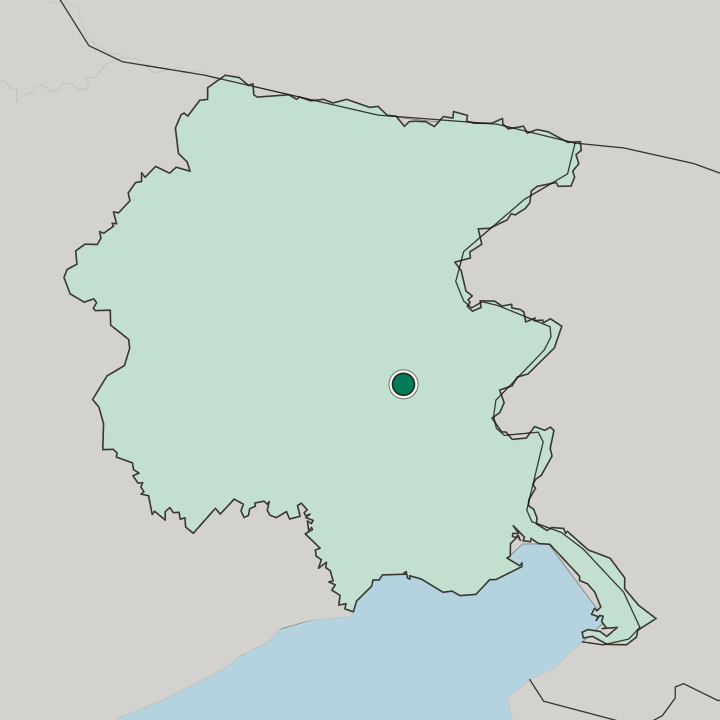
Two edges frame the region. Udine stands in the middle of Friuli-Venezia Giulia, with the Adriatic Sea on one side and the Carnic Alps on the other, so the city sits on open ground rather than on a coast or in a valley. One rise breaks it.
Udine Castle occupies that height, and the comune spreads around it into the Friulian countryside of prosciutto di San Daniele and Montasio cheese.
What is the climate of Udine?
Mountains and sea pull opposite ways. Udine's temperate weather comes of standing between the Carnic Alps and the Adriatic Sea, which means colder air off the high ground in winter and a heavier, wetter warmth drifting in from the water in summer. Friuli grows its wine on that mixture.
Walking the centre between Udine Cathedral and Udine Castle is comfortable in the shoulder seasons, when neither the alpine cold nor the summer damp has the upper hand.
How do you get to Udine?
Udine is where Friuli converges. The city is the capital of the Province of Udine and of the Regional decentralization entity of the same name, so roads across the middle of Friuli-Venezia Giulia run through it rather than past it. The Adriatic Sea lies one way, the Carnic Alps the other.
Anyone heading out to prosciutto di San Daniele or Montasio country starts here.
Common questions
What is the best area to stay in Udine?
Below Udine Castle by the Cathedral: reaching Udine Cathedral and the Oratorio della Purità on foot before breakfast. The San Francesco side: modern galleries a walk out from the castle streets. Out in the Friulian countryside: wine, prosciutto di San Daniele and Montasio cheese at their source.
Good for
Another city in Friuli Venezia Giulia
Updated October 2026