Japan · Miyagi-ken
Where to Stay in Ōsaki, Miyagi-ken
Ōsaki is a city of Miyagi Prefecture in Japan, dating from 2006, with Yūbikan, the Miyazawa Site and the Onikōbe geysers on its register.
Hotel links are affiliate links: booking through them may earn us a commission, at no extra cost to you. It never affects how places are ranked. How this works


Where to stay in Ōsaki
Where visitors usually base themselves, and why.
The choice in Ōsaki runs between Onikōbe and the ground around Yūbikan. Onikōbe holds the Megama/Ogama Geysers, and a bed there trades the city's indoor collections for steam vents that work whatever the weather does to the rest of the day. Yūbikan sits at the other pole. Ōsaki's landmark list splits cleanly along that line, with excavated ground and municipal collections on one side and the geyser field at Onikōbe on the other.
Kankaku Museum, Kamata Memorial Hall, and Osaki Citizens' Gallery Odae-no-Yakata give the same stay three indoor stops when rain closes the excavations. Ōsaki covers a wide stretch of Miyagi Prefecture, and the excavations, the geysers, and the galleries do not sit within walking reach of one another. Archaeology decides the rest. The Miyazawa Site, the Ebisuda Site, Zazaragi Site, and the Yamahata Cave Tomb Cluster lie apart from one another, so a car matters more than any single address if you are here for the excavated ground. Ōsaki dates from 2006.
The city belongs to the World Health Organization's Alliance for Healthy Cities, and its municipal facilities, Osaki City Furukawa Sports Facilities among them, are registered under the Ōsaki name. Onikōbe suits a stay built around the geysers, and the Yūbikan side suits one built around collections.
Find hotels in Ōsaki
Direct booking searches for these neighbourhoods.
Onikōbe
The Megama/Ogama Geysers vent inside Onikōbe itself, so the field is reachable before any of Ōsaki's collections open for the day.Find hotels in OnikōbeYūbikan with the Kankaku Museum on the same stayThe Yūbikan side
Yūbikan anchors the built half of Ōsaki, and the Kankaku Museum, Kamata Memorial Hall and Osaki Citizens' Gallery Odae-no-Yakata draw on that same base.Find hotels in The Yūbikan sideDrives out to the Ebisuda Site and Zazaragi SiteToward the excavations
The Miyazawa Site, the Ebisuda Site and the Yamahata Cave Tomb Cluster lie apart from each other, which rewards a room chosen for the road rather than the pavement.Find hotels in Toward the excavationsHotel links are affiliate links: booking through them may earn us a commission, at no extra cost to you. It never affects how places are ranked. How this works
Things to do in Ōsaki
Ranked by global recognition; descriptions from Wikidata (CC0).
Museums & Galleries
3- Kankaku Museum
- Kamata Memorial Hall
- 大崎市民ギャラリー緒絶の館
Castles & Historic Sites
3- Miyazawa Site Heritage
- 座散乱木遺跡
- Ebisuda Site
Stadiums & Sports
1- 大崎市古川体育施設
worth knowingacross 3 categories in Ōsaki
About Ōsaki
Dig sites outnumber temples here.
What is Ōsaki known for?
The Miyazawa Site, the Ebisuda Site, Zazaragi Site, and the Yamahata Cave Tomb Cluster give Ōsaki four separate excavations, which is more entries than any other kind of landmark holds in the city. Yūbikan is the exception. Kankaku Museum and Kamata Memorial Hall cover the indoor half, and Osaki Citizens' Gallery Odae-no-Yakata adds a municipal gallery to a list that runs heavily to archaeology.
What are the main landmarks in Ōsaki?
Yūbikan heads the list. The Kankaku Museum and Kamata Memorial Hall handle the collections, while Osaki Citizens' Gallery Odae-no-Yakata serves as the municipal gallery, and Osaki City Furukawa Sports Facilities covers sport rather than display. Older ground carries the rest of the register: the Miyazawa Site, the Ebisuda Site, Zazaragi Site, and the Yamahata Cave Tomb Cluster.
Onikōbe adds the Megama/Ogama Geysers.
What is the history of Ōsaki?
Ōsaki as a name is recent. The city dates from 2006, far younger than the ground it administers, and that gap between the administrative record and the buried one shapes most of what there is to see. The excavations came first.
Zazaragi Site, the Miyazawa Site, and the Ebisuda Site are each recorded on their own, and the Yamahata Cave Tomb Cluster adds a cluster of cave tombs to the same inventory of Miyagi Prefecture ground. Yūbikan stands apart from the dug sites. It reads as a standing building rather than an excavation, and the Kankaku Museum, Kamata Memorial Hall, and Osaki Citizens' Gallery Odae-no-Yakata give the city three indoor institutions to set against its buried record.
The list also carries Osaki City Furukawa Sports Facilities, a municipal sports facility, which shows how much of the register is civic rather than historic. Onikōbe answers to geology instead. The Megama/Ogama Geysers at Onikōbe predate every human record on this list, and they remain the one landmark in Ōsaki that no century of settlement produced.
Membership in the World Health Organization's Alliance for Healthy Cities sits at the far end of that same account.
Where is Ōsaki?
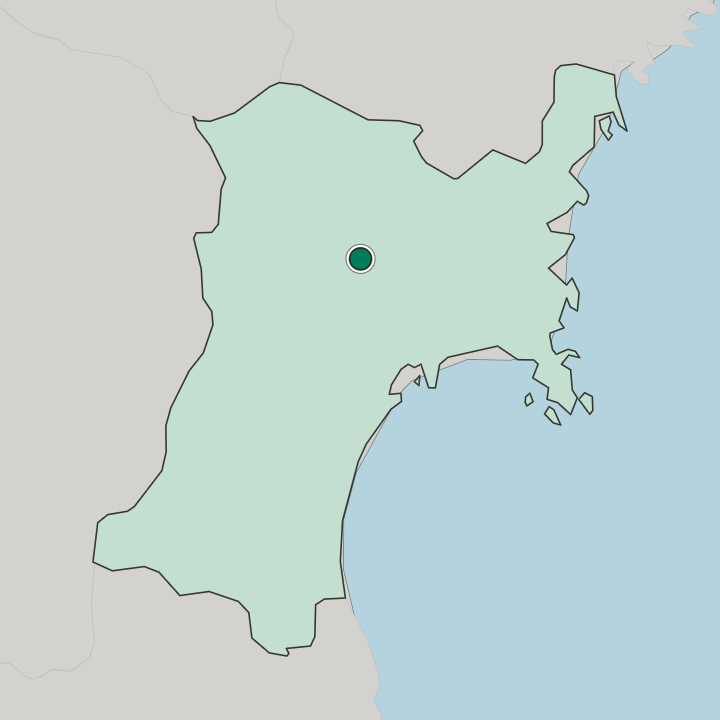
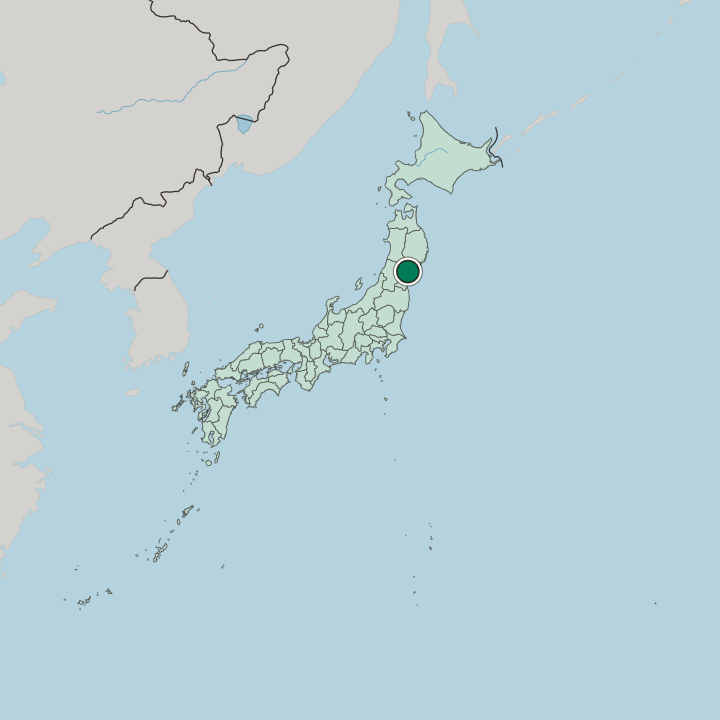
Ōsaki covers a lot of Miyagi Prefecture. The city takes in both the ground around Yūbikan and the geothermal field at Onikōbe, a spread wide enough that one part of the municipality has little to do with another. The Yamahata Cave Tomb Cluster sits in that same spread, as do the Miyazawa Site and the Ebisuda Site.
Getting between them takes a road.
What is the climate of Ōsaki?
Onikōbe reads differently in winter. Cold air thickens the steam over the Megama/Ogama Geysers, which is the one part of Ōsaki where the season changes what a visitor actually sees rather than merely how comfortable the day is. The rest of Ōsaki sits in the temperate band, with warm summers and cold winters, and neither end of that range closes the Kankaku Museum or Kamata Memorial Hall.
The excavations offer no shelter.
How do you get to Ōsaki?
Getting in means choosing a half. A visit built around Yūbikan, the Kankaku Museum, and Kamata Memorial Hall lands in a different part of Ōsaki than one built around the Megama/Ogama Geysers at Onikōbe, and the two are not a short hop apart. Onikōbe sits at one end of that spread, and a car decides whether the geysers and the excavations fit into one day or need two.
The Yamahata Cave Tomb Cluster, the Miyazawa Site, and the Ebisuda Site each need their own leg of the drive.
Common questions
What is the best area to stay in Ōsaki?
Onikōbe: Geyser mornings at Megama/Ogama. The Yūbikan side: Yūbikan with the Kankaku Museum on the same stay. Toward the excavations: Drives out to the Ebisuda Site and Zazaragi Site.
Good for
More cities in Miyagi-ken
Updated September 2026