Lithuania: Regions, Cities & Travel Guide
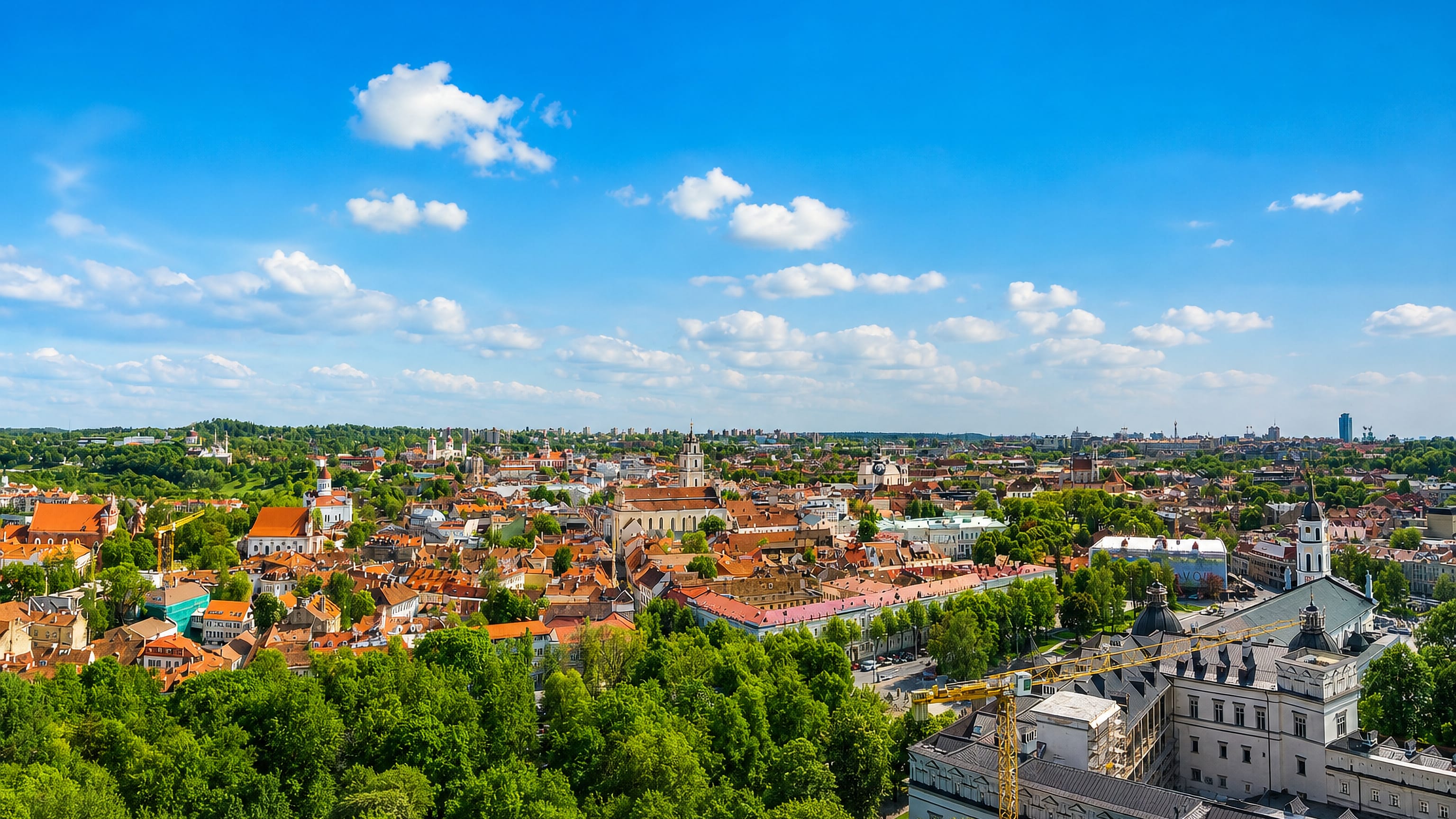
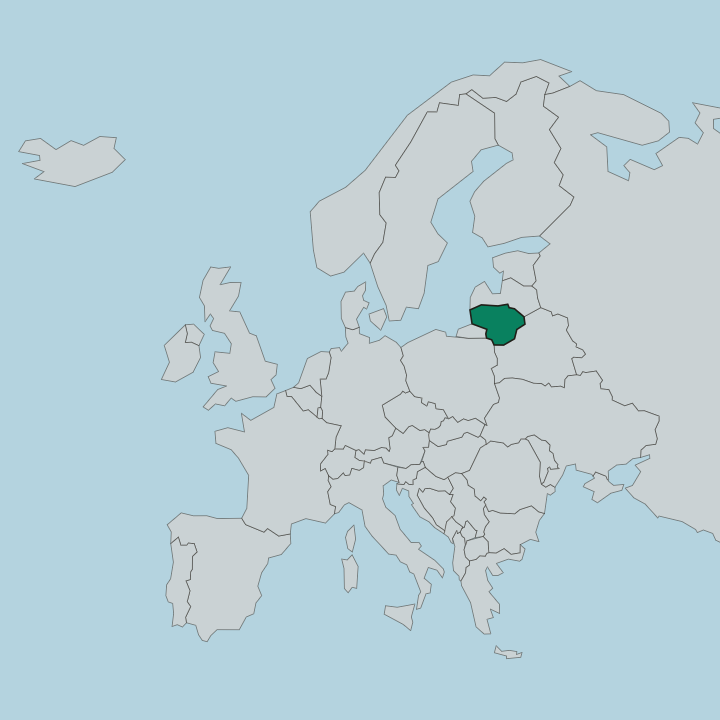
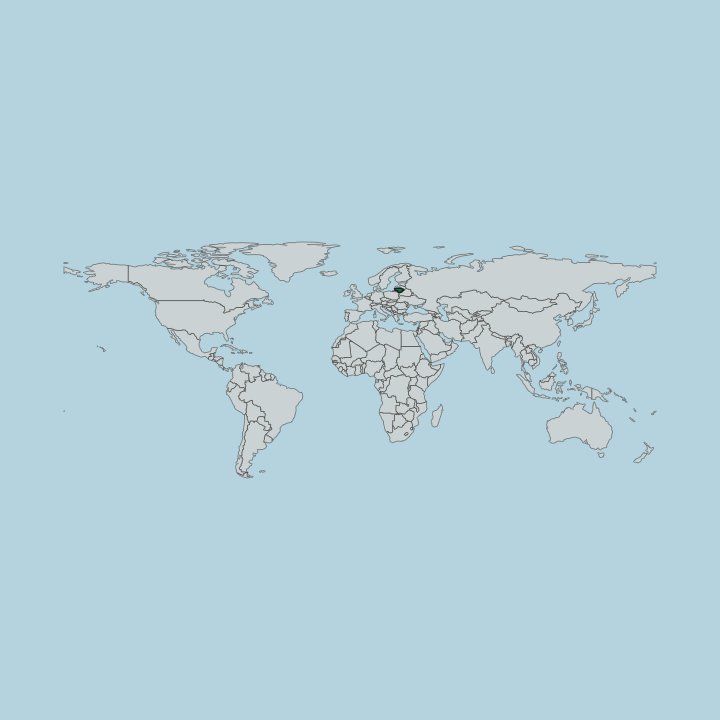
Lithuania is the largest of the three Baltic states, a low, lake-strewn country on the Baltic Sea, with Vilnius as its capital.
Hotel links are affiliate links: booking through them may earn us a commission, at no extra cost to you. It never affects how places are ranked. How this works


Top destinations in Lithuania
Cities to start from, then drill into areas and hotels.
 Lithuania
Vilnius
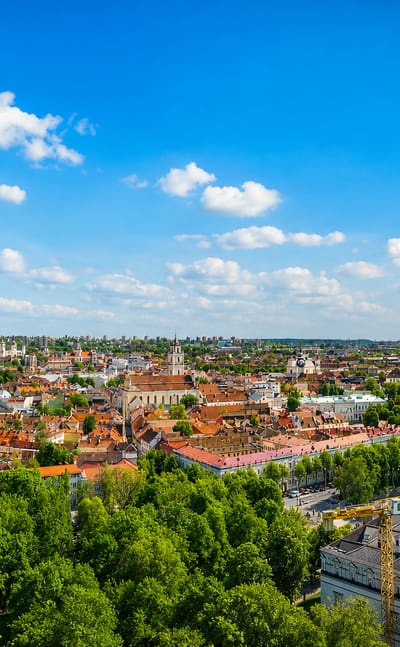
Baroque towers crowd the skyline of Vilnius, the capital of Lithuania in Vilnius County, known for Gediminas' Tower and its walled Old Town.Where to stay →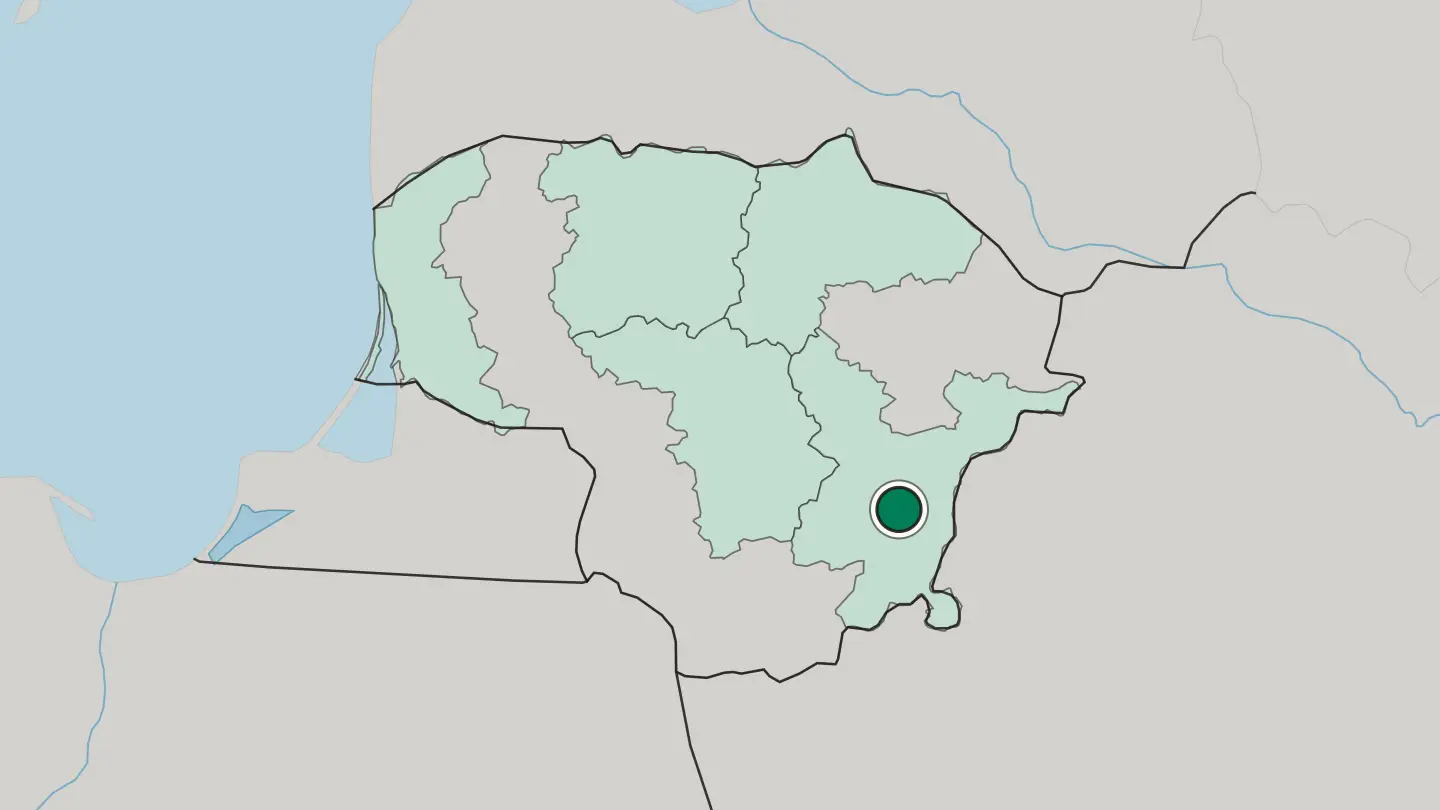
 Lithuania
Kaunas
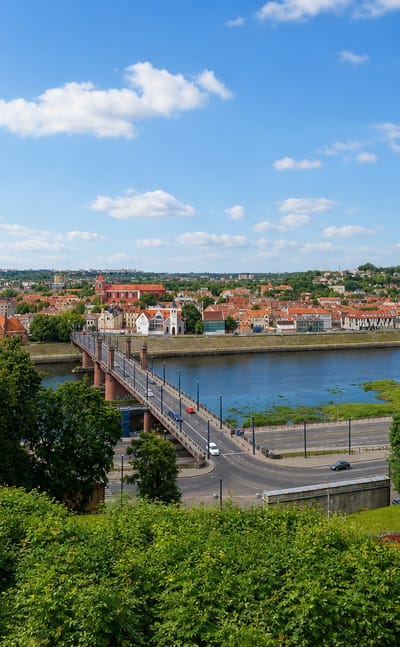
Two rivers meet below the old walls at Kaunas, the second-largest city in Lithuania, known for Kaunas Castle and the avenue of Laisvės alėja.Where to stay →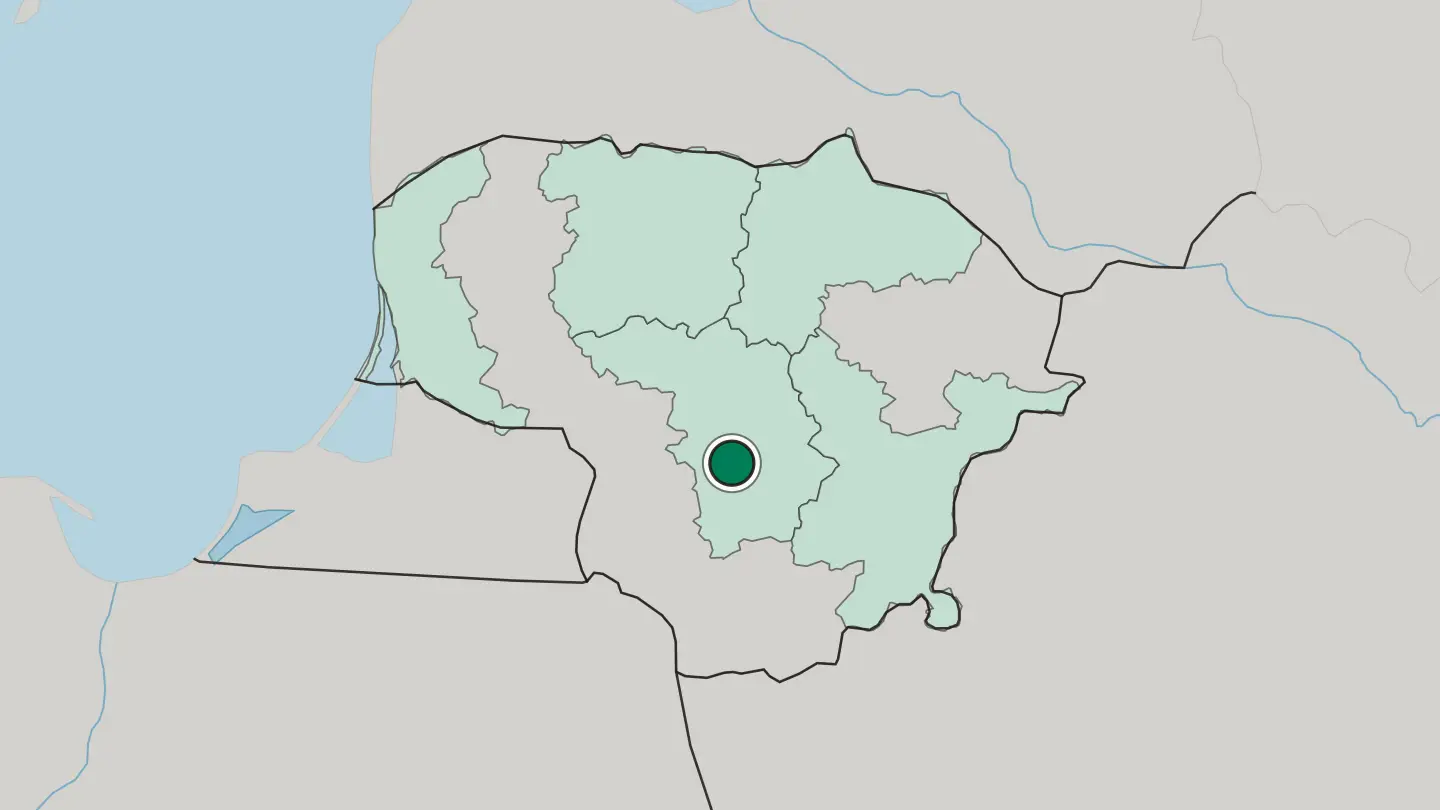
 Lithuania
Šiauliai
Šiauliai is Lithuania's fourth-largest city, an industrial centre in Samogitia and the base for pilgrimages to the Hill of Crosses.Where to stay →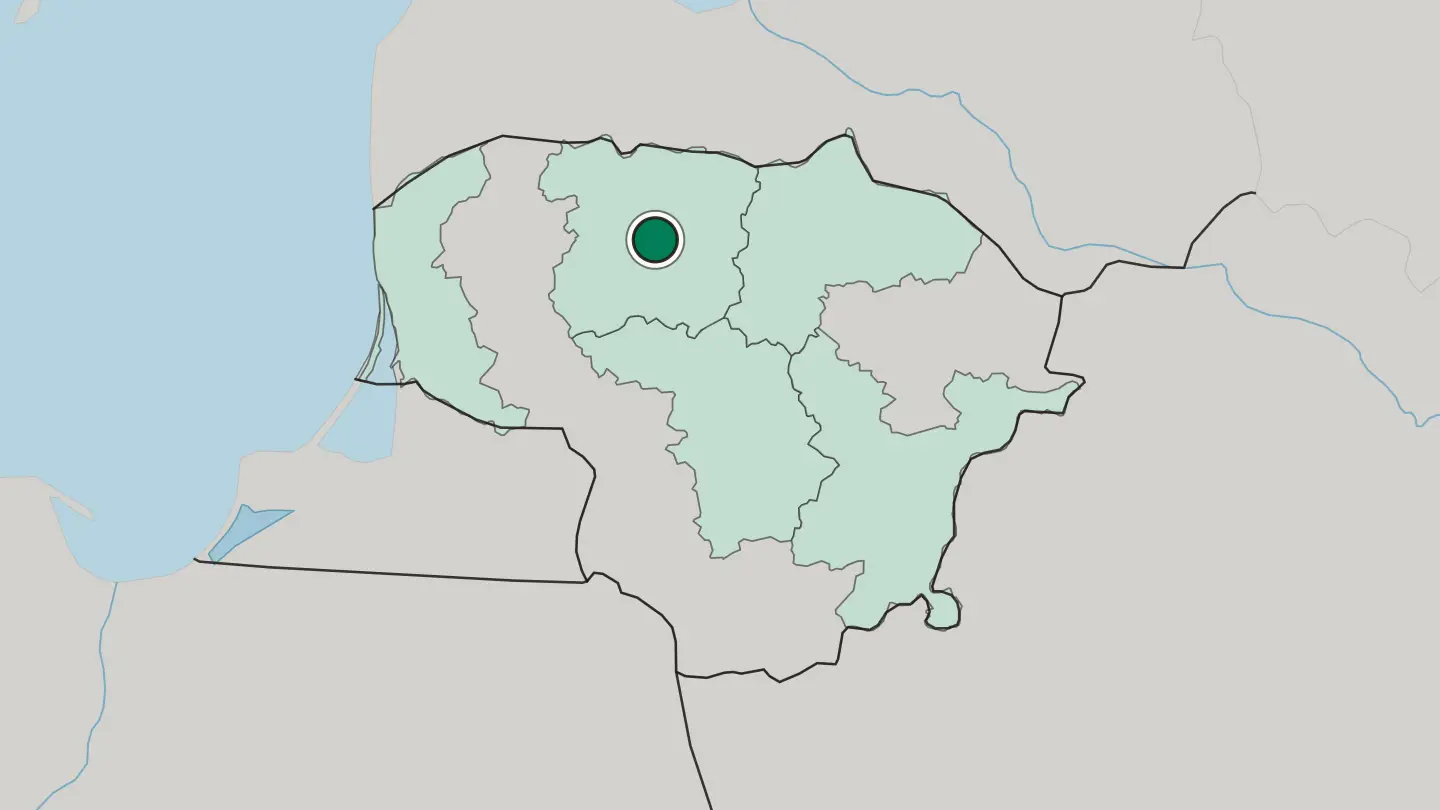
 Lithuania
Panevėžys
Panevėžys is Lithuania's fifth-largest city, an industrial centre of the Aukštaitija region on the highway between Vilnius and Riga.Where to stay → Lithuania
Klaipėda
Klaipėda is a maritime city of Klaipėda County, where the Lithuanian Sea Museum and the Smiltynė fishing exhibits stand.Where to stay →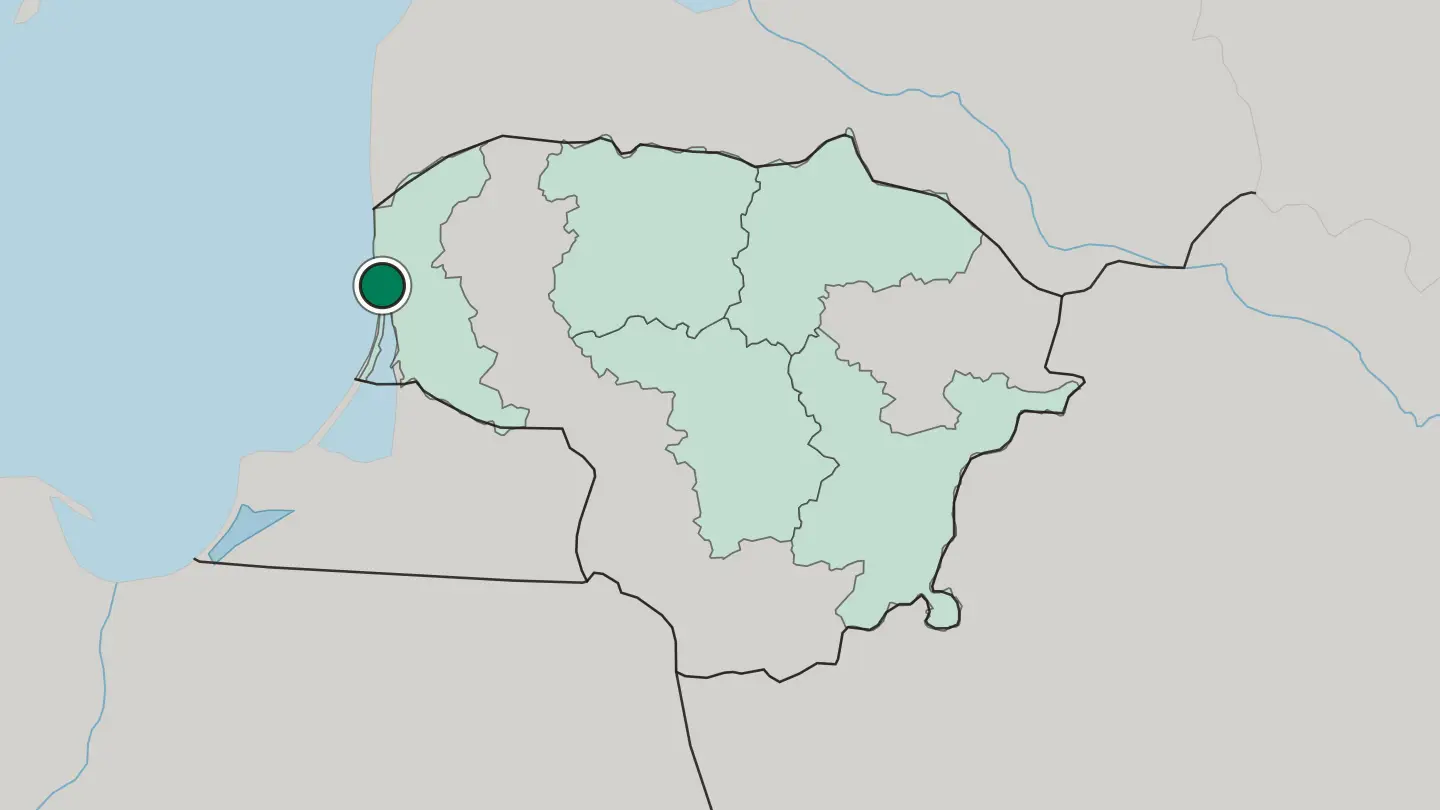
Hotel links are affiliate links: booking through them may earn us a commission, at no extra cost to you. It never affects how places are ranked. How this works
Regions of Lithuania
Lithuania
Kaunas County
Kaunas County lies in the centre of Lithuania, one of the country's ten counties, gathered around its hub city of Kaunas.Towns & cities →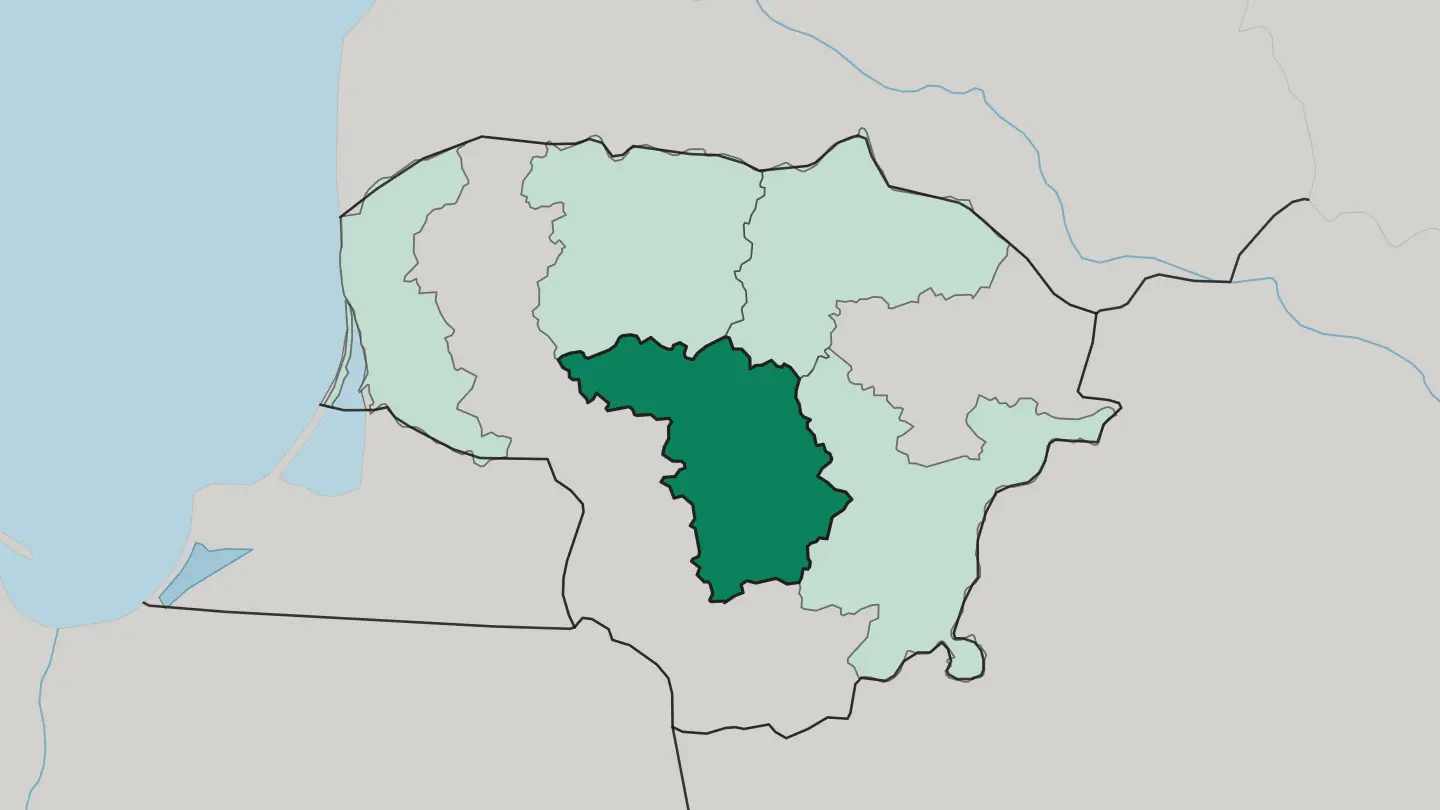 Lithuania
Klaipėda County
Klaipėda County is Lithuania's only county with a Baltic Sea coast, reaching from Kurzeme in Latvia to Kaliningrad Oblast, with Klaipėda as capital.Towns & cities →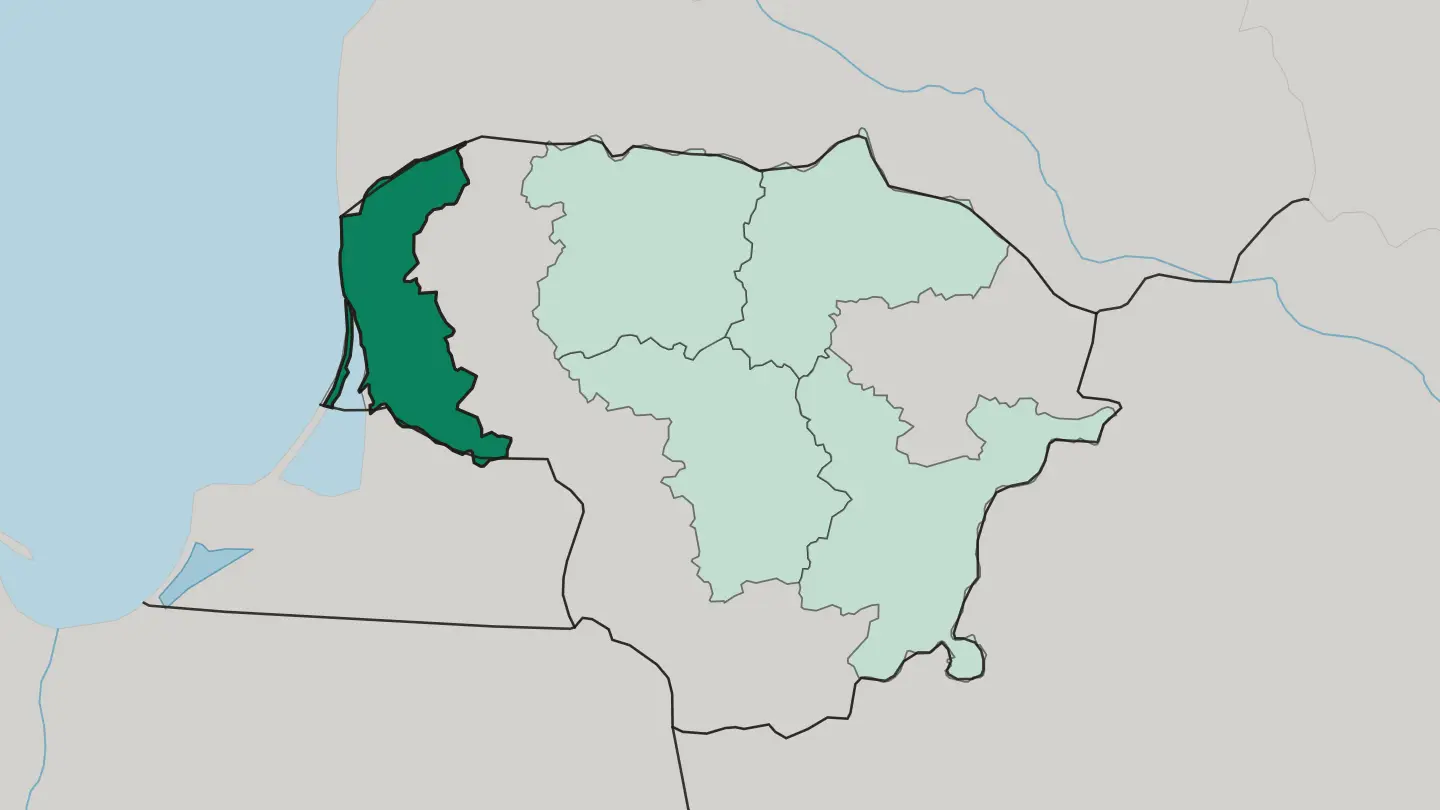 Lithuania
Panevėžys
Panevėžys County is a Lithuanian county in the Aukštaitija region, with Panevėžys, an industrial city on the Vilnius-Riga road, as its capital.Towns & cities →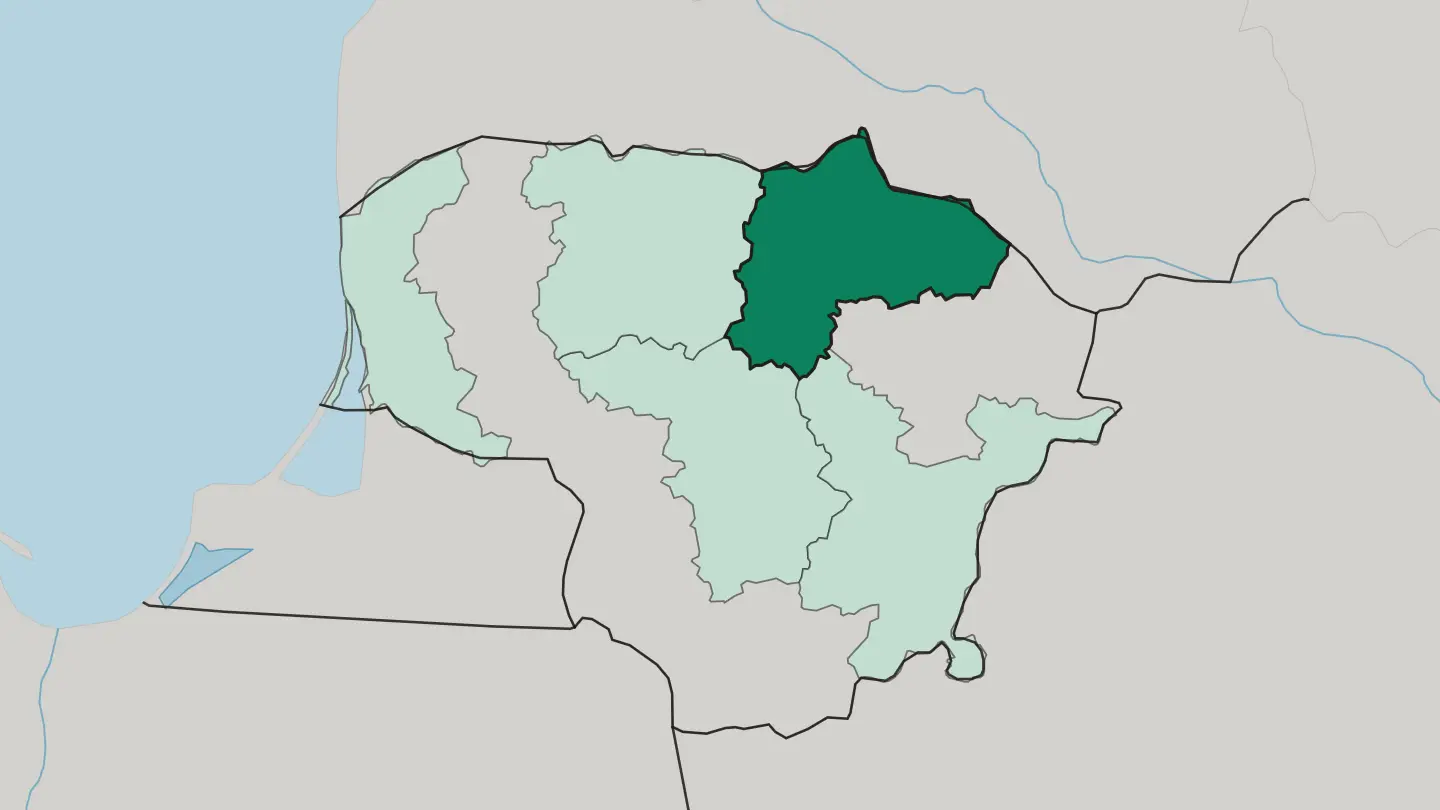 Lithuania
Vilnius County
Vilnius County is the county of Lithuania built around its capital, Vilnius, the hub city that anchors the whole region.Towns & cities →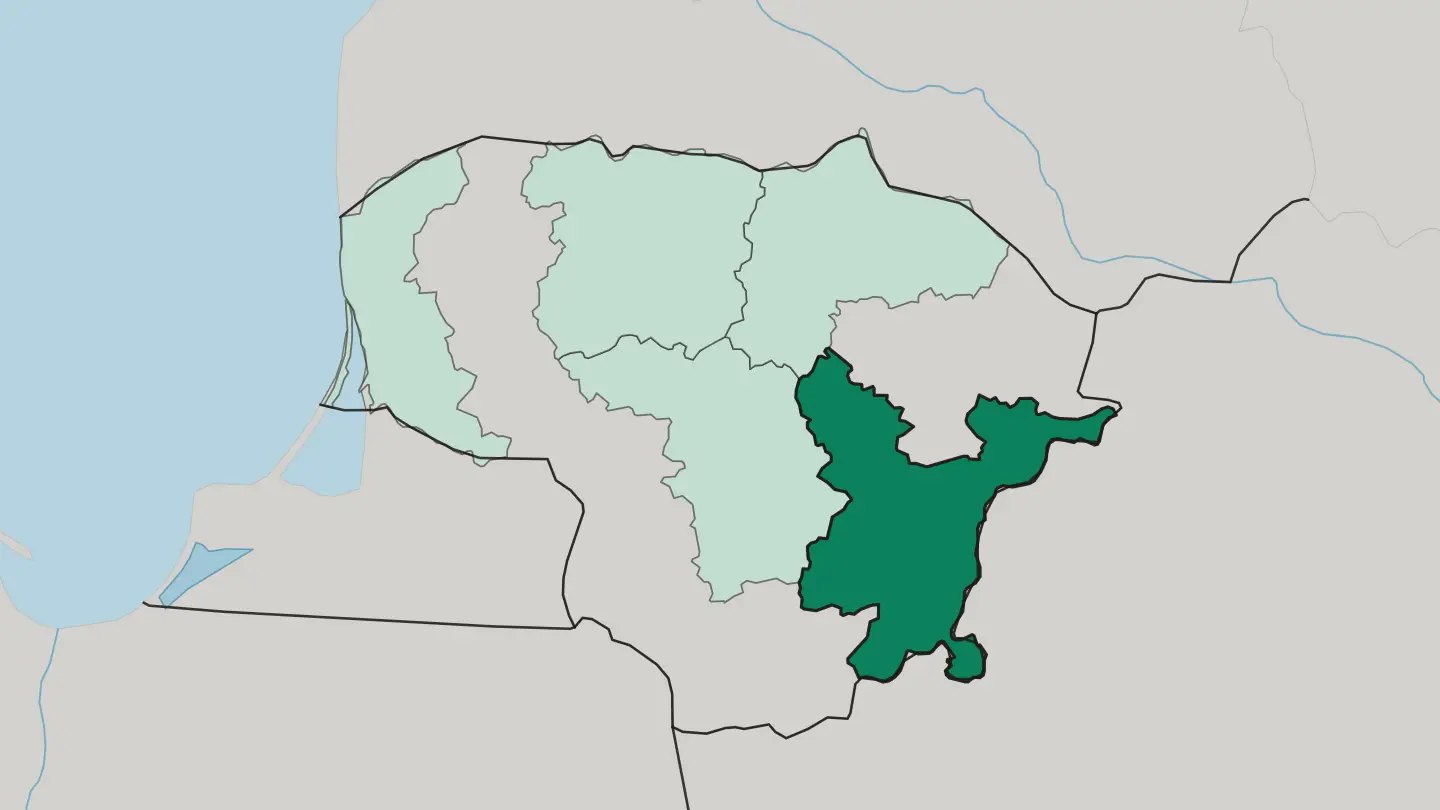 Lithuania
Šiauliai County
Šiauliai County, created in 1994, is one of ten Lithuanian counties, borders Latvia and takes its name and capital from Šiauliai.Towns & cities →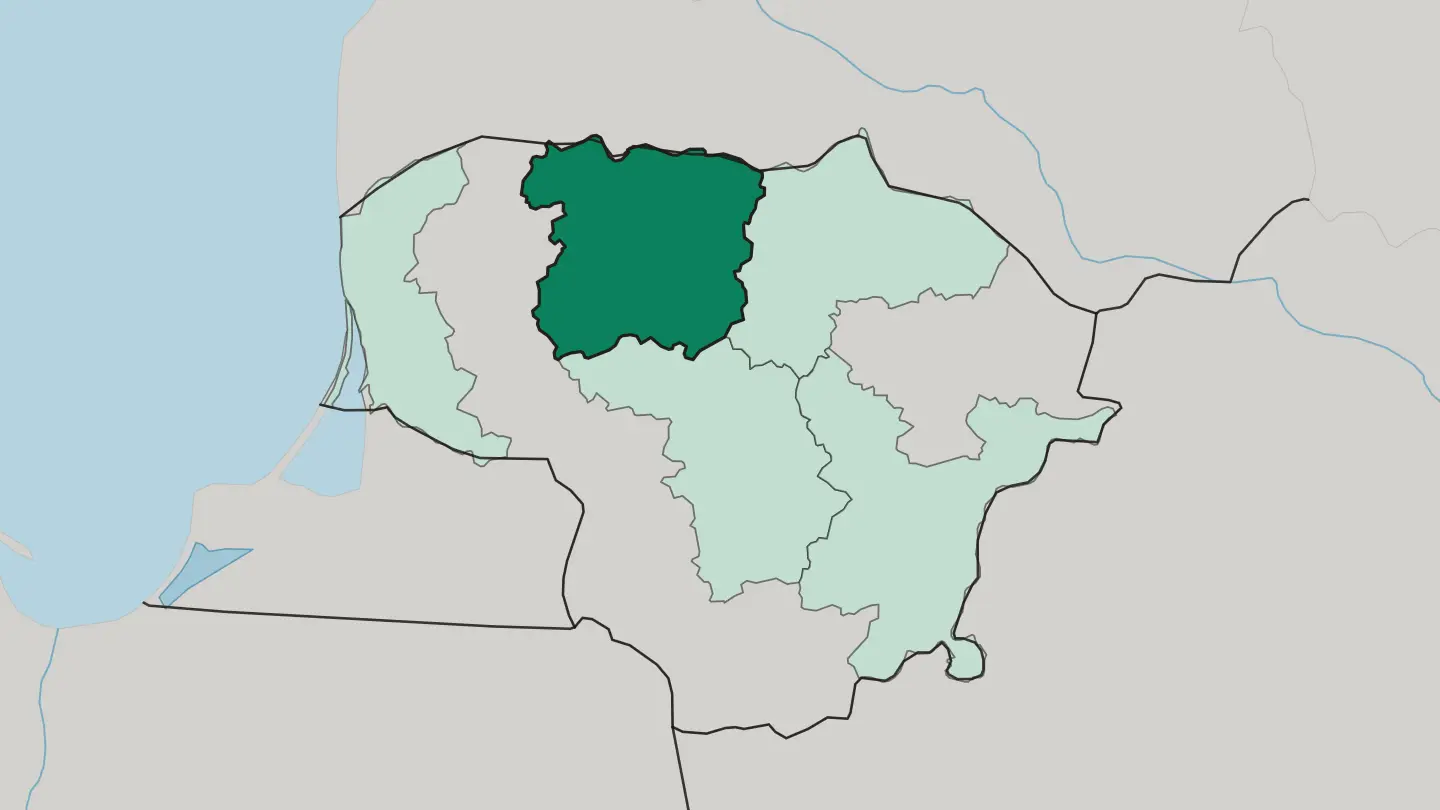
Explore by experience
Not sure which place? Start from how you want to travel.
About Lithuania
What is Lithuania known for?
Lithuania is known for a baroque capital, a sand-dune coast, and the largest state Europe once held. Vilnius carries one of the continent's biggest surviving old towns. Kaunas keeps the interwar modernist buildings from its years as a provisional capital. Along the shore, the Curonian Spit runs as a thin ribbon of pine and shifting dune between the Baltic Sea and its lagoon.
Basketball is a near-religion.
Where is Lithuania?
Lithuania is a low, glacier-worked country, and its highest ground barely clears the trees. The land tilts gently from the morainic hills of the east toward the flat central plain and the Baltic coast in the west, where the Curonian Spit walls off a shallow lagoon with dunes tall enough to bury old villages. Aukštojas Hill, the country's summit near the Belarus border, reaches only a few hundred metres.
Beyond that low relief, it is the rivers and lakes that shape Lithuania. The Neman, called the Nemunas here, gathers the country's drainage and empties through a wide delta into the lagoon, while the Neris joins it at Kaunas after threading through Vilnius. Thousands of lakes freckle the east, most left by retreating ice, and forest still covers roughly a third of the whole.
Five ethnographic regions map onto this relief. Highland Aukštaitija spreads across the lake country of the north-east; Žemaitija, the Samogitian lowland, holds the wetter west; Dzūkija covers the pine forest of the south along the Nemunas. The plainest ground lies in the south-west.
It is farm country, worked for centuries.
What is the history of Lithuania?
Lithuania first entered the record as a kingdom in 1253, when Mindaugas was crowned and baptised, briefly making the country a Christian state. The pagan revival that followed his death set the pattern for the next century, as the Grand Duchy of Lithuania grew under Gediminas and his heirs into the largest country in Europe, stretching from the Baltic almost to the Black Sea. A dynastic bargain changed everything.
In 1386 Jogaila married the Polish queen, converted the last pagan realm in Europe, and tied the duchy to Poland, a link the Union of Lublin turned into a single commonwealth in 1569. That state was carved apart. Partitions handed most of Lithuania to the Russian Empire by 1795, and full independence returned only in 1918, after the First World War.
The twentieth century dealt harshly with the country. Soviet occupation under the Molotov-Ribbentrop Pact, Nazi invasion, and a second Soviet annexation cost half a century of statehood. On the 11th of March 1990 the parliament in Vilnius voted unanimously to break from the Soviet Union.
It was the first republic to leave. The others soon followed.
What is Lithuania like?
Lithuanian culture rests first on its language, an Indo-European tongue that has kept more of its ancient grammar than almost any other living speech, prized by linguists for how close it stays to Proto-Indo-European roots. Song holds nearly the same weight. The Song and Dance Celebration, a mass gathering of choirs and folk dancers that UNESCO recognises, pulls performers from every corner of the country and reaches back to the national revival of the nineteenth century.
Faith runs Catholic and deep, most visibly at the Hill of Crosses outside Šiauliai, where pilgrims have planted a hillside with more than a hundred thousand crosses. Basketball is the other devotion. Table matters too.
Cepelinai, the heavy potato dumplings named for the Zeppelin airships they resemble, share the plate with cold pink šaltibarščiai in summer and the branched, spit-roasted šakotis cake at weddings. In Vilnius the Užupis district declared itself a tongue-in-cheek republic in 1997, wrote its own playful constitution, and became the base for the city's artists and galleries. The threads pull one way.
They bind a small nation to a long past.
What is the climate of Lithuania?
Lithuania sits in the humid continental band, cold and snowy in winter, warm and green through a short summer. The Baltic Sea softens the western coast around Klaipėda, so its winters run milder and its air damper than the interior. Inland it is harsher.
January hovers well below freezing across the eastern lake country, and hard frosts are routine, while July brings warm, showery days that carry the year's heaviest rain. Spring and autumn arrive brief and changeable.
How do you get to Lithuania?
Most travellers land at Vilnius, whose airport sits a short train ride south of the old town and handles the bulk of the country's flights. Kaunas, an hour to the west, runs a second airport favoured by budget carriers. Once inside, trains link the main cities cheaply, threading from Vilnius through Kaunas out to the coast at Klaipėda in a little over four hours.
From the Klaipėda ferry port, ships sail across the Baltic Sea to Germany and Sweden. Buses fill the gaps between towns.
Good for
Updated September 2026