Netherlands · Provincie Limburg
Where to Stay in Heerlen, Provincie Limburg
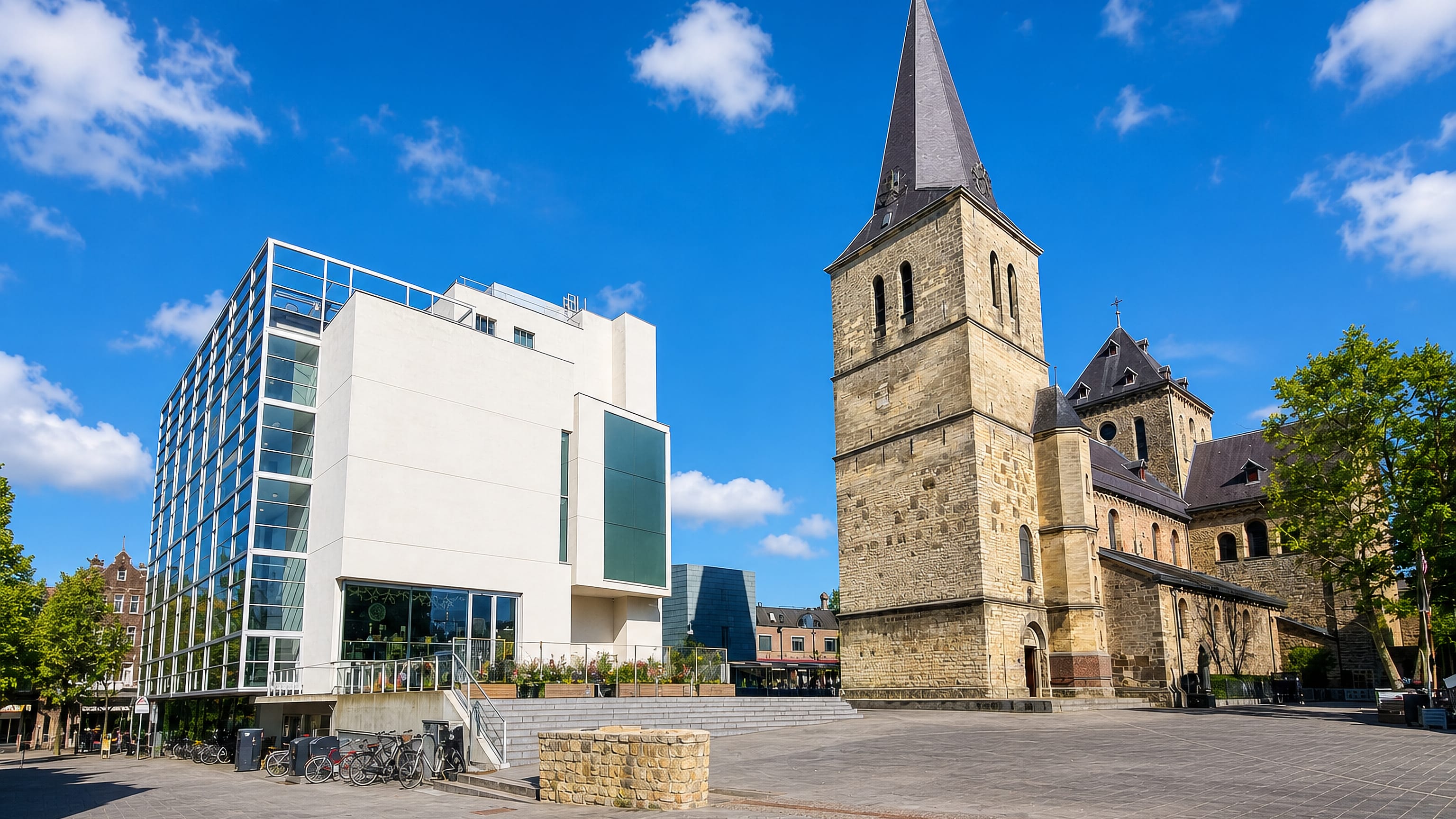
Heerlen is a city of South Limburg, Roman Coriovallum before it was a coal town, whose bathhouse survives as the Thermenmuseum.
Hotel links are affiliate links: booking through them may earn us a commission, at no extra cost to you. It never affects how places are ranked. How this works


Where to stay in Heerlen
Not every neighbourhood fits every trip — here's what each one is good for.

 HeerlenNetherlands
Molenberg
Molenberg is a former mining colony in the south-western part of Heerlen, and the Thermenmuseum and Dutch Mining Museum both sit on its list.Where to stay →HeerlenNetherlandsMeezenbroek
Six protected houses stand along Leenhofstraat in Meezenbroek, a district of Heerlen whose register also lists Sint-Barbarakerk.Where to stay →HeerlenNetherlandsPalemig
The Franciscanessenklooster and a long protected frontage on Sittarderweg are what the register gives Palemig, a district of Heerlen in Limburg.Where to stay →HeerlenNetherlandsHeerlerbaan
Heerlerbaan, a former village now filed under Heerlen in Limburg, keeps the Mijnmonument Schaesberg and three churches on its protected roll.Where to stay →HeerlenNetherlandsBeersdal
Beersdal, a district of Heerlen, is filed with a matched pair: the Sint-Antonius van Paduakerk and the Klooster Sint Antonius van Padua.Where to stay →HeerlenNetherlandsHeerlerheide
Heerlerheide is a village inside the commune of Heerlen, in Limburg, with three churches on its protected list and two guarded houses on Rennemigstraat.Where to stay → HeerlenNetherlands
Vrieheide
Vrieheide is a Heerlen district whose short register turns on the Heilige-Familiekerk and two protected ranges on the Wieënweg in Brunssum.Where to stay →HeerlenNetherlandsNieuw-Lotbroek
Nieuw-Lotbroek is one of Heerlen's districts, and its record runs to two entries: the Christus Koningkerk and Struyver.Where to stay →HeerlenNetherlandsPassart
Passart is a district of Heerlen with four sites on its landmark list, the Pelgrimskerk and the Emmanuel Baptist Church among them.Where to stay →HeerlenNetherlandsMaria-Gewanden
Maria-Gewanden is a district of Heerlen, and its landmark list is headed by Kasteel Hoensbroek, with the Lourdesgrot close behind.Where to stay →HeerlenNetherlandsTerschuren
Terschuren is a Heerlen district filed alongside the Sint-Servatiuskerk and two Roman finds, one at Vaesrade and one near Hellebroek.Where to stay →Hotel links are affiliate links: booking through them may earn us a commission, at no extra cost to you. It never affects how places are ranked. How this works
Find hotels in Heerlen
Direct booking searches for these neighbourhoods.
The Coriovallum centre
The Thermenmuseum keeps the Roman bathhouse of Coriovallum a few streets from the Schelmentoren.Find hotels in The Coriovallum centreGuests tracing the coalfield through the Dutch Mining MuseumThe mining flank
The Dutch Mining Museum and the Mijnmonument Schaesberg carry the coal record away from the Roman centre. Beds are limited here, so book early.Find hotels in The mining flankFamilies pairing Mondo Verde with Kinderstad HeerlenTowards Landgraaf
Mondo Verde stands out at Landgraaf, with Kinderstad Heerlen back on the city side of the drive. Beds are limited here, so book early.Find hotels in Towards LandgraafHotel links are affiliate links: booking through them may earn us a commission, at no extra cost to you. It never affects how places are ranked. How this works
Things to do in Heerlen
Ranked by global recognition; descriptions from Wikidata (CC0).
Museums & Galleries
2- Kasteel Hoensbroek Heritage
- Thermenmuseum
Churches & Religious Sites
8- Sint-Pancratiuskerk Heritage
- Saint Anne Church Heritage
- Huize De Berg Heritage
- Sint-Laurentiuskerk Heritage
- Sint-Franciscus van Assisiekerk Heritage
Show 3 more →
- Sint-Corneliuskerk Heritage
- St. John's Church Heritage
- Sint-Josephkerk Heritage
Castles & Historic Sites
3- Struyver Heritage
- Roman building near Hellebroek Heritage
- Roman villa Thull-Vaesrade Heritage
Parks & Gardens
2- Mondo Verde, Landgraaf
- Kinderstad Heerlen
Landmarks & Notable Places
8- Schelmentoren Heritage
- Huis Op de Linde Heritage
- Gasthuisstraat 2, Heerlen Heritage
- Huis de Luijff Heritage
- Strijthagen Heritage
Show 3 more →
- Sittarderweg 82-88, Heerlen Heritage
- Sittarderweg 106-112, Heerlen Heritage
- Sittarderweg 90-96, Heerlen Heritage
worth knowingacross 5 categories in Heerlen
About Heerlen
Romans bathed here first.
What is Heerlen known for?
Coriovallum stood on this ground with a bathhouse at its heart, and the remains of that building are now the Thermenmuseum, which gives Heerlen an antiquity that few towns in the southeast of the Netherlands can match. Coal came much later. The Dutch Mining Museum and the Mijnmonument Schaesberg hold that second story, while the Schelmentoren, the Sint-Pancratiuskerk and the fortified site of Landsfort Herle cover the centuries in between.
What are the main landmarks in Heerlen?
The Thermenmuseum outranks everything else. Its Roman bathhouse is the reason Heerlen appears in accounts of Coriovallum at all, and after it come the Schelmentoren, Landsfort Herle and the Sint-Pancratiuskerk, the medieval survivals of a city that later gave itself over to coal. Museums split the difference.
The Dutch Mining Museum and the Mijnmonument Schaesberg record the pits, Mondo Verde and Kinderstad Heerlen entertain, and Huize De Berg, Huis de Luijff and the manor ground at Strijthagen supply the older domestic register.
What is the history of Heerlen?
Coriovallum came first. The Roman settlement that stood on this ground had a bathhouse, and its remains are the single most important thing Heerlen owns, sheltered now inside the Thermenmuseum where the plan of the baths can still be read. Rome left, the place stayed.
Landsfort Herle and the Schelmentoren carry the medieval centuries, the fort as a defended site and the tower as the piece of it that is still standing, with the Sint-Pancratiuskerk beside them. Parishes filled the ground between. Sint-Laurentiuskerk, Saint Anne Church, the Sint-Petrus en Pauluskerk, the Heilige Familiekerk, the Sint-Josephkerk and the Nederlands Hervormde Kerk met kosterswoning between them show a municipality serving many congregations, and the Bernardinuskapel adds a chapel to the list.
Coal changed the scale of everything. The pits drew a workforce and the workforce needed housing, churches and schools, so the built-up area grew far past the old core, and when the mines closed they left the Dutch Mining Museum and the Mijnmonument Schaesberg as the record of what had been done underground. Heerlen then joined its neighbours.
The Parkstad Limburg project ties it to Brunssum, Kerkrade, Landgraaf, Onderbanken, Nuth, Simpelveld and Voerendaal, an arrangement that treats the old coalfield as one place rather than eight, and the houses at Huis Op de Linde, Huis de Luijff and Huize De Berg survive from the era before any of that was thought of.
Where is Heerlen?
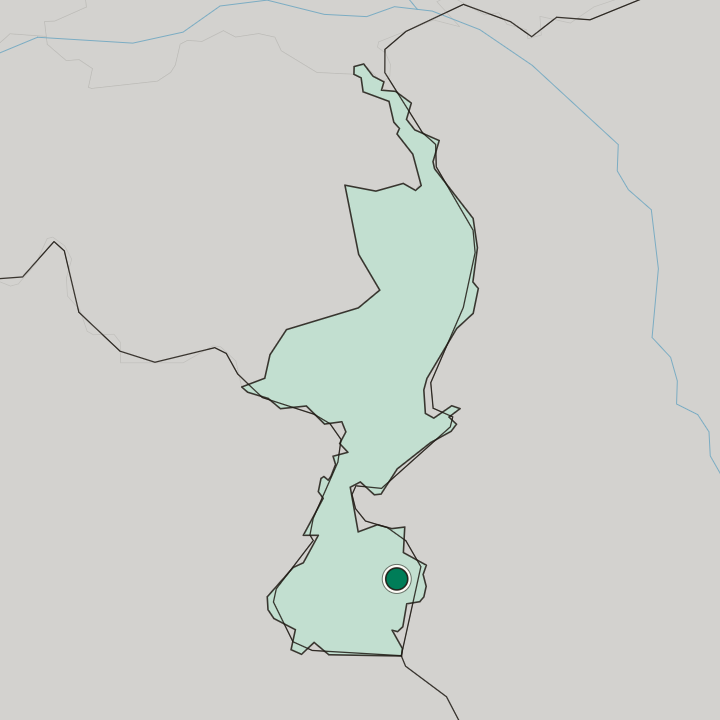
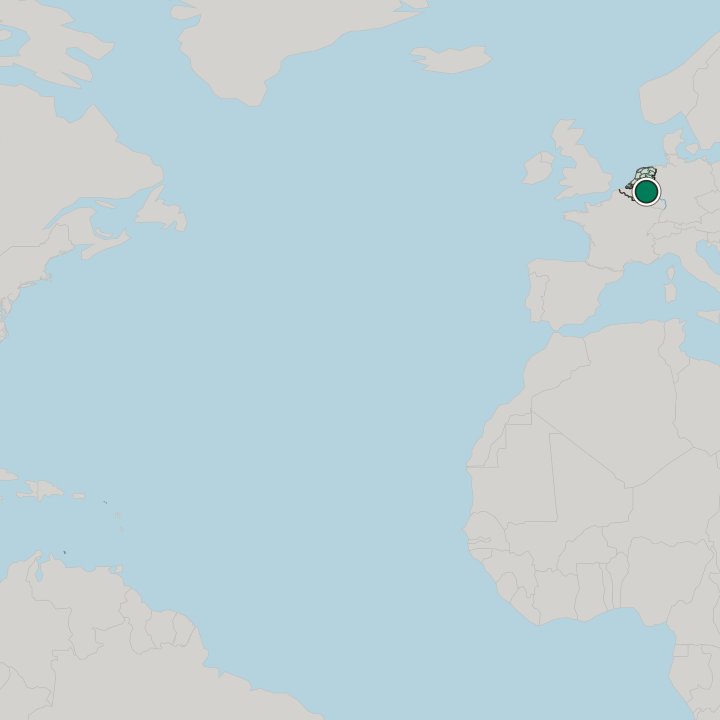
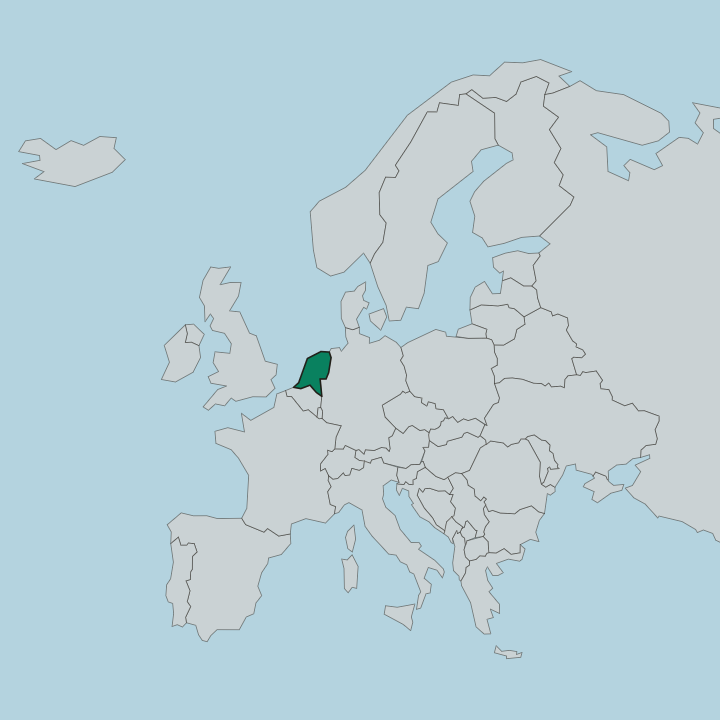
Heerlen occupies some forty-five square kilometres of South Limburg, in the southeast of the Netherlands, close enough to its neighbours that the built-up ground of the old coalfield runs together. Boundaries blur here. Brunssum, Kerkrade, Landgraaf, Onderbanken, Nuth, Simpelveld and Voerendaal are grouped with the city under the name Parkstad Limburg, and Strijthagen and the ground around Mondo Verde at Landgraaf give the outer edge what green it has.
What is the climate of Heerlen?
Four seasons, none of them severe. The southeast of the Netherlands holds a temperate regime, so the cold months in Heerlen run damp rather than hard and the warm ones build gradually instead of arriving in one stroke. Rain is spread thin.
Distance from open water flattens the extremes further, which leaves the gap between a winter morning and a summer one a matter of degree, and makes the weather of any single week less predictable than the shape of the year.
How do you get to Heerlen?
Arrivals come through the Parkstad Limburg cluster, since Heerlen shares its approaches with Brunssum, Kerkrade, Landgraaf, Nuth, Simpelveld and Voerendaal rather than standing alone in open country. Old Heerlen takes up little ground. Thermenmuseum, Schelmentoren and Sint-Pancratiuskerk fall inside one walk of a morning.
Mondo Verde at Landgraaf and the Mijnmonument Schaesberg lie outside that circle, and a car or a local service is the practical way to reach either.
Common questions
What is the best area to stay in Heerlen?
The Coriovallum centre: Travellers whose trip is built around the Thermenmuseum and the Schelmentoren. The mining flank: Guests tracing the coalfield through the Dutch Mining Museum. Towards Landgraaf: Families pairing Mondo Verde with Kinderstad Heerlen.
Good for
More cities in Provincie Limburg
Updated October 2026