Norway · Akershus fylke
Where to Stay in Jevnaker, Akershus fylke
Jevnaker is a mill and museum town in the north-western part of Akershus, in south-eastern Norway.
Hotel links are affiliate links: booking through them may earn us a commission, at no extra cost to you. It never affects how places are ranked. How this works


Where to stay in Jevnaker
The practical side of choosing where to sleep.
Most beds in Jevnaker gather near the centre, where guest rooms and small hotels stand within reach of Jevnaker kirke and the road down to the museum on the river. The centre suits visitors who want the town and the works close at hand. For most stays it is the natural place to settle.
Out by the old mill, rooms cluster near Kistefos-Museet and the Kistefos-Museets skulpturpark, handy for those who want the sculpture walks and the gorge of the river on the doorstep. Those rooms fill in summer. Through the rest of the municipality, farm stays and holiday houses spread among the country parishes around Randsfjord kirke, a quieter base for touring the north-western part of Akershus by car.
Stock thins off the centre. Reserve early in the warm season, when the museum and the long northern daylight draw visitors to this part of south-eastern Norway.
Find hotels in Jevnaker
Direct booking searches for these neighbourhoods.
Jevnaker centre
rooms by Jevnaker kirke and the road to the river millFind hotels in Jevnaker centrethose drawn to the sculpture walks and gorgeKistefos mill side
lodging near Kistefos-Museet and the Kistefos-Museets skulpturparkFind hotels in Kistefos mill sidedrivers touring the north-western part of AkershusRandsfjord parish
farm stays among the parishes around Randsfjord kirke. Lodging is scarce in this area; reserve in advance.Find hotels in Randsfjord parishHotel links are affiliate links: booking through them may earn us a commission, at no extra cost to you. It never affects how places are ranked. How this works
Things to do in Jevnaker
Ranked by global recognition; descriptions from Wikidata (CC0).
Museums & Galleries
1- Kistefos Museum and Sculpture Park
Churches & Religious Sites
2- Jevnaker Church Heritage
- Randsfjord church Heritage
Castles & Historic Sites
3- Kistefos Wood Pulp Mill Heritage
- Moe Heritage
- Onsager Teglverk, Jevnaker Heritage
worth knowingacross 3 categories in Jevnaker
About Jevnaker
What is Jevnaker known for?
Jevnaker is known above all for Kistefos-Museet, set in an old pulp mill on the river in the north-western part of Akershus. The mill made the place. Around the works the Kistefos-Museets skulpturpark spreads its outdoor sculpture along the water, the chief draw of the district, while the heritage churches of Jevnaker kirke and Randsfjord kirke mark the older parish life of this corner of south-eastern Norway.
What are the main landmarks in Jevnaker?
Kistefos-Museet stands at the head of any visit to Jevnaker. The museum fills an old pulp mill on the river, and the Kistefos-Museets skulpturpark spreads outdoor sculpture across the wooded ground and the gorge below, the chief sight of the district. Older ground rings the town.
The heritage churches of Jevnaker kirke and Randsfjord kirke mark the parishes of this part of Akershus, each listed for protection, gathering the farms above the river valley.
What is the history of Jevnaker?
Jevnaker grew as a farming parish on the river in the north-western part of Akershus. The medieval ground of Jevnaker kirke gathered the early settlement, and the church of Randsfjord kirke served the farms spread along the water, both later listed for heritage protection. Wood and water set the living here.
The river drove the mills, and a pulp works rose at Kistefos to turn the timber of the surrounding forests into pulp, drawing labour and trade to the valley. The mill made the modern town. When the works closed, the old pulp buildings at Kistefos were given a second life as Kistefos-Museet, and the Kistefos-Museets skulpturpark spread art across the wooded ground and the gorge of the river.
Jevnaker settled into its role as the seat of its municipality, a quiet river town carrying both the church history of the parish and the industrial story of the mill at the western edge of this part of south-eastern Norway.
Where is Jevnaker?
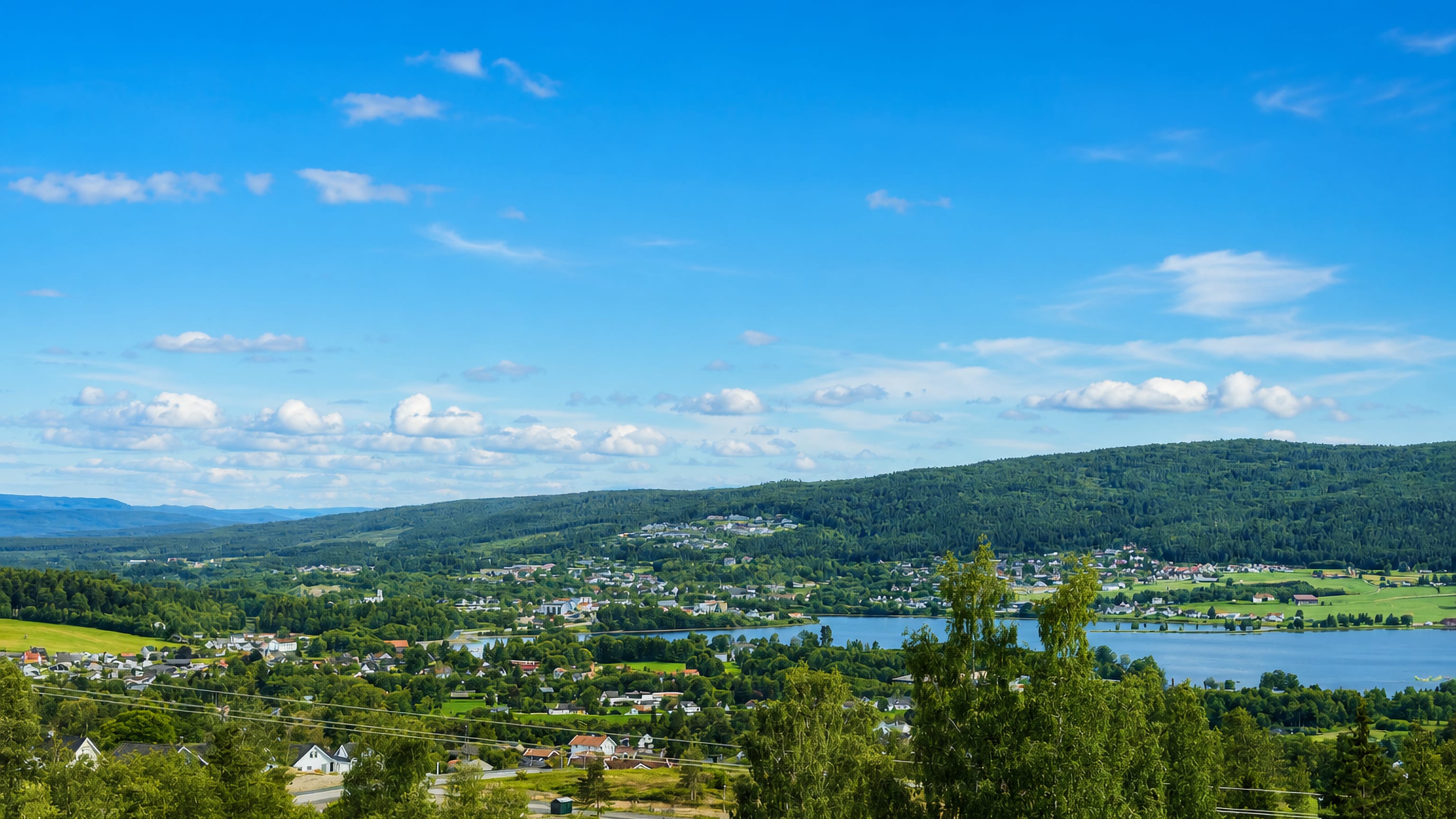
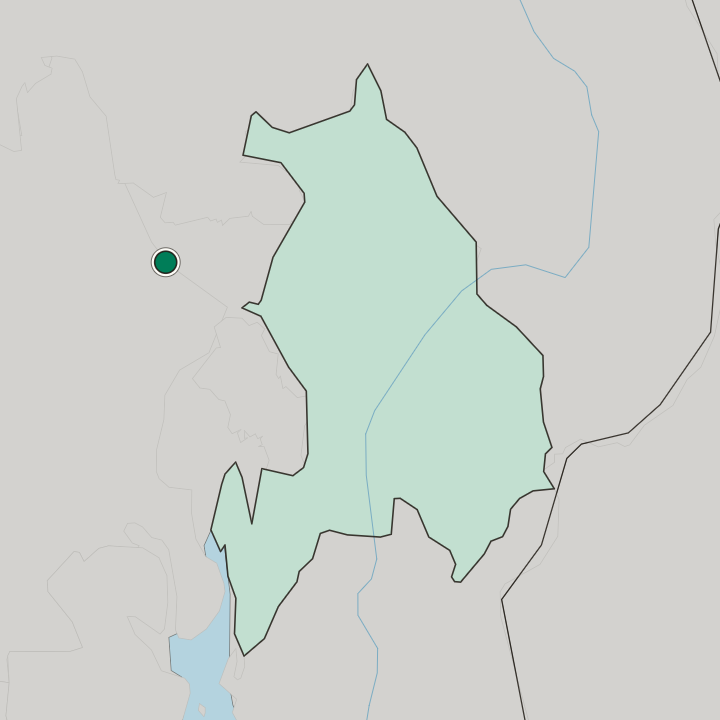
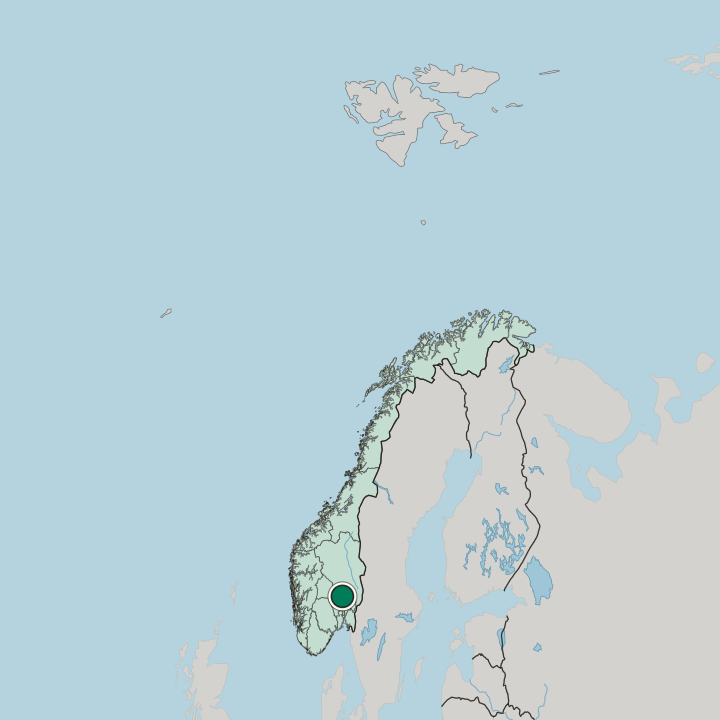
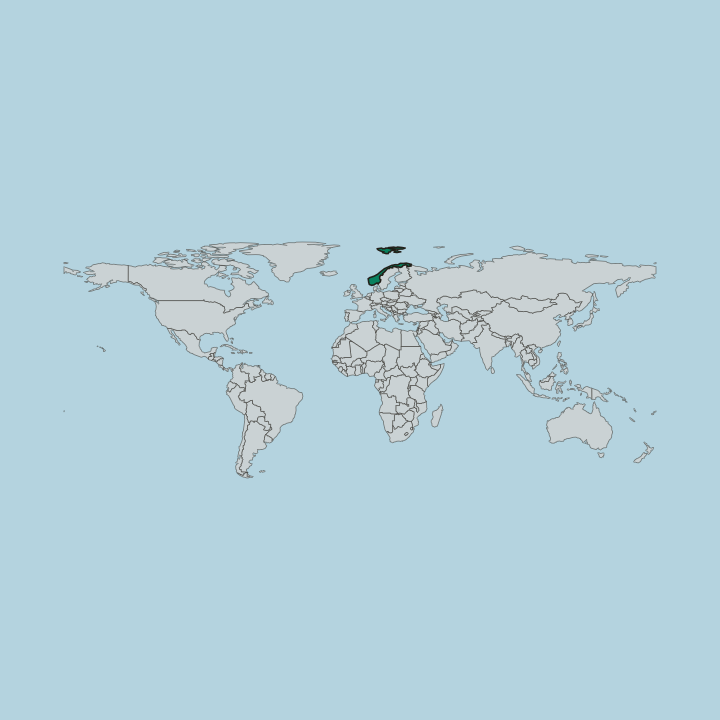
Jevnaker lies in the north-western part of Akershus, in south-eastern Norway, where a river runs down through a wooded valley toward the lowland. Forest closes the slopes on either side. The town gathers near Jevnaker kirke above the water, while the old mill at Kistefos-Museet and the Kistefos-Museets skulpturpark sit in the gorge below, where the river cuts its course.
Farms and forest climb the valley sides. The parish of Randsfjord kirke spreads along the water, the river and its valley shaping this corner of Akershus.
What is the climate of Jevnaker?
Jevnaker has the cold, humid inland climate of the wooded valleys of Akershus. Winters run long and snowy, frost gripping the river gorge below Jevnaker kirke through the dark months. Come summer, the valley turns mild and green.
The long northern daylight warms the valley and the water at Kistefos-Museet, ripening the farms around Randsfjord kirke, while showers and the odd storm cross the forested slopes of this part of south-eastern Norway through the warmer half of the year.
How do you get to Jevnaker?
Jevnaker sits off the rail in the north-western part of Akershus, so most travellers arrive by car. The roads from Oslo and the wider region run up to the river town, leading to Jevnaker kirke and on toward the mill at Kistefos-Museet. The drive is the usual way in.
Buses and coaches reach the town along the same roads, drawing visitors to the Kistefos-Museets skulpturpark, while the airports serving Oslo handle the longer journeys of travellers reaching this part of south-eastern Norway from abroad.
Common questions
What is the best area to stay in Jevnaker?
Jevnaker centre: visitors wanting the town and the works close by. Kistefos mill side: those drawn to the sculpture walks and gorge. Randsfjord parish: drivers touring the north-western part of Akershus.
Good for
More cities in Akershus fylke
Updated October 2026