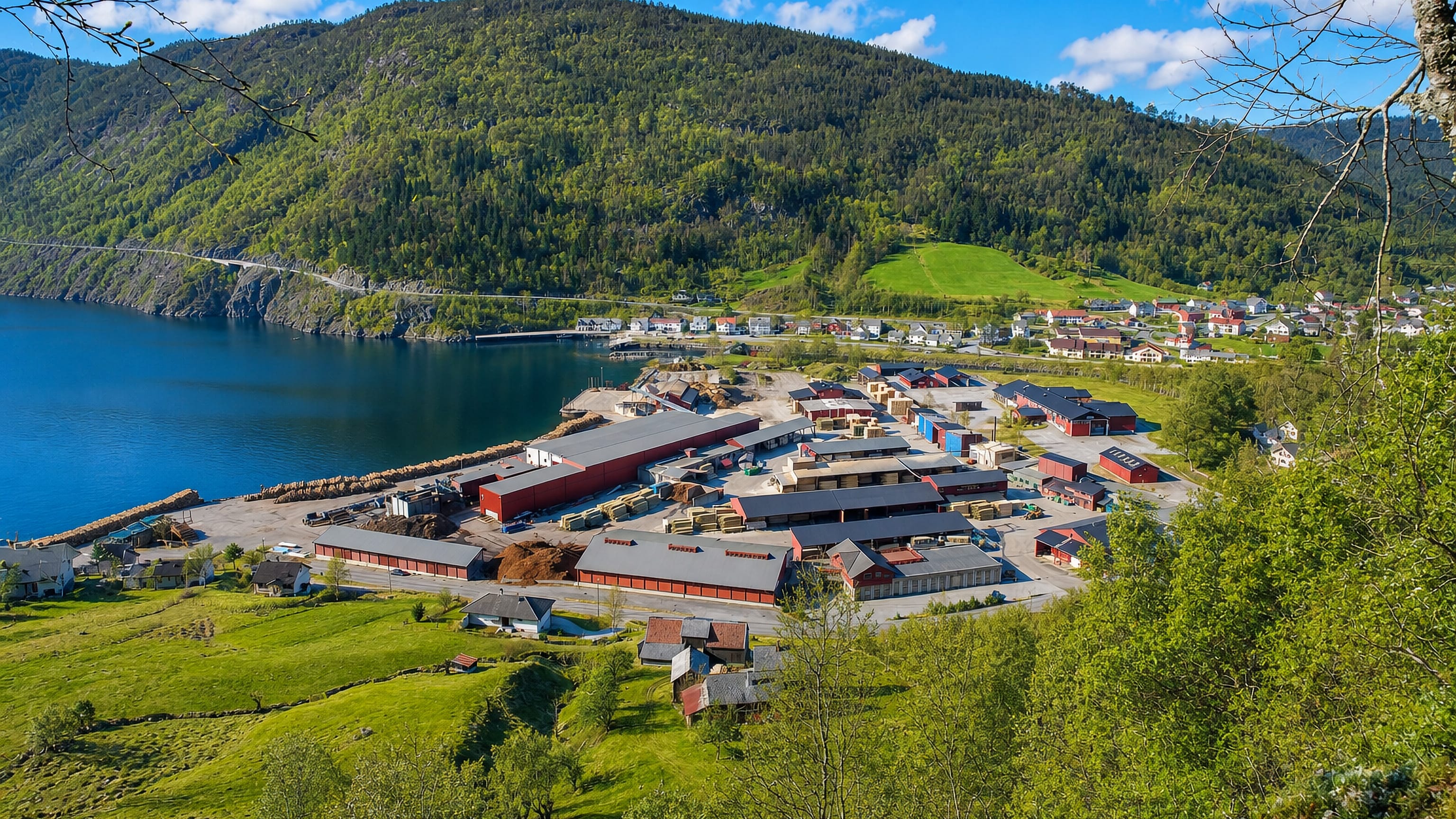
Norway · Vestland
Where to Stay in Granvin, Vestland
Granvin is a small inland community in western Norway, in the southern part of Vestland, now within Voss municipality.
Hotel links are affiliate links: booking through them may earn us a commission, at no extra cost to you. It never affects how places are ranked. How this works


Where to stay in Granvin
The practical side of choosing where to sleep.
Beds in Granvin are scarce, since this is a small rural community rather than a town built for visitors. What lodging there is gathers in and around the old centre at Eide, near the protected Granvin kirke, where the shop and the few rooms sit within easy reach of one another in the heart of the settlement. It is a base for stillness.
Travellers who want an unhurried base in the southern part of Vestland take these village rooms and rented houses, using Granvin as a calm stop away from the busier centres of western Norway. The wider municipality of Voss, into which Granvin now falls, holds the larger choice of hotels and rooms for anyone who needs more than the village can offer. Rooms here are limited at the best of times.
Book ahead through the summer, because Granvin keeps no surplus of lodging beyond what its small population and passing travellers require across the year.
Find hotels in Granvin
Direct booking searches for these neighbourhoods.
Eide centre
rooms in the old Granvin settlement beside the protected Granvin kirke. Rooms are few around here — worth securing early.Find hotels in Eide centretravellers needing a wider choice of hotelsGreater Voss
the larger lodging of Voss municipality, into which Granvin now fallsFind hotels in Greater VossHotel links are affiliate links: booking through them may earn us a commission, at no extra cost to you. It never affects how places are ranked. How this works
About Granvin
The church above the village is its mark.
What is Granvin known for?
Granvin centres on the old settlement of Eide, where the protected Granvin kirke stands as the chief building of a quiet rural community in western Norway. Travellers know it as a small place in the southern part of Vestland, long a municipality of its own and now part of the wider Voss. The draw here is the calm of an inland Vestland community rather than any crowd.
What are the main landmarks in Granvin?
Granvin kirke is the community's landmark. The protected church stands at the old centre of Eide, the chief building of the settlement and the focus of village life in this corner of Vestland. Beyond it, the appeal is the inland Norwegian countryside that surrounds the village rather than any crowd of monuments.
Granvin keeps the plain character of a rural community, its history bound up in the church and the old centre.
What is the history of Granvin?
Granvin grew slowly around its church. For long centuries the community lived as a rural settlement in the southern part of Vestland, its life centred on the old village at Eide where the protected Granvin kirke rose to serve the scattered farms of the district in this inland reach of western Norway. The church gave the place its focus.
Around it the small population worked the land and kept the ordinary rhythms of a Vestland farming community, far from the larger towns of the region, and the parish carried the Granvin name down the generations. The community administered itself as a municipality for much of its history, a small unit set among the hills and valleys of inland Vestland. In time the wider reorganisation of the region drew it into the larger Voss municipality, where it now sits as one of several old communities gathered under a single seat.
Through all of it the village held its character. Granvin remains a quiet rural place, known by its church at Eide and its long standing as a small community of inland Vestland.
Where is Granvin?
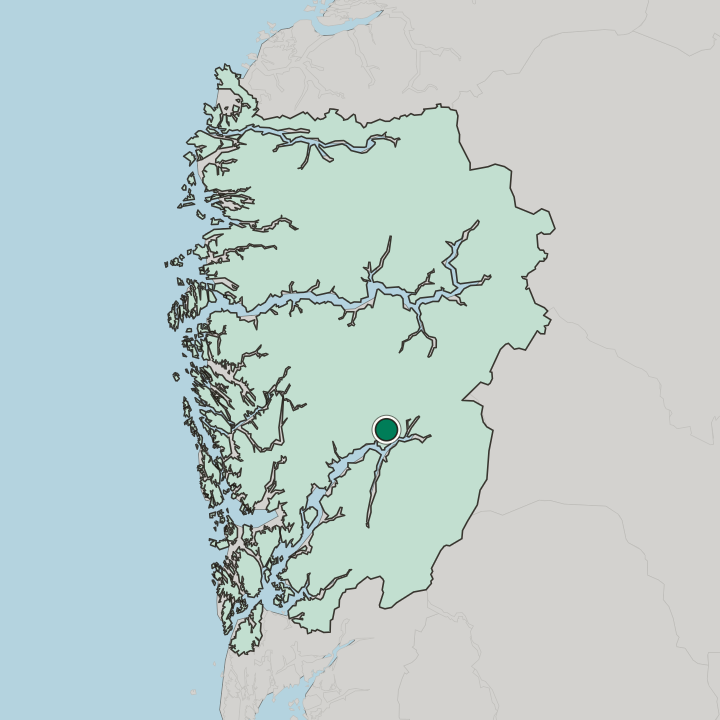
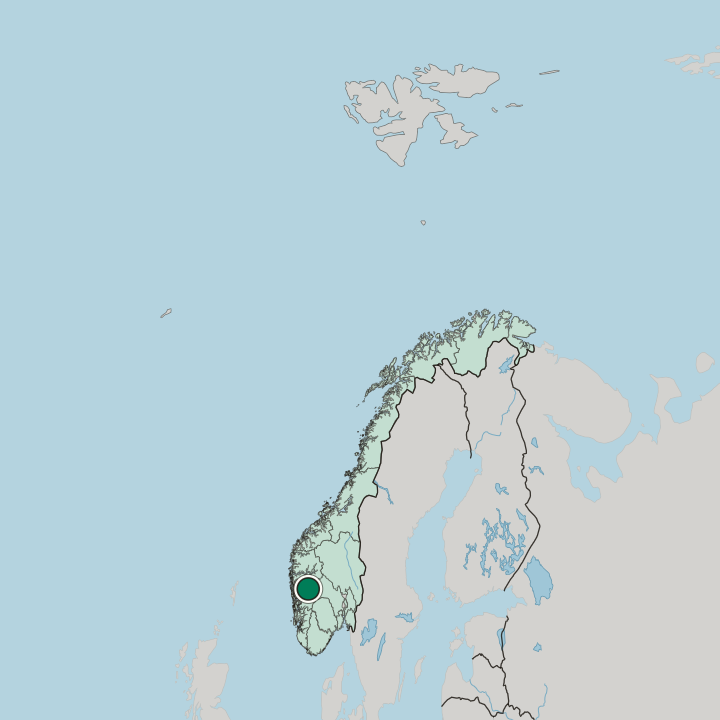
Granvin sits well back from the coast. It sits in the southern part of Vestland, set among the hills and valleys of western Norway away from the larger coastal towns, with the old village of Eide gathered at its centre around the Granvin kirke. The surrounding land is the upland rural country of inland Vestland, worked in farms and broken by slopes.
The settlement falls within the wider bounds of Voss municipality, one community among several in that larger unit.
What is the climate of Granvin?
Granvin has the cool, wet weather of inland western Norway. Lying among the hills of southern Vestland rather than on the open coast, the village sees winters that turn properly cold and snowy in the uplands while the summers stay mild and green across the farmland around Eide. Rain and cloud come often through the year.
The sheltered inland setting tempers the sea winds that reach the outer coast, leaving Granvin with the steadier, damper rhythm of a valley community.
How do you get to Granvin?
You come to Granvin overland. The village lies along the routes that cross the inland country of southern Vestland, linking the old centre at Eide to the wider road network of western Norway. Drivers come in from the larger centres of the region by these roads.
The seat of the surrounding Voss municipality lies within reach, and from there the main rail and road links of Vestland carry on toward Bergen and the coast beyond the hills.
Common questions
What is the best area to stay in Granvin?
Eide centre: a quiet rural base by the church. Greater Voss: travellers needing a wider choice of hotels.
More cities in Vestland
Updated September 2026