Norway · Vestland
Where to Stay in Svortland, Vestland
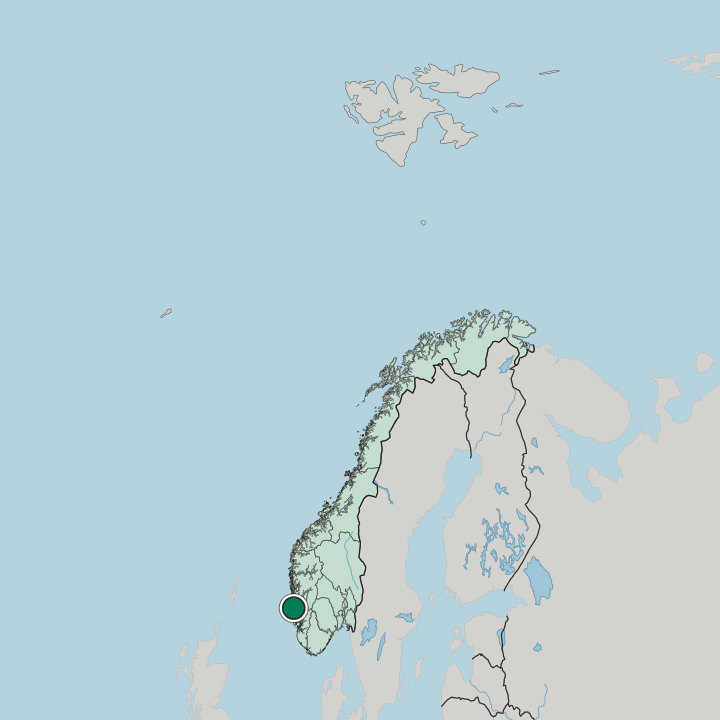
Svortland is the administrative centre of Bømlo Municipality in western Norway, the main village on the island of Bømlo in southern Vestland.
Hotel links are affiliate links: booking through them may earn us a commission, at no extra cost to you. It never affects how places are ranked. How this works


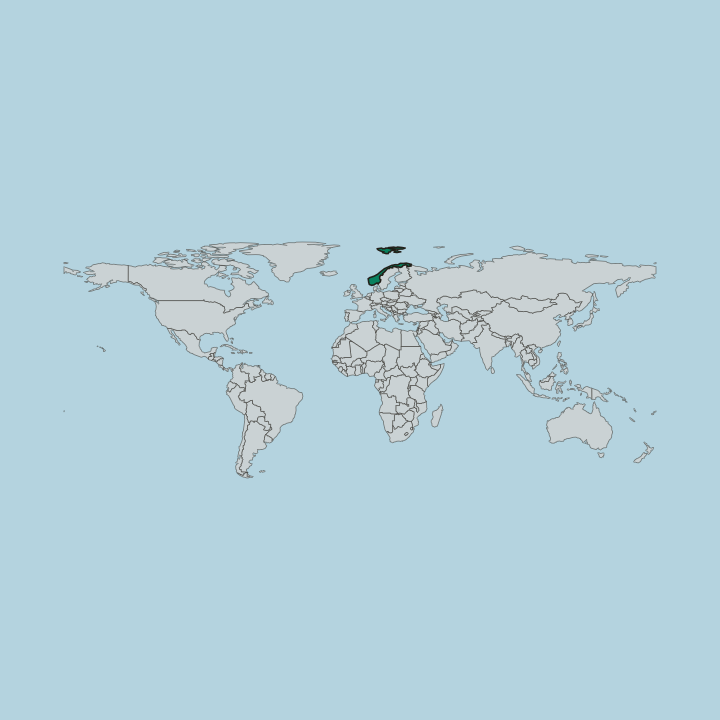
Where to stay in Svortland
The practical side of choosing where to sleep.
Beds are few and centred on the village. The streets of Svortland itself, near Bremnes kirke and the harbour, hold the island's everyday hotels and rooms, and from there the shops and the ferry quays of Bømlo are an easy reach. Stay here if you want the centre and the boats at your door.
Visitors touring the island sometimes look further out, toward the old church settlement at Lykling on the western shore, where the coastal scenery opens but lodging thins to little more than the occasional rented room. Drivers crossing Bømlo on the island roads often keep their base in Svortland, since the routes to the ferries and the outer hamlets all run back through the centre. Rooms are scarce across the whole island.
Book ahead in summer and around the island festivals, when the visitors who come for the coast and the churches fill what little Bømlo Municipality keeps in and around its main village.
Find hotels in Svortland
Direct booking searches for these neighbourhoods.
Svortland village
the island's everyday rooms by Bremnes kirke and the Bømlo ferry quays. Few places to stay nearby — book ahead.Find hotels in Svortland villagedrivers seeking coastal sceneryLykling western shore
occasional rented rooms by the old Lykling kirke on Bømlo's outer coast. Rooms are few around here — worth securing early.Find hotels in Lykling western shoreHotel links are affiliate links: booking through them may earn us a commission, at no extra cost to you. It never affects how places are ranked. How this works
About Svortland
This is the service town for the island.
What is Svortland known for?
Svortland gathers the shops, the schools, and the offices that the scattered farms and coves of Bømlo depend on, and most who pass through come for that everyday business rather than for sights. The old Bremnes kirke above the village is the one fixed landmark, a protected stone church that has served the Bremnes district for centuries. The island shore is never far.
What are the main landmarks in Svortland?
Two old churches mark the island. Bremnes kirke rises on the high ground above Svortland, a protected church of stone that has gathered the Bremnes parish for generations and stands as the village's chief landmark. Out on the western shore, the smaller Lykling kirke serves its own scattered coastal hamlet, a wooden church set among the farms and the sea.
Both are listed for protection. Between them they hold the faith of Bømlo, from the central village to the outer coast.
What is the history of Svortland?
The island came before the village. The farms of Bømlo were settled long before any town gathered, scattered along the coves and headlands where the sea gave a living, and the old Bremnes kirke on its hill records a parish that drew the Bremnes district together centuries before Svortland had a name to speak of. Faith anchored the people.
On the western shore the congregation raised Lykling kirke for the coastal hamlets too far from the central church, so the island's worship reached from the heart of Bømlo out to its furthest farms. Slowly a service centre formed. Where the island roads met near Bremnes, shops and offices clustered at Svortland, and the small place grew into the natural meeting point for a population spread across many islands and skerries.
When the modern commune took shape, that central role made it the obvious seat. Svortland became the administrative centre of Bømlo Municipality, the village through which the whole island now does its business.
Where is Svortland?
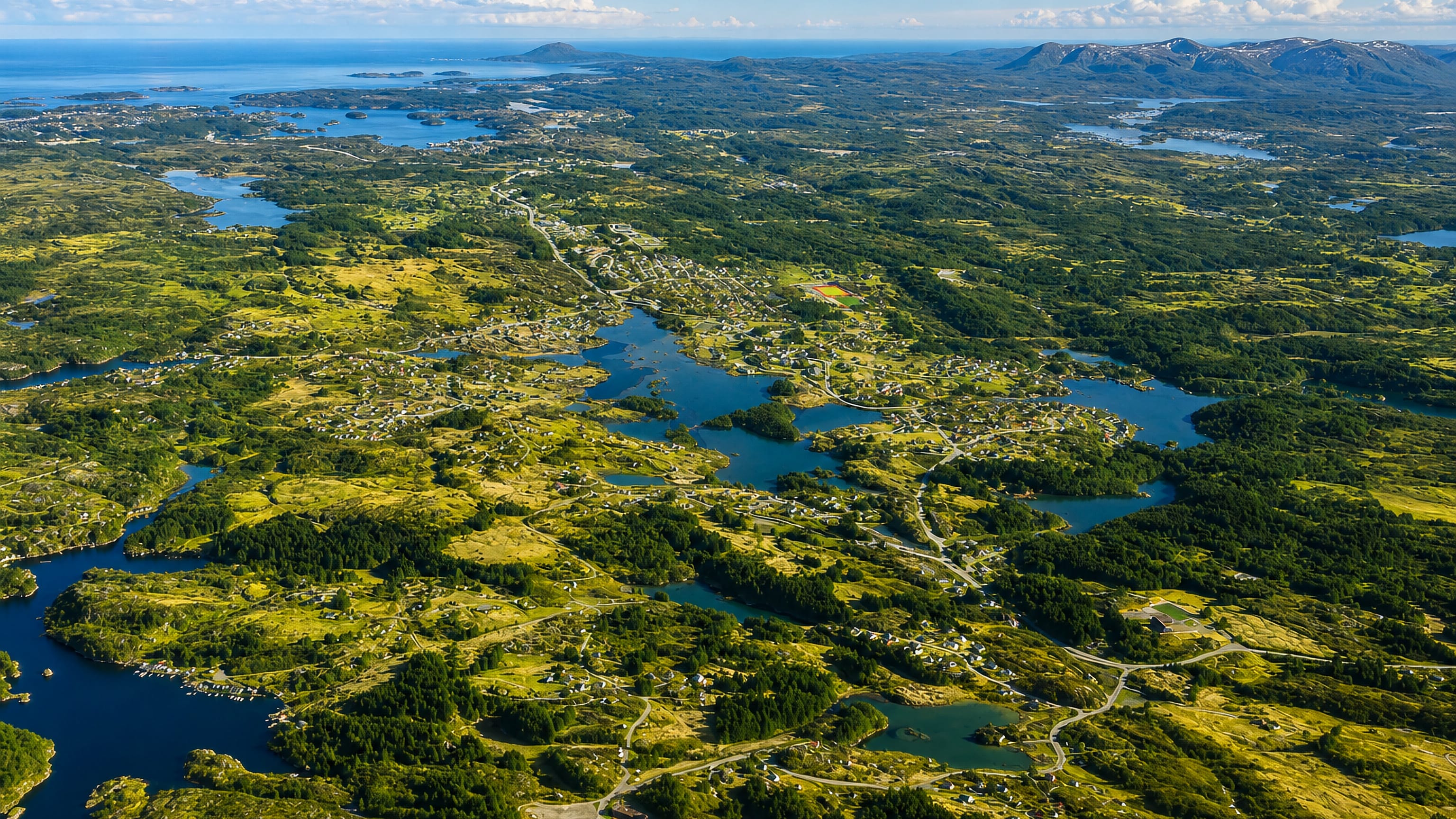
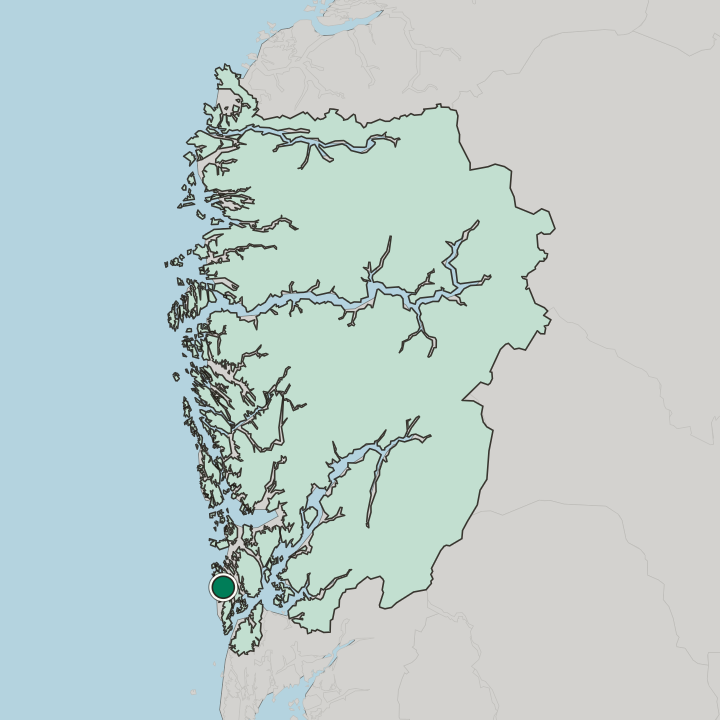
Svortland sits in western Norway. The village lies near the middle of the island of Bømlo, in the south-western part of Vestland, where low hills and farmland run down to a coast broken into countless coves, sounds, and skerries. The open sea lies west.
Bremnes kirke stands on the rise above the centre, while the scattered hamlet of Lykling marks the exposed western shore, and around it all the salt water threads between the islands that make up the Bømlo group.
What is the climate of Svortland?
The sea rules the weather. Open to the ocean on its western flank, Bømlo keeps the soft, wet maritime climate of the outer coast, so winters stay mild and snow rarely settles for long on the low ground around Svortland. Wind comes hard off the water.
Rain falls in every season, and the exposed shore by Lykling feels the full weight of the Atlantic gales that the inner islands partly break before they reach the central village.
How do you get to Svortland?
You reach the island by water and bridge. Svortland sits at the centre of Bømlo, linked to the mainland and the neighbouring islands by ferries and a chain of bridges, so travellers come by car and bus over the crossings rather than by any direct line. The quays handle the boats.
Island roads run out from the village to the ferry points and the outer hamlets such as Lykling, and the whole of Bømlo channels its traffic back through Svortland as the meeting point of its routes.
Common questions
What is the best area to stay in Svortland?
Svortland village: island first-timers near the harbour. Lykling western shore: drivers seeking coastal scenery.
Good for
More cities in Vestland
Updated September 2026