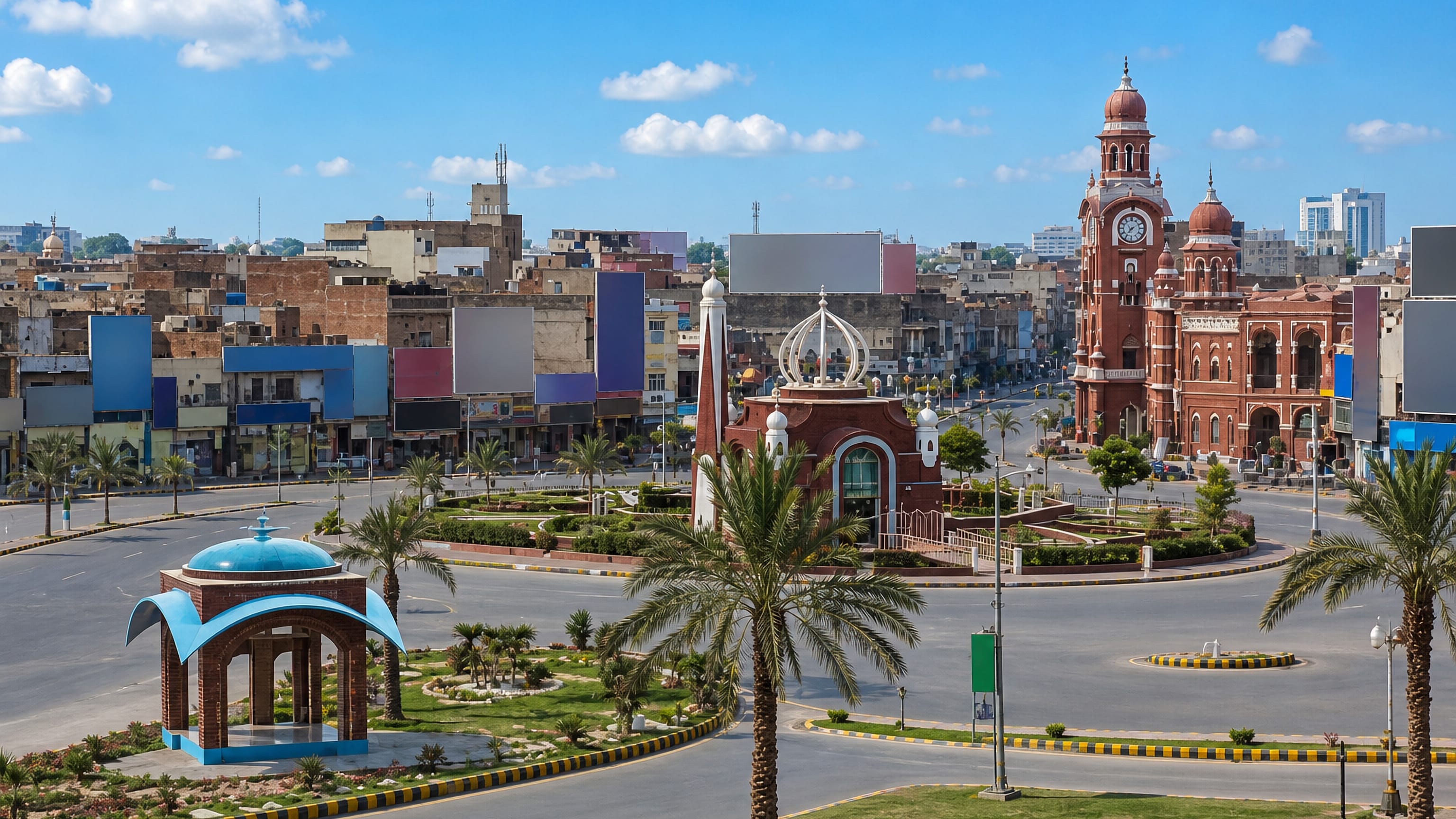
Pakistan · Punjab Province
Where to Stay in Multan, Punjab Province
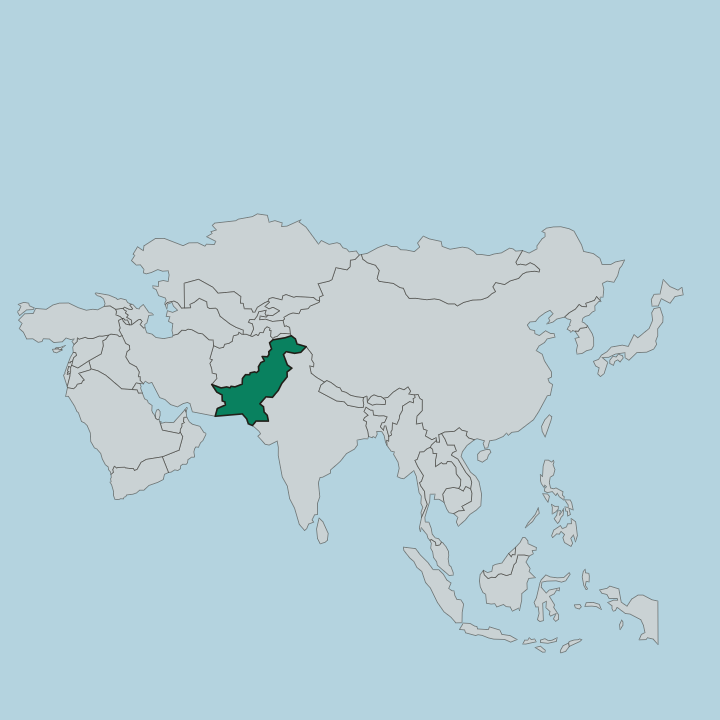
Multan is an ancient city of southern Punjab in Pakistan, the City of Saints, famed for the blue-tiled tombs of its Sufi shrines.
Hotel links are affiliate links: booking through them may earn us a commission, at no extra cost to you. It never affects how places are ranked. How this works


Where to stay in Multan
One neighbourhood here has its own guide — here's what it is best for.

 MultanPakistan
Mumtazabad
Mumtazabad is a quarter of Multan in Punjab, entered on the Pakistani register under that city's name and given no separate detail.Where to stay →Hotel links are affiliate links: booking through them may earn us a commission, at no extra cost to you. It never affects how places are ranked. How this works
Find hotels in Multan
Direct booking searches for these neighbourhoods.
The old walled city
Around the fort in the old townFind hotels in The old walled cityStays wanting gardens and quieter streetsThe new town
Out toward the orchards and broad roadsFind hotels in The new townHotel links are affiliate links: booking through them may earn us a commission, at no extra cost to you. It never affects how places are ranked. How this works
About Multan
Multan is the city of saints and shrines.
What is Multan known for?
On the dusty plain of the southern Punjab near the Chenab, it is one of the oldest cities of the land, and it keeps the great blue-tiled tomb of Shah Rukn-e-Alam on its citadel mound, the shrines of a hundred Sufi saints, the old walled bazaars of tile and craft, and the mango orchards of the plain around. The old citadel rises over the town. The hot plain runs flat beyond.
What are the main landmarks in Multan?
The tomb of Shah Rukn-e-Alam is the glory of Multan. The great blue-tiled mausoleum on the old fort mound, its huge tiled dome rising over the city, stands above the walled town, the emblem of the city, on its height. Another shrine lies close by.
The tomb of Bahauddin Zakariya keeps its saint on the citadel too, while the old fort, the tiled bazaars, and the mango orchards mark the country around Multan.
What is the history of Multan?
Multan is one of the oldest cities of the subcontinent. A city has stood on this mound for thousands of years, holy in ancient days for a great temple of the sun, and it was taken in turn by Persians, Greeks, Arabs, and every conqueror who came down the rivers. Armies came and went.
Alexander was wounded storming its walls, and the city was sacked and rebuilt more times than can be counted, always rising again on its old mound. It became a city of Sufi saints. In the middle ages great Sufi teachers settled here and drew followers from across the Muslim world, and Multan became a holy city of shrines, its saints buried under domes of blue tile.
The tile-work made its fame. Its craftsmen glazed tombs and mosques in deep blue and turquoise, and Multan grew as a place of pilgrimage and craft on the trade roads of the south. The blue domes still hold the skyline.
Multan keeps its shrines and its tiles on the Punjab plain.
Where is Multan?
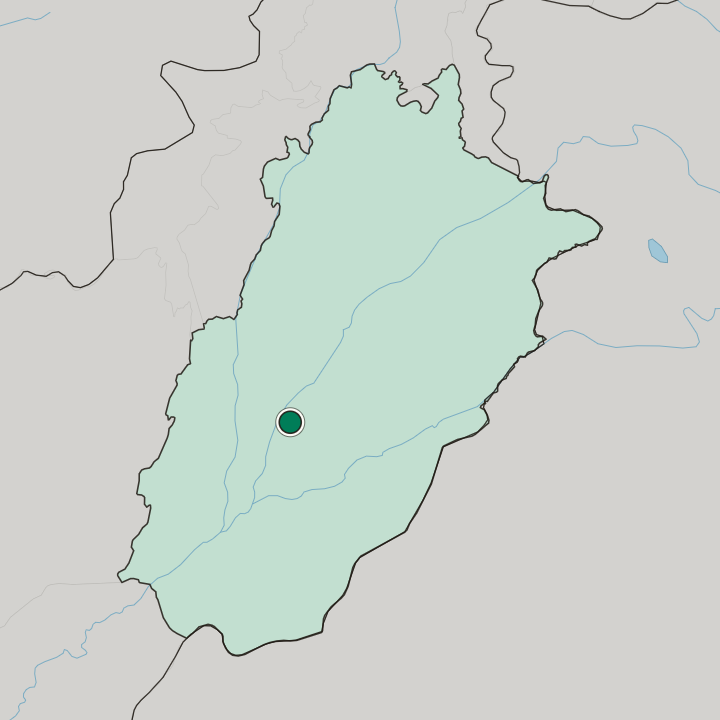
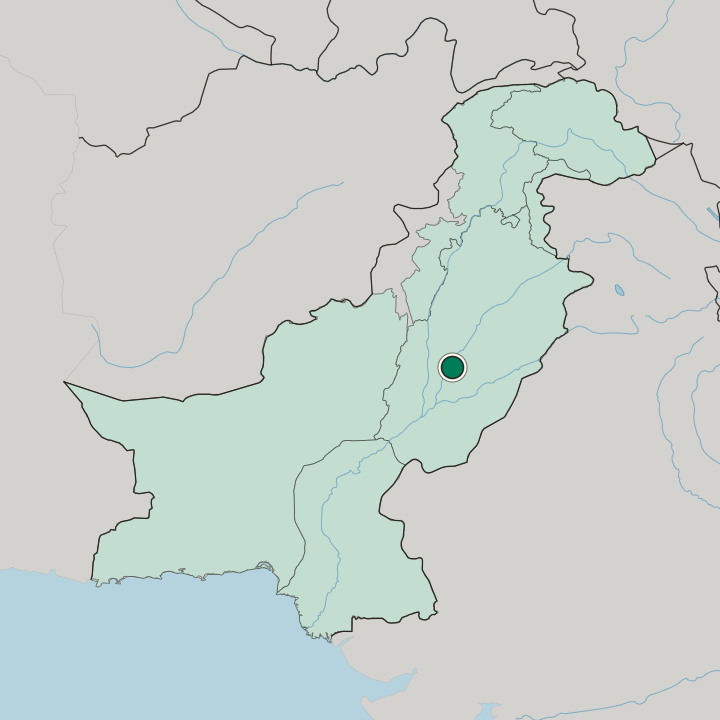
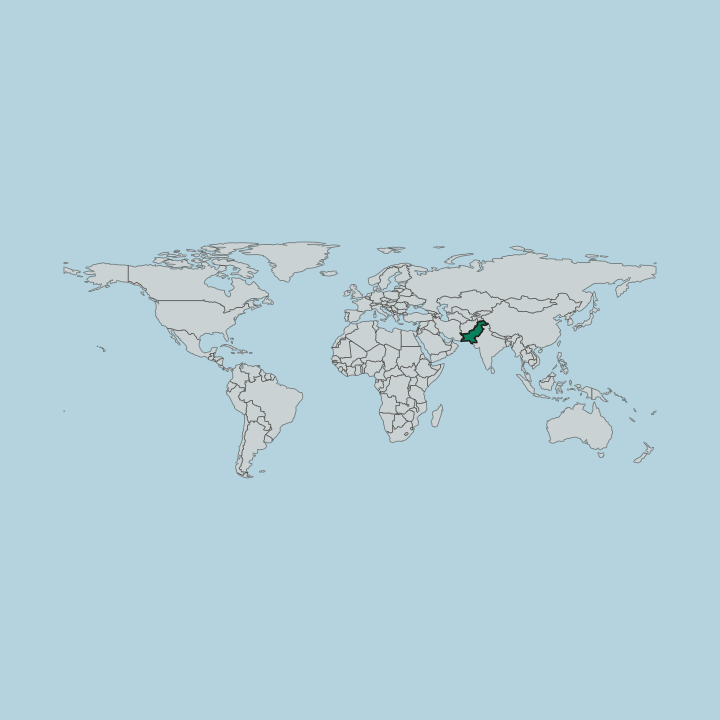
Multan lies in the south of the Punjab in Pakistan, on the flat plain between the Chenab and the Sutlej. The city stands on the dry alluvial plain near the great rivers, at the edge of the desert country of the south, with orchards and cotton fields watered by canals around it. The plain runs flat and dry.
Canals green the cotton fields.
What is the climate of Multan?
Multan has one of the hottest, driest climates in the land. Scorching summers and mild winters cross the plain, with fierce dry heat for much of the year and dust storms in the hot season. The summer heat turns brutal.
Winter brings a short mild spell.
How do you get to Multan?
Multan lies in southern Punjab, on the road and rail between Lahore and the south. Trains and the motorway run to it across the plain from Lahore and Karachi, and roads fan out to the river towns. Lanes wind through the old city.
Lahore lies north up the plain.
Common questions
What is the best area to stay in Multan?
The old walled city: Visitors here for the shrines and bazaars. The new town: Stays wanting gardens and quieter streets.
Good for
More cities in Punjab Province
Updated September 2026