Poland · Lublin Voivodeship
Where to Stay in Zamość, Lublin Voivodeship
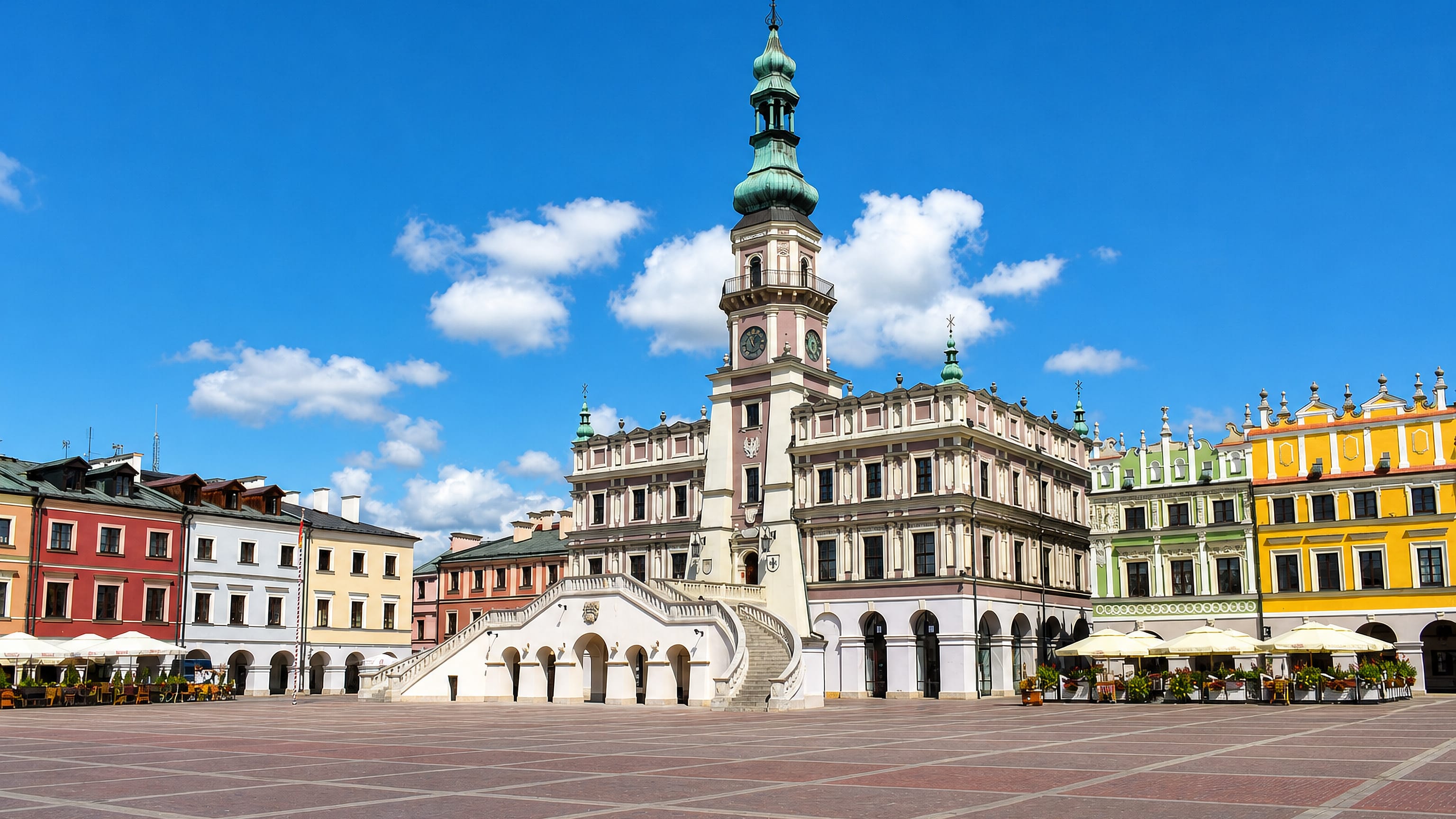
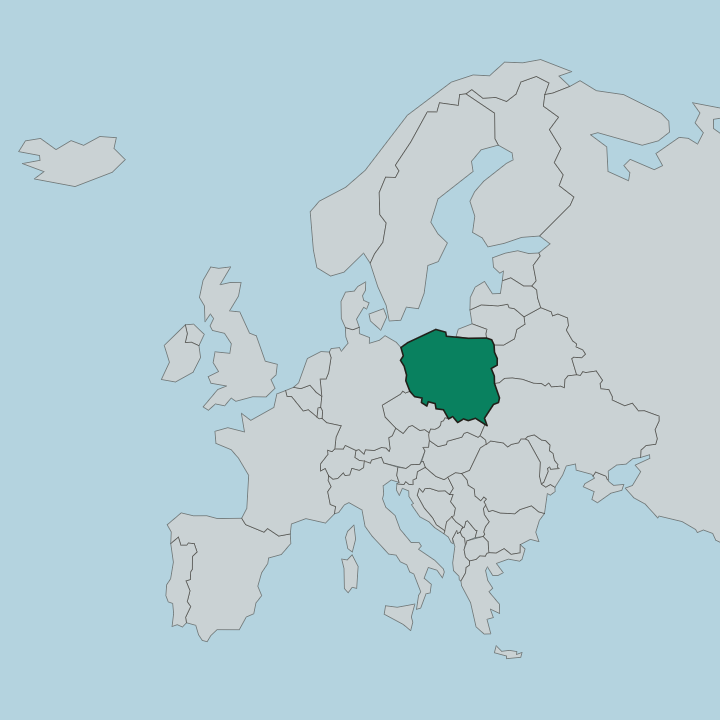
Zamość is a Renaissance town in southeastern Poland, a perfect planned city laid out in the 1580s by the chancellor Jan Zamoyski.
Hotel links are affiliate links: booking through them may earn us a commission, at no extra cost to you. It never affects how places are ranked. How this works


Where to stay in Zamość
Where the beds are, and what that means for the visit.
Zamość splits between the walled old town and the newer streets beyond it. The arcaded streets around the Great Market Square keep the churches, the palace, and the museums within a walk, and staying in the centre suits anyone here for the Renaissance city. The square glows under lamps at night.
Rooms fill the old burgher houses of the centre. Out beyond the ramparts, the newer town spreads into ordinary streets and easier roads. A room outside the walls trades the market square for parking, space, and a quick road toward Lublin.
The modern quarters run plain and calm. If you want the arcades and the churches, stay in the old town; if you want space and the car, take a room outside. Either way, the old city is close at hand.
Find hotels in Zamość
Direct booking searches for these neighbourhoods.
The old town
Around the Great Market Square within a walk of the Zamoyski Palace and the cathedralFind hotels in The old townStays wanting parking outside the Great Market SquareOutside the walls
In the newer town beyond the ramparts, a quick road toward LublinFind hotels in Outside the wallsHotel links are affiliate links: booking through them may earn us a commission, at no extra cost to you. It never affects how places are ranked. How this works
Things to do in Zamość
Ranked by global recognition; descriptions from Wikidata (CC0).
Museums & Galleries
3- Rotunda Zamość Heritage
- Arsenal Museum in Zamość Heritage
- Museum of Zamość
Churches & Religious Sites
6- Cathedral of the Resurrection and St. Thomas the Apostle, Zamość Heritage
- Franciscan Church, Zamość Heritage
- Church of St. Catherine in Zamość Heritage
- Church of St. Nicholas in Zamość Heritage
- D. klasztor klarysek, ob. Państwowa Szkoła Muzyczna (1769–74 r. Heritage
Show 1 more →
- D. kościół św. Anny, ob. sala koncertowa Państwowej Szkoły Muzycznej (ok. 1696 r. Heritage
Castles & Historic Sites
2- Zamoyski Palace Heritage
- Jan Zamoyski Monument in Zamość
Landmarks & Notable Places
5- 11 Zamenhofa Street in Zamość Heritage
- Dom Centralny in Zamość Heritage
- Dom grabarza (2 poł. XIX w.) Heritage
- Dom (łącznik) (XVII/XVIII w. Heritage
- Dom wikariuszy Wikarówka (1 poł. XVII w. Heritage
worth knowingacross 4 categories in Zamość
About Zamość
Zamość is known as an ideal Renaissance city.
What is Zamość known for?
Built whole to one design in the sixteenth century, its arcaded market square and grid of streets survive almost untouched, earning the town the name of the Pearl of the Renaissance. The Zamoyski Palace anchors the old plan. A single vision shaped it all.
What are the main landmarks in Zamość?
The Great Market Square is the heart of Zamość. Ringed by arcaded burgher houses and crowned by the tall town hall, it is the finest Renaissance square in Poland, and the Zamoyski Palace stands close by within the old plan. Churches and forts mark the edges.
The Cathedral of the Resurrection and the Franciscan Church rise among the streets, while the Rotunda Zamość keeps its grim wartime memory.
What is the history of Zamość?
Zamość sprang whole from one man's will. In 1580 the chancellor Jan Zamoyski, one of the greatest lords of Poland, resolved to build a new city on his estates. Wealth and power made it possible.
He brought the Italian architect Bernardo Morando to lay out an ideal Renaissance town, with a great arcaded market square, straight streets, and a ring of mighty fortifications around it all. The town rose as a fortress and a market. Merchants of many nations, Armenians, Greeks, and Jews among them, filled the arcaded houses and traded across the borderlands, and the Zamoyski Palace and the great cathedral crowned the plan.
The walls held off many sieges. In the last war the town became a place of terror, and the Rotunda Zamość, a ring-shaped fort, was turned into a site of execution that is now a memorial. The whole old city was later named a treasure of the world.
Jan Zamoyski's perfect town still stands as he dreamed it.
Where is Zamość?
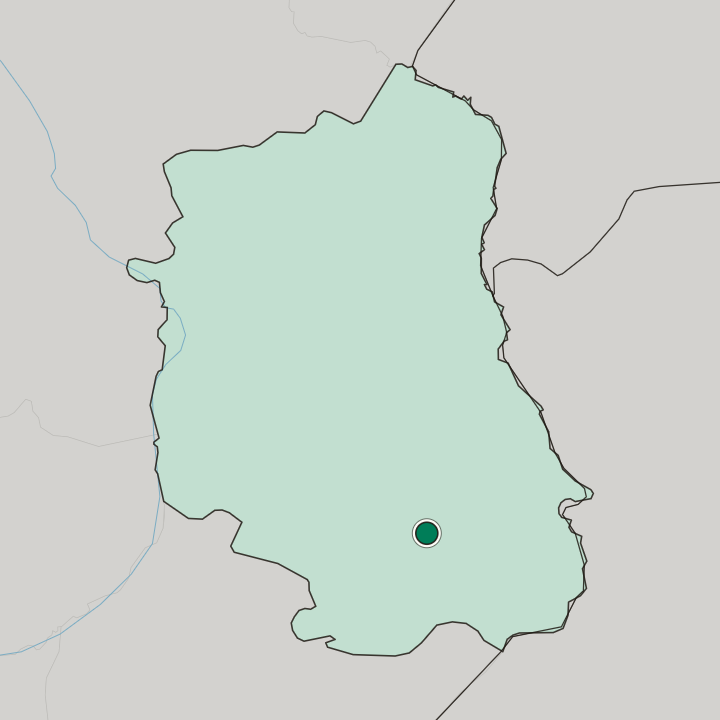
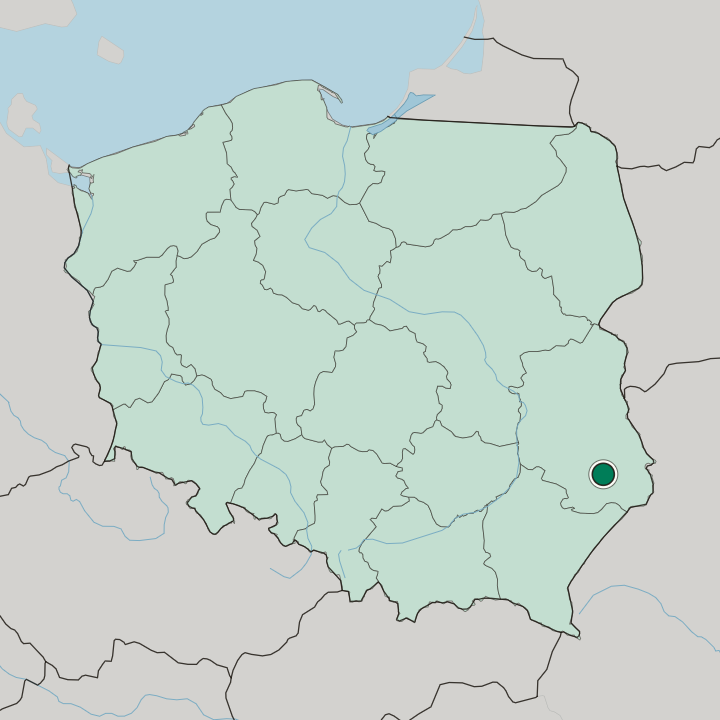
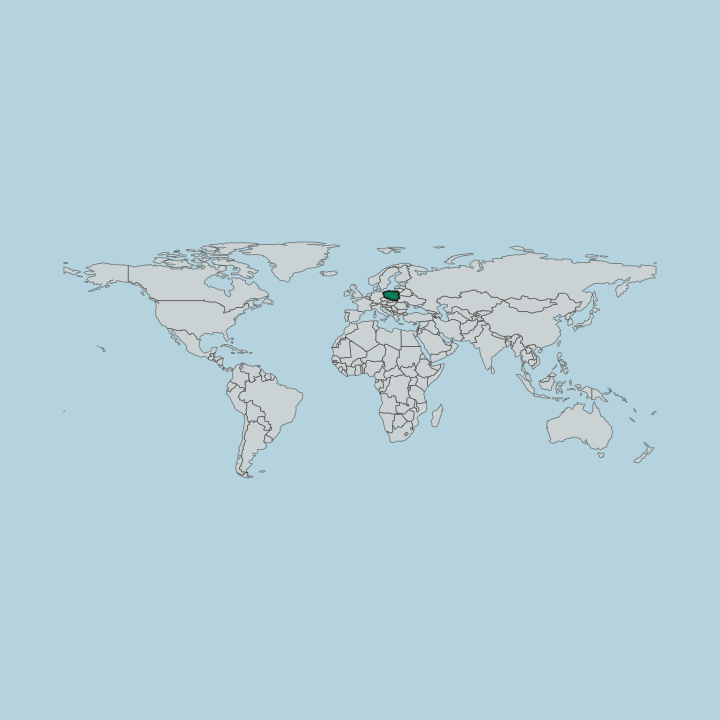
Zamość stands on the plains of the southeast. The town lies in the Lublin region near the old borderlands of Poland, on flat, fertile farm country crossed by slow rivers and ponds. Fields run to the horizon around it.
The open plain frames the walled town.
What is the climate of Zamość?
Zamość has a cool continental climate. Cold, snowy winters settle over the plains, and the warm summers bring sudden storms across the open farmland, with rain spread through the year. Frost grips the fields in the cold months.
The seasons swing clear and wide.
How do you get to Zamość?
Zamość lies in Poland's southeastern corner. Roads run to it from Lublin to the north and toward the Ukrainian border nearby, and buses and trains reach the town across the plains. No motorway comes close.
Most arrive by road from Lublin or Warsaw.
Common questions
What is the best area to stay in Zamość?
The old town: Visitors here for the square, palace, and churches. Outside the walls: Stays wanting parking outside the Great Market Square.
Good for
More cities in Lublin Voivodeship
Updated September 2026