Poland · Pomeranian Voivodeship · Gdańsk
Ujeścisko, Gdańsk — Area Guide & Where to Stay
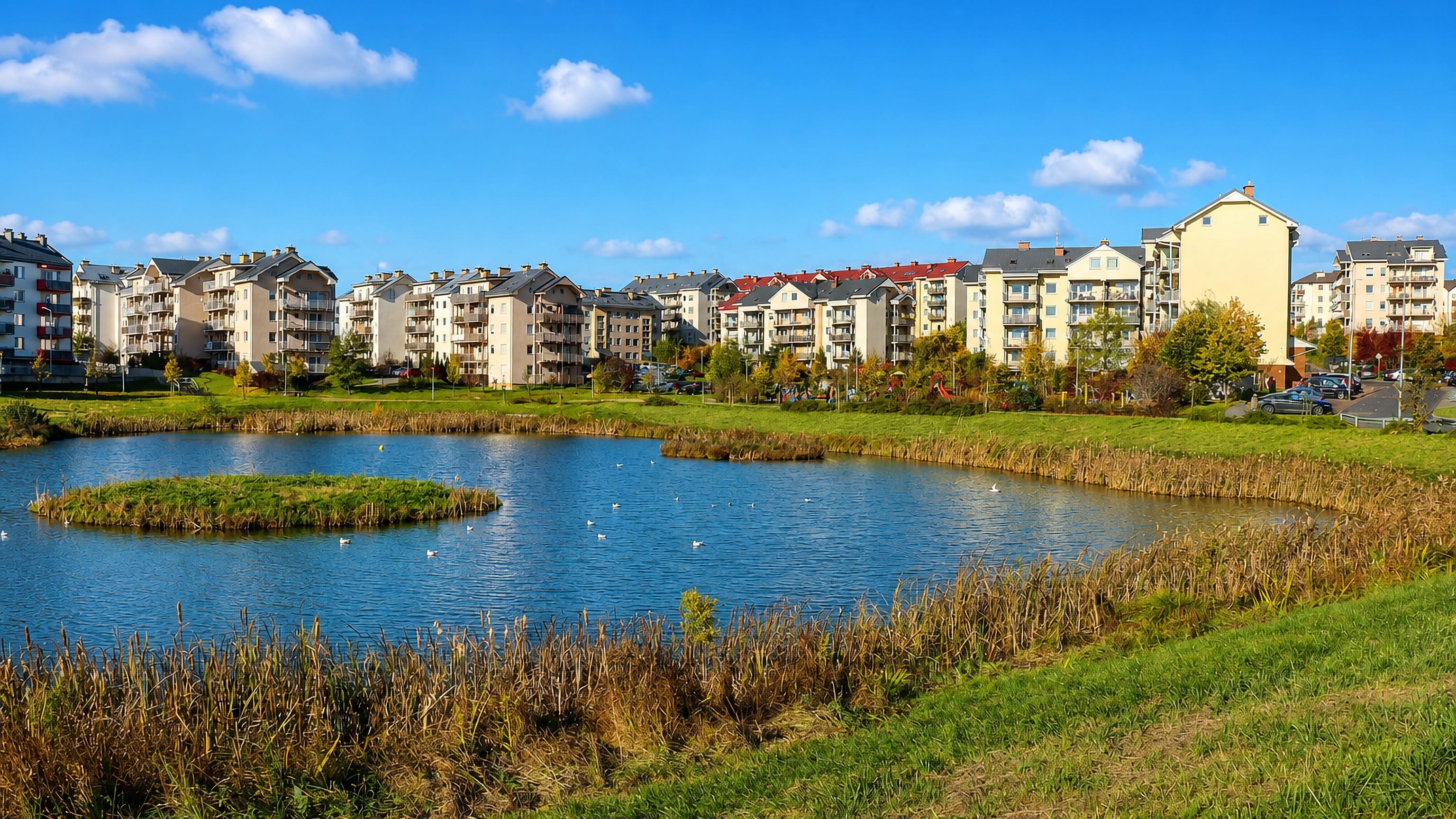
Ujeścisko is a hillside quarter of Gdańsk on the Górny Taras, first recorded as Wonnenberg in 1454, between Wzgórze Armatnie and Góra Ujeścisko.
Hotel links are affiliate links: booking through them may earn us a commission, at no extra cost to you. It never affects how places are ranked. How this works


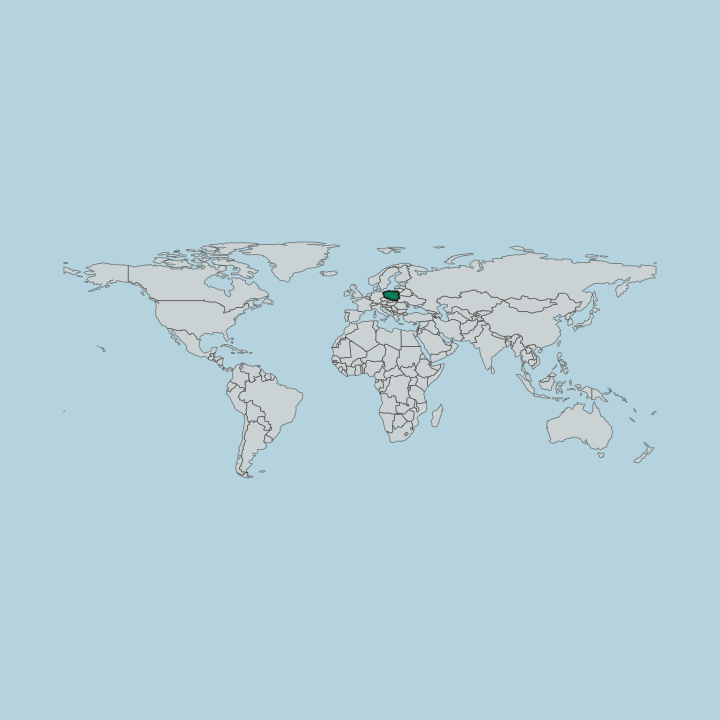
Where to stay in Ujeścisko
Where the beds are, and what that means for the visit.
Ujeścisko was laid out as housing rather than as a base for visitors, and it sits about 4 km south-west of the historic centre of Gdańsk. Aleja Vaclava Havla, opened on 23 December 2011, carries a tram line along its eastern side between the Chełm Witosa and Łostowice Świętokrzyska loops, so the centre is a straightforward ride from any address in the estates. What is on offer is a flat among flats: the SM Ujeścisko blocks on Płocka Street, Osiedle Pogodne on the slope of Góra Ujeścisko, Osiedle Wilanowska on Rogalińska Street.
Take a room here when the reason is on Nieborowska Street. Na Stoku is terraced houses.
Few places to stay in Ujeścisko — most visitors book in Gdańsk nearby.
About Ujeścisko
What are the main landmarks in Ujeścisko?
The Ujeścisko Evangelical Cemetery on Cedrowa Street is entered in Gdańsk's municipal register of monuments. It began as the churchyard cemetery of the village, whose St George's church of 1663 burned in 1945; three inscribed slabs, the traces of its avenues and the foundations of a crypt survive in what is now a small park. Polish soldiers who fell in the 1807 fighting for Gdańsk lie there, among them Antoni Parys, who commanded the 3rd battalion of the 10th Infantry Regiment of the Duchy of Warsaw and died that year.
The other things worth walking to are landform. Wzgórze Armatnie stands beside the SM Szadółki blocks, about 200 m south of where Warszawska Street meets Wieżycka Street, and pre-war surveys put it at 100.1 m; Góra Ujeścisko rises to 83.4 m with a mobile mast on the summit. The cemetery served Ujeścisko until 1961.
What is the history of Ujeścisko?
The oldest name of the place was Mesthin, or Mieścin, which Poles were still using in Napoleonic times; the Teutonic Knights renamed it Wonneberg, and the registers carry Wonnenberg in 1454 and Wonneberg again in 1874 and 1938. In 1454 Ujeścisko was a village and a patrimonial estate of Gdańsk, and in the second half of the sixteenth century it lay in Pomeranian Voivodeship. In 1807 troops of Napoleon skirmished here with the Prussian army.
Gdańsk drew the village inside its administrative boundary in 1973, but the fields stayed until 1981, when the first blocks went up on Łódzka Street. Osiedle Pogodne followed between 1999 and 2009, Osiedle Piastów between 2000 and 2012, and the Błękitna Kaskada buildings on the southern arm of Wawelska Street were handed over between 2009 and 2012. Osiedle Pogodne holds 999 flats.
Where is Ujeścisko?
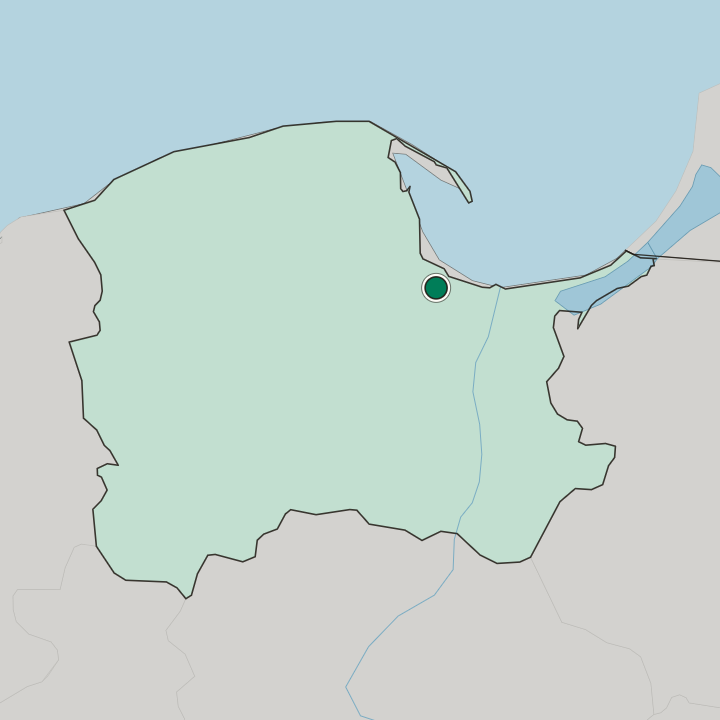
Ujeścisko occupies a shoulder of the Górny Taras, and its ground drops gently from north to south. Pieklisko, its northern tip, runs up against Migowo; Zakoniczyn and Szadółki lie west, Łostowice and Orunia Górna south, Chełm and Wzgórze Mickiewicza east. The quarter straddles two administrative units: part of it falls in Ujeścisko-Łostowice, created in 2010 and covering 7.87 km², and part in Chełm.
One local trap of naming: the blocks on Jeleniogórska and Piotrkowska Streets are often called Szadółki after the cooperative housed there, while Szadółki itself is a separate settlement about 3 km west, in the Jasień district. Kozacza Góra marks the south-west corner.
Common questions
What is the best area to stay in Ujeścisko?
Ujeścisko: a stay with an address in the estates rather than a first look at the city.
More areas in Gdańsk
Updated October 2026