Romania · Hunedoara
Where to Stay in Hunedoara
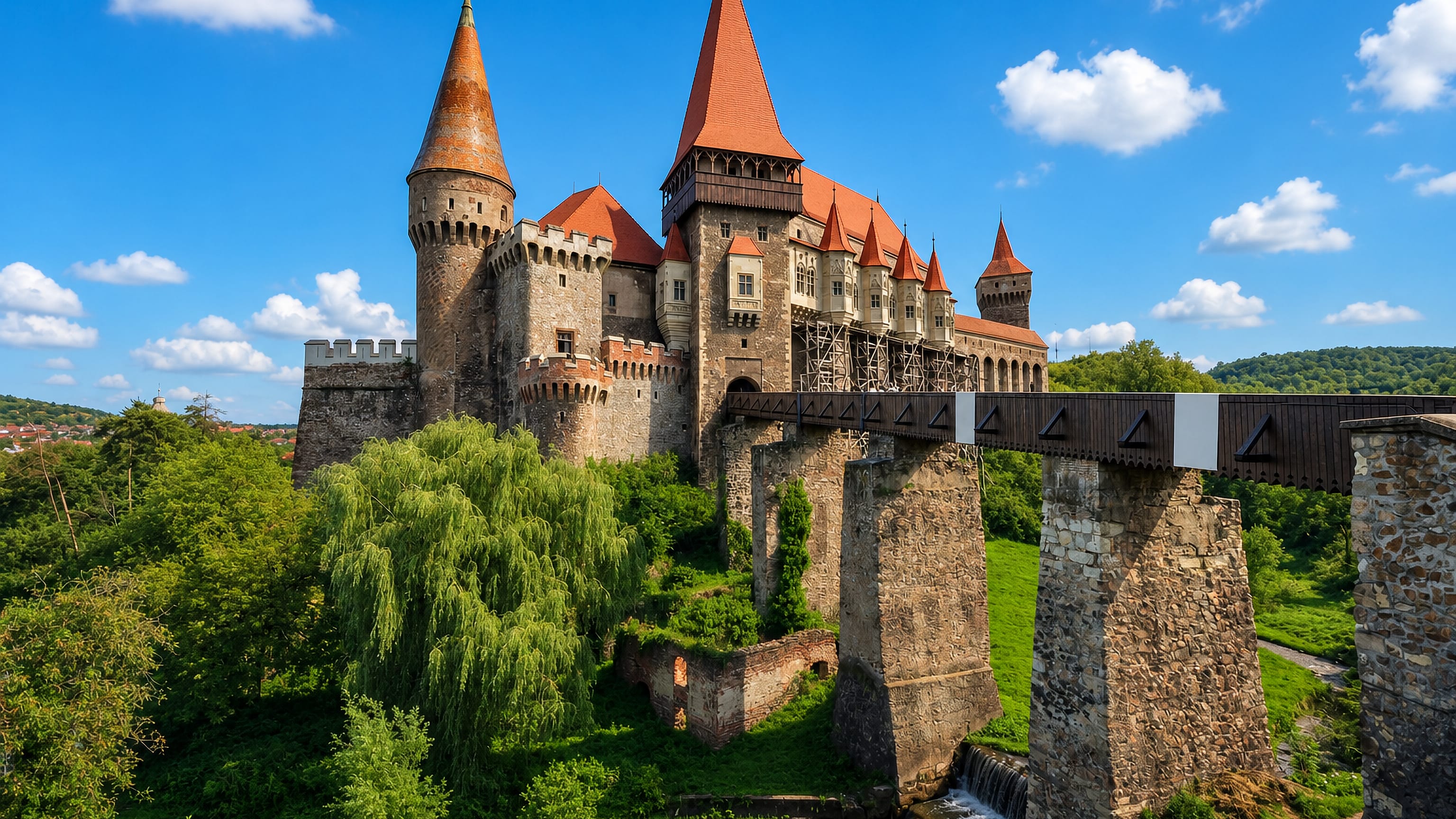
Corvin Castle sets the terms. Hunedoara stands near the Poiana Ruscă Mountains in Transylvania, second in its county after Deva.
Hotel links are affiliate links: booking through them may earn us a commission, at no extra cost to you. It never affects how places are ranked. How this works


Where to stay in Hunedoara
How the choice of base plays out on the ground.
Hunedoara's beds sit in an ordinary town rather than a resort, and most stand within reach of Corvin Castle, the reason nearly everyone comes. The castle decides it. Rooms on the streets near the Saints Constantine and Elena Cathedral put the church and the castle approach in the same short walk, which suits a one-night stop.
Saint Nicholas church and the Reformed church stand in the same central area. Corvin Castle is a half-day on its own, and the town keeps enough churches to fill the rest without moving the car. The centre stays small, so the difference between one street and the next is measured in minutes.
The municipality is larger than the town. Boș, Groș, Hășdat, Peștișu Mare, and Răcăștia lie outside the built-up streets, so a base among them means a car and a road in each morning, in exchange for quiet and space. Quiet costs a drive.
If you want the Poiana Ruscă Mountains within reach after the castle, stay on the town's outer edge rather than the middle. Deva, the county seat, is the other option for anyone touring Hunedoara County. The archaeological point at Dealul Sânpetru belongs to the same municipality.
Find hotels in Hunedoara
Direct booking searches for these neighbourhoods.
Streets by Corvin Castle
The castle approach and the Saints Constantine and Elena Cathedral sit close together, which keeps a short visit to Hunedoara on foot.Find hotels in Streets by Corvin CastleTravellers after Hunedoara's churches and not only its castleCentral blocks near Saint Nicholas church
Saint Nicholas church, the Reformed church, and the Transfiguration Church stand within the same few central streets.Find hotels in Central blocks near Saint Nicholas churchDrivers who prefer village quiet to the middle of HunedoaraVillage edge at Peștișu Mare and Răcăștia
Peștișu Mare, Răcăștia, and the other administered villages trade walking access for space, and the road back in takes minutes.Find hotels in Village edge at Peștișu Mare and RăcăștiaHotel links are affiliate links: booking through them may earn us a commission, at no extra cost to you. It never affects how places are ranked. How this works
Things to do in Hunedoara
Ranked by global recognition; descriptions from Wikidata (CC0).
Churches & Religious Sites
4- Saints Constantine and Elena Cathedral in Hunedoara Heritage
- Saint Nicholas church in Hunedoara Heritage
- Transfiguration Church, Hunedoara Heritage
- Reformed church in Hunedoara Heritage
Castles & Historic Sites
2- Corvin Castle Heritage
- Situl arheologic de la Hunedoara, punct „Dealul Sânpetru” Heritage
worth knowingacross 2 categories in Hunedoara
About Hunedoara
One building carries the name.
What is Hunedoara known for?
Corvin Castle draws the visitors who reach Hunedoara, and the rest of the built record, the Saints Constantine and Elena Cathedral, the Reformed church, and Saint Nicholas church, fills in the town around it. The Transfiguration Church adds another. Beyond the streets the municipality takes in Boș, Groș, Hășdat, Peștișu Mare, and Răcăștia, five villages administered from the town.
What are the main landmarks in Hunedoara?
Corvin Castle stands at the top of any list here. Nothing else in Hunedoara matches it, and the churches that follow are the ordinary fabric of a Transylvanian town rather than monuments in that class. Saints Constantine and Elena Cathedral leads them, with Saint Nicholas church, the Reformed church, and the Transfiguration Church completing the set.
Older ground lies at Dealul Sânpetru. The archaeological site recorded there predates all of it.
What is the history of Hunedoara?
Occupation begins before the charters. The archaeological site at Dealul Sânpetru carries the earlier record, and Hunedoara itself appears in writing in 1265, which makes the charter a marker rather than a beginning. Corvin Castle belongs to the medieval centuries that followed.
It is the building through which the town is known, and the town's later history has been written around it. Transylvania supplies the wider frame, and Hunedoara County the administrative one, so the record sits inside two larger stories at once. Little of the earliest fabric survives in the streets.
Names carry the layers. The villages administered from Hunedoara, Boș, Groș, Hășdat, Peștișu Mare, and Răcăștia, carry second forms alongside the Romanian, Bós, Grós, Alpestes, and Rákosd among them, a plain record of mixed settlement in Transylvania. Churches followed the same pattern.
The Reformed church belongs to the same list as the Saints Constantine and Elena Cathedral, Saint Nicholas church, and the Transfiguration Church, four foundations that together mark more than one tradition in a single small town. Deva holds the county seat, and Hunedoara ranks second in Hunedoara County. The Poiana Ruscă Mountains have framed all of it.
Where is Hunedoara?
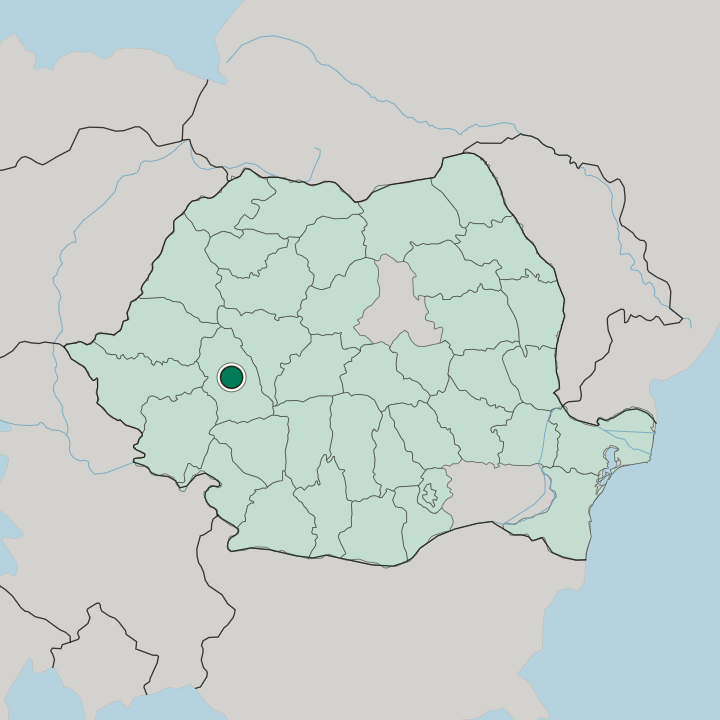
The Poiana Ruscă Mountains stand close to the town, and Hunedoara sits in the ground between those slopes and the rest of Hunedoara County. Its territory is not only streets. Boș, Groș, Hășdat, Peștișu Mare, and Răcăștia extend the municipality into the surrounding countryside, which is why the built-up area accounts for a fraction of what the town administers.
What is the climate of Hunedoara?
The Poiana Ruscă Mountains sit close enough to matter, and mountain ground of that kind usually keeps the nights cooler than the open land of the county. Summers stay warm, winters cold. Winter in this part of Transylvania is a cold season rather than a mild one, and a visit to Corvin Castle in it needs proper clothing.
How do you get to Hunedoara?
Most arrivals come through Hunedoara County, where Deva is the larger centre, and Corvin Castle is the point most visitors head for once they are in the town. The town is small on foot. Boș, Groș, Hășdat, Peștișu Mare, and Răcăștia need a car or a local service, since they sit outside the built-up streets.
Common questions
What is the best area to stay in Hunedoara?
Streets by Corvin Castle: One-night stops built entirely around Corvin Castle. Central blocks near Saint Nicholas church: Travellers after Hunedoara's churches and not only its castle. Village edge at Peștișu Mare and Răcăștia: Drivers who prefer village quiet to the middle of Hunedoara.
Good for
Another city in Hunedoara
Updated October 2026