Senegal
Saint-Louis, Senegal — Towns & Travel Guide
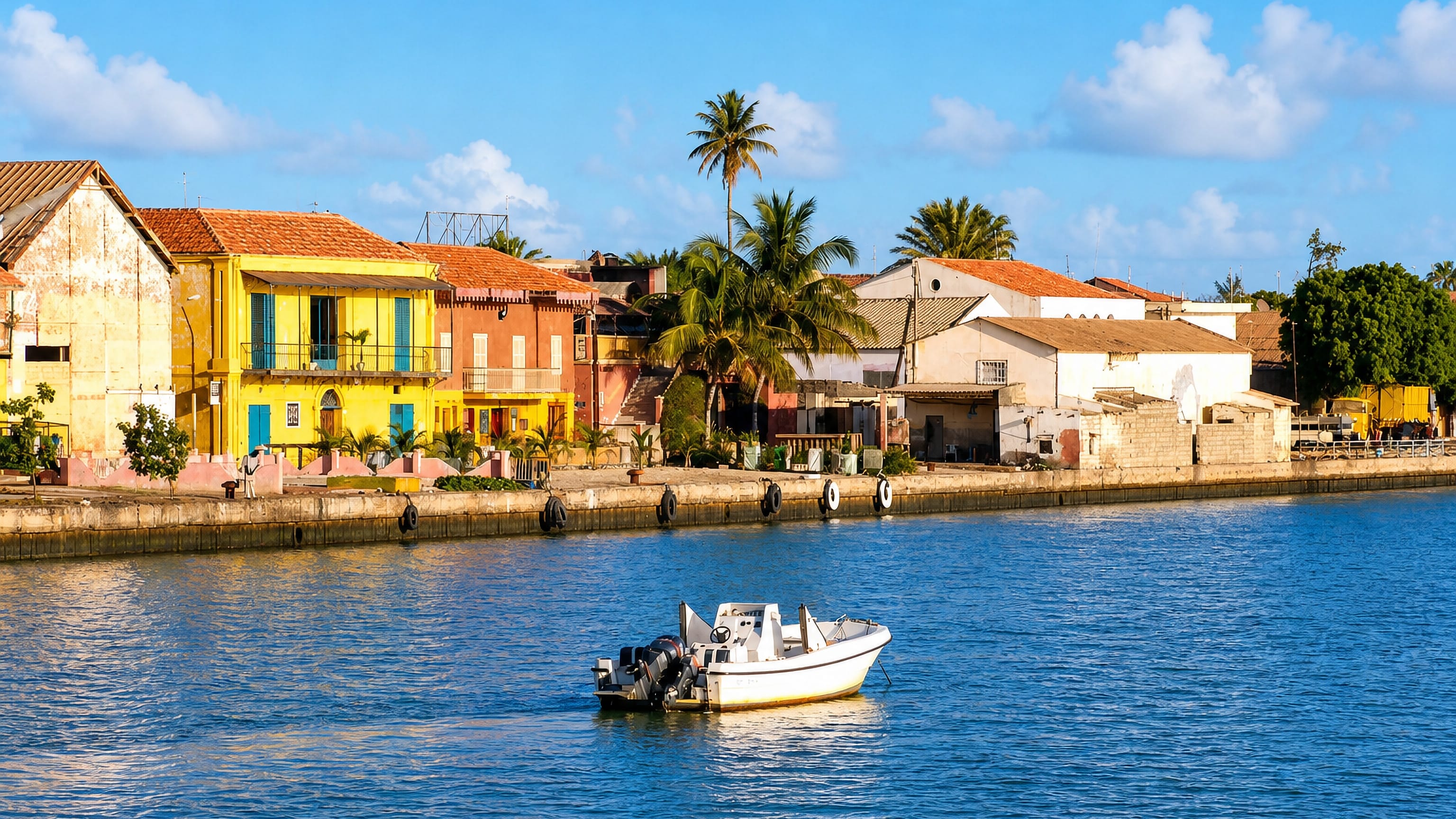
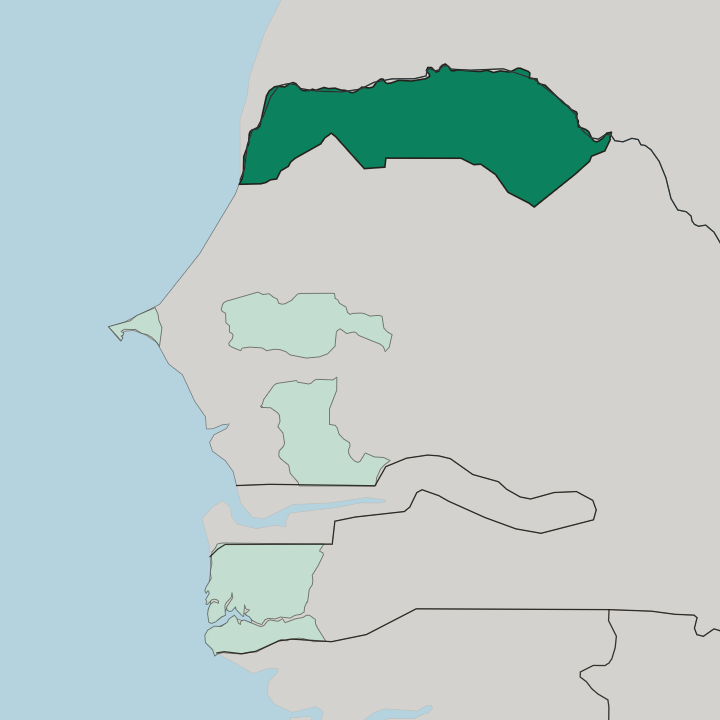
Saint-Louis is a Senegalese region at the mouth of the Senegal River, whose water marks the Mauritanian border and whose shore is the Grande Côte.
Hotel links are affiliate links: booking through them may earn us a commission, at no extra cost to you. It never affects how places are ranked. How this works


Towns & cities in Saint-Louis
One town here has its own guide — it links to where to stay.

 Senegal
Saint-Louis
Saint-Louis is a colonial island city at the mouth of the Senegal River, the old capital of French West Africa.Where to stay →
Hotel links are affiliate links: booking through them may earn us a commission, at no extra cost to you. It never affects how places are ranked. How this works
About Saint-Louis
The Grande Côte edges the region.
What is Saint-Louis known for?
Three things carry its name: the Senegal River, the border that river draws with Mauritania, and the world heritage town of Saint-Louis at the river's mouth. Water decides most things here. The coast gives the region its seaward edge, the river gives it a political one, and Saint-Louis stands at the junction of both.
Where is Saint-Louis?
One channel does double duty. The Senegal River comes down to the sea along this edge of the country and its channel is also an international boundary, so the far bank belongs to Mauritania while the near one belongs to Senegal. Water and boundary are the same thing here.
That arrangement puts the region's principal town at a mouth rather than at a centre. Saint-Louis holds both names. The regional capital and the region carry the same one, which is ordinary in Senegal but worth keeping straight when a route description mentions Saint-Louis without saying which is meant.
Seaward, the Grande Côte takes over. The Grande Côte carries on past the river mouth, and the region's outline follows that coastline as much as it follows the water coming down from inland. The region therefore has two edges of its own, the river on one hand and the sea on the other, and the town of Saint-Louis administers both.
Mauritania is always in view. A border that follows a channel means the neighbouring country is not a distant abstraction here but the opposite bank of the same water.
What is Saint-Louis like?
Heritage status shapes how the region is seen. Saint-Louis is listed as a world heritage site, so the town at the river mouth is treated as something to be conserved rather than simply used, and that colours everything a visitor encounters there. French is the working language.
It runs the offices, the schools, and the signage of the region, as it does elsewhere in Senegal, and a traveller with French will manage the practicalities without difficulty. A border on water is porous in ordinary ways. Mauritania lies across a channel rather than beyond a fence, and a region defined by that arrangement has a life that looks in two directions at once.
The sea adds a third. The Grande Côte gives the region an ocean frontage that the river does not, and coast and channel are separate propositions. Neither water is merely scenery here.
Saint-Louis sits between them. The regional capital and its heritage quarter carry both identities, a river town by the border and a coastal town on the Grande Côte, and the region's character comes from holding the two together.
What is the history of Saint-Louis?
The town gave the region its name. Saint-Louis stands at the mouth of the Senegal River, and the world heritage listing recognises the town's built fabric rather than the region's wider ground. The border came later than the river.
A channel that had always run to the sea was made to serve as the line between Senegal and Mauritania, and the region has been organised around that decision ever since.
What is the climate of Saint-Louis?
The ocean sets the terms on the coast. Air off the Grande Côte reaches the river mouth and keeps the regional capital milder than ground further from the water, which is the practical difference a traveller notices. Inland runs hotter.
Away from the Senegal River and the shore, towards the Mauritanian side, the air is drier and the days harder, and shade rather than shelter is what is wanted.
How do you get to Saint-Louis?
Nearly every route runs through Saint-Louis. The town at the river mouth is the point everything is measured from, and journeys within the region are described as distances from it rather than from anywhere inland. The Mauritanian border is the other door.
Crossing the Senegal River puts a traveller into Mauritania, so the region works as an entry and exit point for overland routes as much as a destination in itself.
Common questions
What is the best area to stay in Saint-Louis?
Saint-Louis: the world heritage quarter at the Senegal River mouth. The Grande Côte: sea nights away from the Saint-Louis river frontage.
More regions in Senegal
Updated September 2026