
Senegal: Regions, Cities & Travel Guide
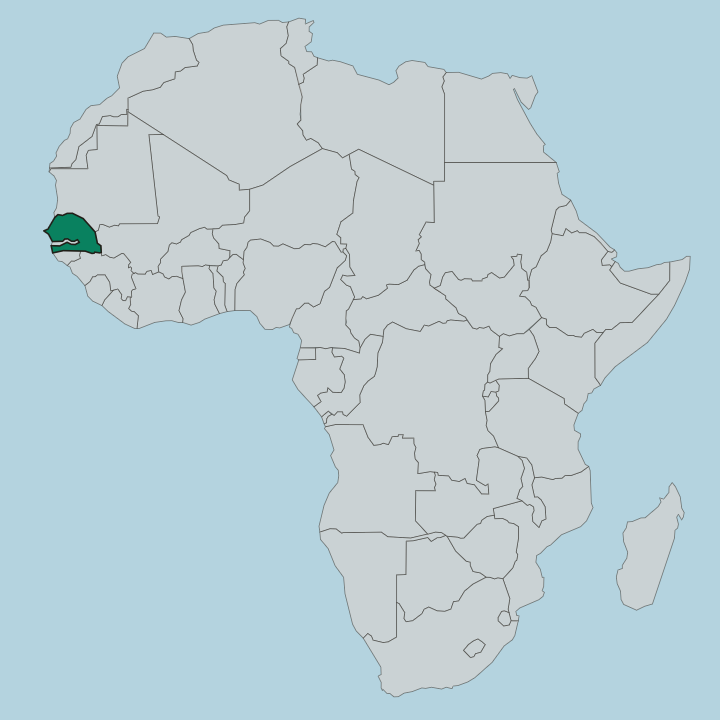
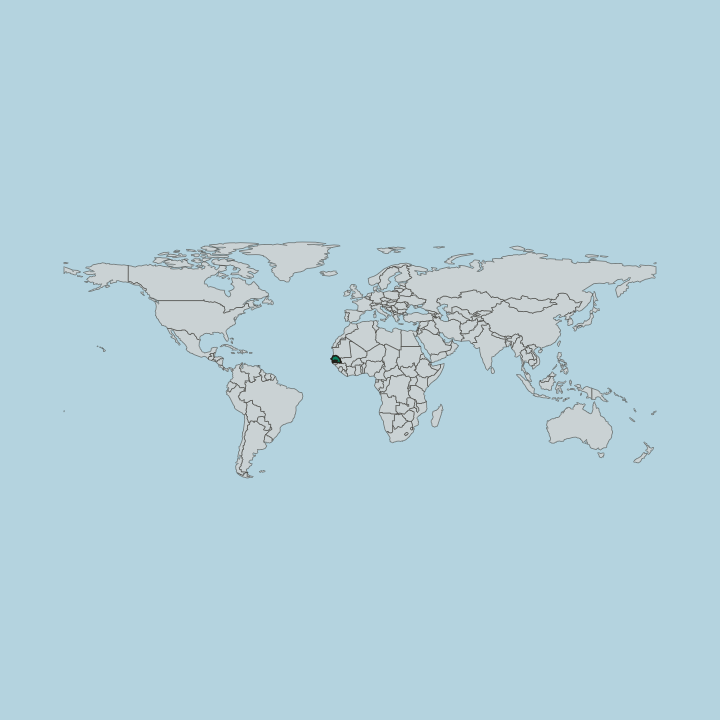
Senegal is the westernmost country of mainland West Africa, wrapped around the Gambia and edged by the Atlantic, with Dakar as its capital.
Hotel links are affiliate links: booking through them may earn us a commission, at no extra cost to you. It never affects how places are ranked. How this works


Top destinations in Senegal
Cities to start from, then drill into areas and hotels.

 Senegal
Dakar
Dakar is the capital and largest city of Senegal, a coastal city that anchors French-speaking West Africa and faces the island of Gorée offshore.Where to stay →
 Senegal
Saint-Louis
Saint-Louis is a colonial island city at the mouth of the Senegal River, the old capital of French West Africa.Where to stay → Senegal
Touba
Touba is the holy city of the Mouride brotherhood in central Senegal, built around one of the great mosques of Africa.Where to stay →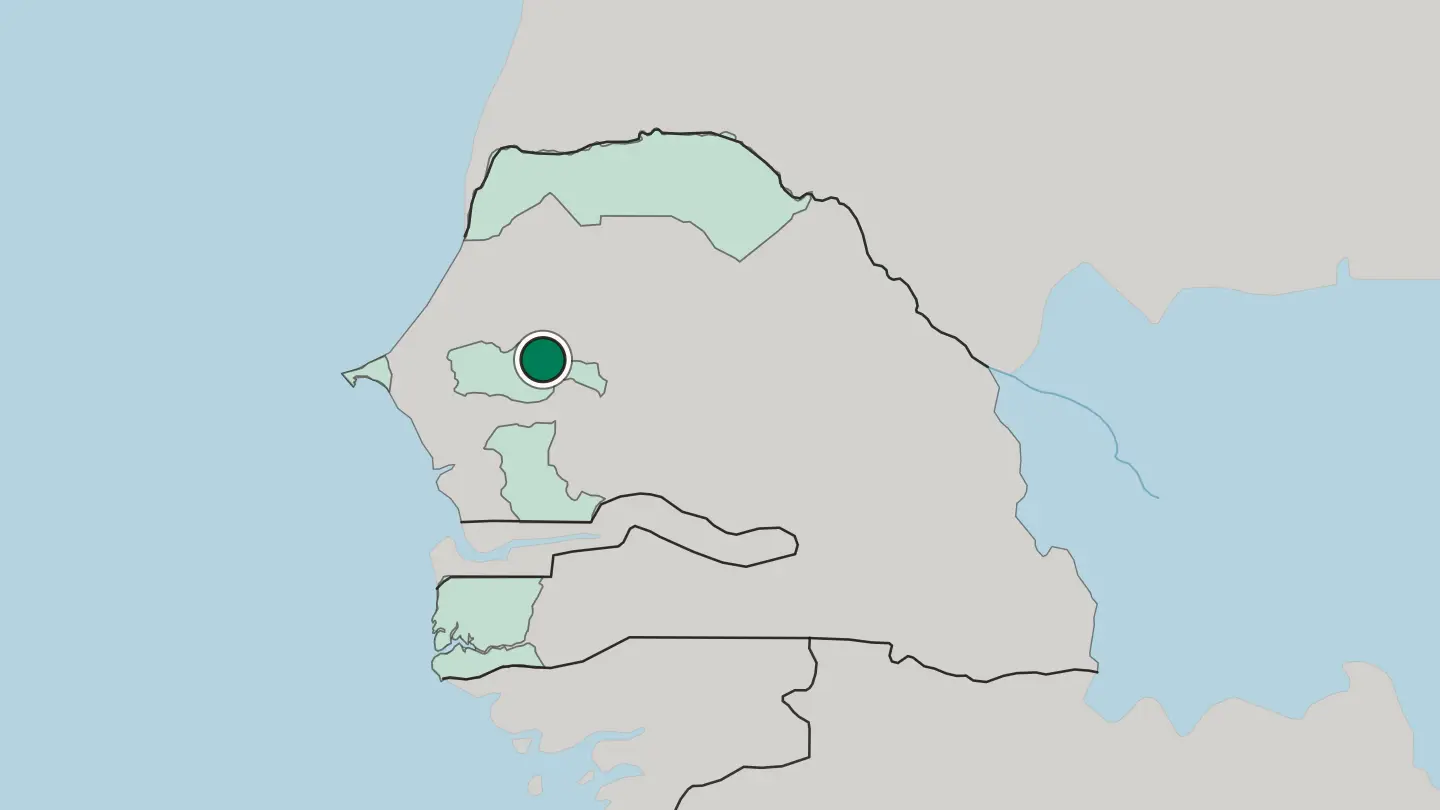
 Senegal
Ziguinchor
Ziguinchor is a city of the Casamance in southern Senegal on the Casamance, an old colonial town in Diola country amid mangroves and rice fields.Where to stay →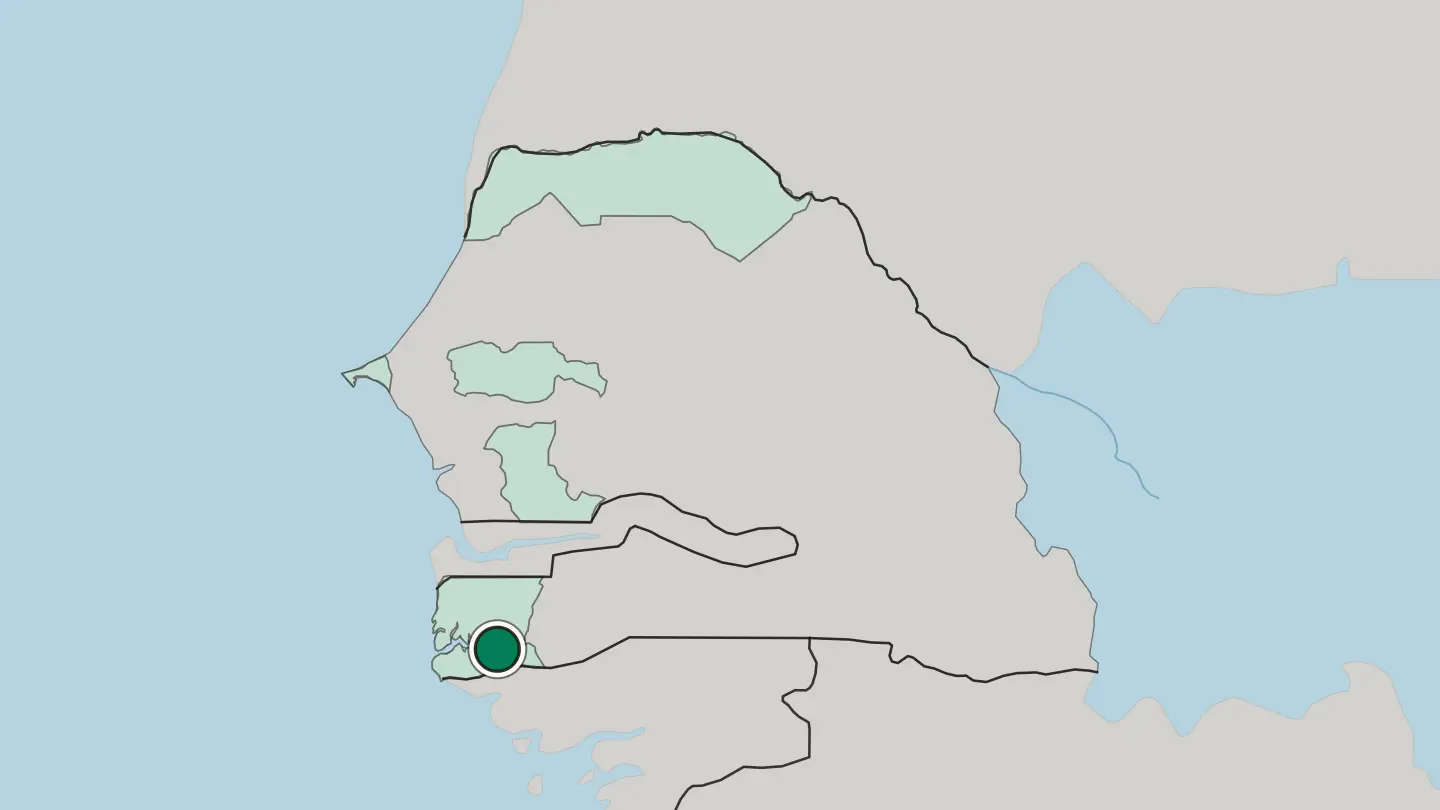 Senegal
Kaolack
Kaolack is a city of central Senegal on the Saloum, an old trading town of the peanut and salt country, and a great center of Sufi Islam in west Africa.Where to stay →
Hotel links are affiliate links: booking through them may earn us a commission, at no extra cost to you. It never affects how places are ranked. How this works
Regions of Senegal
Senegal
Dakar
Dakar is the coastal region of Senegal built around its capital city, the compact western corner where the country meets French-speaking West Africa.Towns & cities →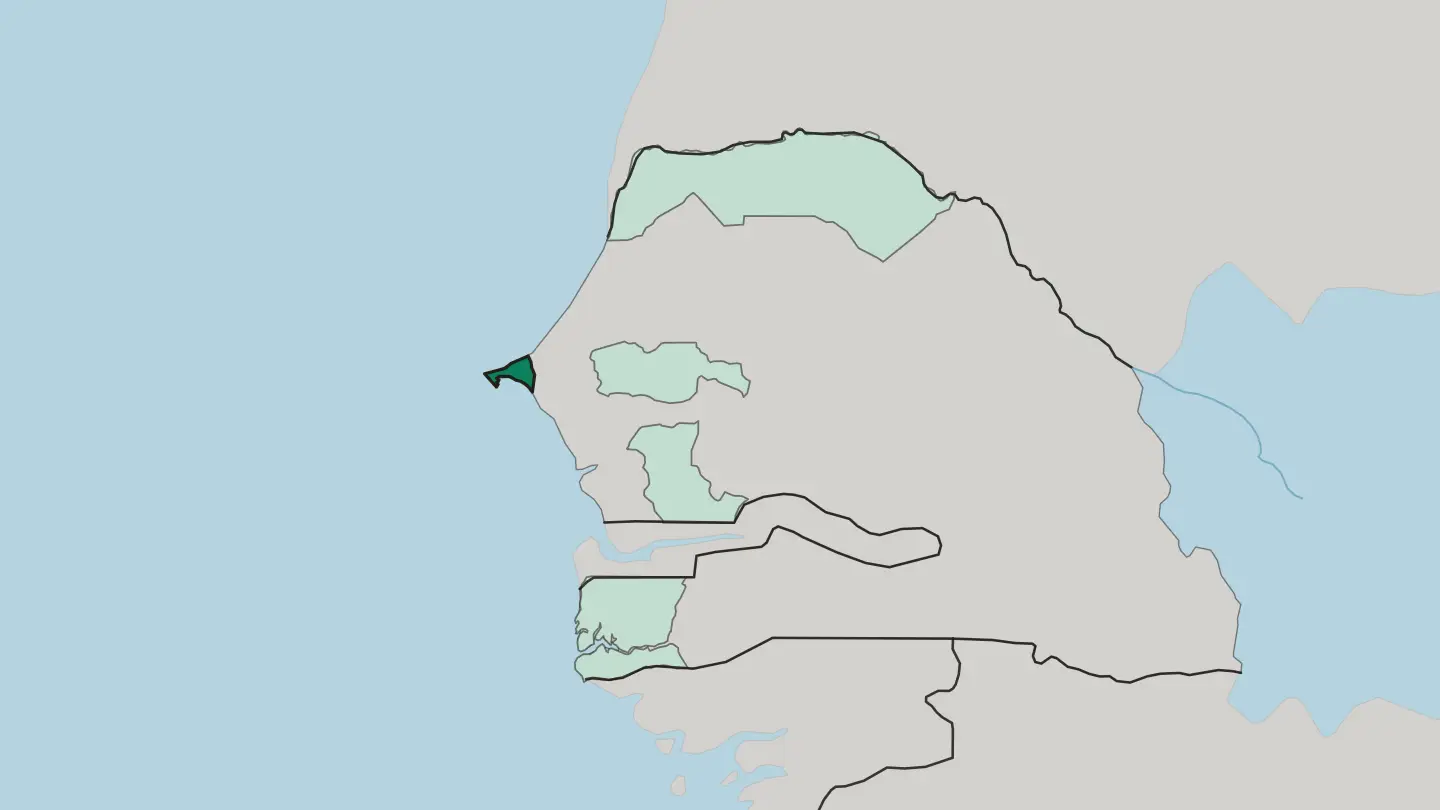 Senegal
Diourbel
Diourbel is a region of Senegal covering the ground of the old Bawol kingdom; Touba is its largest city and Diourbel its capital.Towns & cities →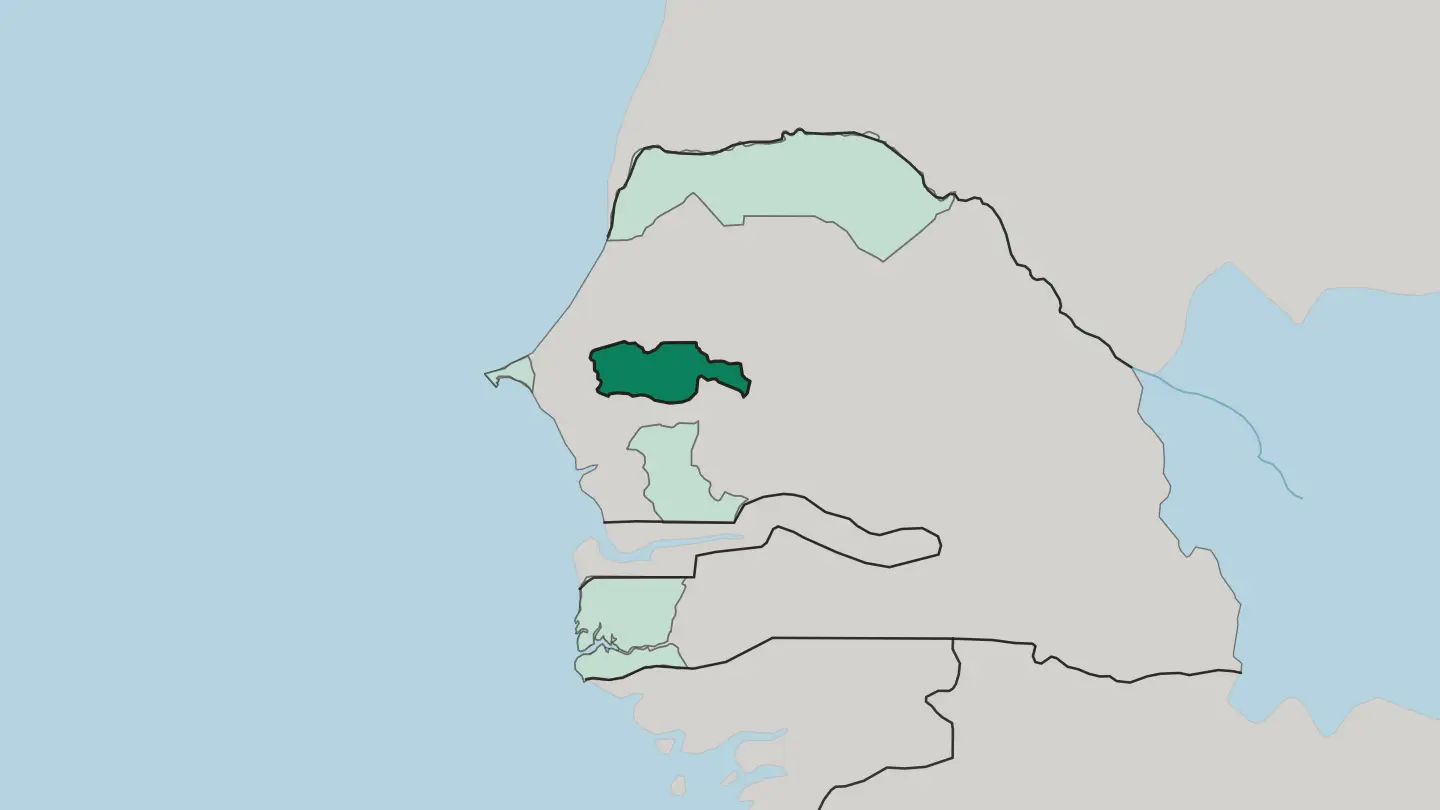 Senegal
Kaolack
Kaolack is a region of Senegal on the Gambian border, the old Saalum country, and a standing halt on the road between Dakar and Banjul.Towns & cities →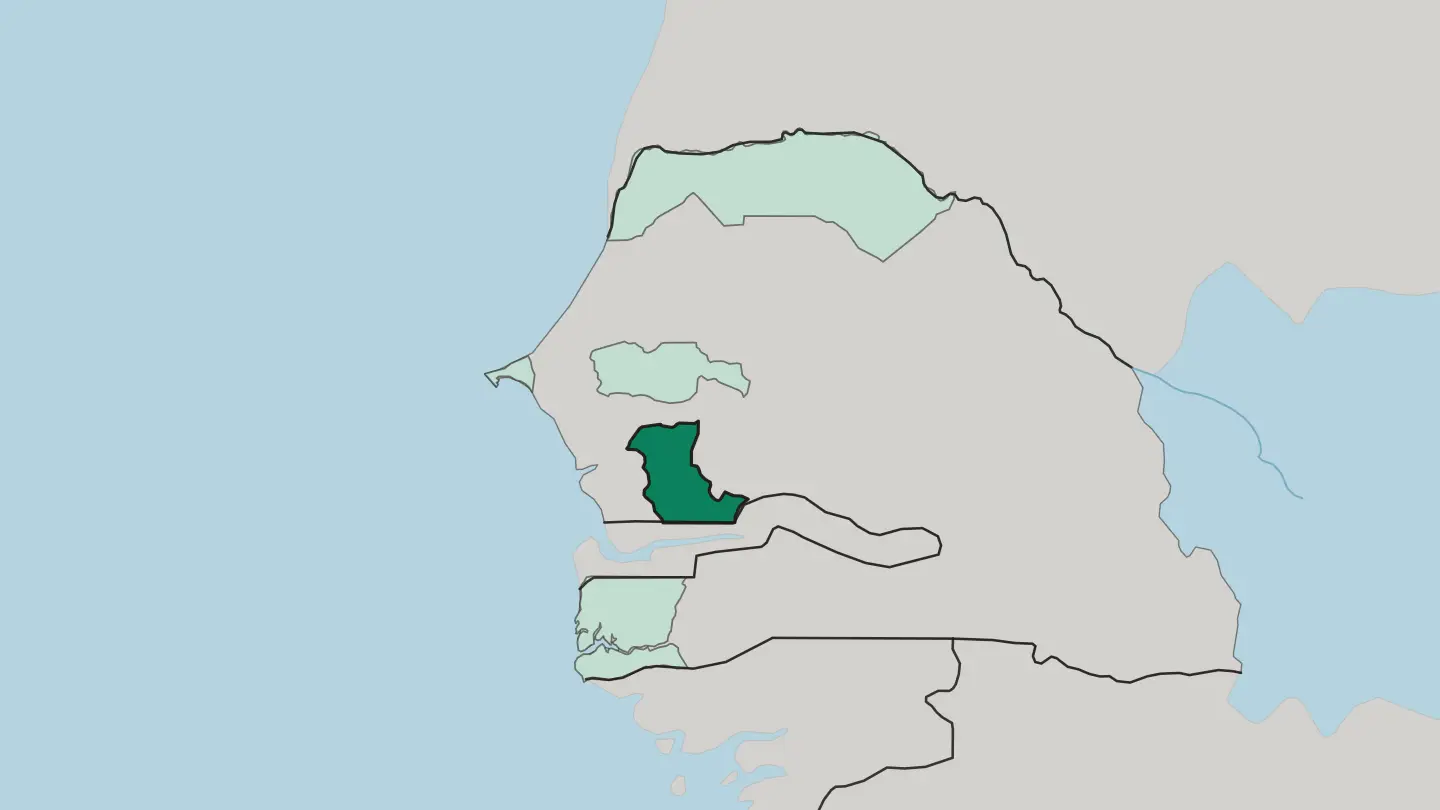 Senegal
Saint-Louis
Saint-Louis is a Senegalese region at the mouth of the Senegal River, whose water marks the Mauritanian border and whose shore is the Grande Côte.Towns & cities →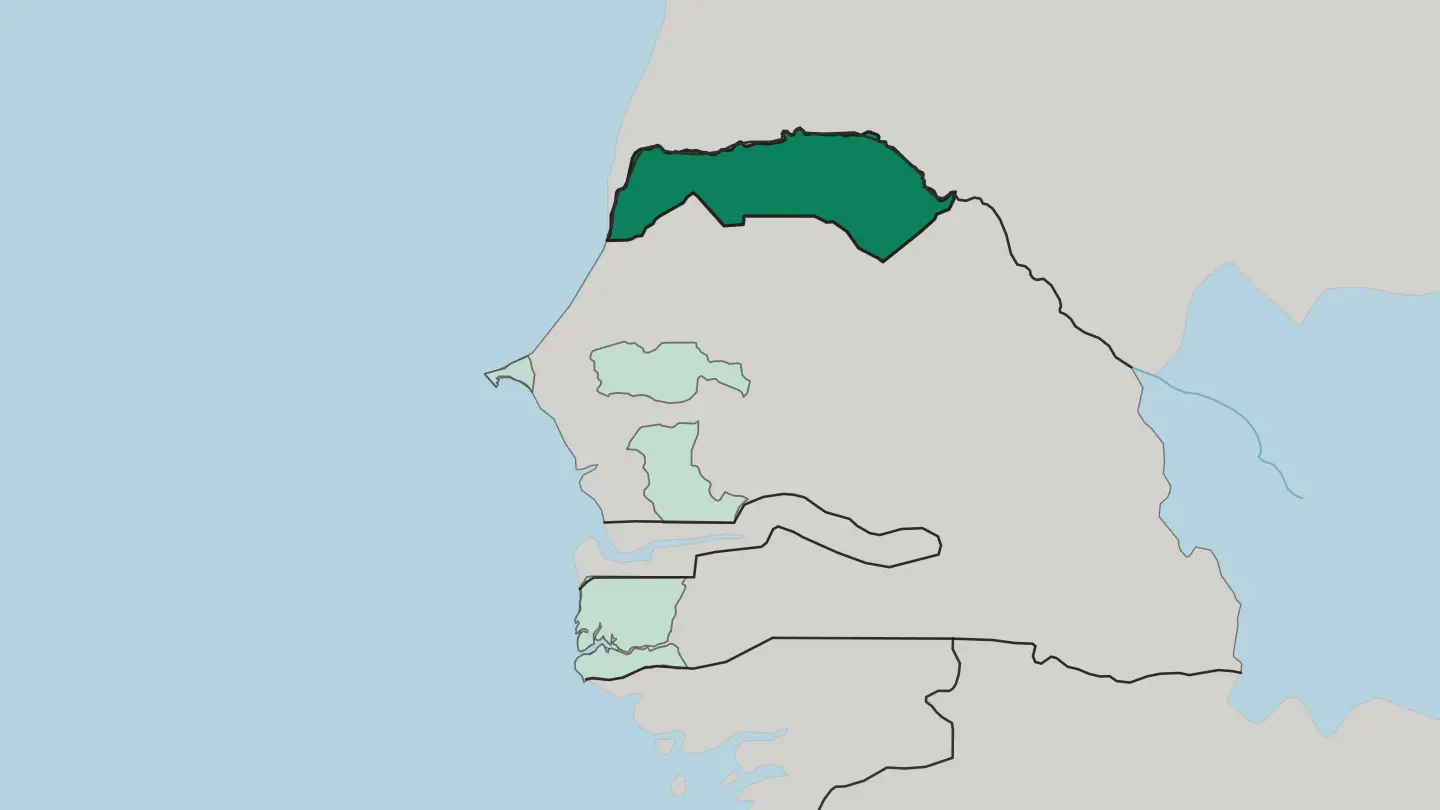 Senegal
Ziguinchor
Ziguinchor is a region of Senegal in the Casamance, known historically and popularly as Basse Casamance, with the city of Ziguinchor at its head.Towns & cities →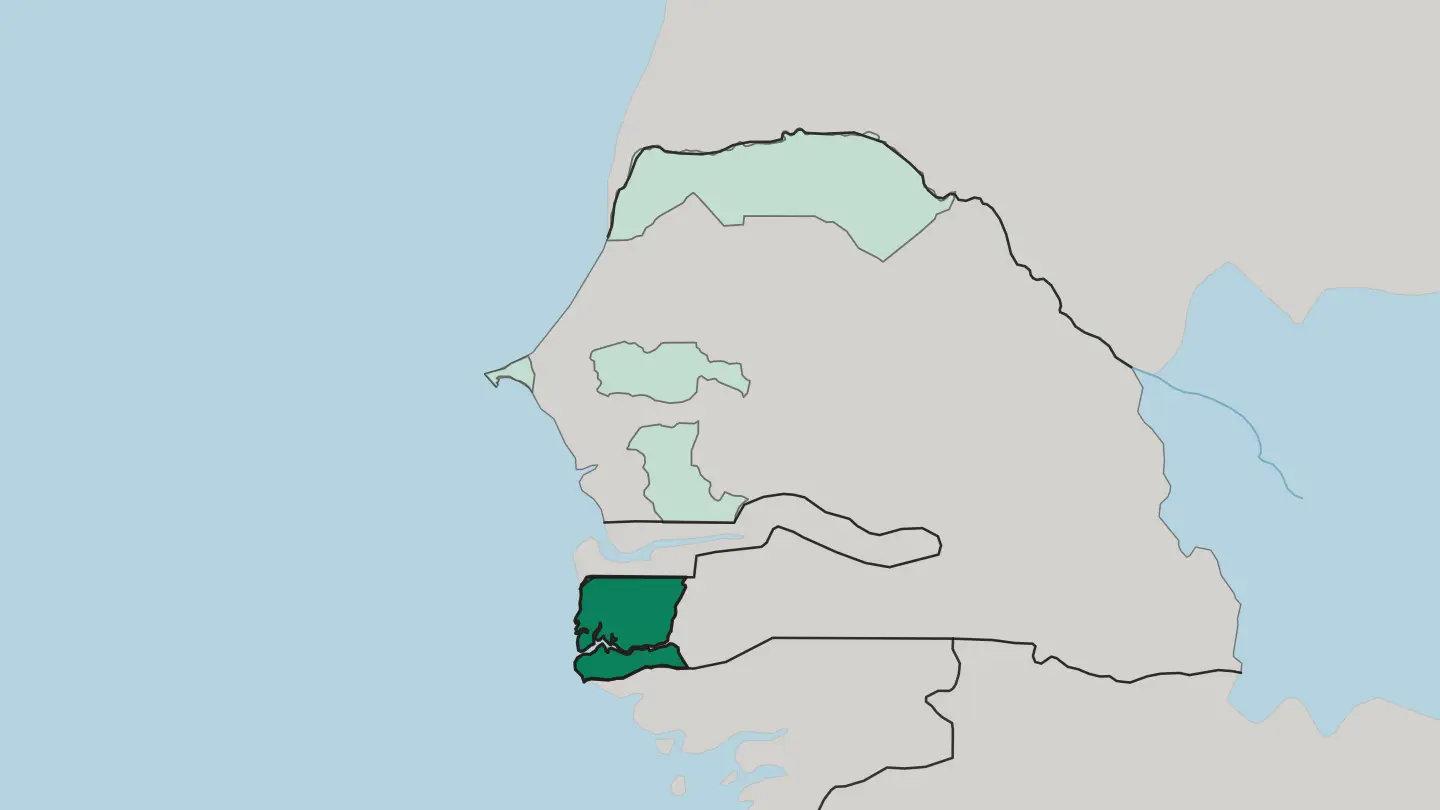
About Senegal
Dakar sets the tone.
What is Senegal known for?
The capital pushes out onto the Cap-Vert peninsula, the most westerly point of the African mainland, and radiates the mbalax music and teranga hospitality the country is known for. Just offshore lies Gorée, a small island whose slave-trade past is remembered at the House of Slaves. North stands Saint-Louis, the old colonial capital on the Senegal River, while the mangrove creeks of the Saloum Delta and the forests of Casamance mark the south.
Youssou N'Dour carried its sound abroad.
Where is Senegal?
Senegal occupies the flat western tip of the Sahel, where the African mainland reaches its most westerly point at the Cap-Vert peninsula on the Atlantic coast. The land is mostly low and open. Two great rivers frame it: the Senegal River runs along the northern border with Mauritania before reaching the sea at Saint-Louis, and the Gambia River cuts a corridor through the middle that the neighbouring country of the Gambia follows almost to the interior.
That river-country all but splits Casamance, the southern region, from the rest of Senegal. The coast changes character as it runs south. Around the mouths of the Sine and Saloum, a maze of tidal channels, islands, and mangroves forms the Saloum Delta, protected as a national park.
Below the Gambia the terrain grows wetter and more wooded, with forests and rice paddies filling Casamance. Inland to the south-east the flat plains finally rise toward the foothills of the Fouta Djallon massif, which pushes over the frontier from Guinea. Along the eastern edge, the wooded savanna of Niokolo-Koba shelters what large wildlife the country still has.
From ocean sand to upland woodland, the range is wide for so small a map.
What is the history of Senegal?
Long before Europeans arrived, the Senegal valley carried states of its own. Tekrur rose along the river from the sixth century, and later the Wolof-led Jolof Empire drew the coast between the Senegal and Gambia rivers under one crown. The empire fractured in the sixteenth century.
Cayor and Baol broke away after the Battle of Danki, and a patchwork of Wolof and Serer kingdoms held the land when the first traders reached the shore. Europe came by water. The French built a fort at Saint-Louis on the Senegal River in 1659 and traded in enslaved people through Gorée.
Saint-Louis grew into the capital of the wider colony of French West Africa until that role passed to Dakar in the early twentieth century. The road to sovereignty ran through the poet-statesman Léopold Sédar Senghor, who guided the country to independence in 1960 and became its first president. He held that the griot traditions of Senegal stood equal to any classical inheritance.
That idea still shapes how the country sees itself.
What is Senegal like?
Senegalese life turns on teranga, the Wolof idea of hospitality that governs how a household treats a guest and a stranger alike. Music sits close to its centre. Mbalax, built on the fast sabar drumming of the Serer and pulled toward jazz and soul, became the country's own urban sound, and Youssou N'Dour carried it from Dakar to stages worldwide.
Older still are the griots, the hereditary singers and genealogists who hold family histories and praise-songs in memory for the Wolof, Serer, and Toucouleur. The country is a mix of peoples. The Wolof are the largest group, alongside Fula, Serer, Mandinka, and the Jola of Casamance, and Islam gives the daily rhythm much of its shape.
Around a bowl of thieboudienne, the rice-and-fish dish counted as the national plate, that mix comes to the table. Léopold Sédar Senghor, a poet as much as a president, framed all this as negritude, arguing that Senegal's own traditions carried the weight of any European canon. Colour runs through the cloth, the drumming, and the talk.
Hospitality is the through-line.
What is the climate of Senegal?
Senegal runs on two seasons. A long dry spell holds from November to May, when the harmattan blows off the Sahara carrying dust and little rain, and a shorter wet season arrives with the monsoon between roughly June and October. The coast around Dakar stays milder than the interior, cooled by the Atlantic, while the Sahelian north is drier and the Casamance south takes the heaviest rains.
Most travellers come in the dry months.
How do you get to Senegal?
Nearly every visitor lands near Dakar. Blaise Diagne International Airport, out by the town of Diass in the Thiès region east of the capital, is the country's main gateway and takes long-haul flights from Europe and across Africa. A rail link runs in toward the city.
For the far south, small flights and the ferry along the coast reach Ziguinchor and Cap Skirring, skirting the corridor of the Gambia. Distances inland are long by road.
Good for
Updated October 2026