Syria · Latakia Governorate
Where to Stay in Jablah, Latakia Governorate
Jablah is a Mediterranean coastal city in Syria's Latakia Governorate, with a Roman theatre and the tomb of Ibrahim Bin Adham at its heart.
Find your area →


Where to stay in Jablah
Where visitors usually base themselves, and why.
The Roman Theatre of Jableh sits at the centre of everything worth walking to. Rooms near it put the Mosque of Sultan Ibrahim Ibn Adham, the old streets and the Mediterranean front all within a few minutes on foot, which suits anyone whose reason for coming is the antiquities rather than the water. The core is small.
That compactness is the argument for staying inside it, because the alternative is trading walking distance for a sea view that the town gives up freely anyway. Latakia is the other option, 25 km north along the coast. That larger city gives the Latakia Governorate its name and carries a wider range of rooms, and from there Jablah works as a half-day out with Tell Tweini and the theatre on the same run south. Baniyas lies the same distance the other way, and the two make Jablah the middle stop on this stretch of the Syrian coast.
If you want the mosque and the tomb close at hand in the evening, stay in Jablah itself; if you want choice, the city up the coast is the practical base and the road between them does the rest.
About Jablah
What is Jablah known for?
The Roman Theatre of Jableh anchors the old centre, a stone survival from antiquity, when the town went by Gabala. Pilgrims come for something else. The tomb and mosque of Ibrahim Bin Adham, the Sufi mystic remembered for renouncing the throne of Balkh, draw visitors to Jablah from well beyond the Latakia Governorate.
Tell Tweini adds a third layer on the same coastal strip.
What are the main landmarks in Jablah?
Three sites carry the town. The Roman Theatre of Jableh stands from antiquity, when the place went by Gabala, and its stone is the plainest reminder of that period. The Mosque of Sultan Ibrahim Ibn Adham holds the tomb of the Sufi who left the throne of Balkh.
Tell Tweini lies apart from both.
What is the history of Jablah?
Gabala is the older name. The town on this part of the Syrian coast was known by it in antiquity, and the Roman Theatre of Jableh is what that period left standing in the middle of the modern streets. Tell Tweini pushes the record back further.
The site belongs to the same coastal strip, evidence that the ground between Baniyas and Latakia was settled long before either the theatre or the town's present name existed. Christianity gave Gabala its next role. The town held a Byzantine archbishopric, and the office outlasted the seat itself: the Latin Catholic church keeps Gabala as a titular see, a name held in use long after the archbishopric it referred to had gone.
Continuity here runs through titles. What survives from that stretch of the past is less a building than an entry in a list. The mosque brings a different lineage.
Ibrahim Bin Adham, remembered as a Sufi who renounced the throne of Balkh and gave the rest of his life to prayer, is buried in Jablah, and the tomb and mosque that hold him are the reason many visitors come. Pilgrimage outlasted empire. Between the theatre, the see and the tomb, three separate pasts sit inside one small coastal town.
Where is Jablah?
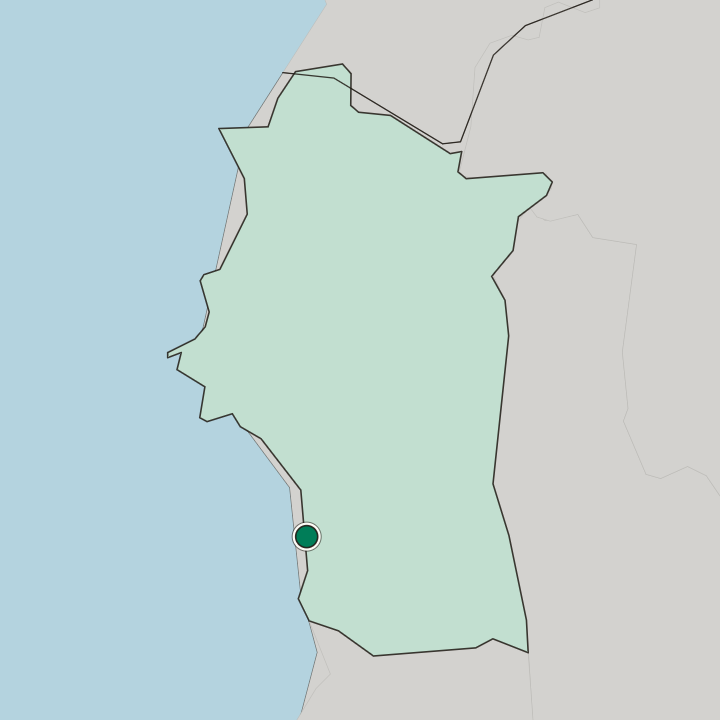
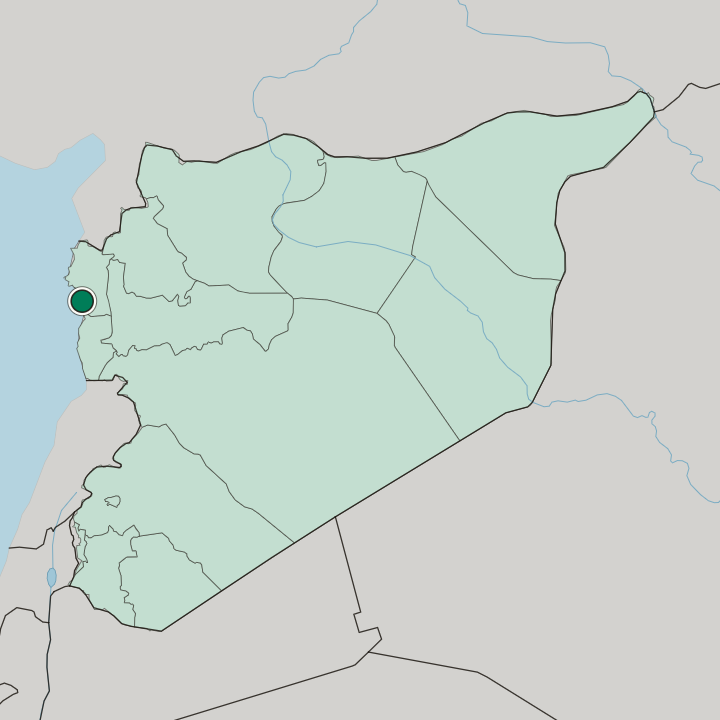
Jablah faces the Mediterranean from the middle of a short coastal run. Baniyas lies 25 km to the south and Latakia the same distance to the north, which puts the town between the two on the seaward edge of the Syrian Coast and Mountains region. The sea is the town's front.
Behind it the ground rises away from the water toward the mountains that give the region its name.
What is the climate of Jablah?
The Mediterranean sets the terms. Jablah sits on the coast in the northern temperate band, close enough to the water that the sea moderates both ends of the year and keeps the swings smaller than they are inland behind the mountains. Sea air reaches everything here.
The old centre, the theatre and the shore all sit within the same narrow strip, so the weather that arrives off the water arrives everywhere at once.
How do you get to Jablah?
The coast between Latakia and Baniyas is the way in. Jablah lies 25 km from each, so arrivals reach the town along the shore rather than from inland. The approach is simple.
From either direction the same coastal line through the Latakia Governorate brings a traveller to the Roman Theatre of Jableh and the mosque in the middle of the town.
Good for
Another city in Latakia Governorate
Updated September 2026