Uganda: Regions, Cities & Travel Guide
Uganda is a landlocked country in East Africa where the Nile leaves Lake Victoria, with Kampala as its capital.
Hotel links are affiliate links: booking through them may earn us a commission, at no extra cost to you. It never affects how places are ranked. How this works


Top destinations in Uganda
Cities to start from, then drill into areas and hotels.
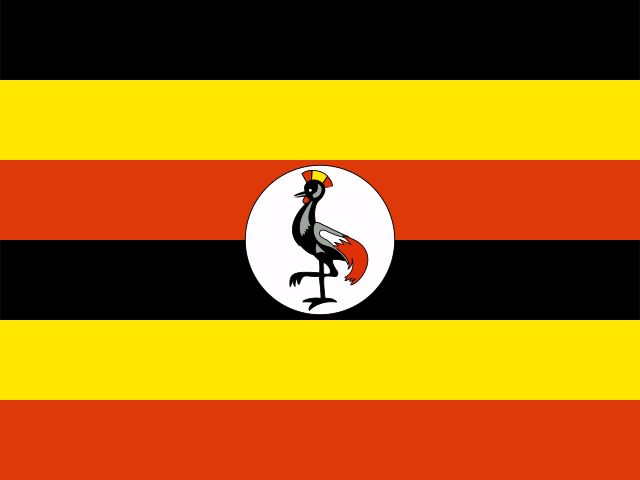 Uganda
Kampala
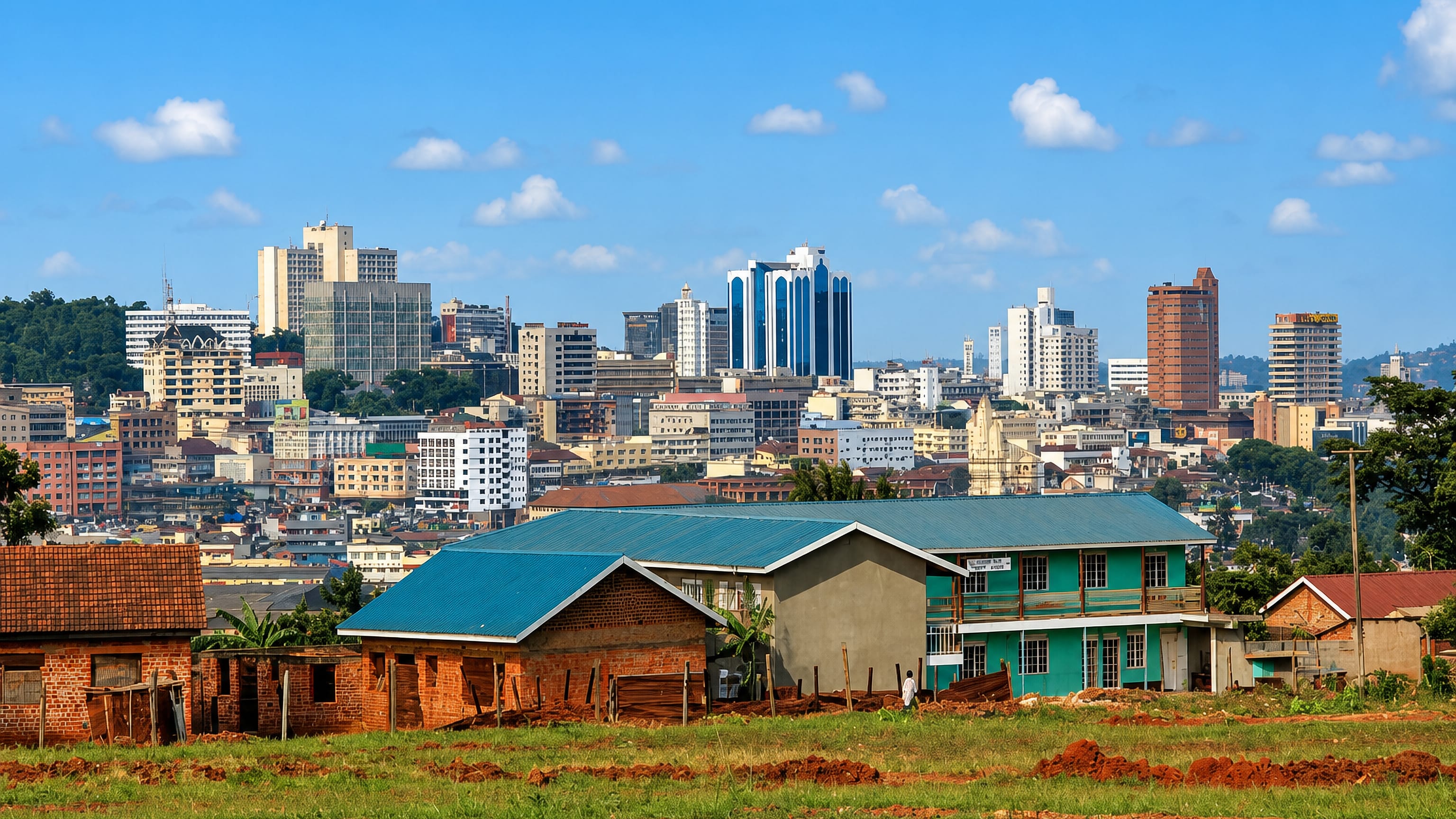
Kampala climbs a cluster of hills above Lake Victoria, Uganda's capital and the seat of Buganda, known for the Kasubi Tombs and the Uganda Museum.Where to stay →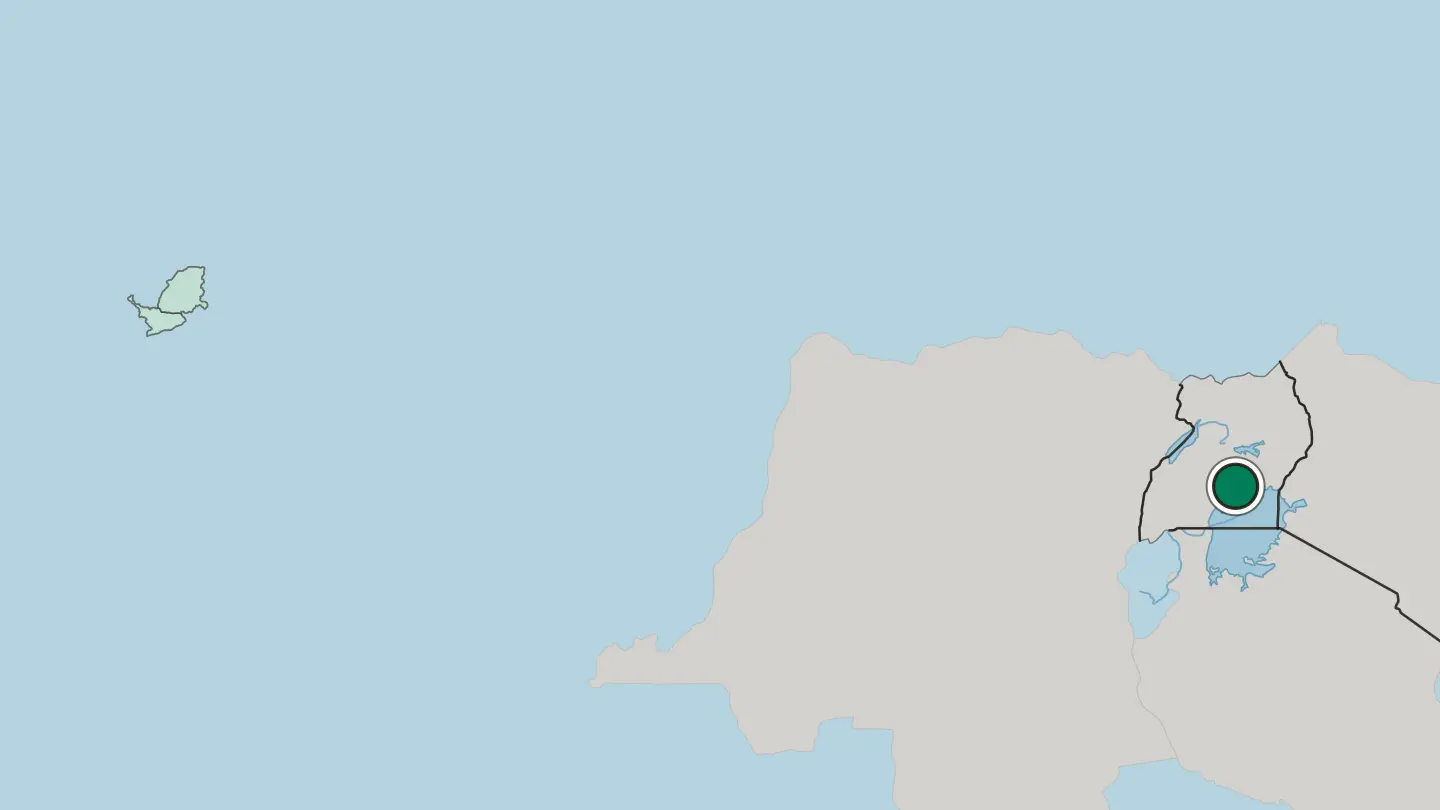
 Uganda
Entebbe
Entebbe is a town of Uganda on a Lake Victoria peninsula, the country's old colonial capital and its main airport, known for lakeside gardens and wildlife.Where to stay →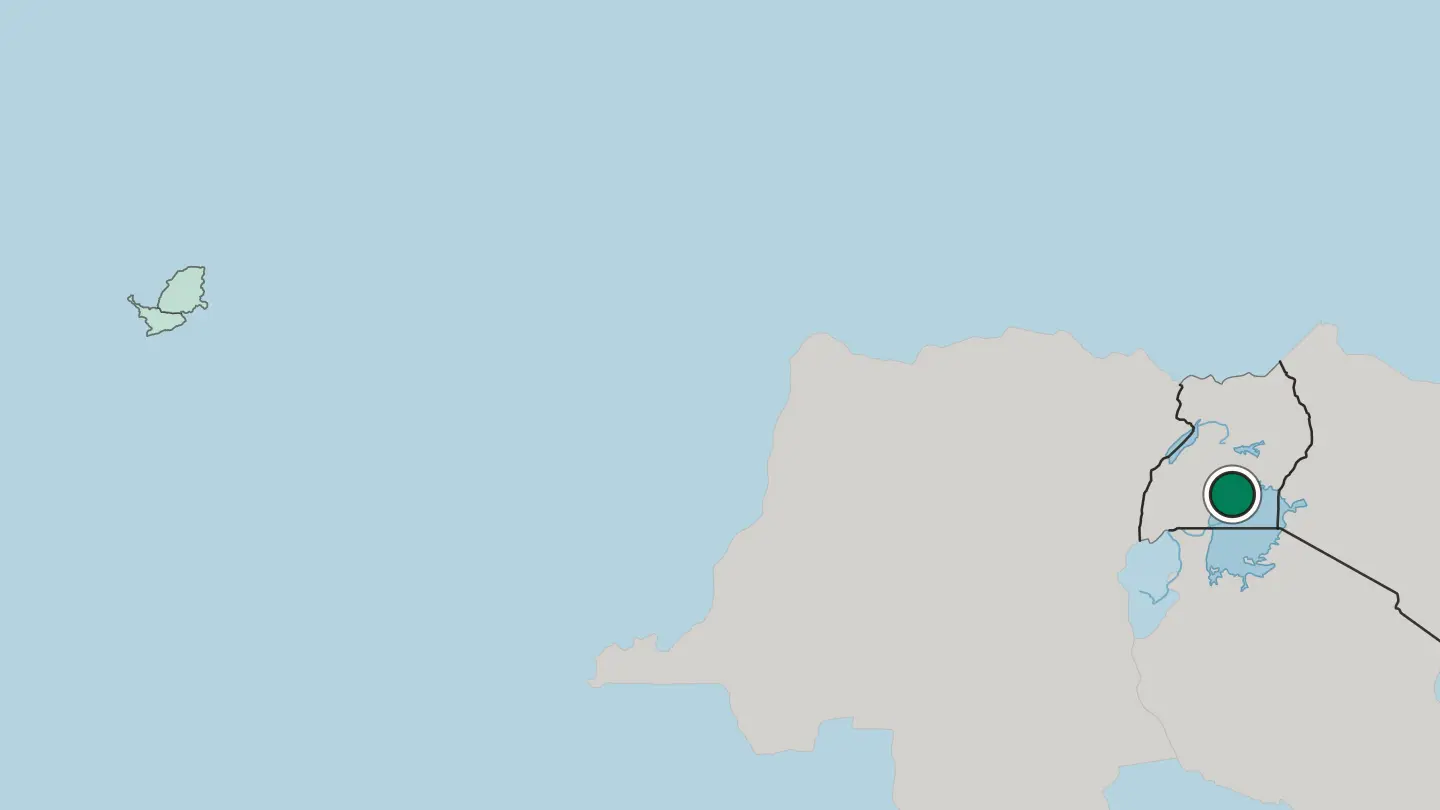
 Uganda
Jinja
Jinja is a city of eastern Uganda on Lake Victoria, where the great Nile begins its journey north, and the adventure capital of the East African lakes.Where to stay →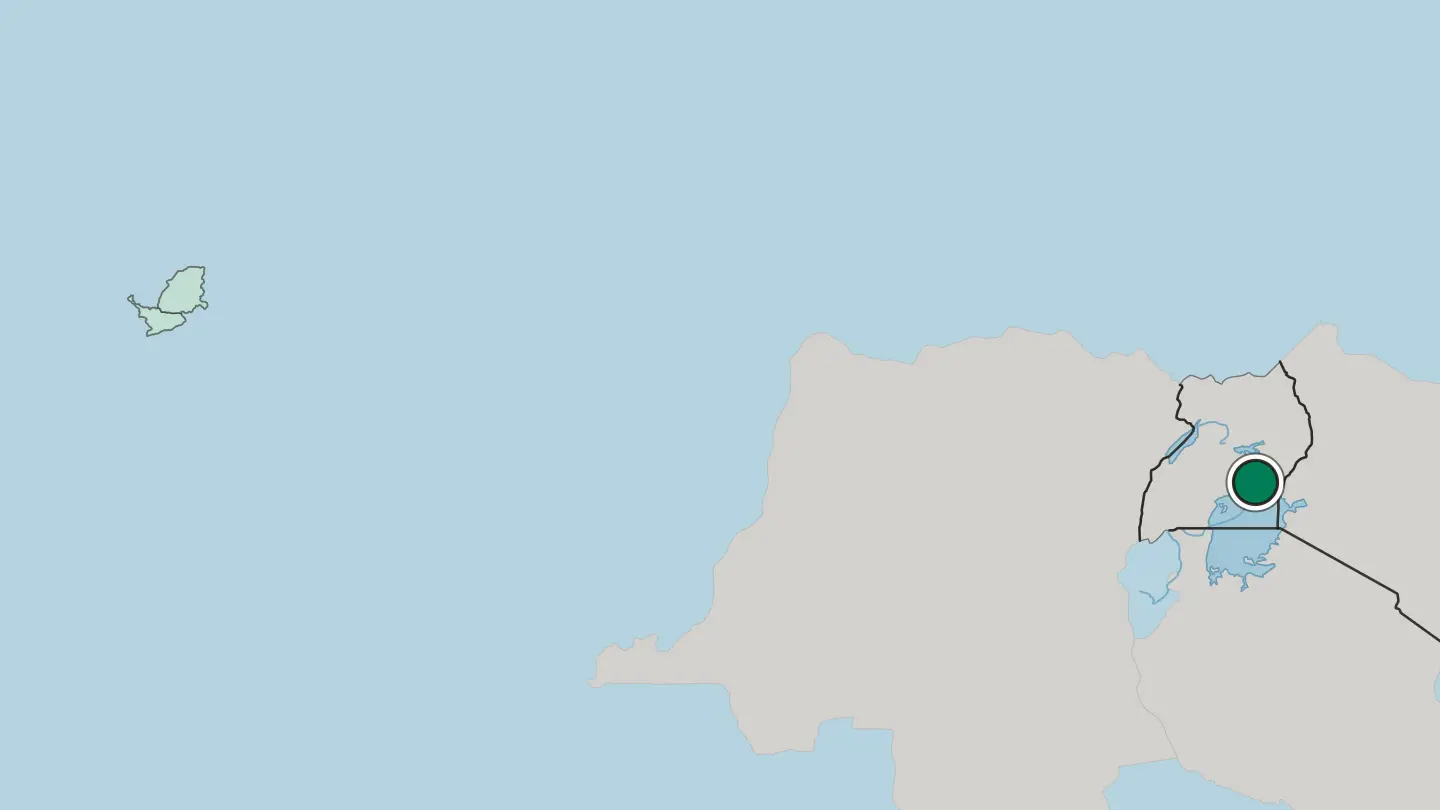
Hotel links are affiliate links: booking through them may earn us a commission, at no extra cost to you. It never affects how places are ranked. How this works
Regions of Uganda
Uganda
Central Region
Central Region surrounds Kampala on the northern shores of Lake Victoria in Uganda, holding the Buganda heartland and the lakeside city of Entebbe.Towns & cities →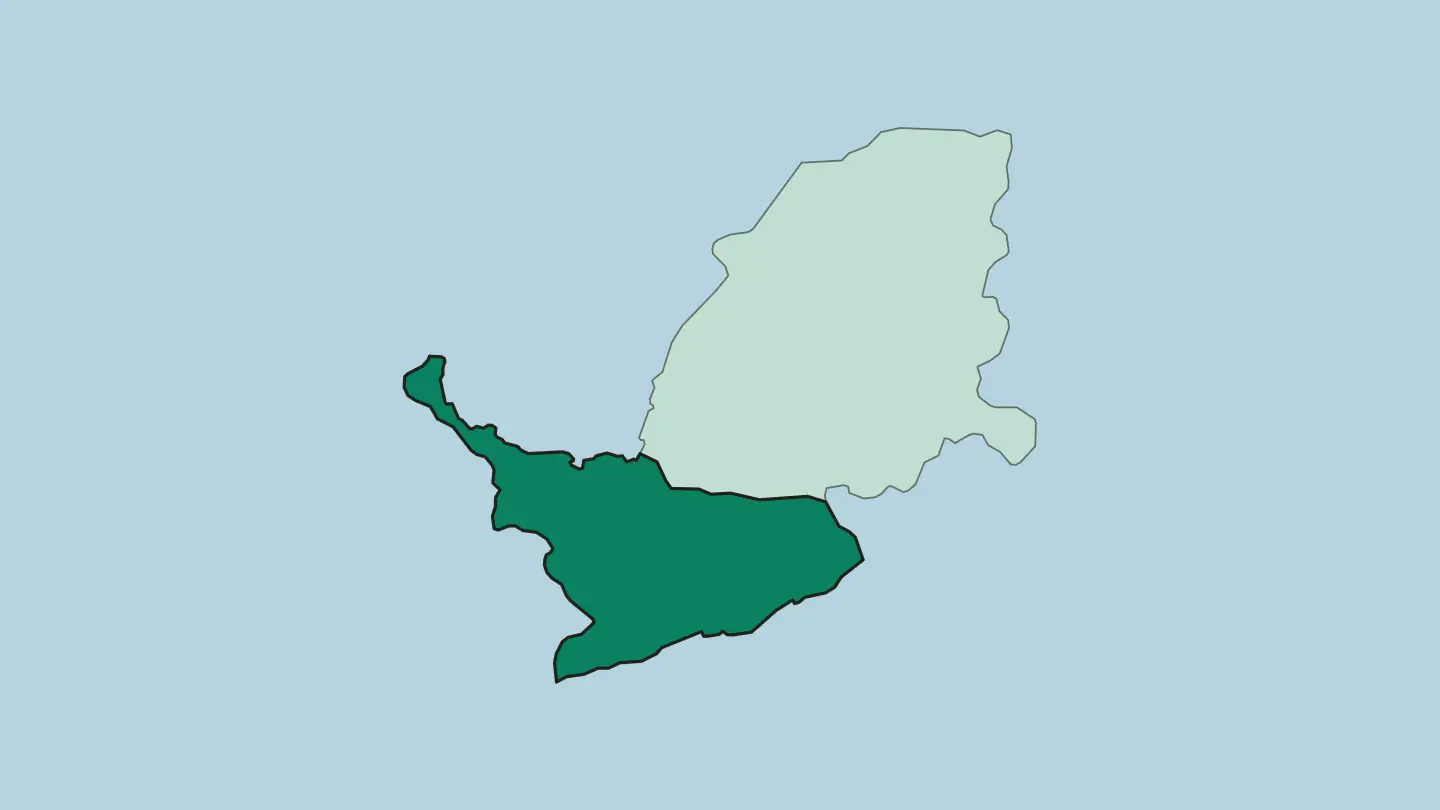 Uganda
Eastern Region
The Eastern Region is one of the four regions of Uganda, an administrative division of the country lying north of the equator in the tropics.Towns & cities →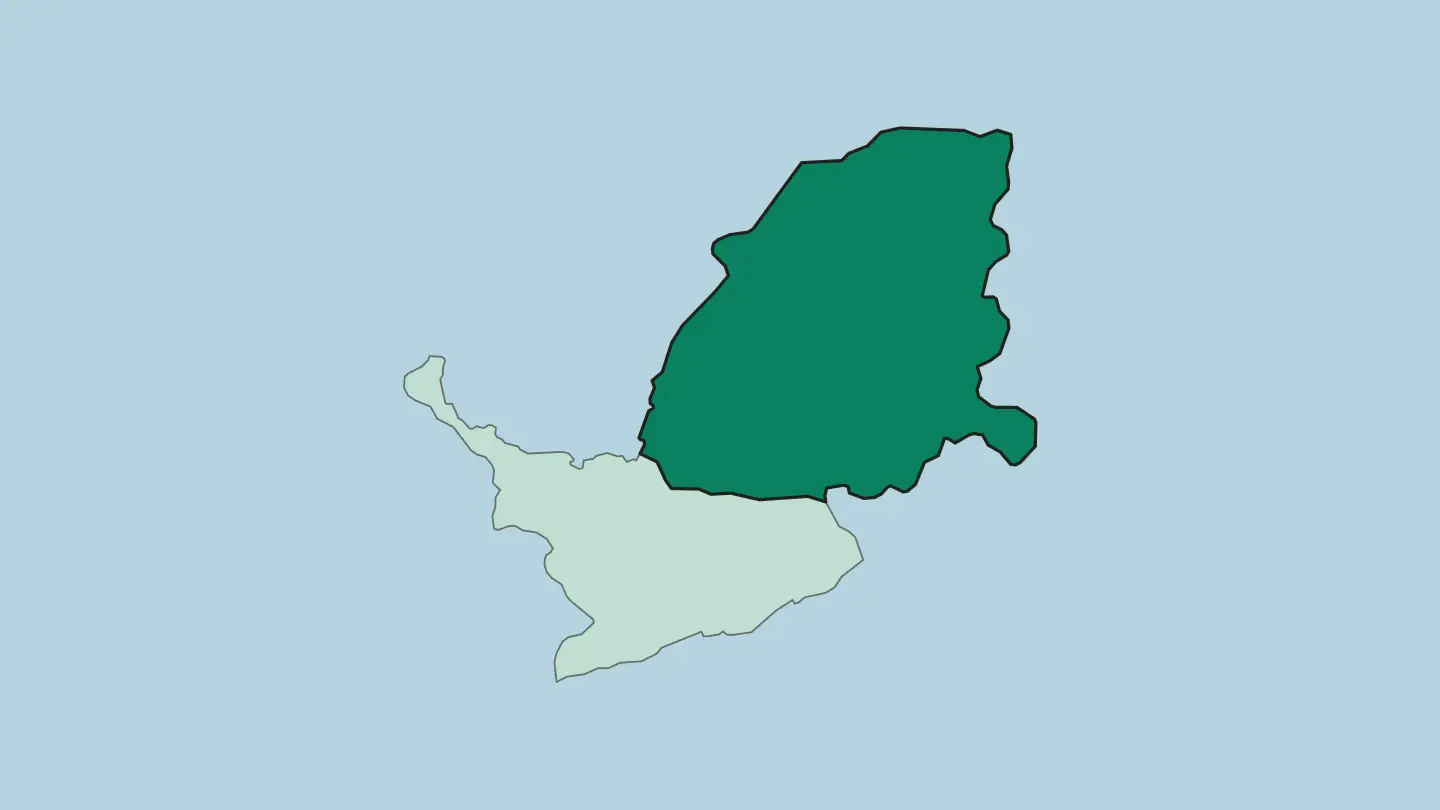
About Uganda
Winston Churchill called Uganda the Pearl of Africa.
What is Uganda known for?
Roughly half the world's mountain gorillas live in the misted slopes of Bwindi Impenetrable National Park, in the far south-west, and travellers trek to find them on foot. The country stacks its draws close together: chimpanzees in Kibale, tree-climbing lions in Queen Elizabeth National Park, and the thunder of Murchison Falls where the Nile squeezes through a narrow gorge. The equator runs straight across it.
Kampala hums on its hills above Lake Victoria.
Where is Uganda?
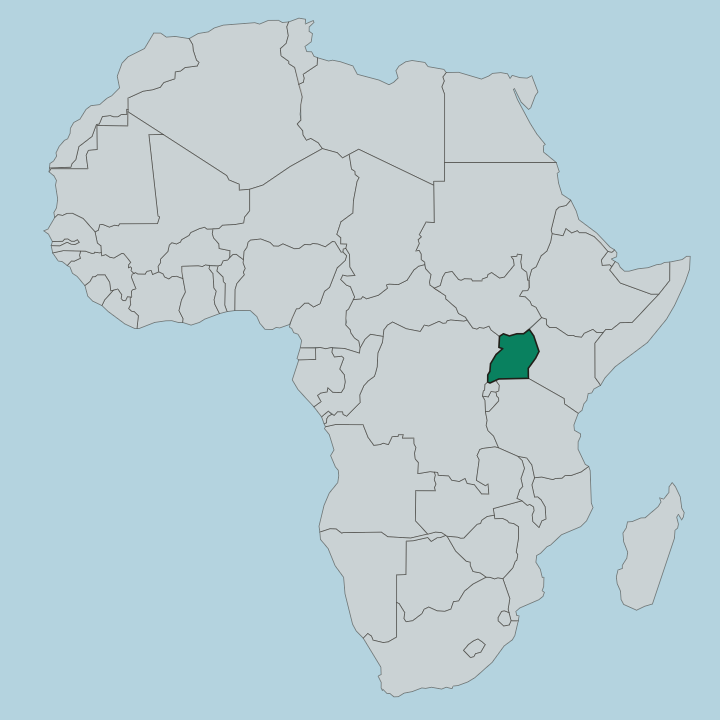
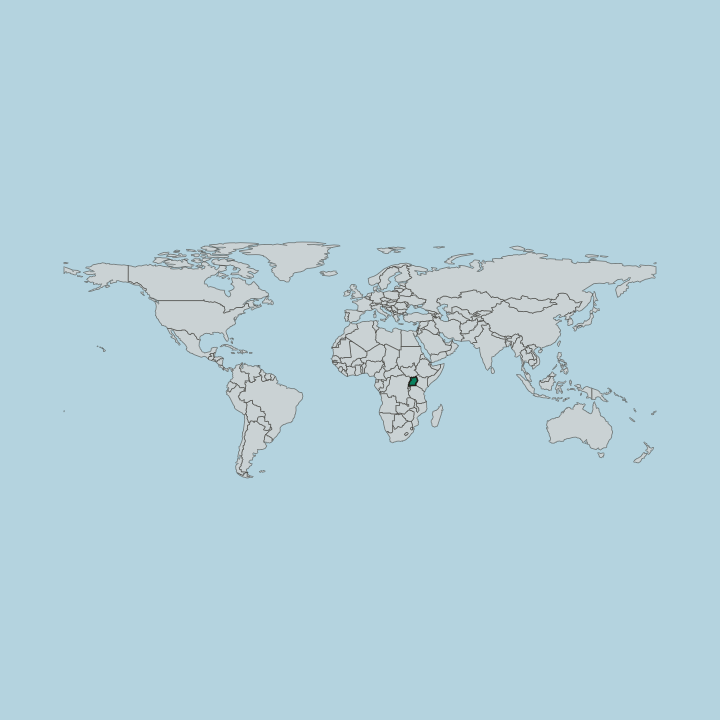
Uganda is a landlocked country in East Africa, and much of it is a high plateau tilted toward the great lakes. Its southern edge takes in a broad slice of Lake Victoria, the second-largest freshwater lake on earth, shared with Kenya and Tanzania. From the lake's northern shore the Victoria Nile begins its long journey, draining north and west across the country and over the ledge at Murchison Falls before it slides on toward South Sudan and Egypt.
The land is far from flat. Along the western frontier with the Democratic Republic of the Congo rise the Rwenzori Mountains, a glaciated range whose highest peaks carry permanent ice almost on the equator, and their meltwater feeds the lakes and rivers of the Western Region. Away to the east, on the border with Kenya, the vast eroded cone of Mount Elgon spreads one of the largest volcanic footprints in the world.
Between these highlands the country is a green quilt of hills, papyrus swamps, crater lakes, and cultivated slopes, most of it well watered and green. The equator cuts through the south. Northern Uganda flattens into drier savanna running toward South Sudan, while the fertile crescent around Lake Victoria carries most of the farms and people.
Water shapes almost everything here.
What is the history of Uganda?
Long before colonial borders, powerful kingdoms ruled the land around Lake Victoria. The greatest was Buganda, a centralised Bantu monarchy of hill-forts and clan chiefs whose Kabaka still commands deep loyalty, and its name lies behind the country's own. British agents arrived in the late nineteenth century, and in 1894 the territory became a protectorate administered indirectly through those kingdoms.
Independence came in 1962. Sir Edward Muteesa, the reigning Kabaka of Buganda, became the first president, while Milton Obote served as prime minister of the new state. The settlement did not hold.
Obote suspended the constitution and stripped the kingdoms of their power in the mid-1960s, and in 1971 his army commander Idi Amin seized control in a coup, beginning eight years of a brutal dictatorship that expelled the country's Asian traders and ended only after a war with Tanzania toppled him in 1979. The years that followed brought further upheaval before a measure of stability returned in the mid-1980s. The traditional kingdoms, Buganda foremost among them, were formally restored in 1993 as cultural institutions.
That long thread of monarchy still runs through Ugandan life. History here is anything but settled.
What is Uganda like?
Uganda is one of the most ethnically layered countries in Africa, with dozens of peoples and languages folded into one state. The largest group are the Baganda, whose kingdom of Buganda gave the country its name and whose language, Luganda, is heard across the Central Region and beyond. English and Swahili tie the regions together for trade and government.
Food carries the identity of each people. The everyday staple across the south is matoke, green cooking bananas steamed to a soft mash, and the classic Baganda feast is luwombo, meat or groundnut stew slow-steamed inside folded banana leaves. Christianity reaches most households, an inheritance of the mission era, alongside a substantial Muslim minority and older clan traditions that never fully faded.
Music and drumming run deep. The royal drums of the old kingdoms, the dances of harvest and marriage, and a lively street sound out of Kampala all belong to the same broad culture. Football and the long-distance runners of the eastern hills stir national pride.
Hospitality is a point of honour, and a visitor is rarely left to eat alone. Many worlds share one flag here.
What is the climate of Uganda?
The equator gives Uganda a mild, spring-like climate that belies its tropical position, tempered by altitude on the high plateau. Most of the country sees two rainy spells, heaviest around March to May and again in the autumn, split by drier windows that suit travel and wildlife viewing. The south around Lake Victoria stays green and humid year round.
Cool air settles on the highlands. Northern Uganda runs hotter and drier, edging toward semi-arid savanna near South Sudan.
How do you get to Uganda?
Nearly every visitor arrives at Entebbe, the international airport set on a Lake Victoria peninsula a short drive south of Kampala. From there the parks lie hours apart by road. Reaching the Bwindi gorillas in the south-west is a long overland haul, so many safaris cover the distances with light aircraft to airstrips near the parks.
Some travellers cross overland from Kenya or Rwanda. Book the road transfers and permits well ahead.
Good for
Updated September 2026