United States · Louisiana
Where to Stay in Metairie, Louisiana
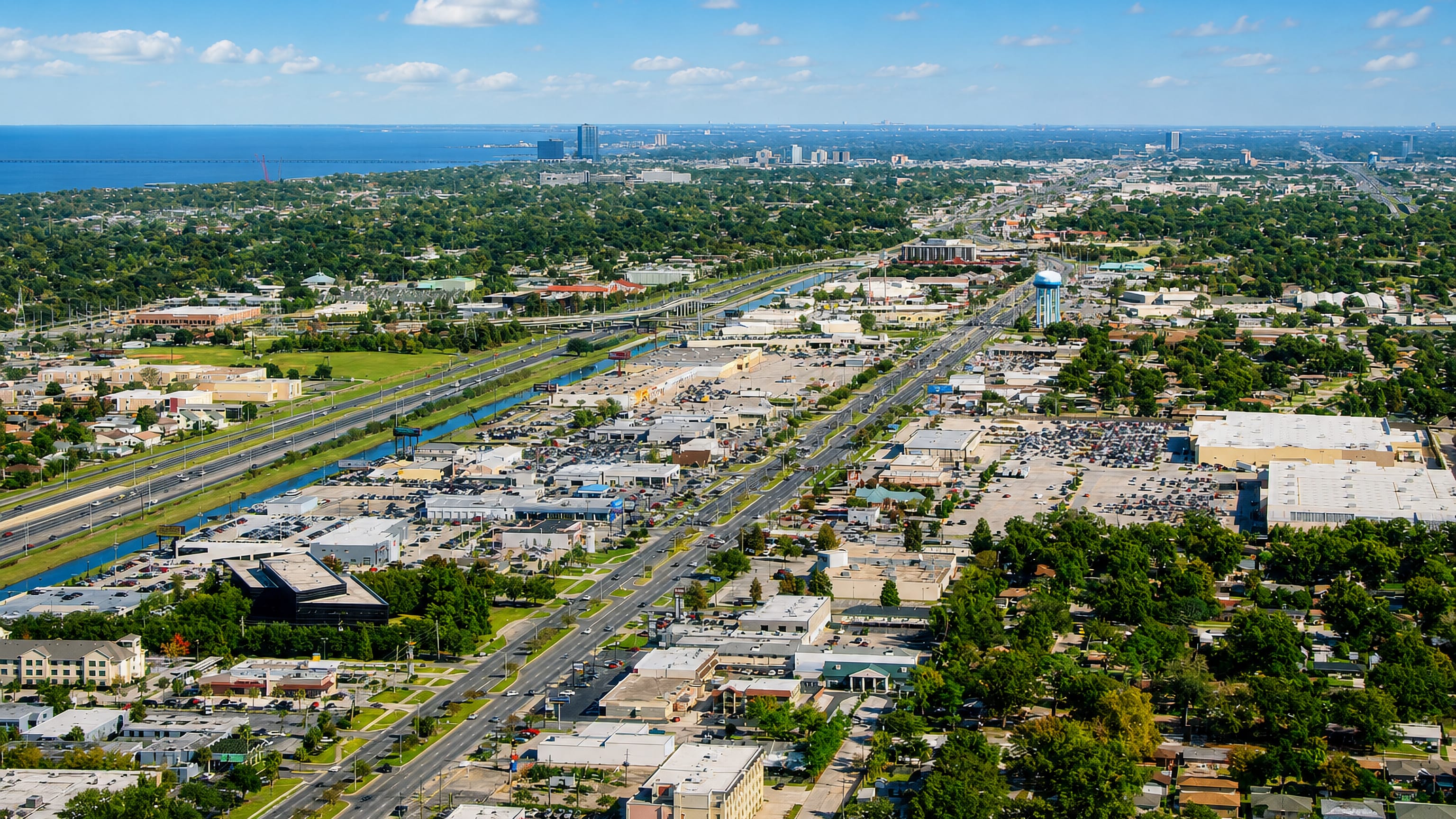
Metairie is the largest community in Jefferson Parish, Louisiana, an unincorporated suburb that runs into New Orleans without a break.
Hotel links are affiliate links: booking through them may earn us a commission, at no extra cost to you. It never affects how places are ranked. How this works


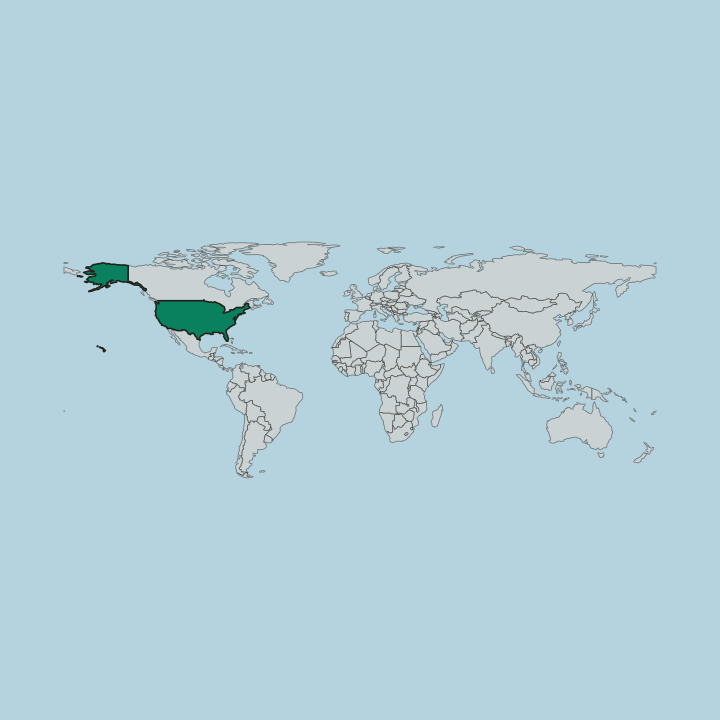
Where to stay in Metairie
The practical side of choosing where to sleep.
Metairie sells proximity rather than atmosphere. Rooms here sit on the arterial roads of Jefferson Parish with parking attached, and the trade-off is plain, since quieter nights and easier driving come at the cost of a commute whenever the evening plan sits in New Orleans. The Shrine on Airline is the clearest local anchor, and beds near it suit anyone here for a ballgame or a conference rather than a walking route through the old quarters.
Chain hotels and parking lots set the tone. Across the parish line the calculus flips. A room in New Orleans puts the National World War II Museum, the Ogden Museum of Southern Art and the Audubon Zoo within reach on foot, and that convenience is precisely what Metairie trades away.
Neither direction takes long. The Cabildo sits an easy drive off. Fair Grounds Race Course and the Carousel Gardens Amusement Park draw families out of the suburb for the day, while the Louisiana State Museum, the New Orleans Museum of Art and the Newcomb Art Gallery hold the cultural weight of the whole metropolitan area.
Find hotels in Metairie
Direct booking searches for these neighbourhoods.
Around the Shrine on Airline
Suburban rooms with parking sit close to the stadium and the arterial roads of Jefferson Parish.Find hotels in Around the Shrine on AirlineReaching the National World War II Museum and The Cabildo on footOver the parish line
A room in New Orleans puts the museums and the old quarters within walking range instead of a drive.Find hotels in Over the parish lineDrivers wanting parking and a short run into New OrleansJefferson Parish arterials
Chain stock along the parish roads trades atmosphere for space and an unobstructed exit.Find hotels in Jefferson Parish arterialsHotel links are affiliate links: booking through them may earn us a commission, at no extra cost to you. It never affects how places are ranked. How this works
Things to do in Metairie
Ranked by global recognition; descriptions from Wikidata (CC0).
Museums & Galleries
3- The Cabildo Heritage
- Confederate Memorial Hall Heritage
- National World War II Museum
Churches & Religious Sites
2- St. Patrick's Church Heritage
- Our Lady of Guadalupe Chapel
Stadiums & Sports
2- Fair Grounds Race Course
- Shrine on Airline
Parks & Gardens
2- Carousel Gardens Amusement Park
- White City
Landmarks & Notable Places
2- Beauregard-Keyes House Heritage
- Hermann–Grima House Heritage
worth knowingacross 5 categories in Metairie
About Metairie
Suburban scale is the defining fact.
What is Metairie known for?
Metairie holds more people than any other community in Jefferson Parish, yet it has never incorporated, which leaves it a census-designated place rather than a city with its own hall. Sport fills the local register. The Shrine on Airline gives Metairie a stadium of its own, while the museums and quarters that visitors actually come for sit over the line in New Orleans, minutes away by road.
What are the main landmarks in Metairie?
The landmark register here belongs to the wider metropolitan area. Shrine on Airline stands as the suburb's own, while the roll of famous buildings sits over the line, from The Cabildo and Madame John's Legacy in the old quarter to the Old Ursuline Convent, the Hermann-Grima House and the Beauregard-Keyes House. Museums cluster there too.
The National World War II Museum, the Ogden Museum of Southern Art and the Louisiana State Museum carry the biggest names.
What is the history of Metairie?
Metairie skipped incorporation entirely. It grew as a settled area of Jefferson Parish beside New Orleans and stayed unincorporated as it filled out, so it carries the census-designated place label instead of a charter, a mayor or a founding date. No document marks a beginning.
Growth was continuous rather than declared, and the suburb passed the size of every other community in Jefferson Parish without ever acquiring the municipal machinery that a comparable Louisiana city would hold. The deeper past sits over the parish line. New Orleans accumulated the buildings that define the area's record, among them The Cabildo, the Old Ursuline Convent and Madame John's Legacy, all of them older than the suburban tract development that produced Metairie.
Napoleon House and the Hermann-Grima House belong to the same layer. White City and the George Washington Cable House sit in the same older register. Later generations added the institutions that read the past back to visitors, from the Louisiana State Museum and the 1850 House to the National World War II Museum, and Metairie's own contribution to that inventory is the Shrine on Airline rather than anything from the older centuries.
Where is Metairie?
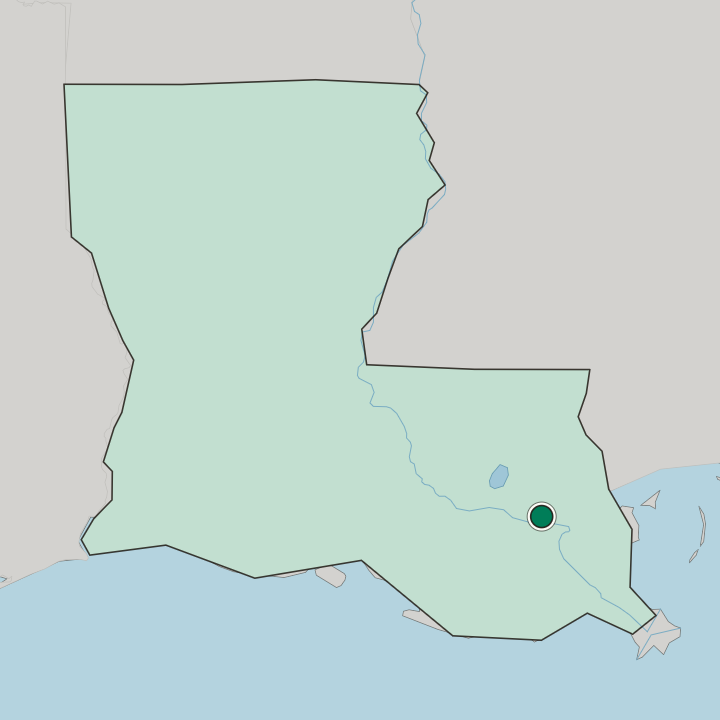
Flat ground runs to every edge. Metairie occupies a stretch of Jefferson Parish that meets New Orleans without a visible boundary, low and level enough that the built-up area reads as one continuous surface broken only by its roads. No hill interrupts it.
The subtropical lowlands of Louisiana leave the suburb without relief of any kind, so its shape follows the road grid and the parish line rather than any ridge or valley.
What is the climate of Metairie?
Damp air is the baseline. The subtropical band that Louisiana sits in gives Metairie long hot months in which the air over the flat lowland holds its moisture from morning through to the middle of the night. Winter is a brief interruption.
Cold snaps pass through New Orleans and its suburbs quickly, and rain arrives in heavy bursts that the level ground of Jefferson Parish sheds slowly.
How do you get to Metairie?
Cars carry in nearly all of Metairie's visitors. Metairie sits inside the New Orleans metropolitan area with no gap between it and the city, so the approach is a matter of leaving one set of parish roads and joining another, usually without noticing the line. Jefferson Parish handles the traffic.
Visitors coming for the Shrine on Airline or the suburban hotel stock drive straight in, while those heading for the older quarters keep going and cross into New Orleans, a run that rarely takes long outside the worst of the commute.
Common questions
What is the best area to stay in Metairie?
Around the Shrine on Airline: Ballgames at the Shrine on Airline and conferences reached by car. Over the parish line: Reaching the National World War II Museum and The Cabildo on foot. Jefferson Parish arterials: Drivers wanting parking and a short run into New Orleans.
Good for
More cities in Louisiana
Updated October 2026