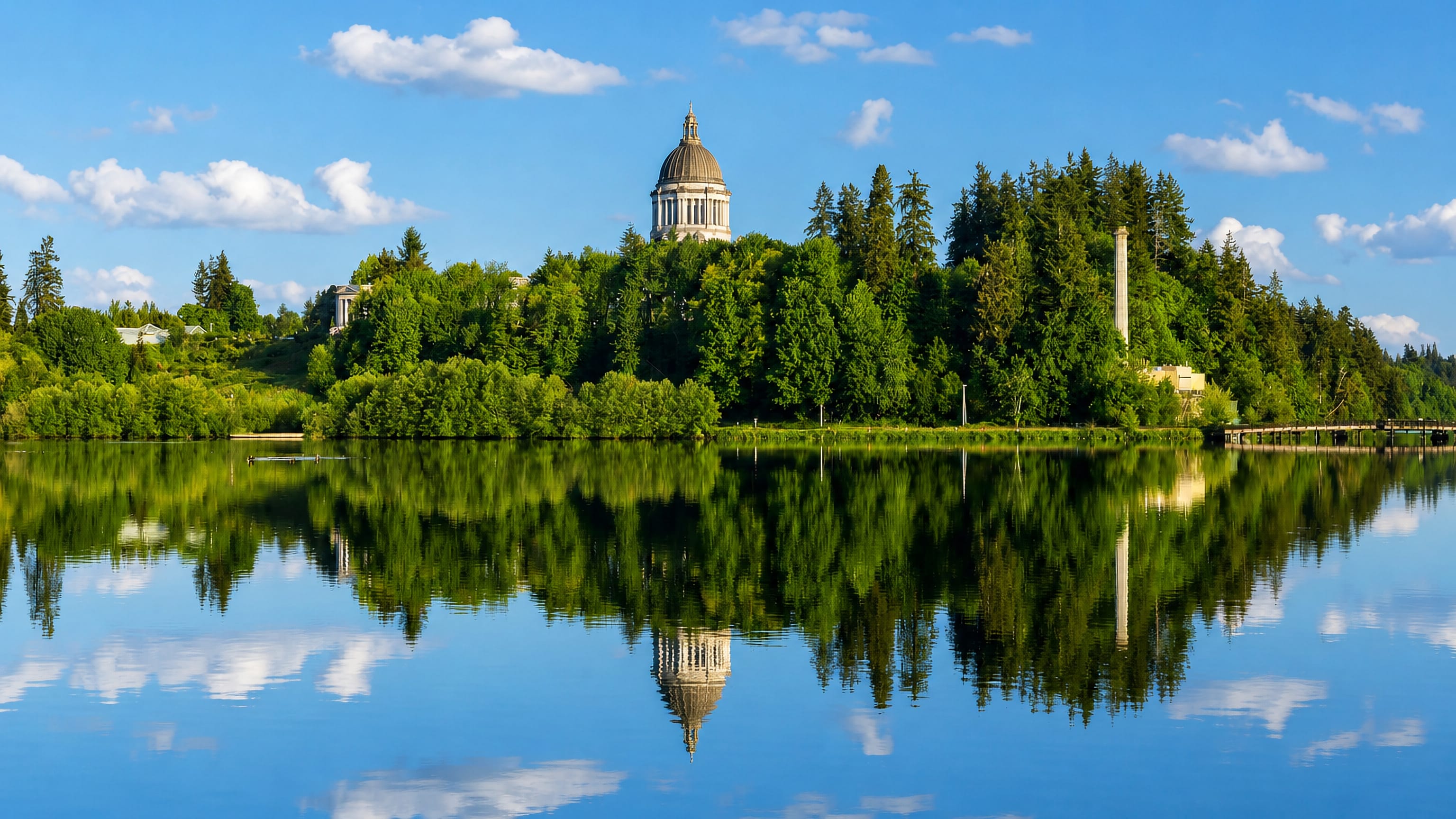
United States · Washington
Where to Stay in Olympia, Washington
Olympia is Washington's capital and the seat of Thurston County, a small city anchoring the South Puget Sound region, founded in 1859.
Hotel links are affiliate links: booking through them may earn us a commission, at no extra cost to you. It never affects how places are ranked. How this works


Where to stay in Olympia
Where the beds are, and what that means for the visit.
Start with the museums. The Hands On Children's Museum and the Olympia Arts & Heritage Alliance Museum both stand inside the small central compass of the capital, and a bed within reach of them settles most of a family trip before any other question is asked. Thurston County is the wider frame.
Beyond the middle, Olympia loosens quickly into residential ground, so a room out there means driving in for anything, which suits you only if the stay is long or the car is coming anyway. Heritage streets are the second choice. The Crosby House, the Funk House and the Captain Calvin and Pamela Hale House survive from the century that followed 1859, and a stay among them buys quiet and an older grain of street in exchange for a walk to everything else.
St. John's Episcopal Church stands on the same ground. Rooms there suit slower visits, the sort that treat Olympia as a place to spend two days in rather than a stop on the way to Seattle. One more consideration: the distance from Seattle.
Olympia lies about fifty miles southwest of it, far enough that a night here is a deliberate choice rather than an overflow from the larger city, and near enough that the drive between them is nothing much. The scale is human. Nowhere in Olympia is far from anywhere else in it, which is what makes the choice of area matter less here than the choice of dates.
Find hotels in Olympia
Direct booking searches for these neighbourhoods.
Around the Hands On Children's Museum
The Hands On Children's Museum and the Olympia Arts & Heritage Alliance Museum stand within the same short walk of central OlympiaFind hotels in Around the Hands On Children's MuseumSlow stays among the Crosby House and the Funk HouseThe Crosby House streets
The Crosby House, the Funk House and the Captain Calvin and Pamela Hale House give these blocks the oldest grain in Olympia. Lodging is scarce in this area; reserve in advance.Find hotels in The Crosby House streetsDrivers wanting space on the Thurston County side of OlympiaThe outer Thurston County edges
Olympia thins into residential Thurston County ground where a car replaces the walk to St. John's Episcopal ChurchFind hotels in The outer Thurston County edgesHotel links are affiliate links: booking through them may earn us a commission, at no extra cost to you. It never affects how places are ranked. How this works
About Olympia
Government and music, oddly paired.
What is Olympia known for?
Olympia holds the Washington state capital and the Thurston County seat, which fills the working week with legislative business that has nothing to do with the alternative culture the city sends out across the Pacific Northwest. Both are true at once. The Hands On Children's Museum and the Olympia Arts & Heritage Alliance Museum sit within the same small compass as the offices, and the mix is what visitors remember.
What are the main landmarks in Olympia?
Seven names hold the roster. Two are museums, the Hands On Children's Museum and the Olympia Arts & Heritage Alliance Museum, and both work as indoor days when the weather off the Sound closes in. The rest are houses and a church.
Crosby House, Funk House and the Captain Calvin and Pamela Hale House stand for the families who built here after 1859, while the Daniel R. Bigelow House carries the name of one of them into the present day. St. John's Episcopal Church completes it.
What is the history of Olympia?
1859 is the founding date. Olympia was fixed as the seat of Thurston County and as the capital of Washington, two roles that a place of this size would not otherwise carry, and the pairing has shaped everything the city has done since. Government came first.
The decision to put the capital here gave a small city on the South Puget Sound an institutional weight that no other town of its size in Thurston County ever acquired, and the buildings followed the decision. Private houses hold the remainder of the story. The Daniel R. Bigelow House, the Crosby House and the Captain Calvin and Pamela Hale House all carry family names from the decades that followed the founding.
The second story is cultural. Olympia became a breeding ground for alternative culture in the Pacific Northwest, sending out music and personalities far out of proportion to its size, and that reputation sits alongside the government business as the other thing the city is known for. St. John's Episcopal Church predates all of it.
The Funk House does too, and the Olympia Arts & Heritage Alliance Museum exists to hold the records of both stories, the official one and the one that arrived much later.
Where is Olympia?
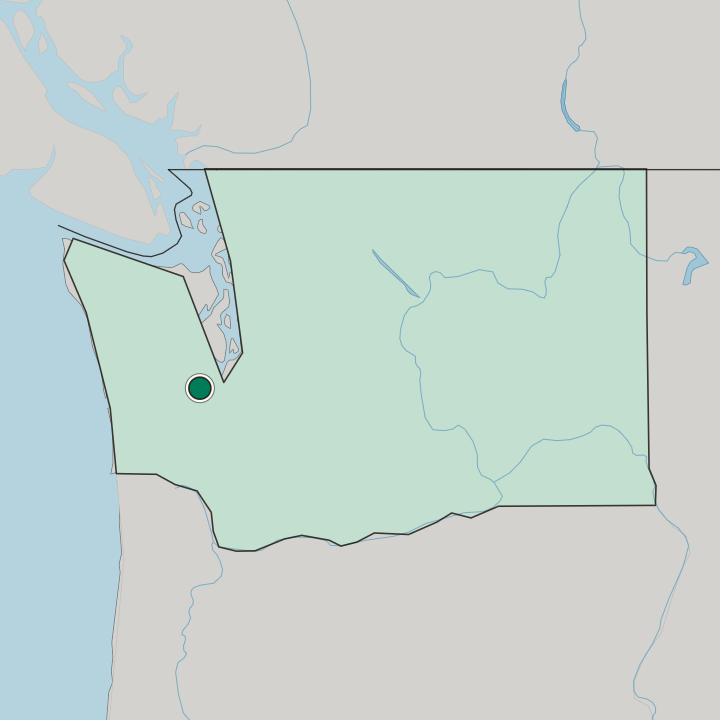
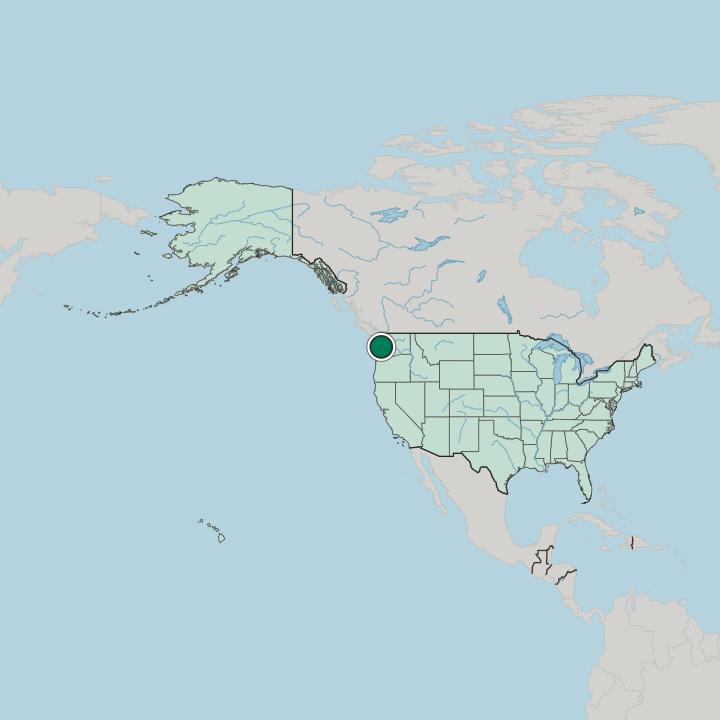
Water ends the journey here. Olympia sits at the southern end of Puget Sound, where the inlets narrow and the South Sound region hands over to the ground behind it, and Thurston County spreads around the city on every landward side. Not much of it is built up.
Roughly twenty square miles hold the whole of it, and Olympia lies about fifty miles southwest of Seattle, far enough down the water to feel like the end of a road rather than a stop along one.
What is the climate of Olympia?
Rain defines the calendar. Air moving in off Puget Sound keeps Olympia's winters mild and persistently wet, while the same water clips the top off whatever summer heat inland Thurston County manages to gather. Snow is rare and brief.
What the capital gets instead is a long damp stretch broken by a reliably dry gap in high summer, which is when the South Sound is at its best.
How do you get to Olympia?
Seattle is the usual first stop. Olympia lies about fifty miles southwest of it, a straight run by road at the southern end of Puget Sound, so most visitors arrive having already passed through the larger city. The last stretch is straightforward.
Once inside Thurston County the roads converge on the capital, and the small central district around St. John's Episcopal Church can be reached on foot from almost anywhere a car is left.
Common questions
What is the best area to stay in Olympia?
Around the Hands On Children's Museum: Families basing a trip on the Hands On Children's Museum. The Crosby House streets: Slow stays among the Crosby House and the Funk House. The outer Thurston County edges: Drivers wanting space on the Thurston County side of Olympia.
More cities in Washington
Updated September 2026