Uruguay
Departamento de Salto, Uruguay — Towns & Travel Guide
Salto is both a city and the department around it, Uruguayan country ending westward at the Río Uruguay and the frontier with Argentina.
Hotel links are affiliate links: booking through them may earn us a commission, at no extra cost to you. It never affects how places are ranked. How this works


Towns & cities in Departamento de Salto
One town here has its own guide — it links to where to stay.

 Uruguay
Salto
Salto is a city of northwest Uruguay on the Uruguay river, the country's second city, famed for its hot springs and orange groves on the Argentine border.Where to stay →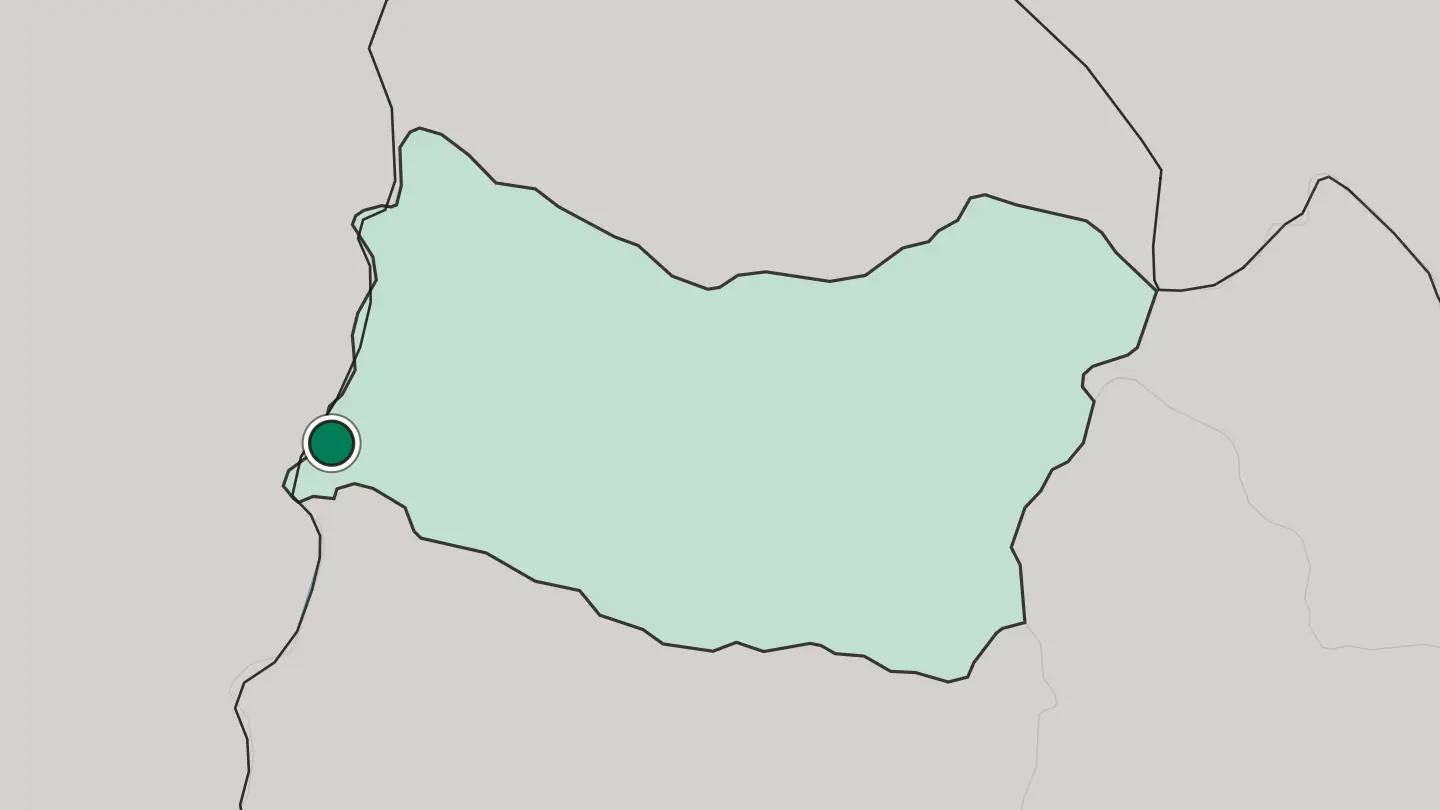
Hotel links are affiliate links: booking through them may earn us a commission, at no extra cost to you. It never affects how places are ranked. How this works
About Departamento de Salto
Water on one side, neighbours on the other three.
What is Departamento de Salto known for?
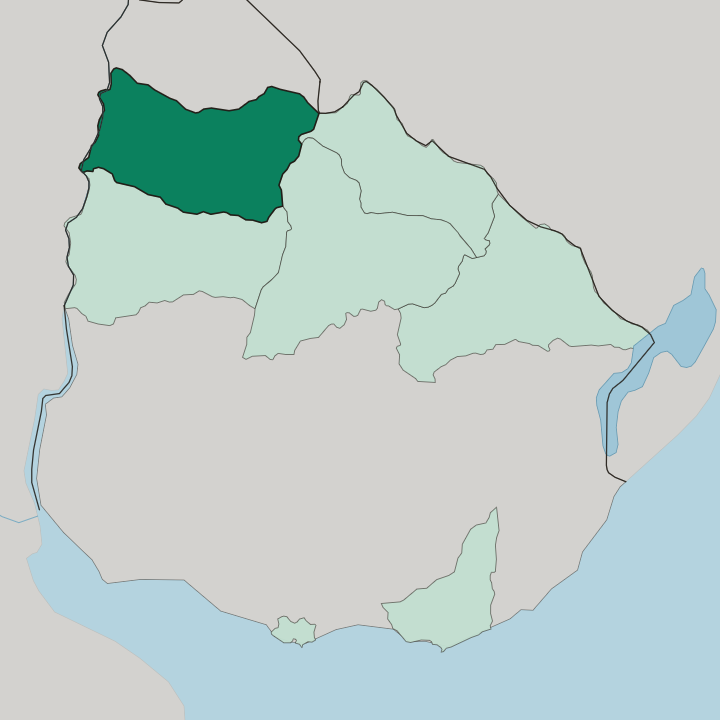
The Río Uruguay carries the department's western limit and separates it from Argentina, while Artigas Department closes the north, Paysandú Department the south, and the departments of Rivera and Tacuarembó the eastern side. Salto city gives the unit its name. Its founding year is 1837, and the seat has stayed in the city on the river ever since.
Where is Departamento de Salto?
Departamento de Salto covers a wide block of country with the Río Uruguay along one flank. That river is the western limit, and because it also carries the international boundary, the far bank belongs to Argentina rather than to another department. Artigas Department adjoins the north.
Southward the ground continues into Paysandú Department, while the eastern side backs onto Rivera and Tacuarembó, so the department bridges river country in the west and inland country in the east. Few departments on the Uruguayan map cover more ground. Two very different kinds of edge give this department its shape.
One is water. The Río Uruguay makes a boundary that is plain on the ground, and the whole western side of the department is arranged with reference to it. The other edges are lines drawn between Salto and its neighbours, running through open country where nothing underfoot announces the change from one department to the next.
Salto city sits on the river side. The department has been administered from there since 1837, which keeps its busiest quarter close to the water and leaves the interior to farmland and small settlements.
What is Departamento de Salto like?
Spanish carries everything here, from the offices in Salto to the farms out toward Tacuarembó. A river frontier sits at the department's back. Because the far bank of the Río Uruguay belongs to Argentina, the department keeps a foreign shore permanently in view, which is a different daily experience from the one lived in the landlocked departments to the east.
Paysandú Department to the south shares the same river frontage. Distance does the rest: the eastern boundaries with Rivera and Tacuarembó lie far from the water, and life out there turns inland instead of toward the far bank. The department dates from 1837.
It belongs to the middle layer of Uruguay's administrative history, and it has carried the name of its capital for that whole span, through every generation that has farmed the country between the river and the interior. One word covers city and department. Which of the two a speaker means is decided by the sentence around it, and a visitor sorts the difference out quickly once a bus timetable or a postal address has been read.
That doubling is standard across the country.
What is the history of Departamento de Salto?
The department was established in 1837. Its seat was the city of Salto on the Río Uruguay, and the department has borne that city's name from the beginning. Three land boundaries and one river define it.
Artigas Department to the north, Paysandú Department to the south, and the Rivera and Tacuarembó boundaries in the east complete an outline that the Río Uruguay closes in the west.
What is the climate of Departamento de Salto?
Heat peaks around the new year. The department lies well inside the subtropical band of the southern hemisphere, so its summers run long and its winters short, and the coldest weeks fall when the northern hemisphere is at its warmest. The Río Uruguay is the one large body of water in reach.
Inland toward Tacuarembó the summer air sits heavier, away from the river and its bank.
How do you get to Departamento de Salto?
Salto is the way in. The city on the Río Uruguay concentrates the department's connections, and roads run out from it north to Artigas Department, south to Paysandú Department and east into the interior toward Rivera and Tacuarembó. The river is a boundary, not a road.
Anyone approaching from Argentina crosses an international frontier rather than a departmental line.
Common questions
What is the best area to stay in Departamento de Salto?
Salto: visitors who want the river capital as a base. The eastern interior toward Rivera and Tacuarembó: drivers crossing the department away from the water.
More regions in Uruguay
Updated September 2026