Uruguay: Regions, Cities & Travel Guide
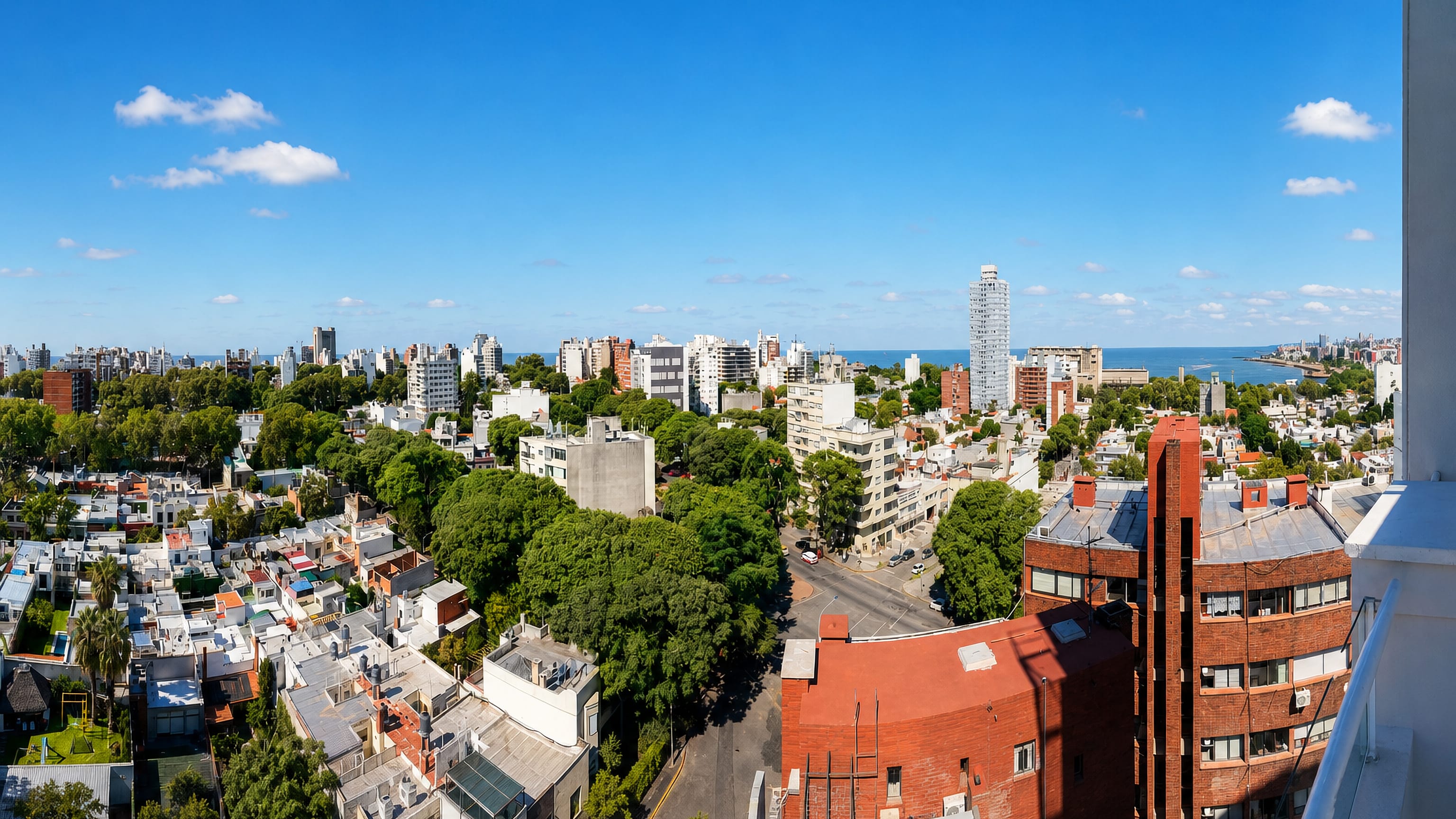
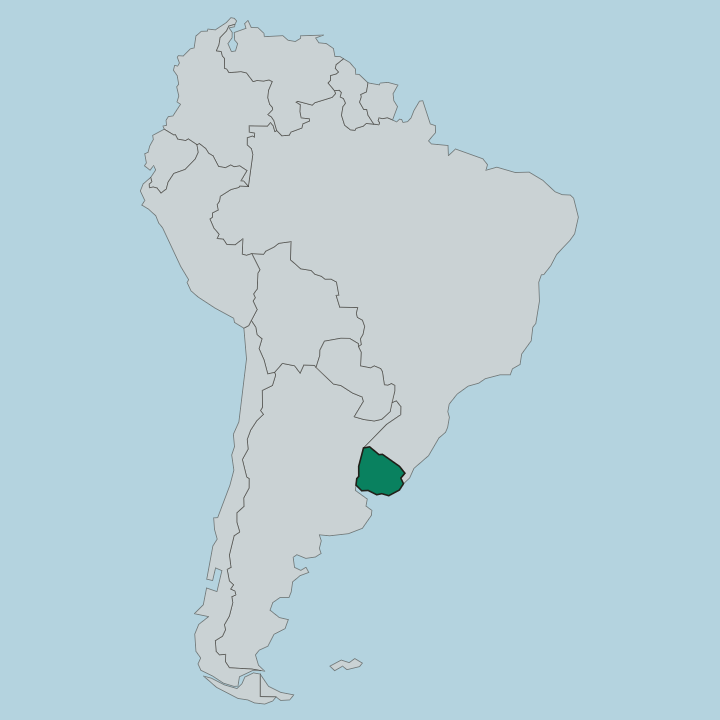
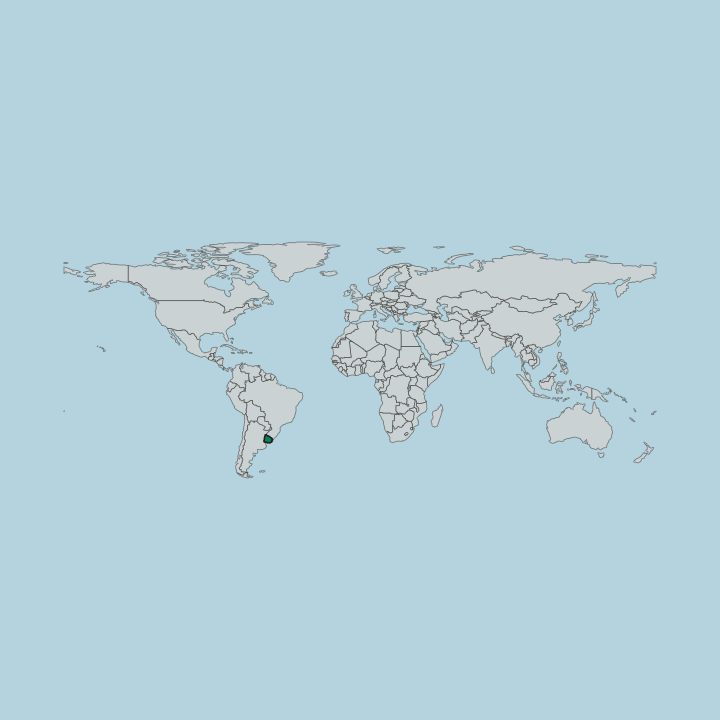
Uruguay is a small South American country between Argentina and Brazil, with Montevideo on the Río de la Plata.
Hotel links are affiliate links: booking through them may earn us a commission, at no extra cost to you. It never affects how places are ranked. How this works


Top destinations in Uruguay
Cities to start from, then drill into areas and hotels.
 Uruguay
Montevideo
Wide water opens along the Río de la Plata at Montevideo, capital and largest city of Uruguay, known for the Artigas Mausoleum and its museum quarter.Where to stay →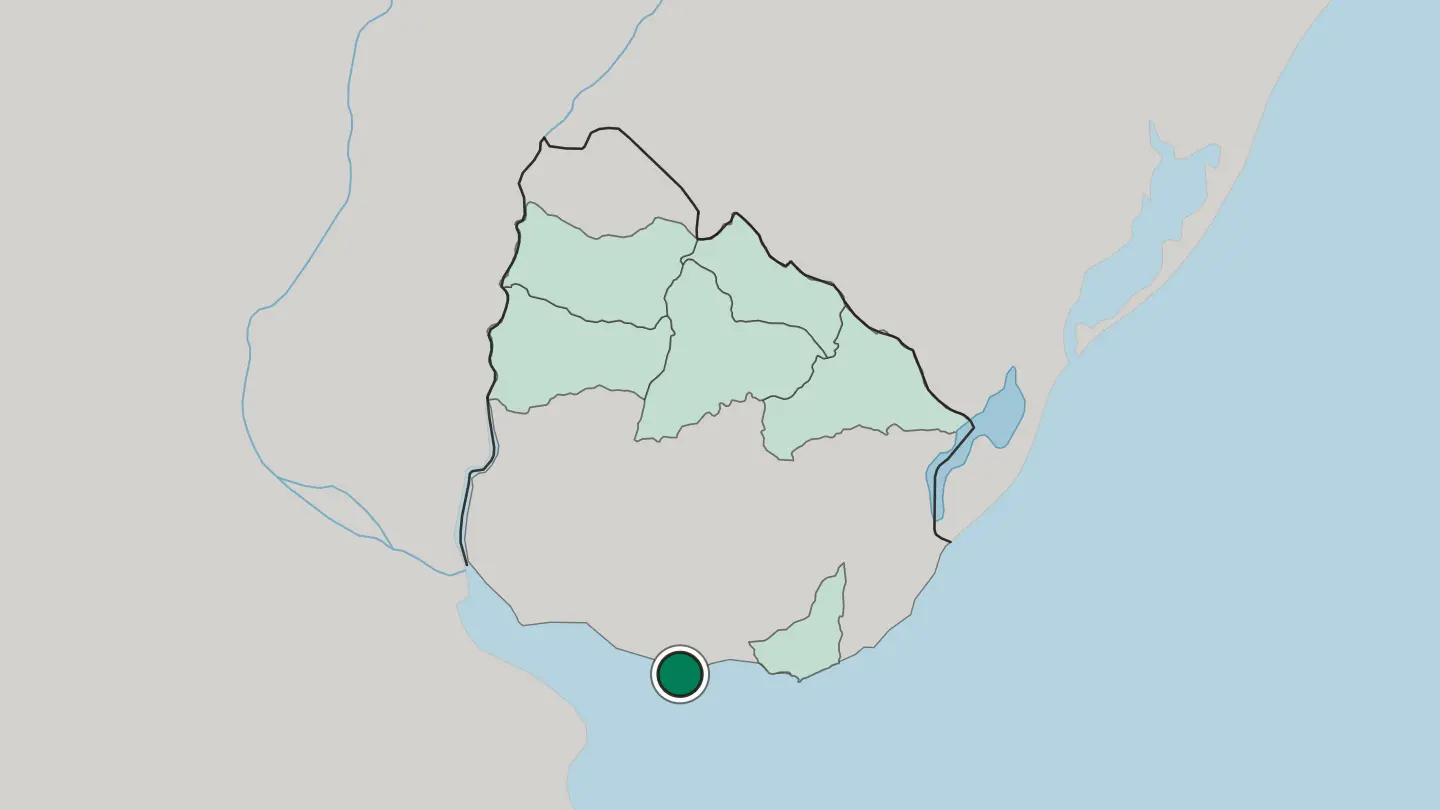
 Uruguay
Salto
Salto is a city of northwest Uruguay on the Uruguay river, the country's second city, famed for its hot springs and orange groves on the Argentine border.Where to stay →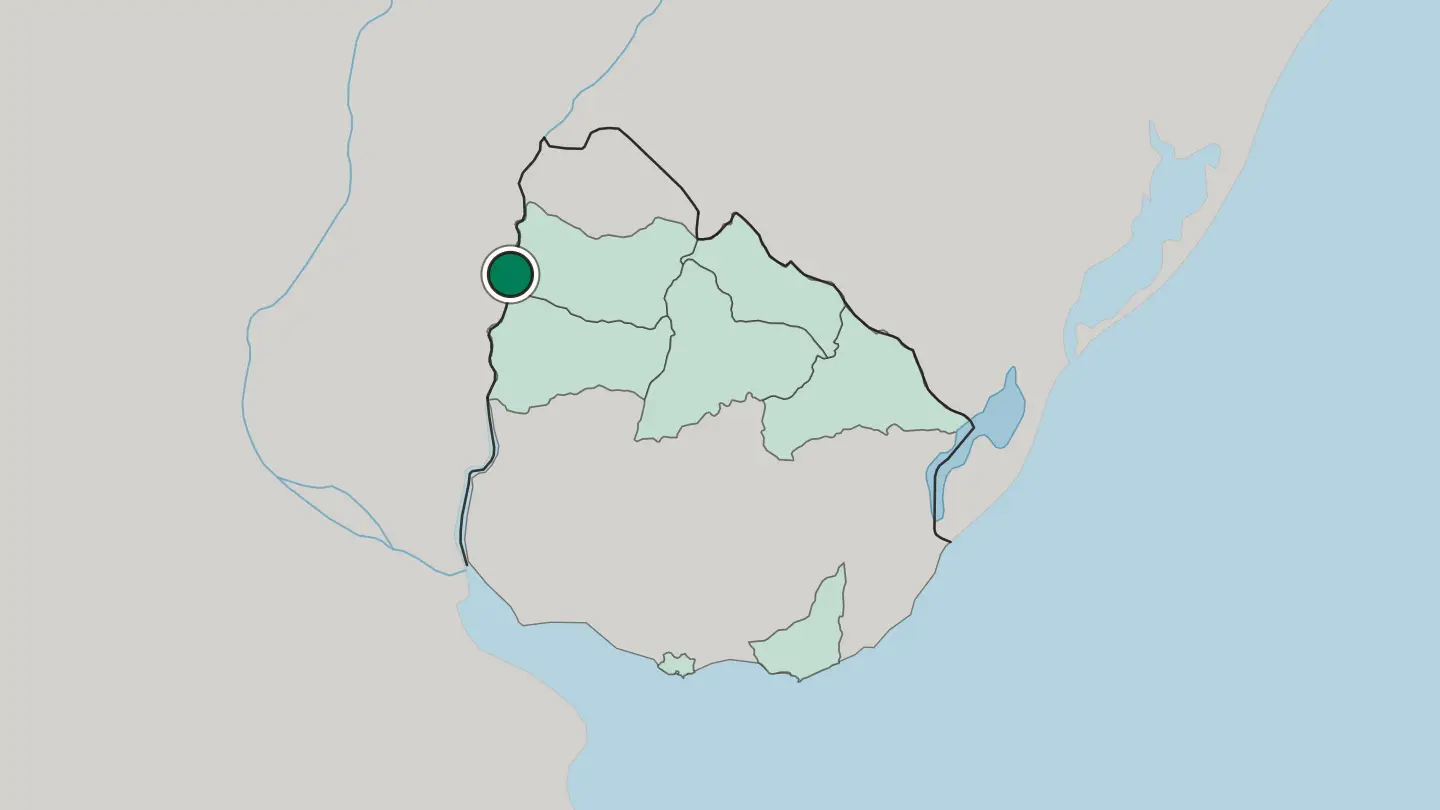
 Uruguay
Rivera
Rivera is a hill town on Uruguay's frontier with Brazil, joined street by street to Santana do Livramento on the far side of the line.Where to stay →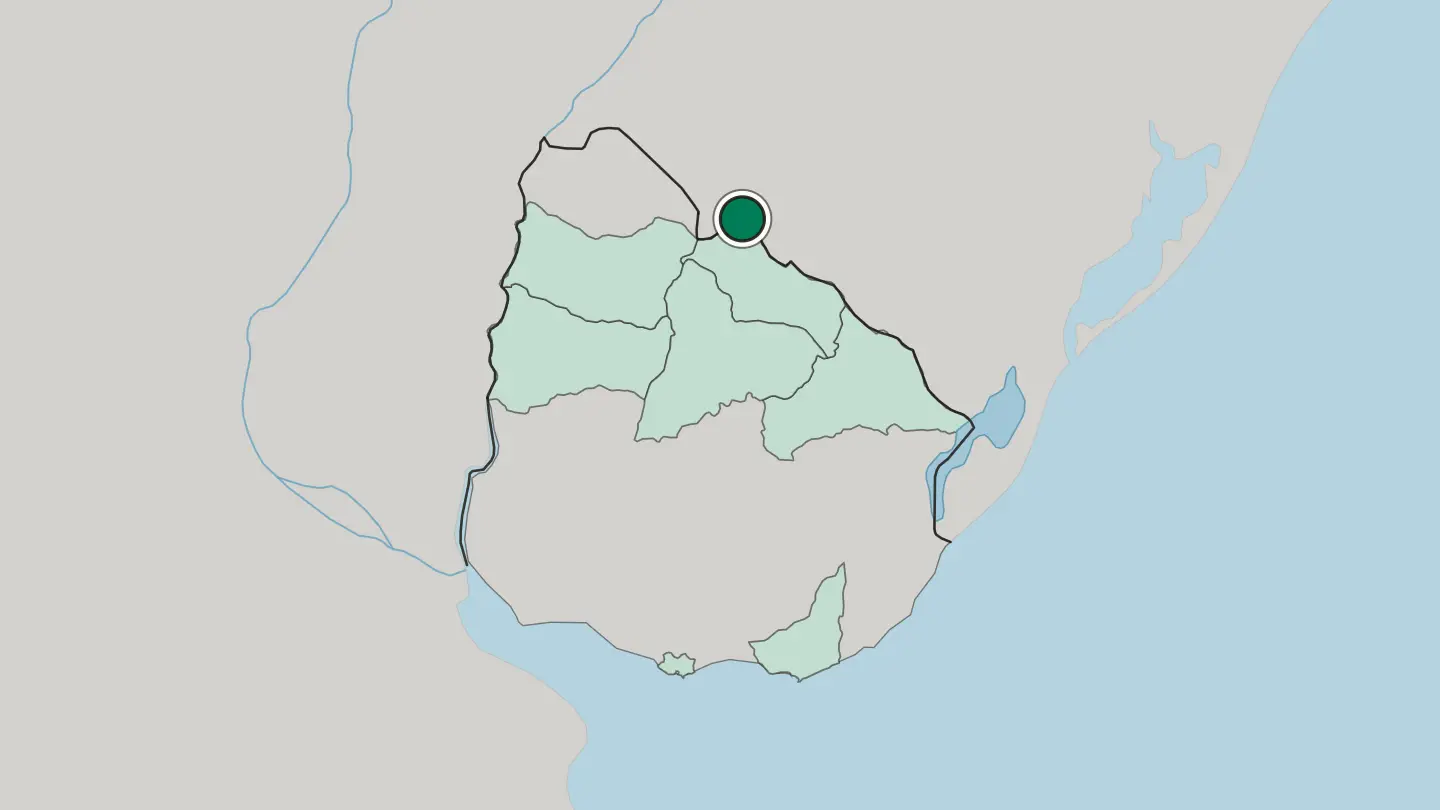
 Uruguay
Maldonado
Maldonado is a city of southeast Uruguay near the Atlantic, an old colonial town beside the great beach resort of Punta del Este.Where to stay →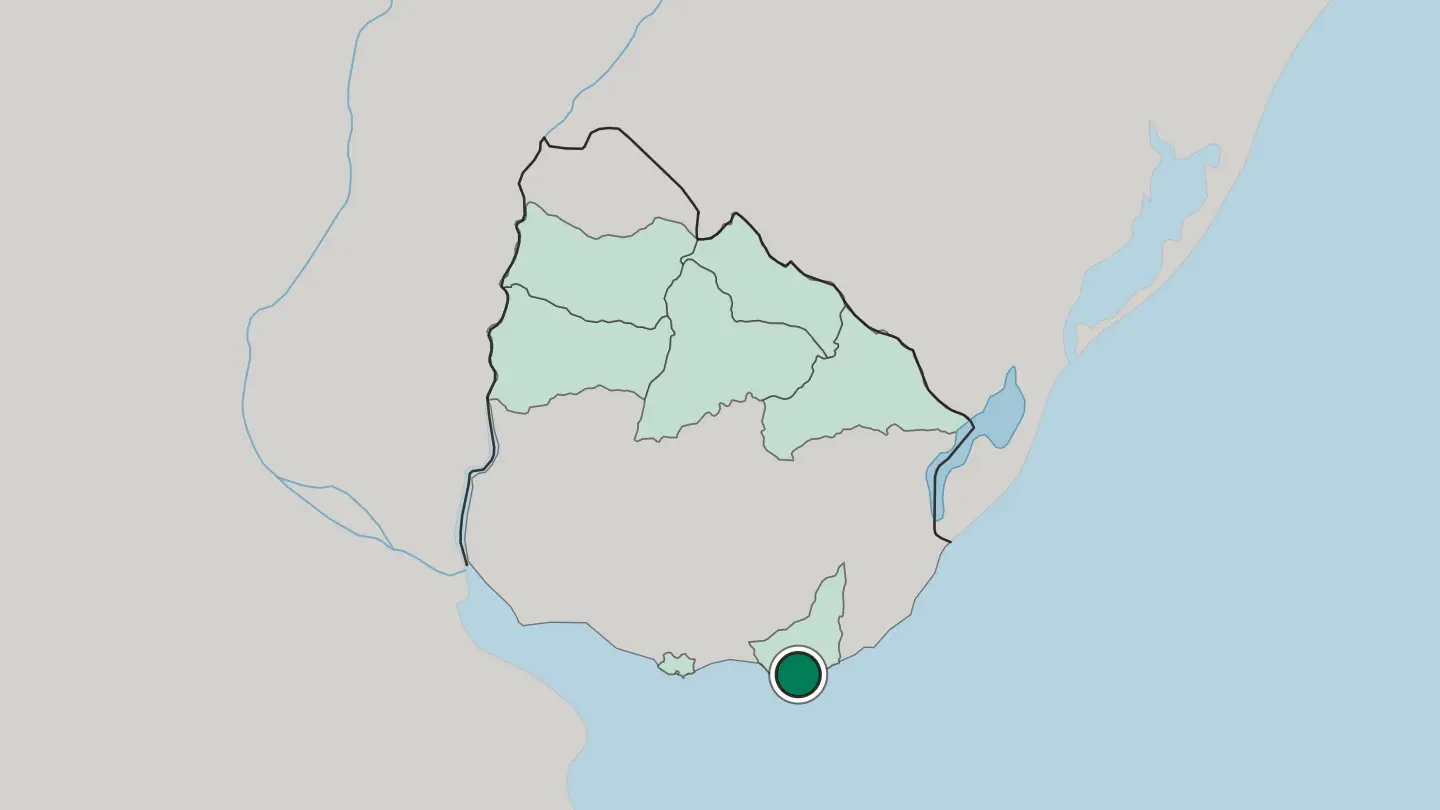
 Uruguay
Paysandú
Paysandú stands on the bank of the Uruguay River, capital of its department and the fourth-largest city in Uruguay, facing Colón in Argentina.Where to stay →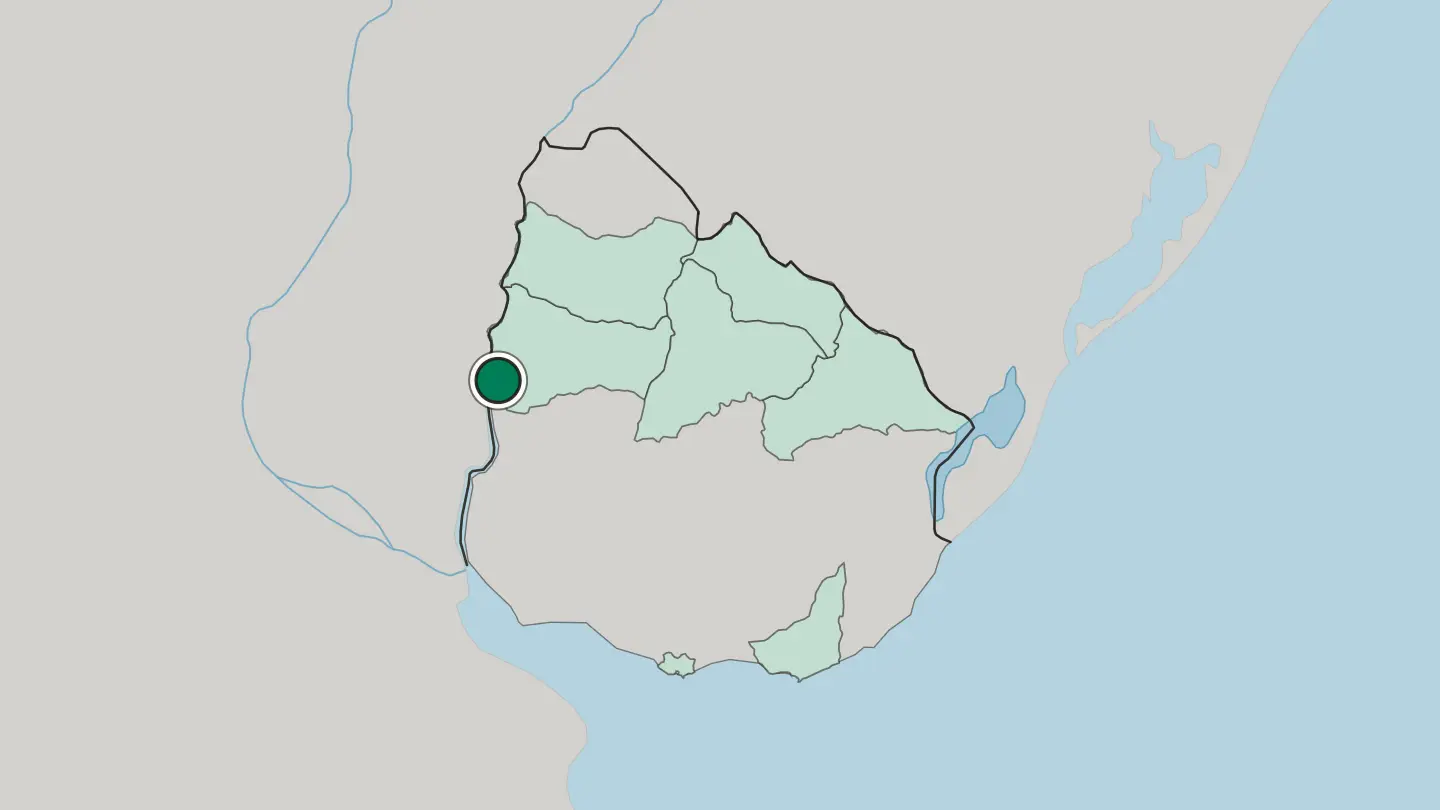 Uruguay
Tacuarembó
Tacuarembó is the capital of Uruguay's Tacuarembó Department, a gaucho town named among the birthplaces claimed for Carlos Gardel.Where to stay →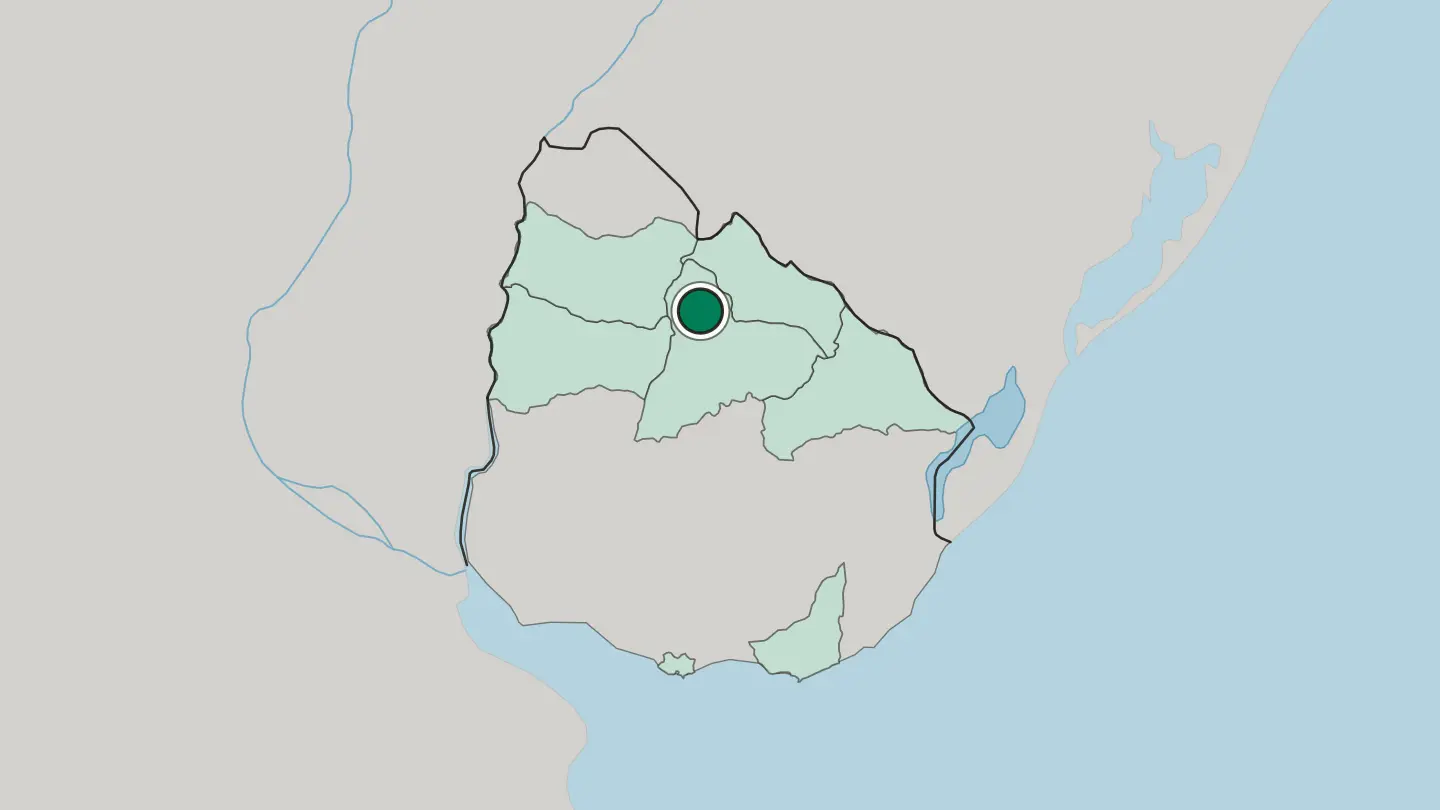
 Uruguay
Melo
Melo is the capital of Cerro Largo, a department of north-eastern Uruguay, laid out in 1795 around the cathedral at its centre.Where to stay →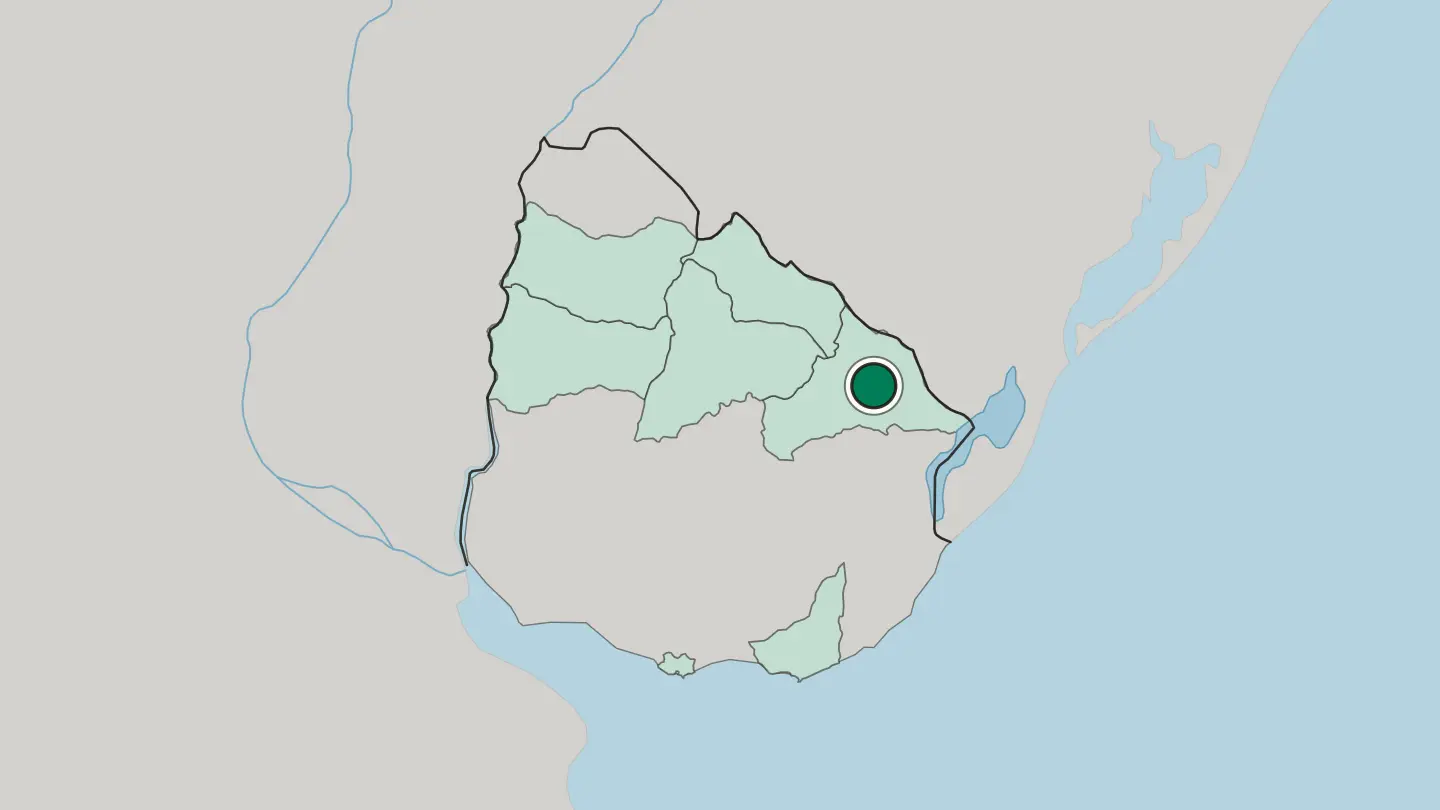
Hotel links are affiliate links: booking through them may earn us a commission, at no extra cost to you. It never affects how places are ranked. How this works
Regions of Uruguay
Uruguay
Departamento de Cerro Largo
Departamento de Cerro Largo lies in the east of Uruguay, bordered by Brazil along the Yaguaron River, with Melo as its capital.Towns & cities →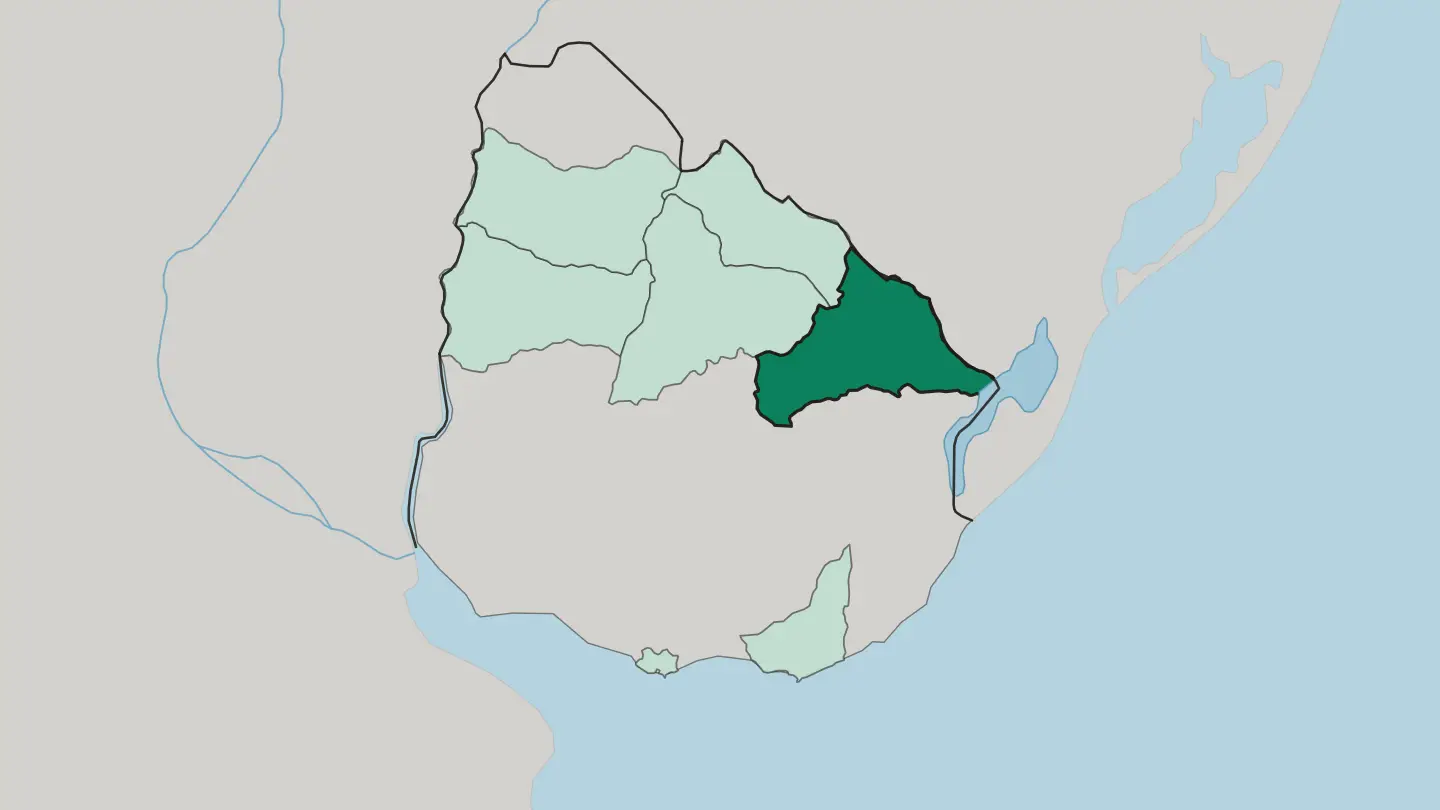 Uruguay
Departamento de Maldonado
Departamento de Maldonado is a department of Uruguay, created in 1816 and named for the city of Maldonado, its capital.Towns & cities →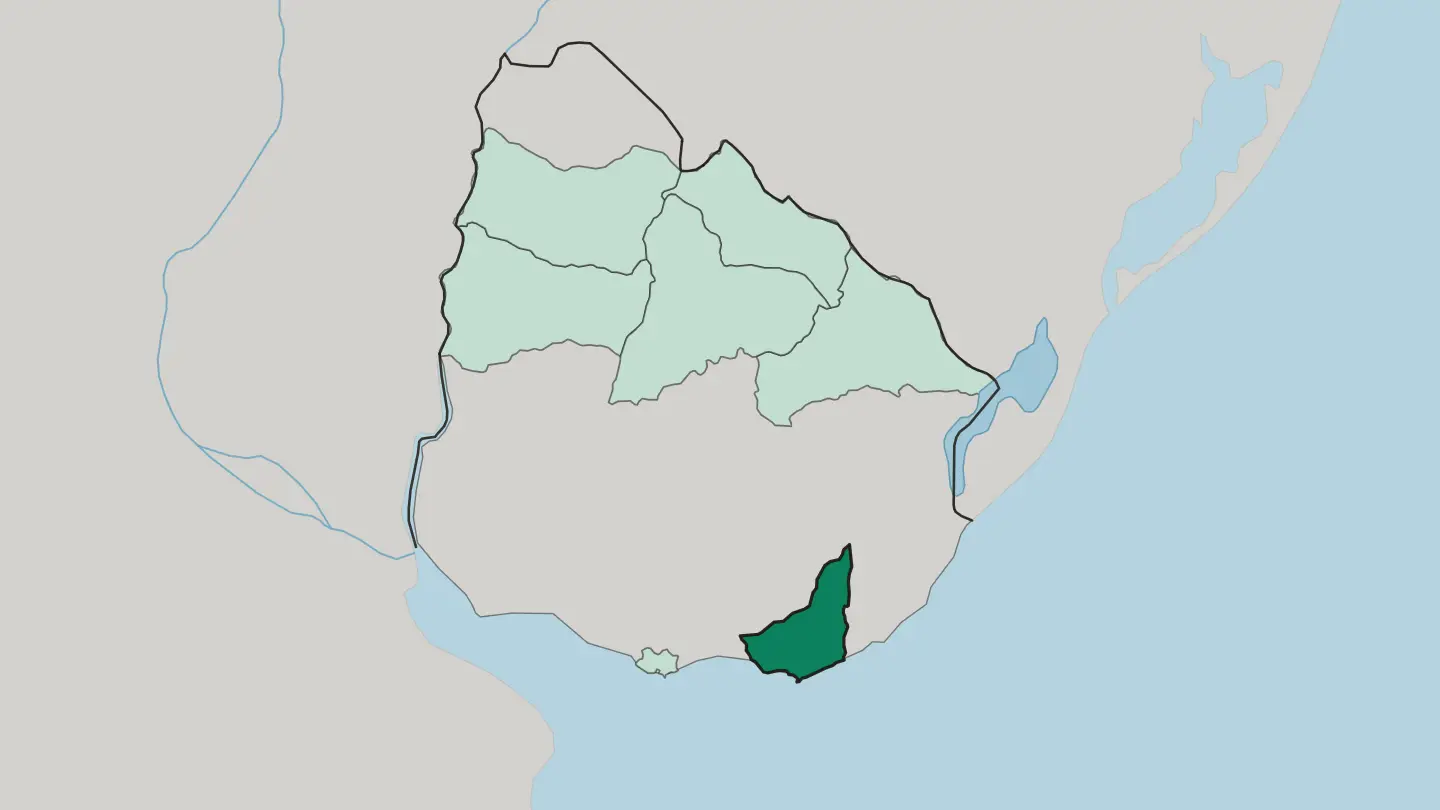 Uruguay
Departamento de Montevideo
Departamento de Montevideo is the smallest and most populated department of Uruguay, built almost entirely around the capital city of Montevideo.Towns & cities →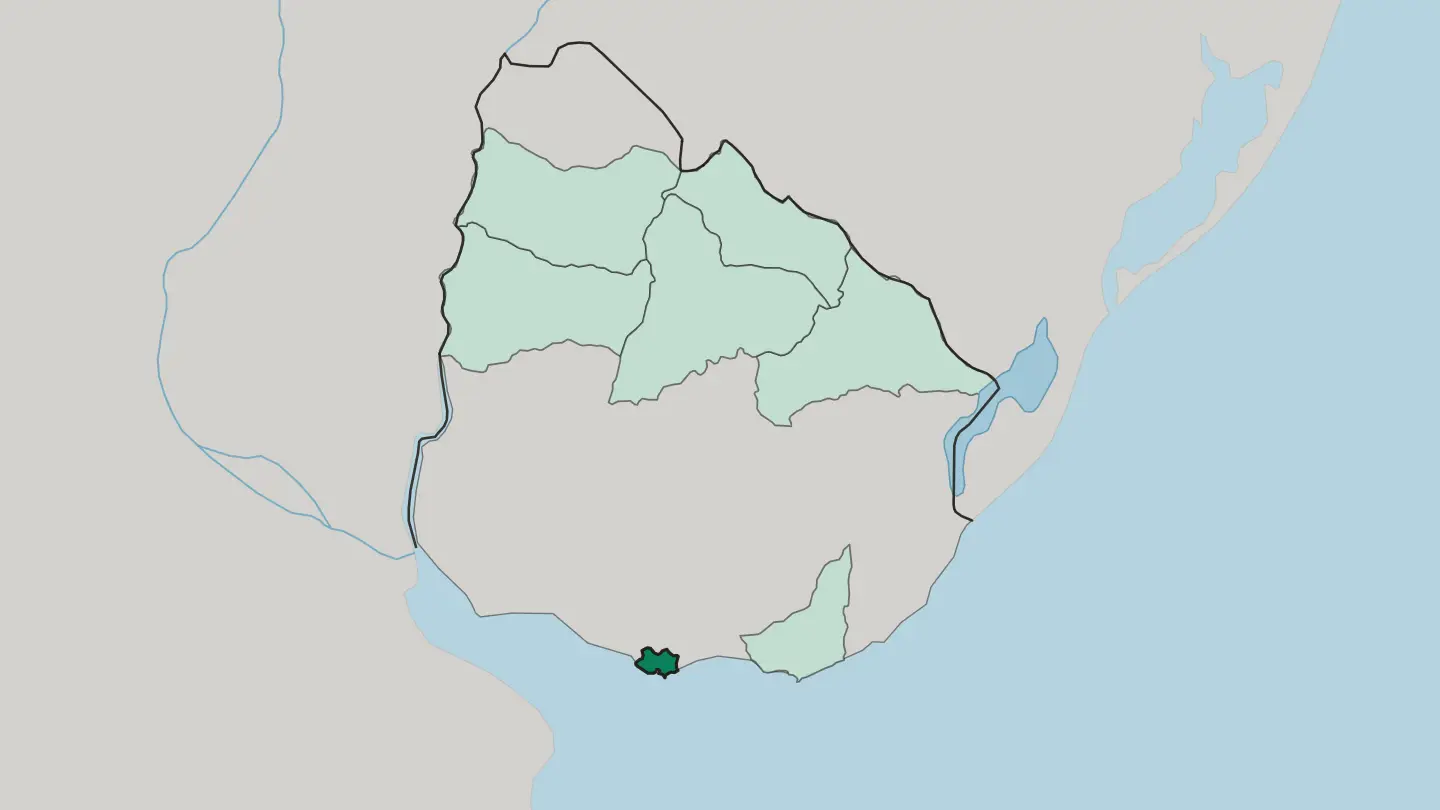 Uruguay
Departamento de Paysandú
Departamento de Paysandú runs along the Río Uruguay, the river boundary with Argentina, and takes its name from its capital city, Paysandú.Towns & cities →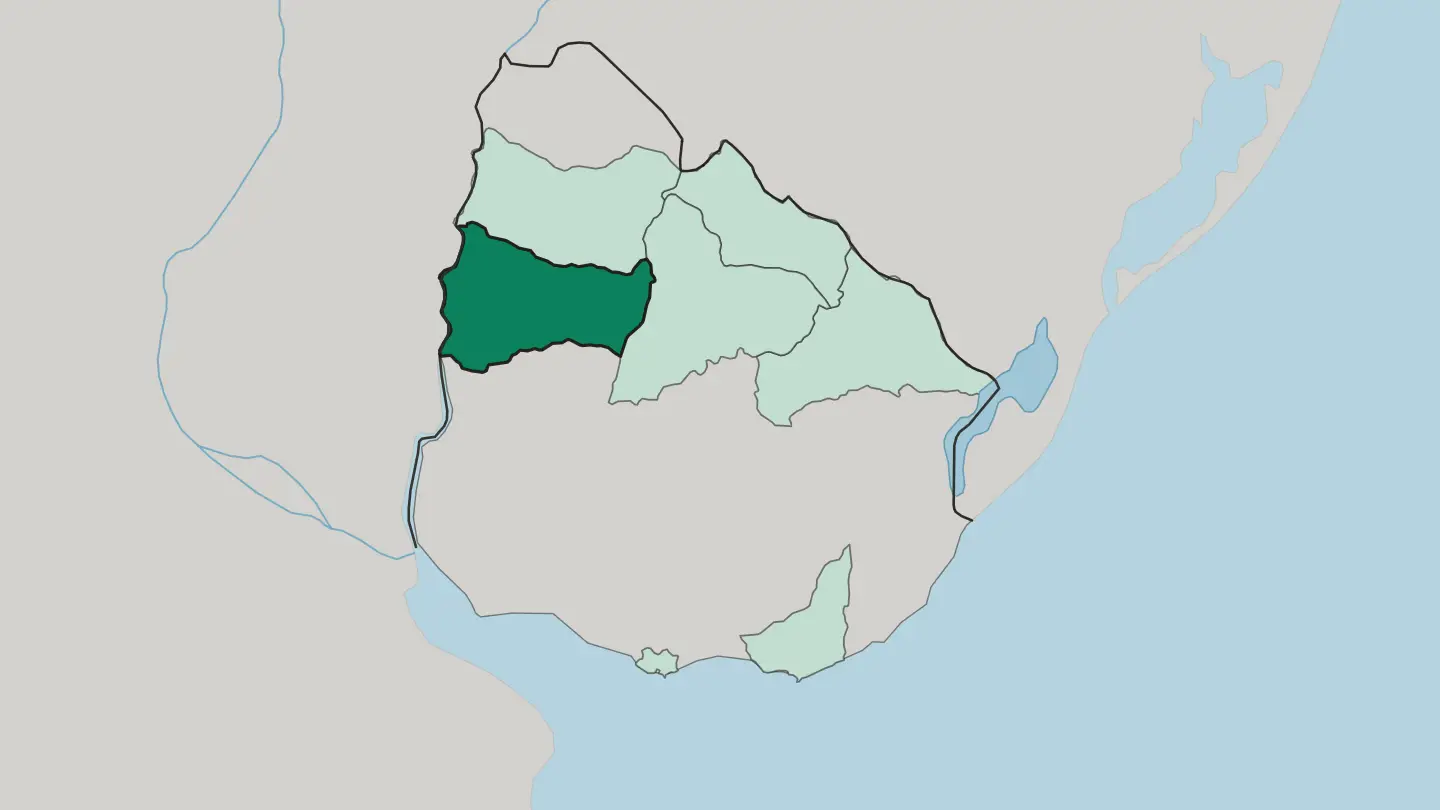 Uruguay
Departamento de Rivera
Departamento de Rivera meets Brazil along its northern and eastern boundary, and takes its name from its capital, the city of Rivera.Towns & cities →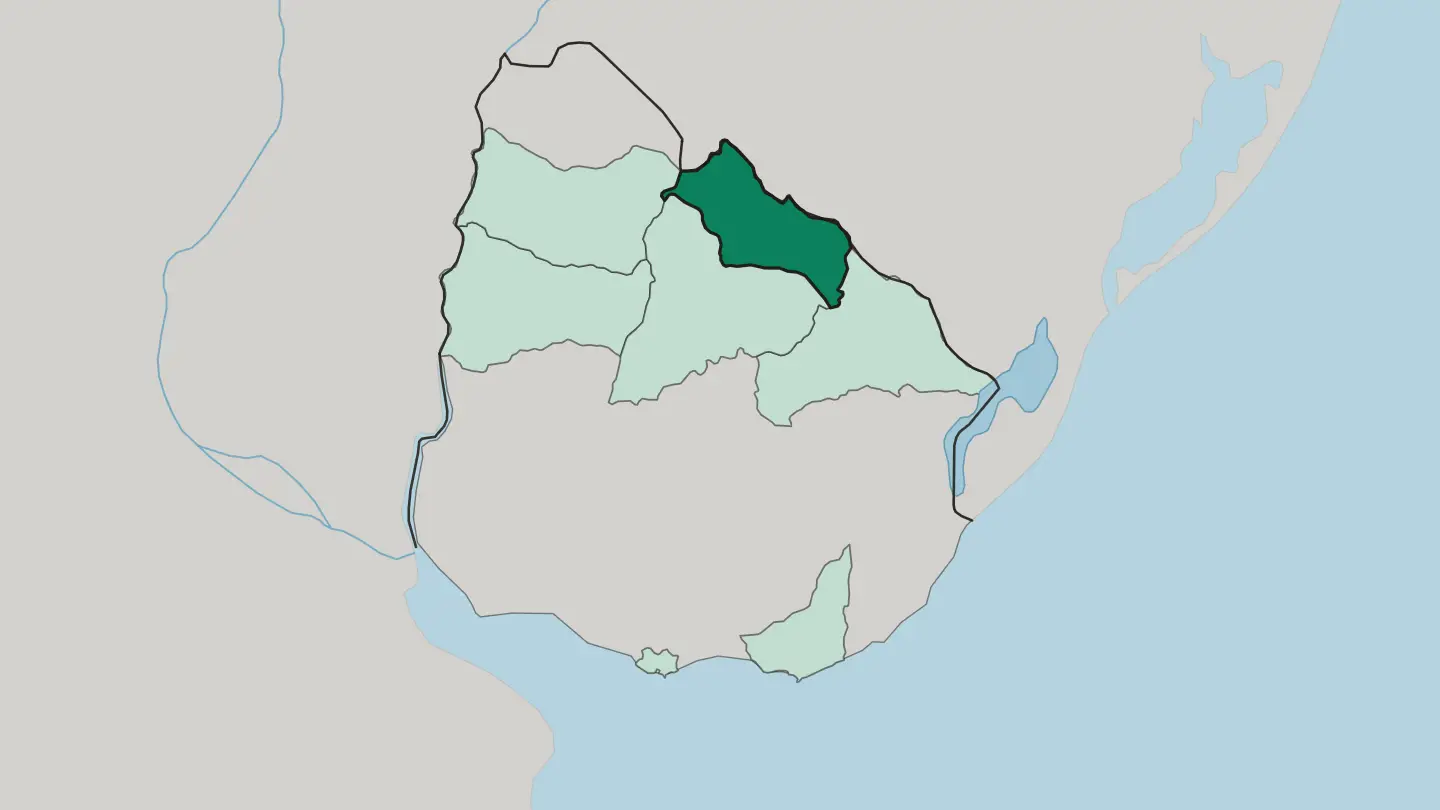 Uruguay
Departamento de Salto
Salto is both a city and the department around it, Uruguayan country ending westward at the Río Uruguay and the frontier with Argentina.Towns & cities →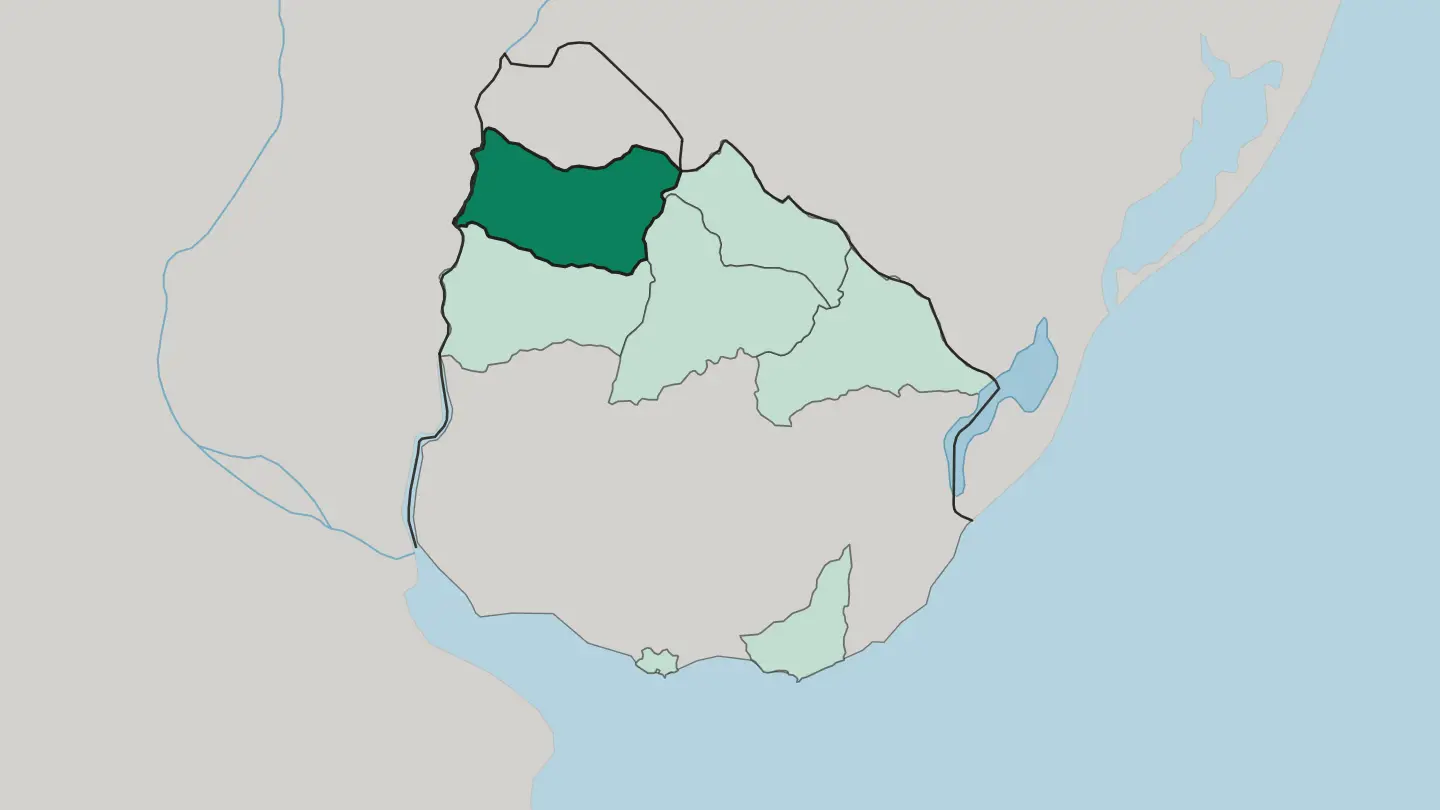 Uruguay
Departamento de Tacuarembó
Departamento de Tacuarembó is the largest of Uruguay's departments, reaching from the Rivera boundary south to the Río Negro. Its capital is Tacuarembó.Towns & cities →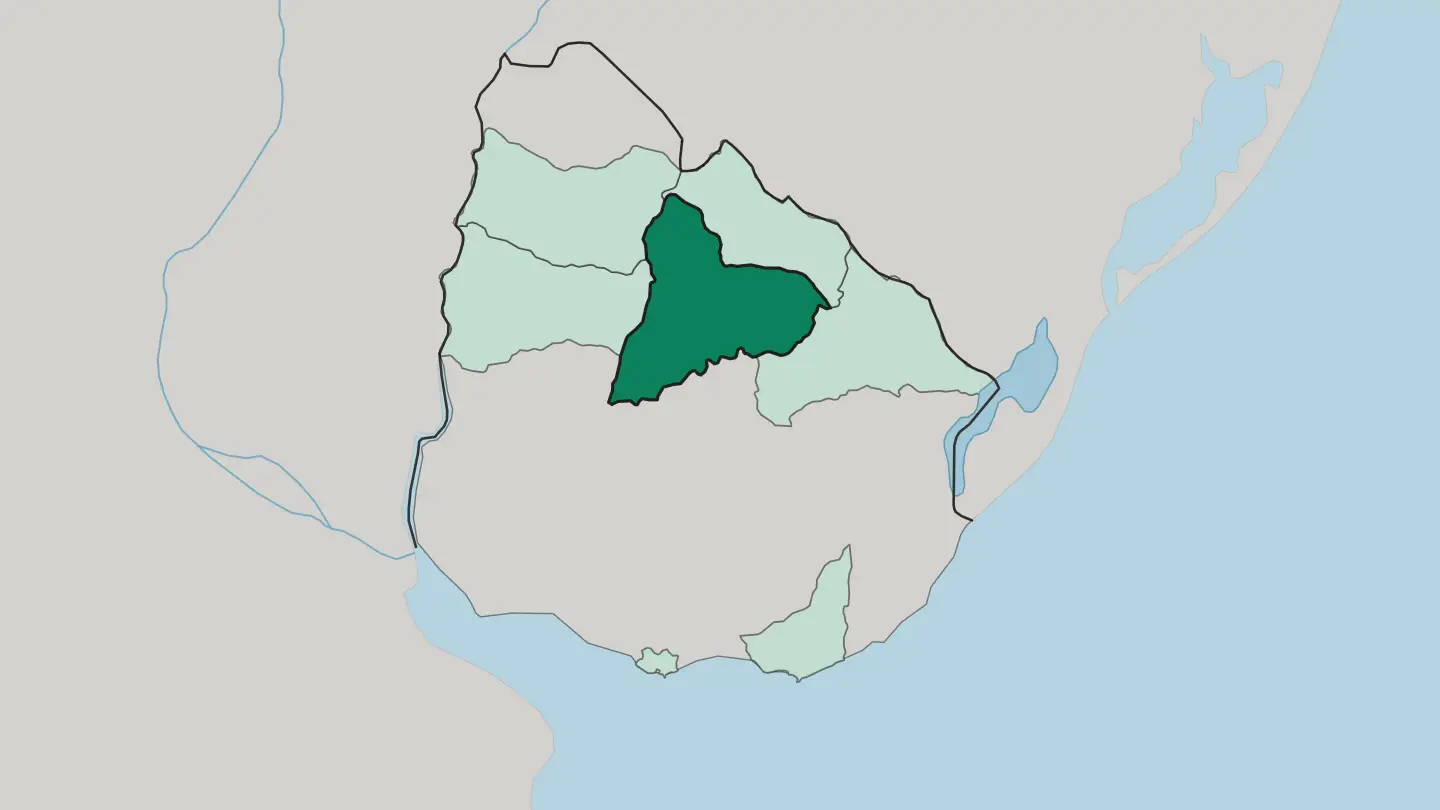
Explore by experience
Not sure which place? Start from how you want to travel.

About Uruguay
Uruguay is known for grass.
What is Uruguay known for?
Rolling grazing country covers most of the land, and cattle on it feed the asado that anchors every Sunday. The capital, Montevideo, faces the wide brown Río de la Plata and gives the country its tango, its candombe drumming, and its long seafront rambla. East of it the Atlantic beaches run from the resort headland of Punta del Este to the fishing village of Punta del Diablo, while west along the estuary sits the cobbled colonial quarter of Colonia del Sacramento.
Mate, sipped from a gourd, threads through all of it.
Where is Uruguay?
Uruguay is the second-smallest country in South America, set in the Southern Cone between Argentina to the west and Brazil to the north and northeast. Its edges are almost all water. The Uruguay River runs down the western border and empties into the Río de la Plata, the broad estuary that forms the southern shore and separates the country from Buenos Aires, while the Atlantic laps the southeast.
Grass defines the interior. Undulating grasslands roll across the great bulk of the land, the southernmost reach of the Pampas that spill in from Argentina, grazed by cattle and sheep and broken only by low hill ranges. Chief among those is the Cuchilla Grande, a spine of gentle ridges running up from the south.
Nowhere is it high. Cerro Catedral, the country's highest point, tops out at barely 513 metres in the Sierra Carapé near Maldonado. The Río Negro cuts clear across the middle from the Brazilian border to the Uruguay River, splitting the country into a northern and a southern half.
Its dammed reservoir is the largest artificial lake in the land. Along the Rocha coast the Atlantic shore gives way to lagoons and marsh behind the dunes. From estuary bank to grassy ridge, the relief stays low and open.
What is the history of Uruguay?
Before Europeans came, the grasslands belonged to the Charrúa and other small nomadic bands who hunted deer and rhea across the open country. The Spanish and Portuguese both wanted the estuary. Portugal founded Colonia del Sacramento on the Río de la Plata in 1680 as a smuggling foothold facing Spanish Buenos Aires, and the two crowns fought over the town for a century.
Spain answered by founding Montevideo in the 1720s as a fortified port and naval base. The land became the Banda Oriental, the eastern bank, and the name stuck. Independence came the hard way.
After Spanish rule collapsed, the territory was annexed by the Portuguese-Brazilian empire as the province of Cisplatina, and in 1825 a band remembered as the Thirty-Three Orientals, led by Juan Antonio Lavalleja, crossed the Uruguay River and declared independence. A war followed, and British mediation produced the 1828 treaty that created Uruguay as a buffer state between its two giant neighbours. The young republic then tore itself apart in a long civil war between the Blancos and the Colorados, the two parties that still run through its politics.
Cattle wealth and European immigration, much of it Italian and Spanish, filled Montevideo and built the seafront city on the estuary. That grazing economy still shapes the country.
What is Uruguay like?
Uruguay carries its culture at a walking pace. The country reveres the gaucho, the horseman of the grasslands, and his image of stubborn independence runs through its music, its dress, and its sense of itself. Food is the daily rite.
The asado, meat cooked slowly over wood coals, gathers families for hours, and a gourd of mate passes hand to hand from morning to night in parks, on buses, and along the Montevideo rambla. The capital is the country's cultural engine. Tango grew up along the Río de la Plata on both banks, and Montevideo claims a full share of its songwriters and orchestras.
From the same city comes candombe, the drumming brought by enslaved Africans and now recognised by UNESCO, whose barrel drums fill whole streets during Carnival. That Carnival is among the longest in the world. Immigrant waves, mostly Italian and Spanish, shaped the language, the coffee habit, and the pizza-and-pasta side of the table.
Rugby and football stir deep passion, and the national team's early World Cup triumphs remain a point of pride. The result is a small and literate society with easygoing manners and strong secular traditions. It wears its identity plainly.
What is the climate of Uruguay?
Uruguay has a mild, humid climate that changes little from one end to the other. It lies wholly in the temperate belt, and its seasons are those of the southern hemisphere, so the summer heat peaks in January and the cool grey of July stands in for winter. Neither heat nor cold gets severe.
Warm, wet summers give way to damp, windy winters, and fog rolls in off the Río de la Plata and the Atlantic. The pampero, a cold wind off the Argentine plains, can drop the temperature hard in a single afternoon.
How do you get to Uruguay?
Most travellers arrive through Montevideo. The capital's Carrasco airport, east of the city, handles the main international flights and connects onward to Punta del Este in high summer. The other common route is the water.
Fast ferries cross the Río de la Plata from Buenos Aires to Colonia del Sacramento and Montevideo in a few hours, a favourite hop for visitors coming from Argentina. Buses then reach every corner of a country this size. Nothing is more than a short ride away.
Good for
Updated September 2026