Australia
Northern Territory, Australia — Towns & Travel Guide
The Northern Territory splits Australia's dry heart from its tropical top, holding Uluru, Kakadu and the desert town of Alice Springs.
Hotel links are affiliate links: booking through them may earn us a commission, at no extra cost to you. It never affects how places are ranked. How this works


Towns & cities in Northern Territory
One town here has its own guide — it links to where to stay.
 Australia
Darwin
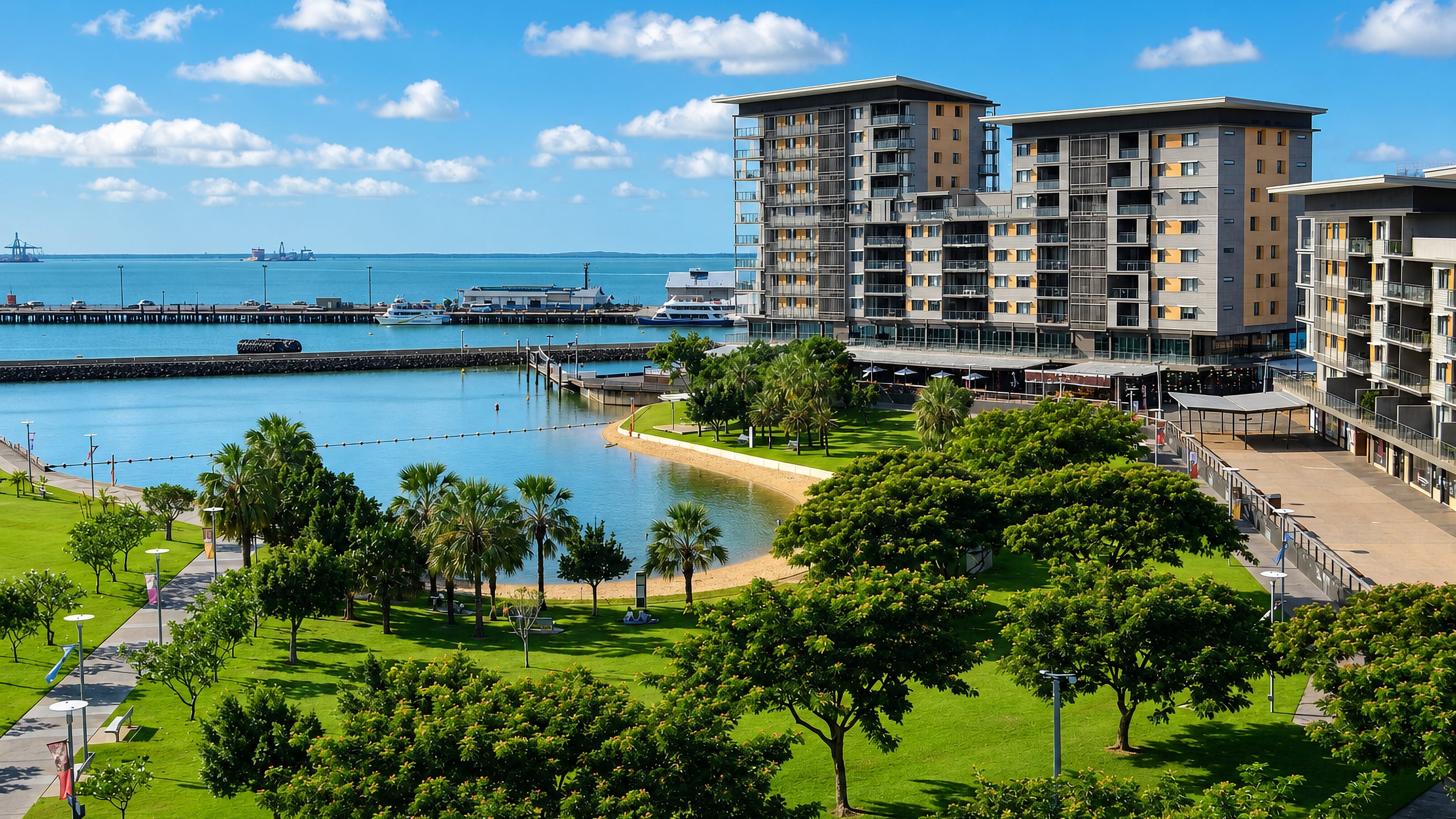
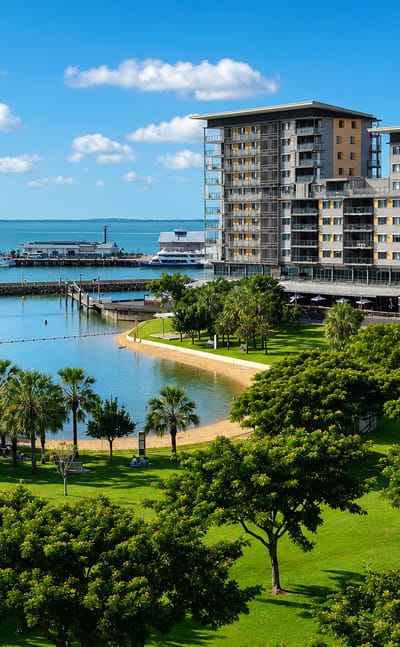
Warm air drifts off the Timor Sea into Darwin, the tropical capital of the Northern Territory, Australia, known for St Mary's Star of the Sea Cathedral.Where to stay →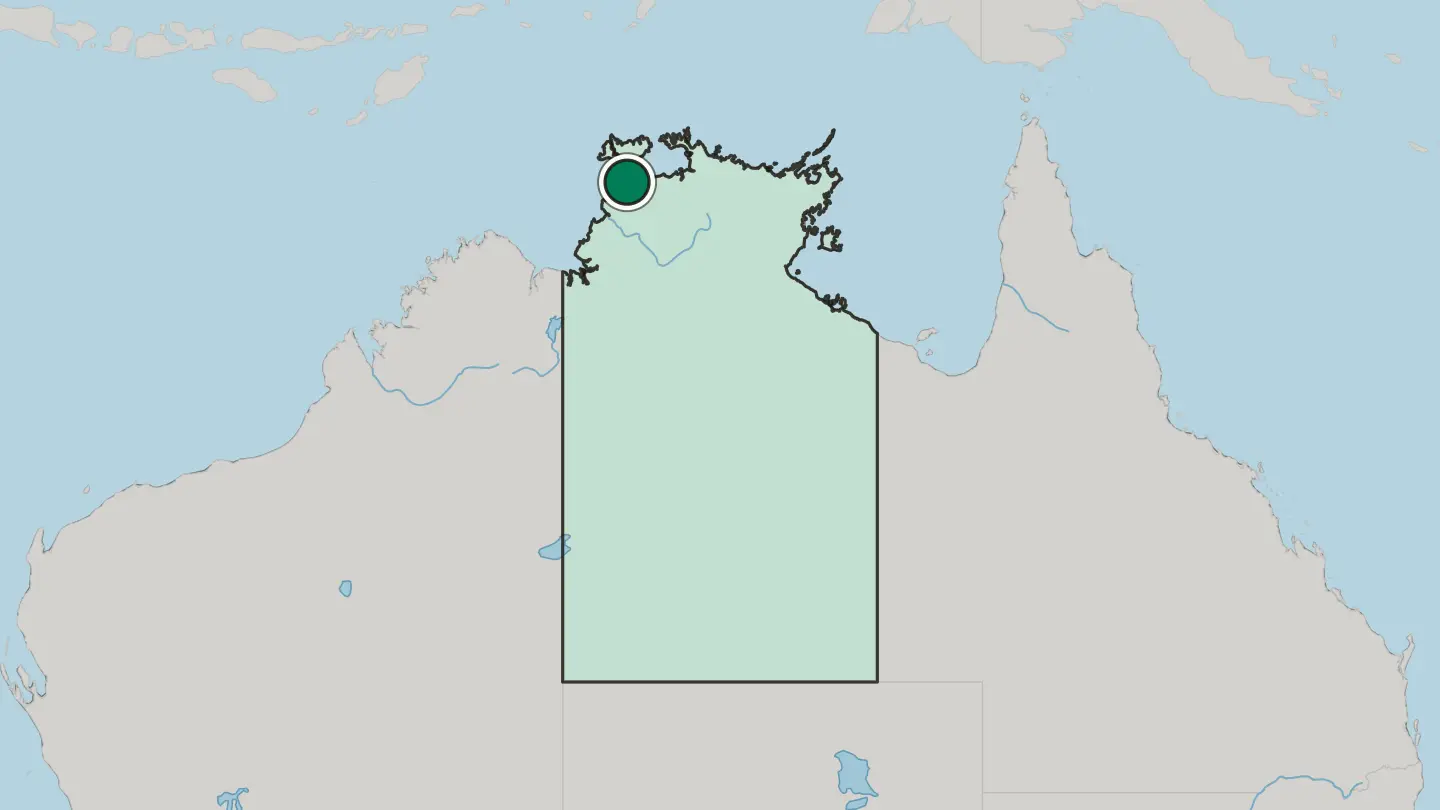
Hotel links are affiliate links: booking through them may earn us a commission, at no extra cost to you. It never affects how places are ranked. How this works
About Northern Territory
Two landscapes define the Territory.
What is Northern Territory known for?
The tropical Top End around Darwin runs on a wet season and a dry one, while the arid Red Centre bakes red around Alice Springs. Uluru rises from the southern desert. Kakadu spreads across the Top End floodplains, and the Simpson Desert fills the Territory's south-eastern corner with parallel dunes.
The Territory is sparsely populated, with fewer than half as many people as Tasmania.
Where is Northern Territory?
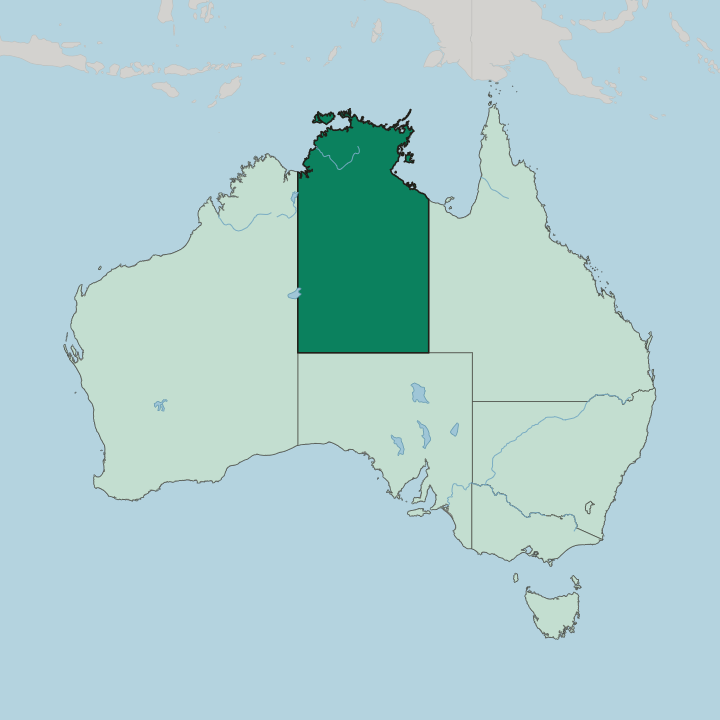
The Northern Territory takes up much of the centre and central-north of the Australian mainland, roughly a sixth of the continent. It is huge and mostly empty. Western Australia lies along its western border, Queensland to the east, and South Australia across the whole southern line. To the north the land opens onto the Timor Sea and the Arafura Sea, with the Gulf of Carpentaria curling in at the north-eastern corner toward Queensland.
Darwin sits up on that tropical coast, the capital looking out over the Timor Sea. Inland the country dries out and reddens. The MacDonnell Ranges run east and west through the centre near Alice Springs, long parallel ridges of ancient rock.
Further south-west stands Uluru, alone on the desert plain, with the domes of Kata Tjuṯa nearby. The Simpson Desert and its dunes fill the south-eastern corner where the Territory meets both Queensland and South Australia. From the wet northern floodplains down to that dune country is well over a thousand kilometres of changing land, and the drive between them crosses almost the whole width of the continent's interior.
What is Northern Territory like?
Aboriginal culture is not a museum piece in the Territory; it lives across the land. More than a hundred Aboriginal languages and dialects are spoken across it. The Larrakia, the saltwater people, hold the Darwin coast.
The Arrernte belong to Mparntwe, the country around Alice Springs in the centre. That span from tropical coast to red desert marks the art as much as the map does. Style shifts with the land.
In the Top End the old rock-art tradition leans figurative, with animals and ancestral figures painted on stone in places like Kakadu. Down in the Red Centre the desert style turns to dot painting, the fine acrylic canvases that carry the country's stories in pattern. Visitors sit with artists at community art centres to hear how a painting maps a stretch of land.
Away from the two towns life is remote and outdoor, tied to the rhythm of wet and dry rather than to any clock, and much of the population is Aboriginal.
What is the history of Northern Territory?
Aboriginal people have lived across this country for tens of thousands of years, long before any border was drawn on a map. South Australia governed the Territory from Adelaide through the nineteenth century and found it too far and too costly to hold. So it let go.
In 1911 the land passed to the new Commonwealth, which ran it from Canberra for decades with no local parliament and no vote of its own. Self-government arrived only in 1978, when the Territory won its own Legislative Assembly and elected leaders. It is still a federal territory, not a full state.
What is the climate of Northern Territory?
Two climates split the Territory top to bottom. Around Darwin, the tropical Top End swings between a hot, humid Wet from October to April, when monsoon storms flood the country, and a warm, dry season through the rest of the year. Down around Alice Springs the Red Centre is true desert: scorching by day in summer, cold enough to frost the ground on winter nights.
Rain is thunderous in the north and scarce in the south. Travel in the dry.
How do you get to Northern Territory?
Most visitors fly into Darwin, the Top End's airport and the Territory's main gateway from the rest of Australia and from Asia. Alice Springs runs its own airport for the Red Centre. The Ghan comes in overland: a passenger train that crosses the continent from Adelaide up through Alice Springs and Katherine to Darwin, once a week each way.
Drivers take the Stuart Highway, the single sealed road running the full length of the Territory from the southern border to the northern coast. Fuel stops are far apart.
Common questions
What is the best area to stay in Northern Territory?
Darwin: arriving in the tropical Top End. Kakadu and the Top End: floodplains and rock art. Alice Springs: the arid heart of the Territory. Uluru and the deep south: the rock at sunrise.
Good for
More regions in Australia
Updated October 2026