Bangladesh · Dhaka Division
Where to Stay in Dhaka, Dhaka Division
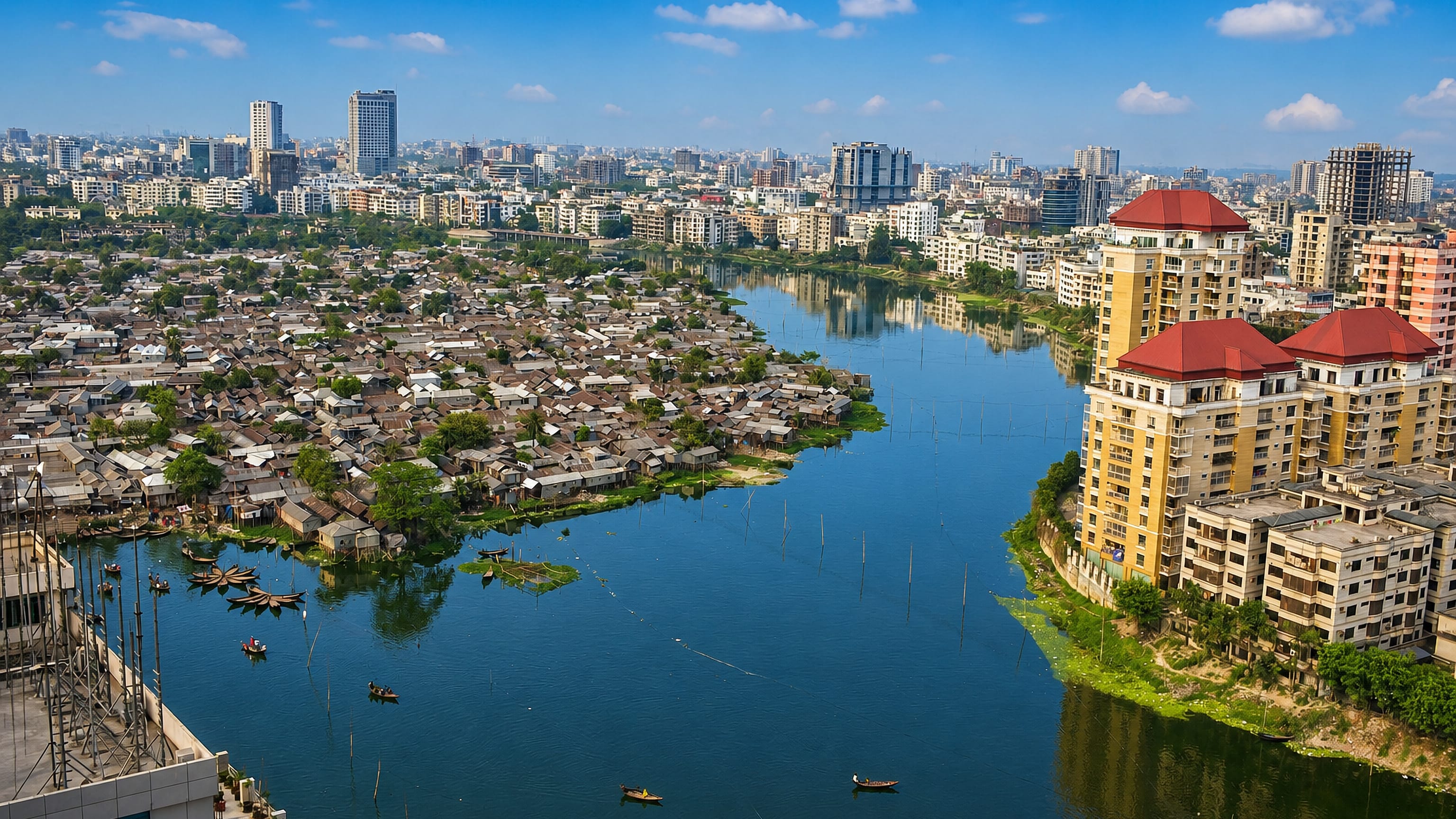
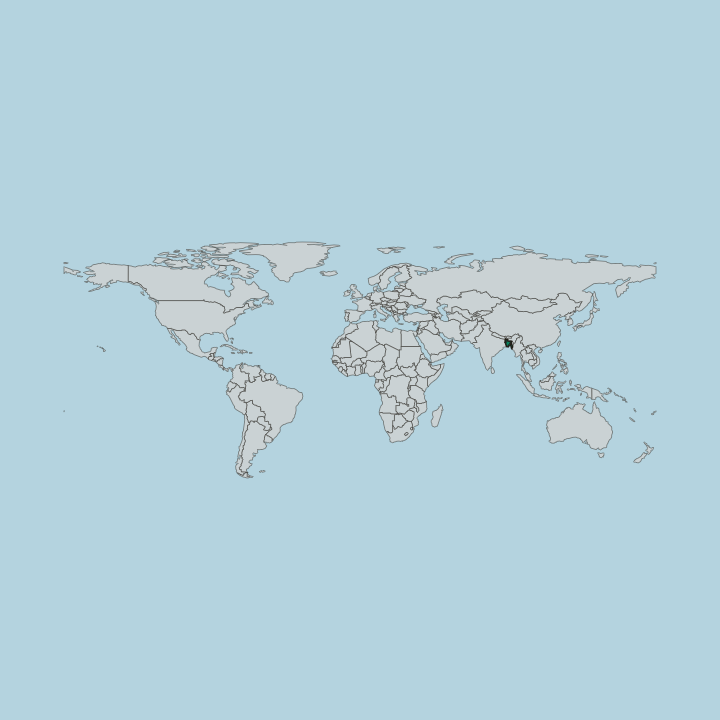
Dhaka is the capital of Bangladesh, a Bengali city on the Buriganga river, long known as the City of Mosques and the Venice of the East.
Hotel links are affiliate links: booking through them may earn us a commission, at no extra cost to you. It never affects how places are ranked. How this works


Where to stay in Dhaka
Where you base yourself shapes the visit — here's the character of each area.

 DhakaBangladesh
Dhanmondi
Dhanmondi is an upscale residential and commercial neighbourhood of Dhaka, tied to founding president Sheikh Mujibur Rahman.Where to stay →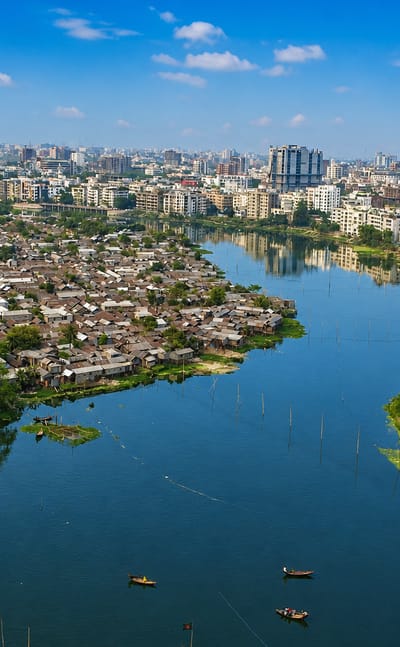 DhakaBangladesh
Nazirabazar
Nazirabazar is a neighbourhood in the old part of Dhaka, in Bangladesh, known for its shoe factories and its dense run of restaurants and eateries.Where to stay →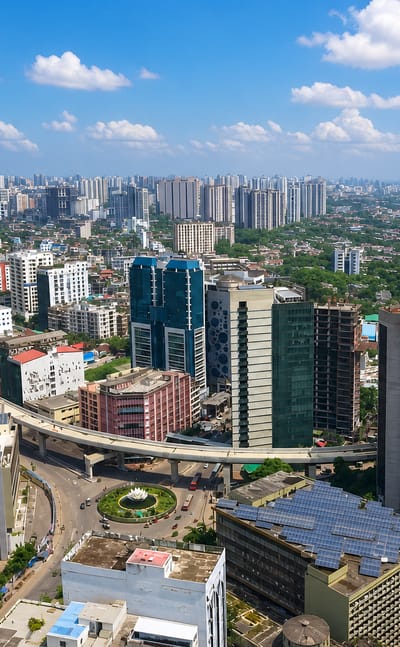 DhakaBangladesh
Motijheel
Motijheel, whose name means 'Lake of Pearls', is the main central business district of Dhaka and the largest commercial hub of Bangladesh.Where to stay → DhakaBangladesh
Bangla bazar
Bangla bazar is the oldest neighbourhood of Dhaka, Bangladesh, and its largest book and publication market.Where to stay →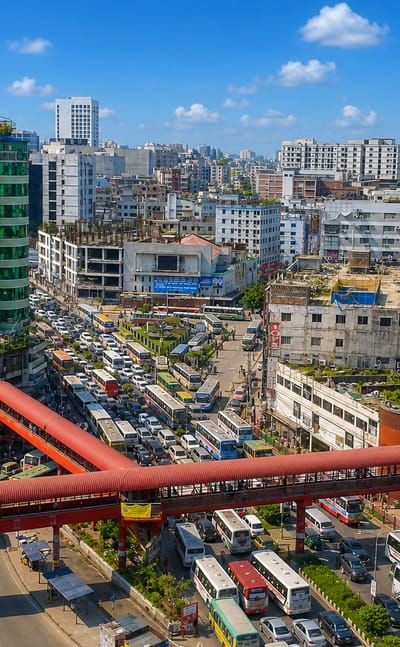 DhakaBangladesh
Farmgate
Farmgate is a busy commercial and transit neighbourhood in central Dhaka, Bangladesh.Where to stay →DhakaBangladeshGulshan
Gulshan is an affluent residential and commercial neighbourhood of Dhaka and a thana, home to most of Bangladesh's foreign embassies.Where to stay → DhakaBangladesh
Pallabi
Pallabi is a northern district of Dhaka in the Mirpur area, its streets running out to the Turag River.Where to stay →DhakaBangladeshUttara
Uttara is a planned township in northern Dhaka, laid out in numbered sectors near Hazrat Shahjalal International Airport.Where to stay →DhakaBangladeshRupayan City
Rupayan City is a planned gated community in Sector 12 of Uttara Model Town, on the northern edge of Dhaka.Where to stay →DhakaBangladeshUttarkhan
Uttarkhan is a low-rise northern neighbourhood of Dhaka, spread across former farmland east of Uttara near the Turag River.Where to stay →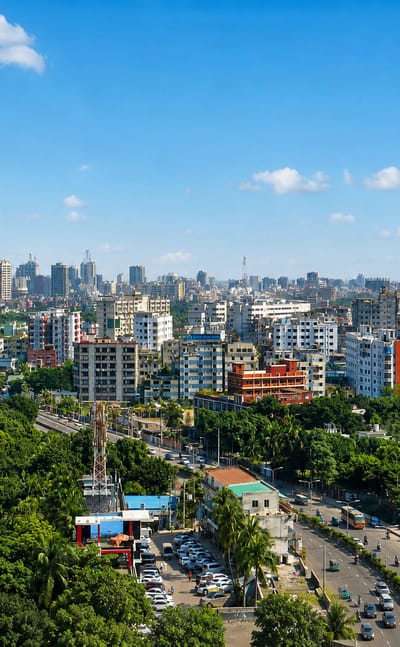 DhakaBangladesh
Mohakhali DOHS
Mohakhali DOHS is a planned residential district of Dhaka, Bangladesh, built as a housing society for officers of the Armed Forces.Where to stay →Hotel links are affiliate links: booking through them may earn us a commission, at no extra cost to you. It never affects how places are ranked. How this works
Find hotels in Dhaka
Direct booking searches for these neighbourhoods.
Old Dhaka by the Buriganga
The oldest quarter, strung along the Buriganga past the Armenian Church and Holy Rosary Church, source of the City of Mosques name.Find hotels in Old Dhaka by the Burigangamuseum-goers who want the cultural core on footThe museum quarter at Shahbag
The green around Suhrawardy Udyan, gathering the Bangladesh National Museum, the National Art Gallery, and the Shaheed Minar within a walk.Find hotels in The museum quarter at Shahbagbusiness trips near government offices and Shapla SquareThe civic centre by Bangabhaban
The government and commercial core around Bangabhaban, the Museum of Independence, and the plaza of Shapla Square.Find hotels in The civic centre by BangabhabanHotel links are affiliate links: booking through them may earn us a commission, at no extra cost to you. It never affects how places are ranked. How this works
Things to do in Dhaka
Ranked by global recognition; descriptions from Wikidata (CC0).
Museums & Galleries
3- Bangladesh Military Museum
- Liberation War Museum
- Bangladesh National Museum
Churches & Religious Sites
3- Armenian Church
- Holy Rosary Church
- St Thomas Church Dhaka
Castles & Historic Sites
3- Bangabhaban
- Greek Memorial, Dhaka
- Eight Pillars Against Aggression
Stadiums & Sports
3- Suhrawardy Udyan
- Ranjit Mallick Cricket Stadium
- Outer Stadium Ground
worth knowingacross 4 categories in Dhaka
About Dhaka
Dhaka is the capital and largest city of Bangladesh.
What is Dhaka known for?
It stands as the great city of the historical region of Bengal, with a long past as a Bengali capital and a centre of trade and culture across South Asia. People call it the City of Mosques for its skyline of minarets, and the Venice of the East for the riverfront along the Buriganga. It carries another name too.
As the Rickshaw Capital of the World, its streets fill with cycle rickshaws, while parks and gardens still open between them.
What are the main landmarks in Dhaka?
Dhaka wears its landmarks openly. The Shaheed Minar rises as the country's memorial column to its martyrs, while the Bangladesh National Museum and the Museum of Independence hold its history indoors. Bangabhaban serves as the official residence at the heart of the state.
Older communities left their mark in the Armenian Church, the Holy Rosary Church, and St. Mary's Cathedral. Suhrawardy Udyan gives green relief, and the plaza of Shapla Square anchors the commercial core near the river.
What is the history of Dhaka?
Dhaka is an old Bengali capital. The city grew in the historical region of Bengal, on the banks of the Buriganga, where the river carried the trade that made it rich. Under earlier rule it was written Dacca, the older spelling of the same name.
Its mosques rose in such number that it took the title City of Mosques, while its riverfront brought the name Venice of the East. Merchants, faiths, and rulers alike all left their mark on the growing river city. The modern chapter tied Dhaka to the birth of Bangladesh.
When the country took its present form, Dhaka became its capital, the seat of government and the centre of national memory. The Museum of Independence and the Bangabandhu Memorial Museum keep that national story, while the Shaheed Minar stands as a memorial to the city's martyrs. Older communities are remembered too, in the Armenian Church and the Greek Memorial that recall foreign traders long settled here.
From a river port in Bengal to the capital of a nation, Dhaka has held the thread of Bengali city life across the centuries.
Where is Dhaka?
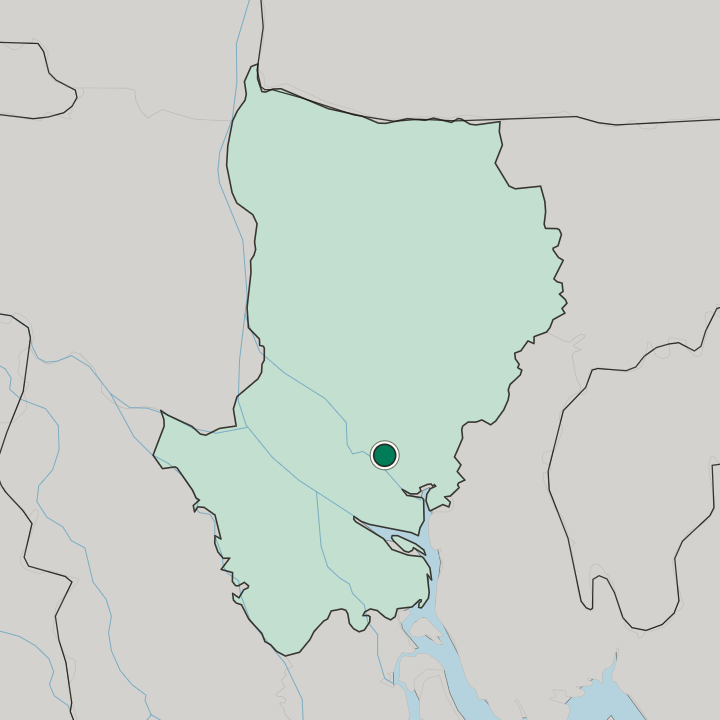
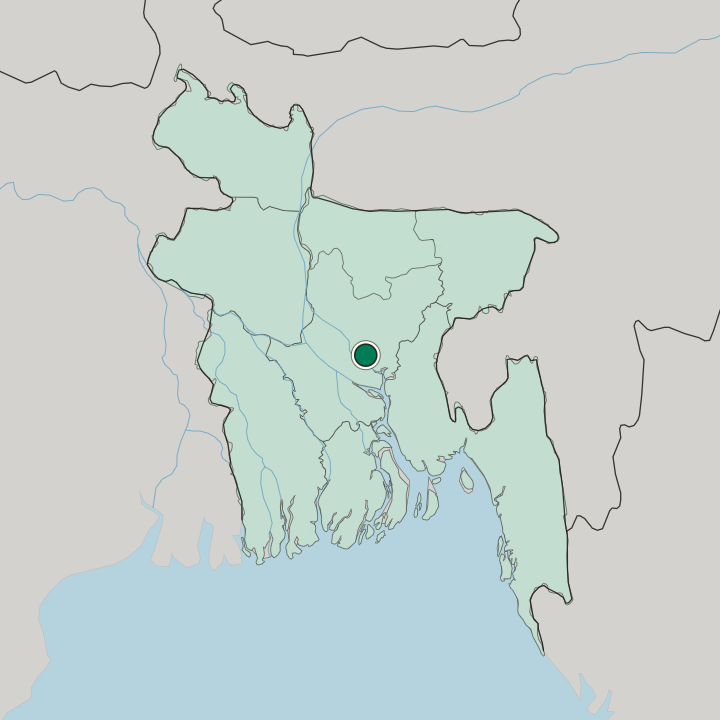
Dhaka lies on the Ganges Delta, in the low and river-laced heart of Bangladesh. Four rivers frame the city: the Buriganga along its old southern edge, with the Turag, the Dhaleshwari, and the Shitalakshya around the others. The Buriganga is the historic waterfront, the river of the old port.
Water sits close on every side. That setting, more than any hill, has shaped where the capital of Dhaka Division could grow, among the channels of the delta.
What is the climate of Dhaka?
Dhaka has a warm, subtropical climate marked by a heavy wet season. Hot, damp months build through spring. Through the height of the monsoon, downpours swell the Buriganga and the other rivers around the city, and flooding is a fact of life on the delta.
Winters are short, dry, and pleasantly mild. Humidity hangs over the city for much of the year, eased only by those cooler dry months.
How do you get to Dhaka?
Dhaka is the country's main point of arrival. As the capital of Bangladesh, it draws the busiest air, road, and rail links, and most journeys within the country pass through it. The rivers still carry traffic too.
Launches and ferries work the Buriganga and the wider delta, a reminder of the old water routes. From Dhaka the roads run out across Dhaka Division and on to the rest of Bangladesh.
Common questions
What is the best area to stay in Dhaka?
Old Dhaka by the Buriganga: travellers who want the historic river city at the door. The museum quarter at Shahbag: museum-goers who want the cultural core on foot. The civic centre by Bangabhaban: business trips near government offices and Shapla Square.
Good for
More cities in Dhaka Division
Updated October 2026